 The SSD Review The Worlds Dedicated SSD Education and Review Resource |

PCMARK 10 FULL SYSTEM STORAGE BENCHMARK
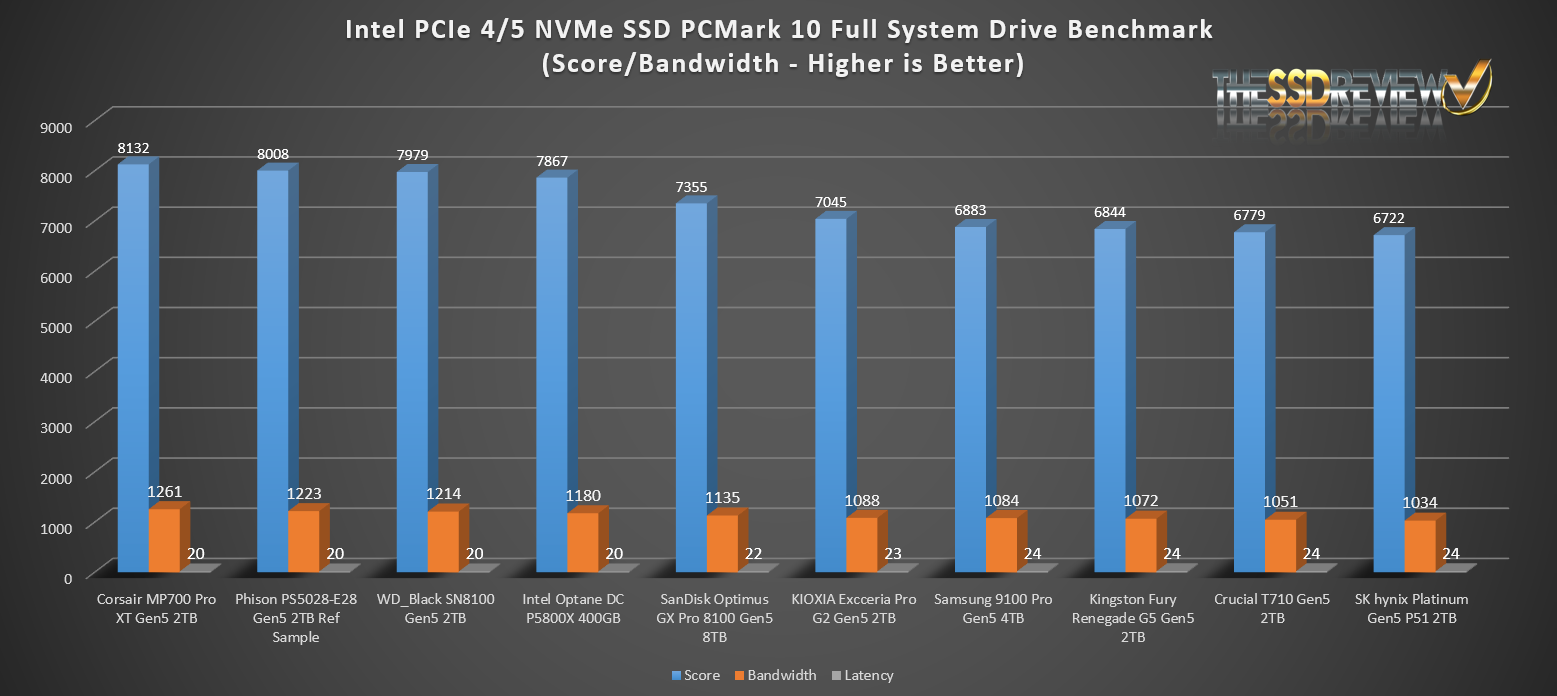
PCMark 10 Storage Benchmarks produce an overall score as a measure of drive performance. Comparing devices is as simple as comparing scores. The tests also measure and report the bandwidth and average access time performance for the drive. Each test uses traces recorded while performing real-world tasks such as booting Windows 10, starting applications such as Adobe Photoshop and Illustrator, working with applications such as Microsoft Excel and PowerPoint, and copying several large files and many small files.

The SanDisk Optimus GX Pro 8100 Gen5 8TB SSD achieved the a top 10 score in PCMark 10 Full System Storage.
PCMARK 10 QUICK SYSTEM STORAGE BENCHMARK
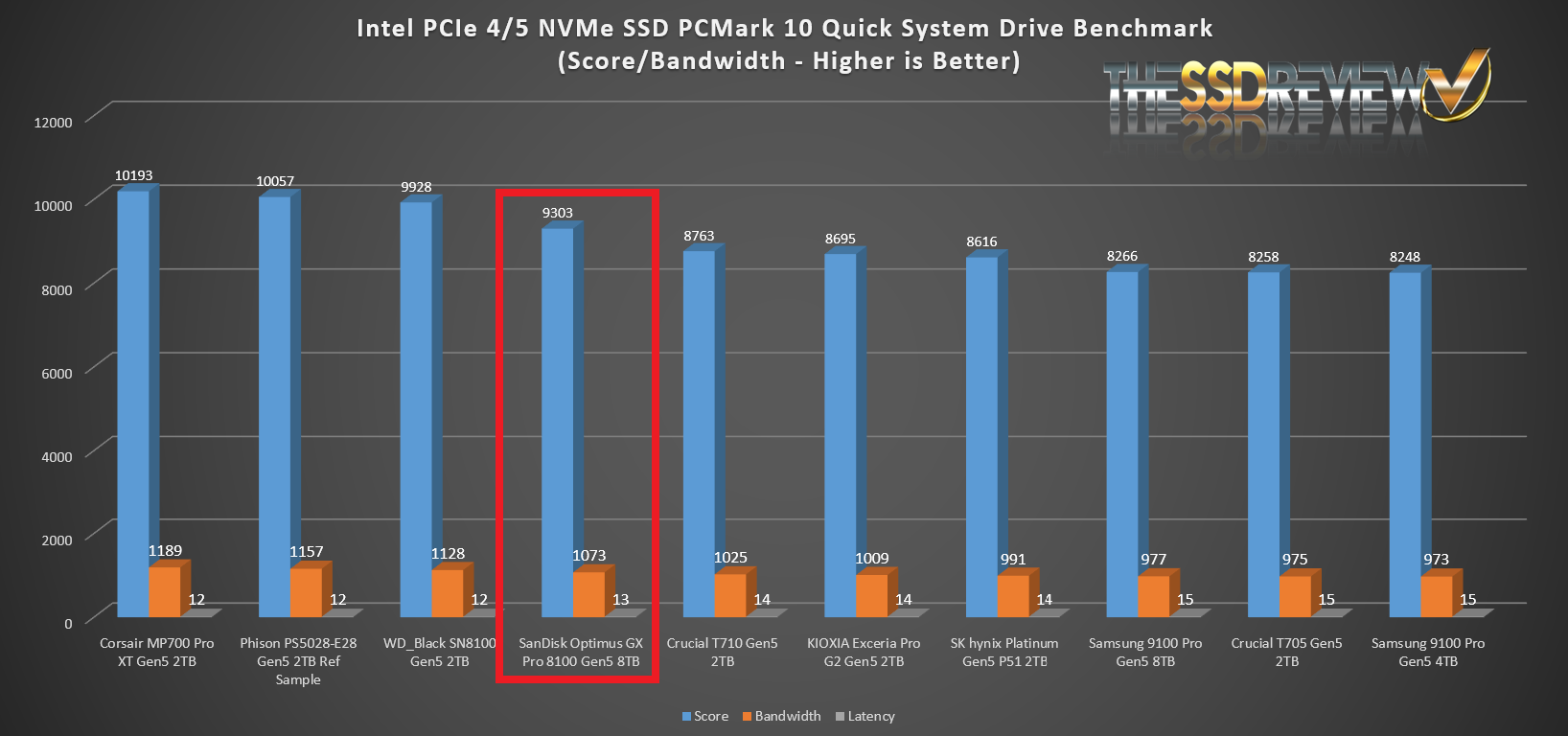
The Quick System Drive Benchmark is a subset of the Full test and is more representative of typical daily usage to show what would be expected regarding hybrid SSD performance on a day-to-day basis.

Again, the SanDisk Optimus GX Pro 8100 Gen5 SSD placed in the top 10 of SSDs tested to date.
TRUE DATA TESTING
For our True Data Testing, we simply loaded 15GB video, music, photo and OS files onto the SanDisk Optimus GX Pro 8100 Gen5 8TB SSD and copied the data to a new folder on that same disk.
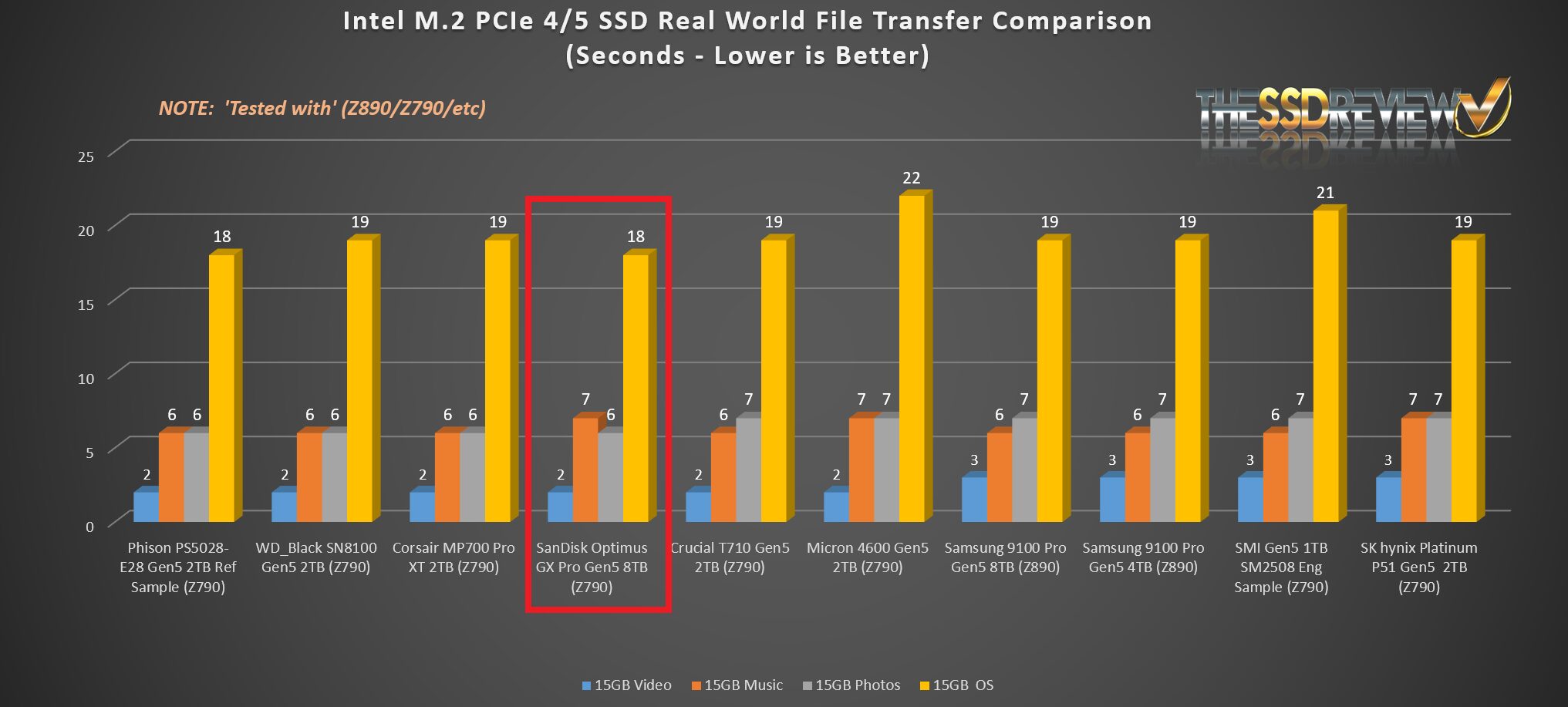
The SN8100 placed 4th of all SSDs tested to date in true data transfer testing.
PASSMARK PERFORMANCE TEST
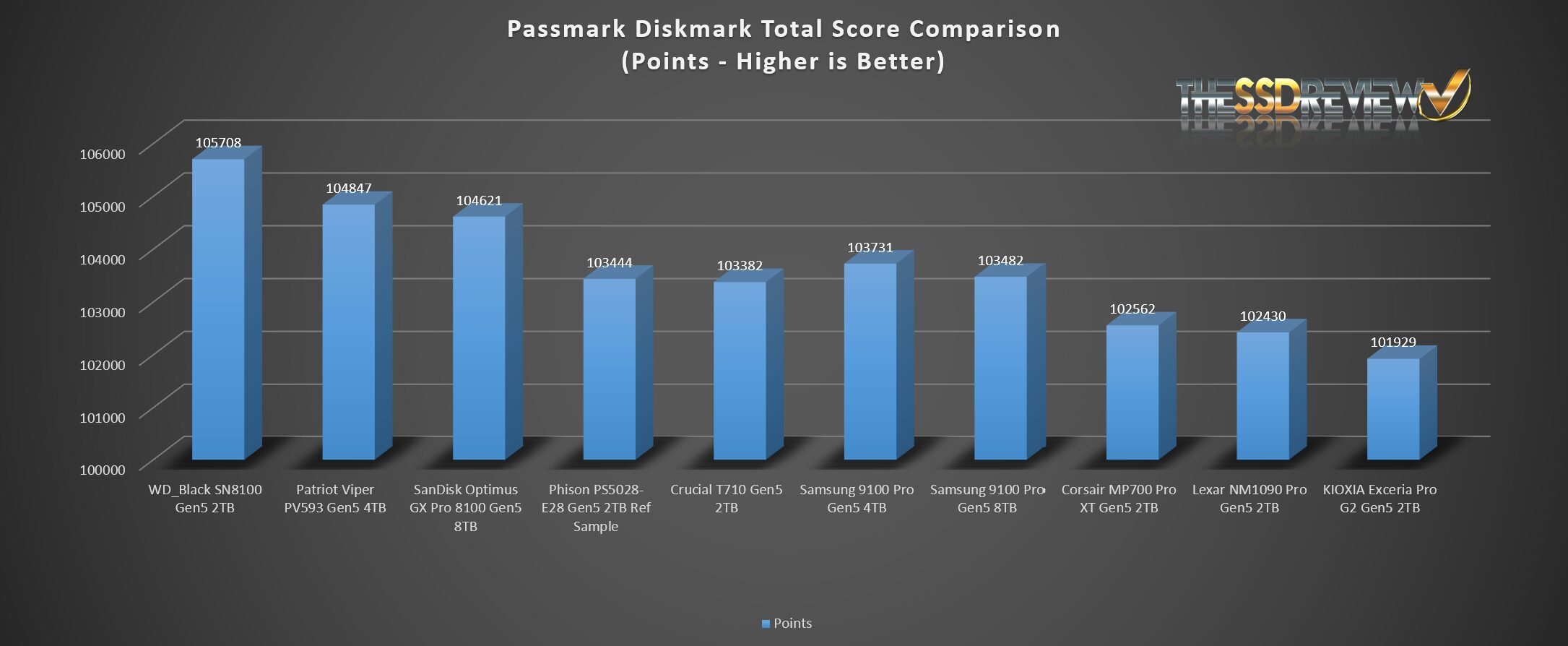
We thought we might add a few extras in our report today, PassMark Performance Test DiskMark component being a nice addition. This software tests sequential reads and writes, along with IOPS and compares the result with millions of other SSDs worldwide.
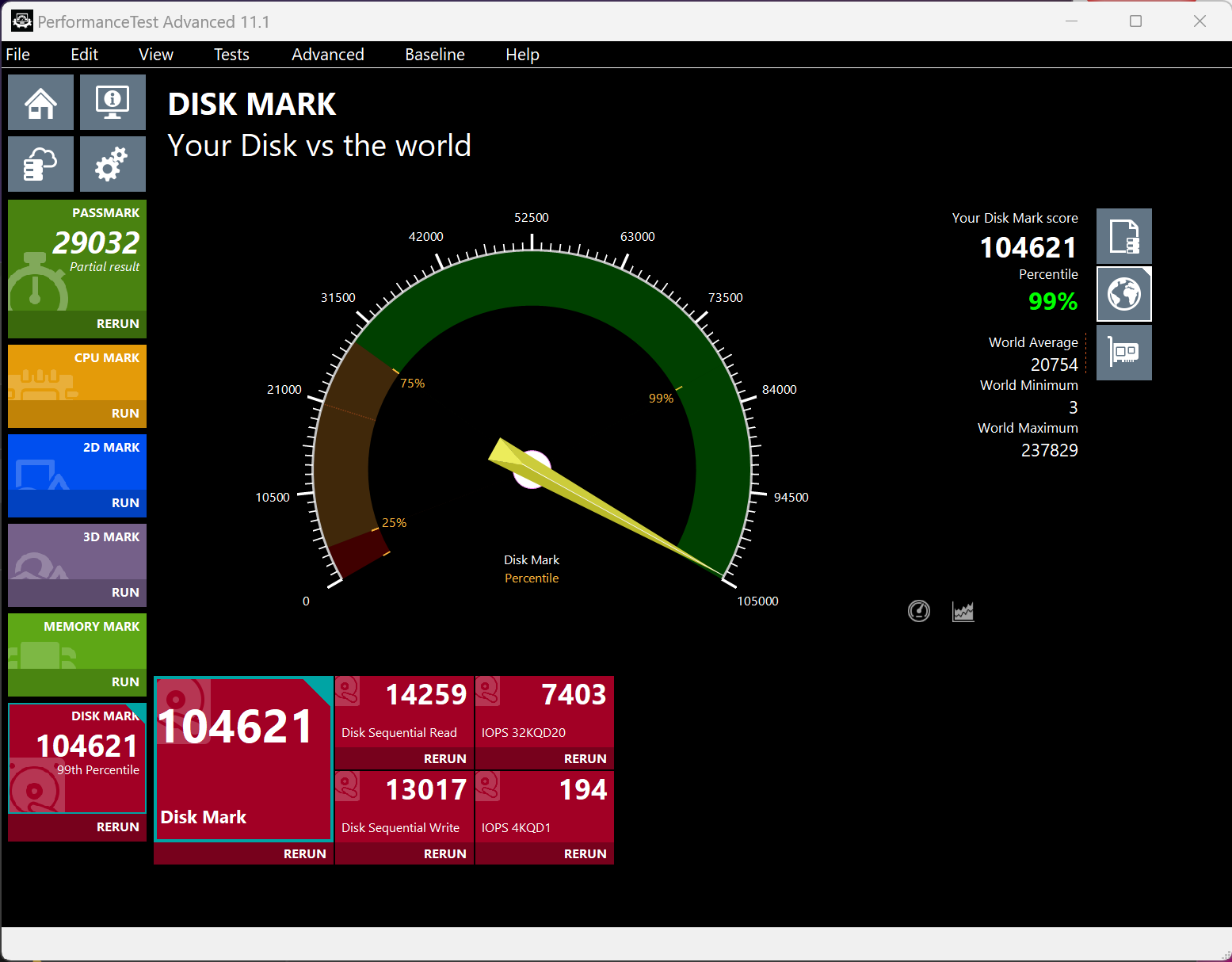
The 8100 placed No 3 in all SSDs tested to date.
FINAL FANTASY XIV: ENDWALKER BENCHMARK
The Final Fantasy Benchmark is a new tool in our arsenal and geared specifically to the gamer. The software is installed directly on the SSD and the SSD tested, providing and end result of FPS and scene transition times.
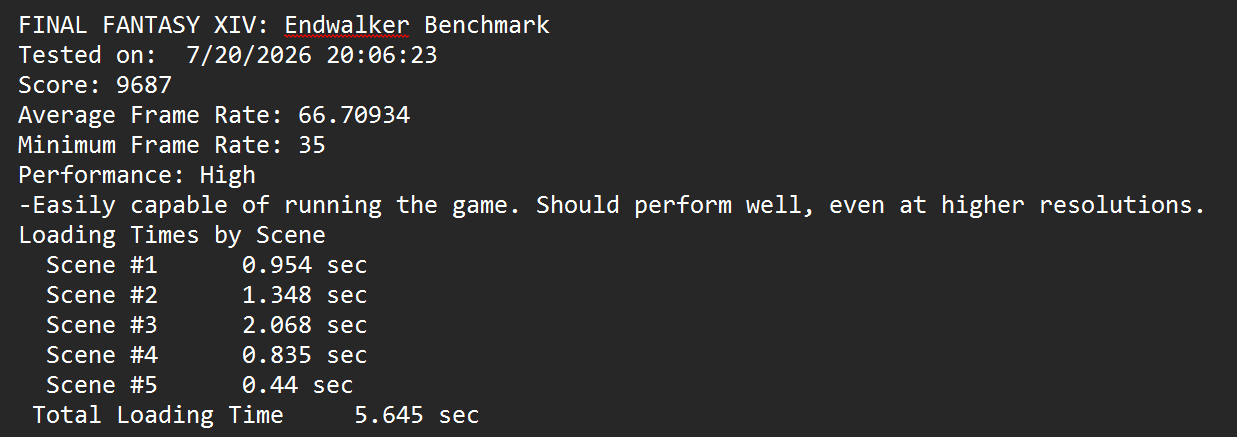
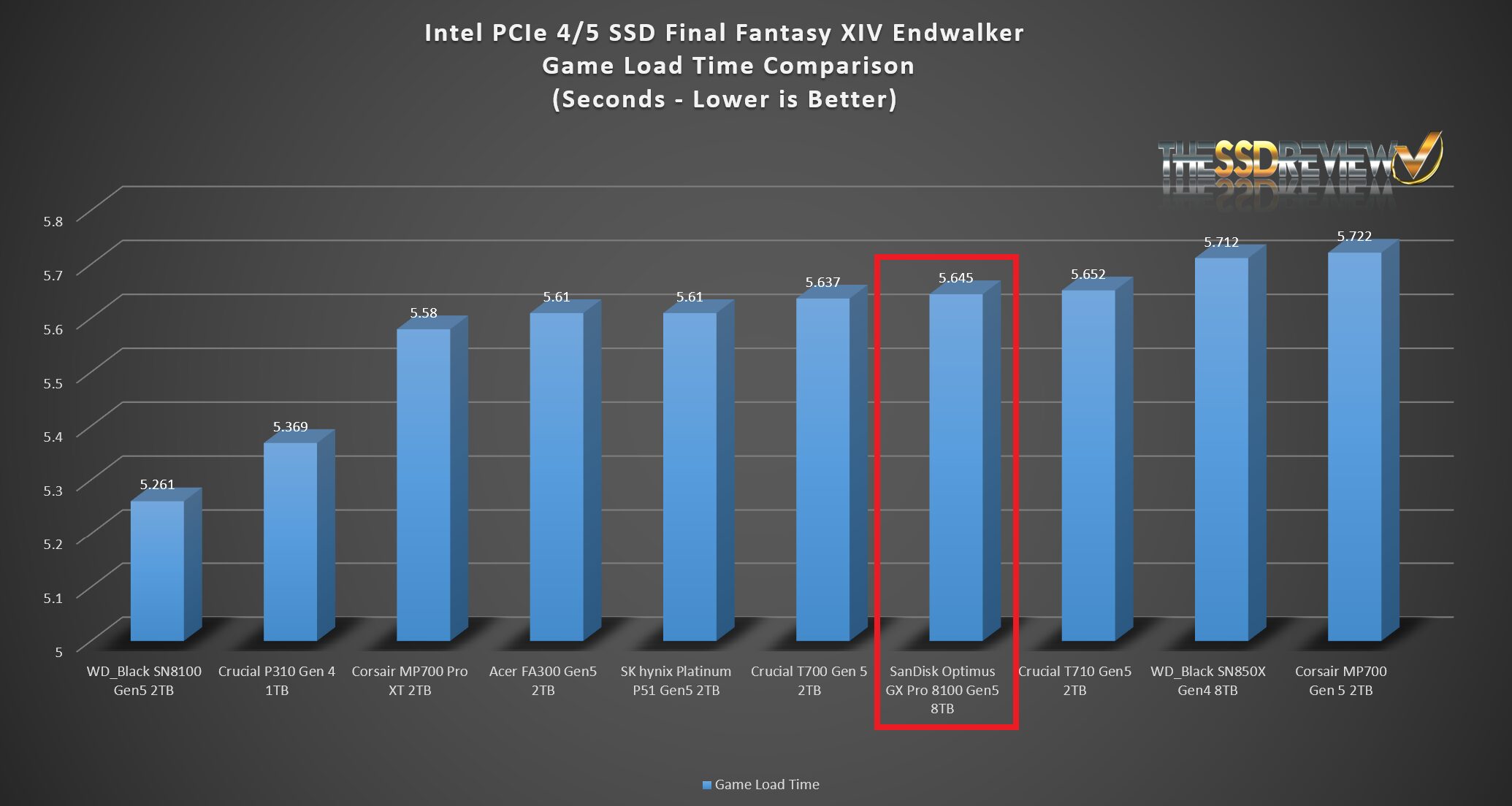
As expected, the SanDisk Optimus GX Pro 8100 Gen5 8TB SSD placed in the top 10 with a game load time of 5.645 seconds.
Impressive review of a powerful Gen5 SSD with massive capacity and speed. Do you think 8TB NVMe drives will become more affordable enough for everyday users in the future?
NAND is a cyclical market. We are in a boom, but that boom– and it’s associated high pricing, is showing cracks. Demand will diminish and pricing will return to normal. I bought the sn850x 4TB for $226 USD last year, that might never be the case again, but $379 seems like a reasonable price floor , instead of the current price of $599
The memory and storage crisis will not happen for too long. Once the AI bubble bursts (hopefully by 2028), prices for these will basically crash down back to normal prices or even be cheaper then how they were in 2024.
Same with the GPU crisis during 2021, people thought that this will happen for a long time, but then during mid-2022, prices for GPUs unexpectedly crashed down as well.
Need to tell you something important about this Txbench. Although you said to simply click on its title for a “free copy”, when I clicked on it, this website appears not to work anymore or maybe it is the wrong link. In fact a couple times when I tried, this website even redirected me to a tech support scam and scareware link where I got a false warning that my “Windows system is damaged”, and that I had to call a fake phone number to fix it. It even wanted to download some files. I completely blocked it though and pressed Alt + F4, but other users who might not know many think their system got infected. Because of this, may you please fix the link, or maybe upload a copy of Txbench somewhere else, as Txbench is very useful for even secure erasing SSDs and viewing detailed SMART information status. I could not find any other benchmark utility that could do what Txbench does. Even if you can not though, please still remove the clickable link for Txbench as this website might mislead others to a false scareware website. Thank you so much!
Thank you for your input!