 The SSD Review The Worlds Dedicated SSD Education and Review Resource |


3D MARK STORAGE GAMING BENCHMARK
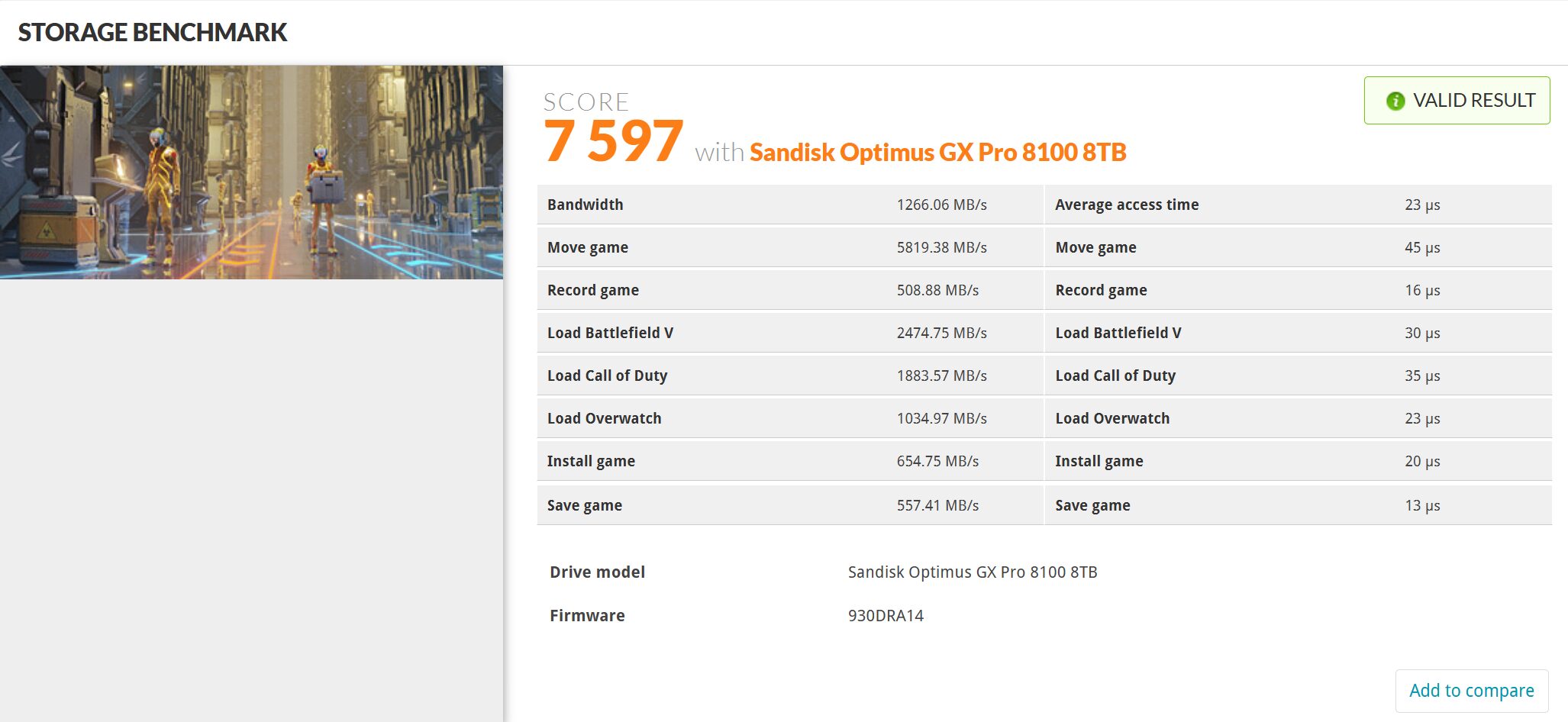
UL Solutions has created a new storage gaming benchmark that we will start to use as new SSDs come in. The 3DMark Storage Benchmark DLC extends 3DMark Advanced Edition with a dedicated component test for measuring the gaming performance of SSDs and other storage hardware. It supports all the latest storage technologies and tests practical, real-world gaming performance for activities such as loading games, saving progress, installing game files, and recording gameplay video streams.
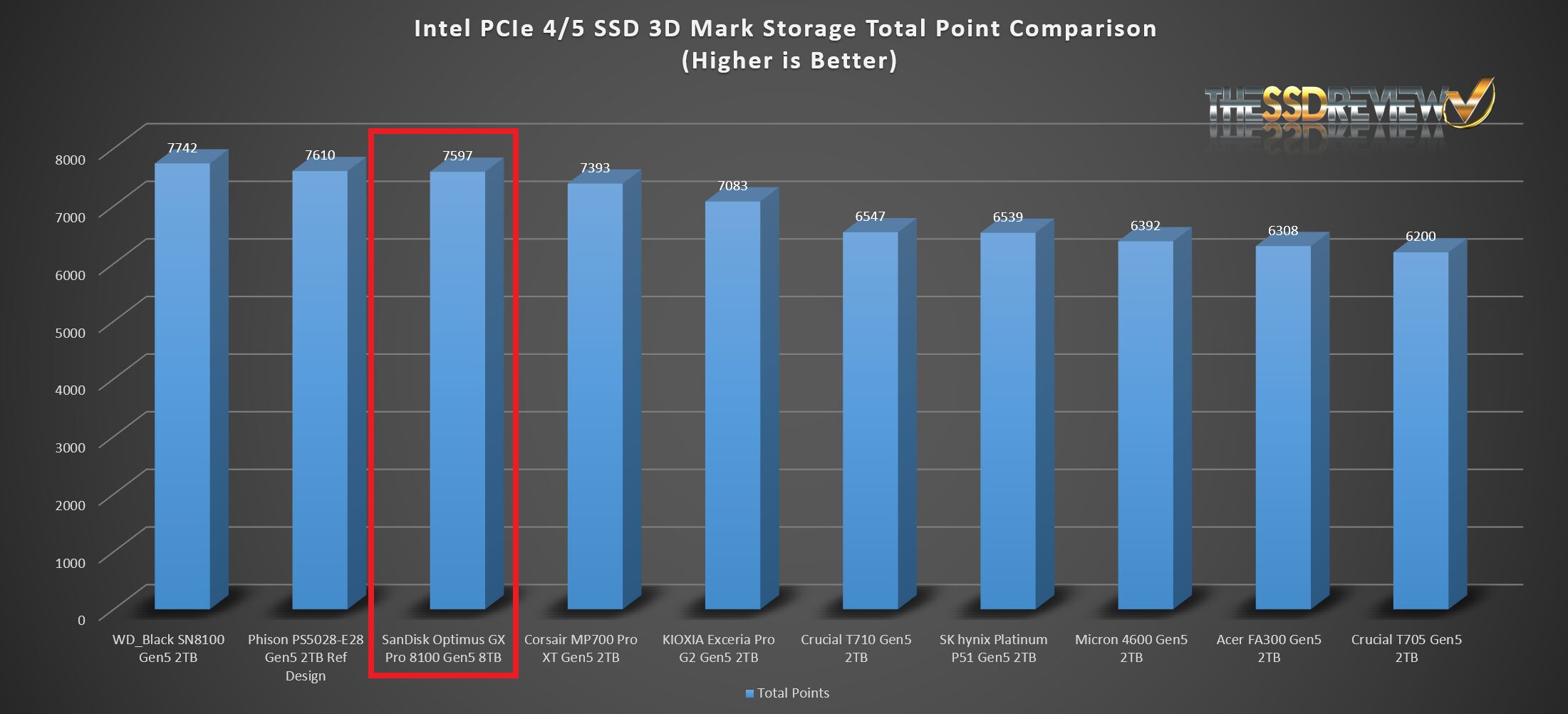
The SanDisk 8100 Gen5 8TB SSD placed third of SSDs tested to date in our 3DMark Storage Benchmark
3D MARK MS DIRECT STORAGE FEATURE TEST
As our SanDisk Optimus GX Pro 8100 Gen5 8TB SSD is MS DirectStorage compatible, we thought we might take advantage of the 3DMark DirectStorage Feature Test and see how this SSD fared. MS DirectStorage, in very basic terms, allows direct transfer of data from your SSD storage directly to your GPU, eliminating its historical necessary passage from the SSD through the CPU to RAM, back through the CPU and finally to the GPU VRAM. This is, for the most part at this time, intended on faster game load times,reducing CPU overhead and providing more detailed graphics.
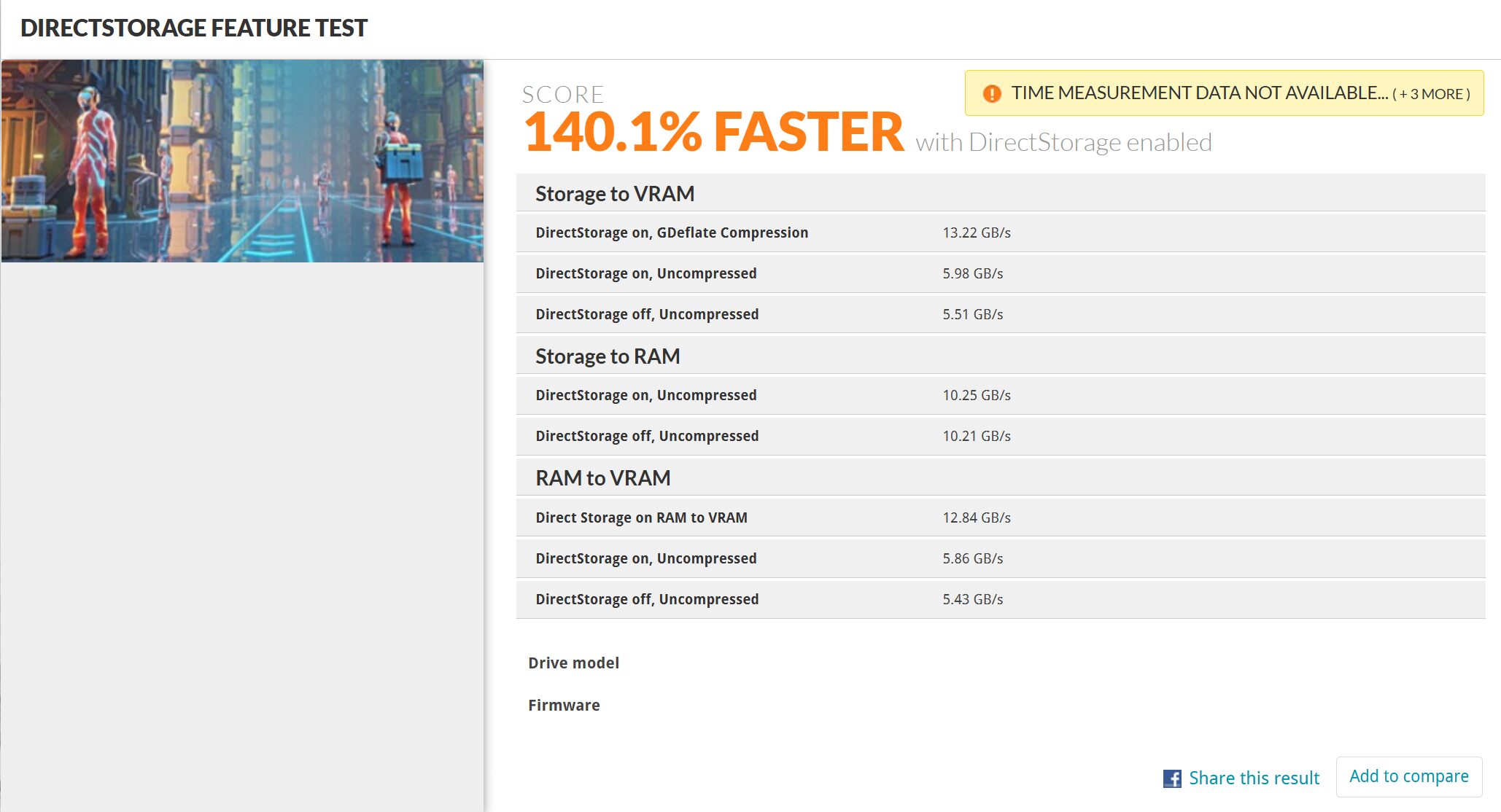
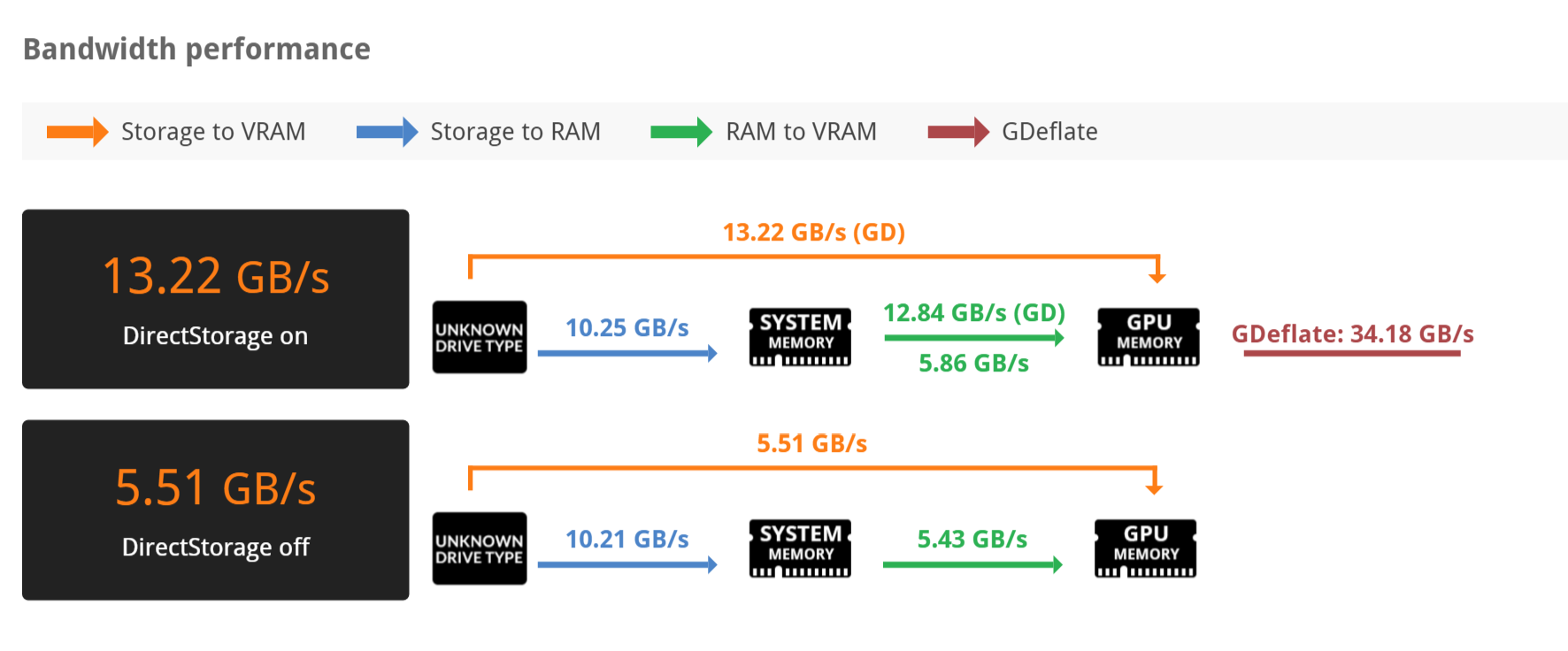
In our testing, data transfer achieved a 140.1% faster transfer of data than with MS DirectStorage disabled.
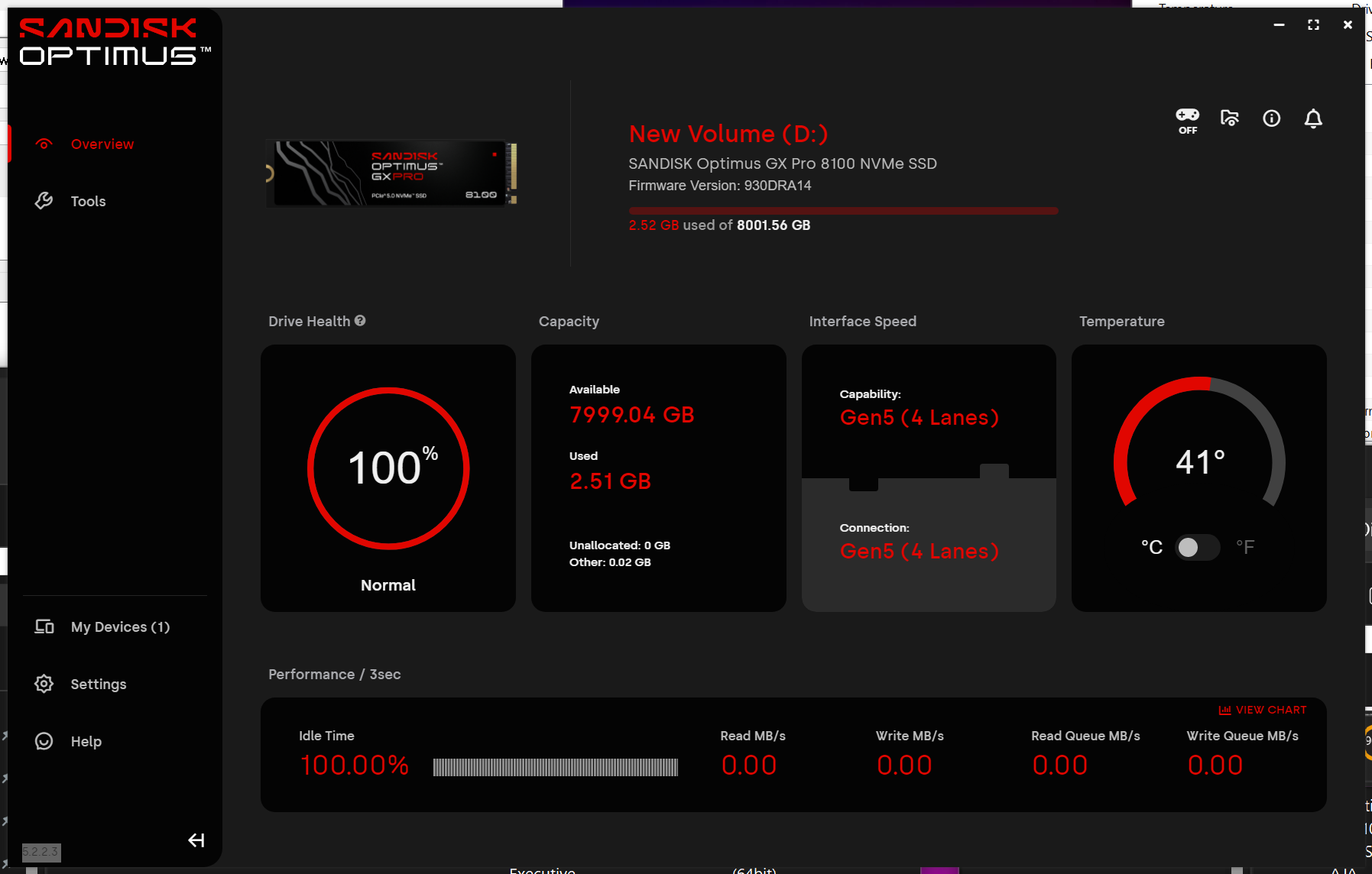
SanDisk provides, totally free of charge, an SSD utility named the SanDisk SSD Dashboard which allows for maintenance and upkeep of your SanDisk SSD. SanDisk also provides Acronis True Image free of charge to allow for a totally seamless migration to your new SanDisk SSD. Simply click the title above which contains the link!
REPORT ANALYSIS AND FINAL THOUGHTS
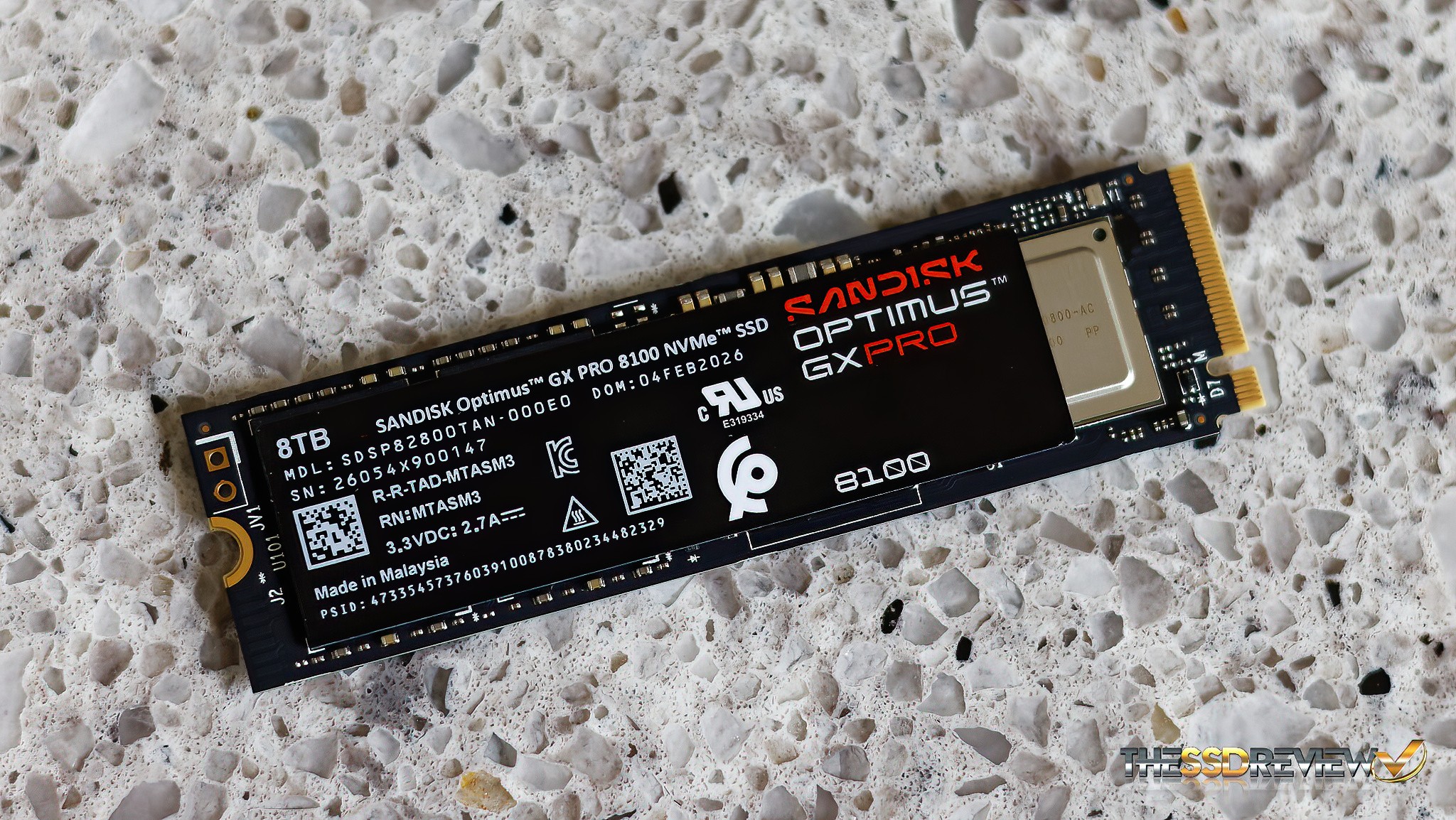
Having previously reviewed the WD_Black SN8100, we had a good idea of what to expect from the new SanDisk Optimus GX Pro 8100 Gen5 8TB SSD. It didn’t disappoint. Performance was consistently among the best we have tested, placing in our Top 10 across every benchmark with peak speeds of 14GB/s read, 13GB/s write, and more than 2.2 million IOPS. In today’s market, where value-oriented DRAMless SSDs have become increasingly common, flagship drives of this caliber are becoming increasingly rare. Rarer still is the opportunity to evaluate an 8TB consumer SSD, making the Optimus GX Pro 8100 a refreshing reminder of what a true no-compromise Gen5 SSD can deliver.
SanDisk can’t take all the credit though. The Silicon Motion SM2508 8-channel Gen5 SSD NVMe controller has shown itself as the industry leader in this category and we have seen very similar results in everty SSD tested with this controller.
We wanted to throw in a very interesting picture that was sent to us in press materials and it depicts how NAND is layered to increase its density…or capacity.
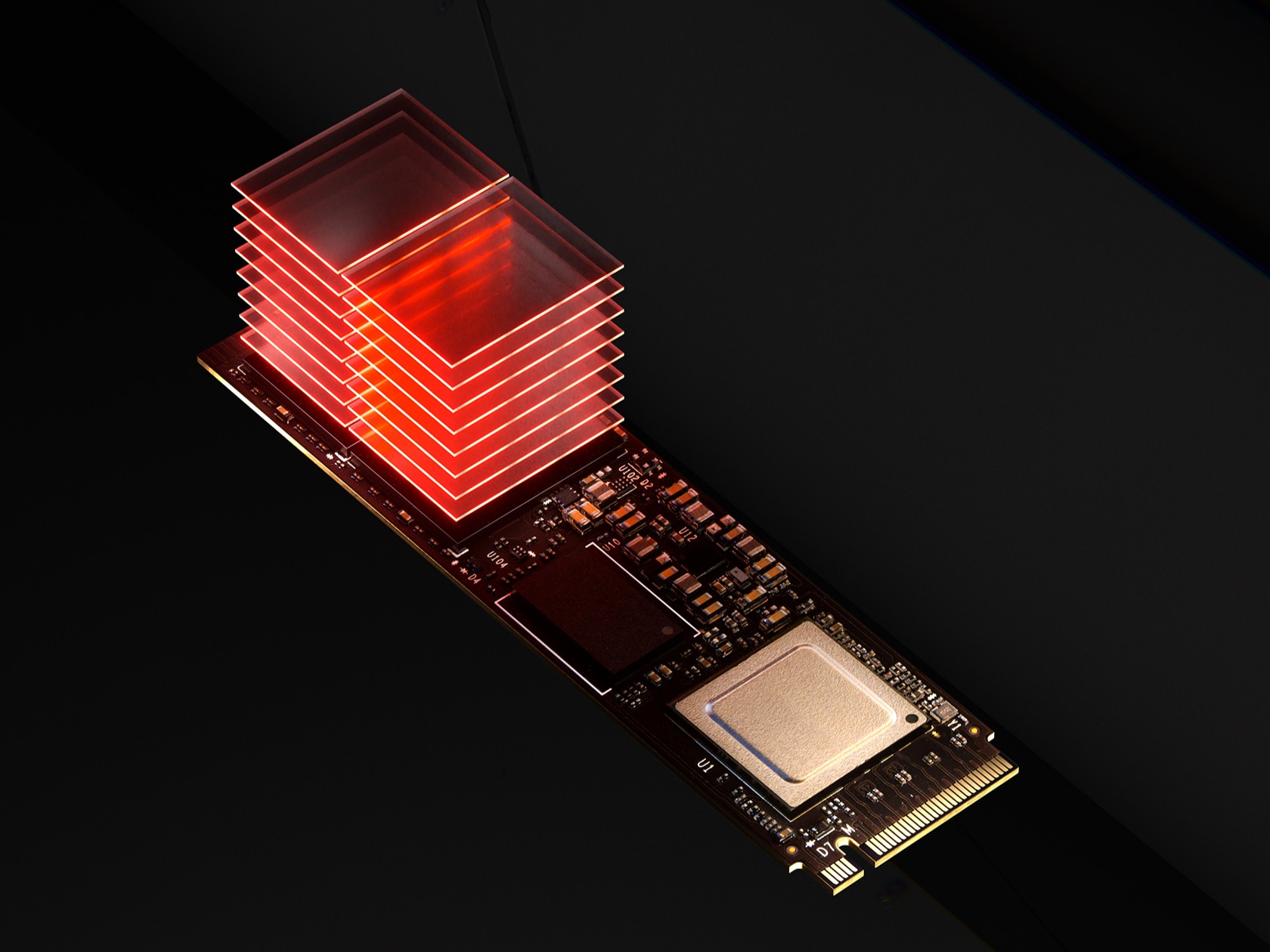
The truly remarkable achievement is that each additional NAND layer is so incredibly thin that the overall package height remains virtually unchanged. SanDisk’s BiCS8 218-layer 3D TLC NAND is a perfect example of just how far flash technology has advanced. Because 3D NAND stacks memory cells vertically rather than relying solely on shrinking them horizontally, manufacturers can dramatically increase storage density without increasing the physical footprint.
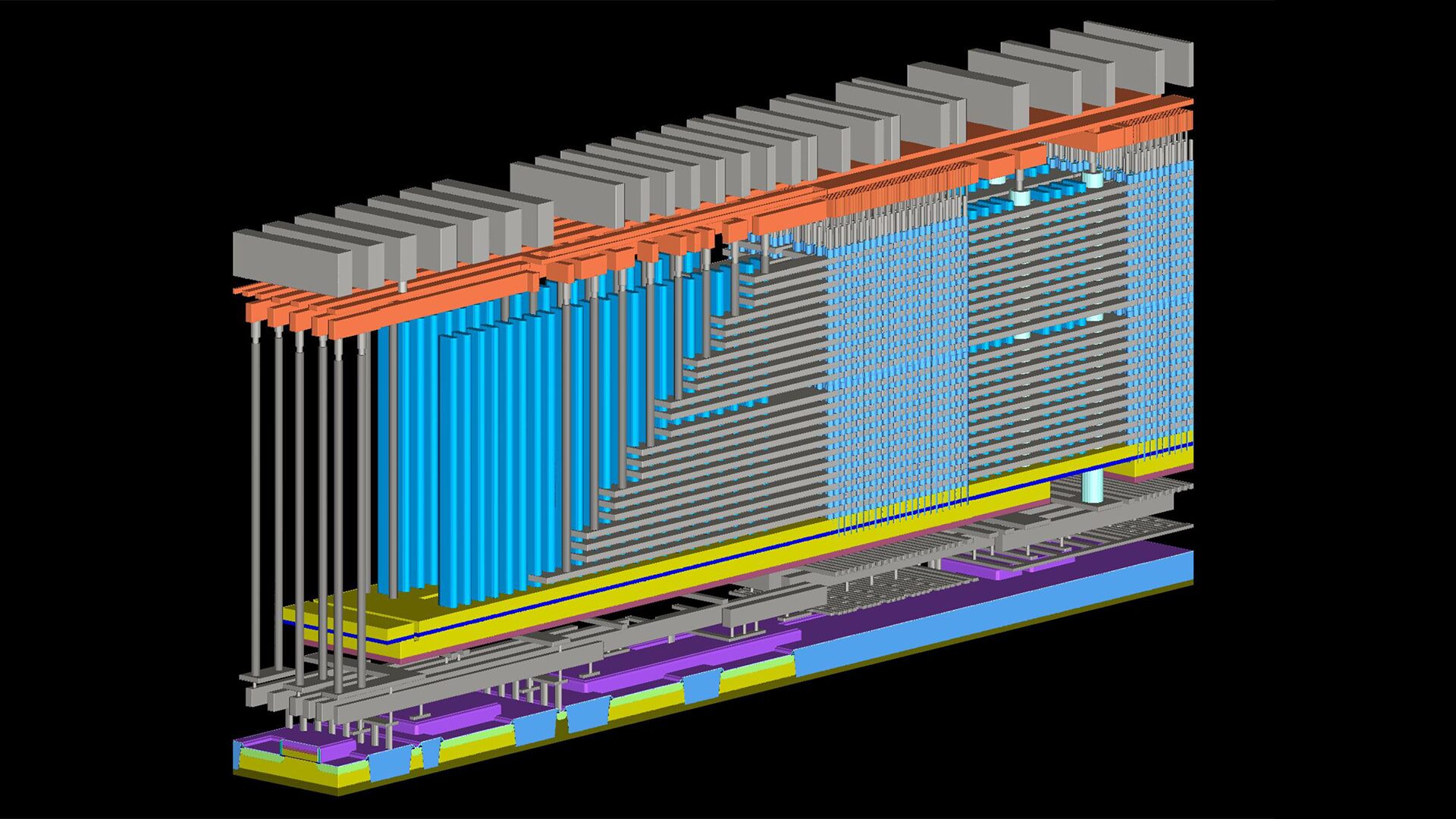
Each individual layer measures just 40-50nm in thickness, making it approximately 2,000 times thinner than a human hair, which typically measures 80,000-100,000nm. Take a look at the whole picture, structured as one might see an apartment building:
Last but not least is pricing. The reality is that the retail SSD market is increasingly being overshadowed by enterprise demand, with AI-driven deployments fueling dramatic NAND price increases. Unfortunately, that trend appears unavoidable, and it is difficult to imagine retail pricing ever returning to the levels we saw when the WD_Black SN8100 first launched.
That said, there still needs to be greater consistency in regional pricing. At the time of writing, the 8TB SanDisk Optimus GX Pro 8100 carries a U.S. MSRP of $2,149.99, which converts to roughly $3,028 CAD. There is simply no justification for the same drive being listed at $5,799.99 CAD on Amazon Canada. Even more puzzling is the fact that the identical SSD under its previous WD_Black SN8100 branding is currently available for $2,579.99 CAD (approximately $1,832 USD). Such a massive pricing disparity for what is essentially the same product is difficult to understand and even harder to justify.
With this in mind, the SanDisk Optimus GX Pro 8100 Gen5 8TB SSD cannot be penalized for what they cannot control with respect to the industries NAND pricing. The 8100 is deserving of our Editor’s Choice Award.
CHECK OUT SANDISK OPTIMUS GX PRO 8100 PRICING AT AMAZON

Impressive review of a powerful Gen5 SSD with massive capacity and speed. Do you think 8TB NVMe drives will become more affordable enough for everyday users in the future?
NAND is a cyclical market. We are in a boom, but that boom– and it’s associated high pricing, is showing cracks. Demand will diminish and pricing will return to normal. I bought the sn850x 4TB for $226 USD last year, that might never be the case again, but $379 seems like a reasonable price floor , instead of the current price of $599
The memory and storage crisis will not happen for too long. Once the AI bubble bursts (hopefully by 2028), prices for these will basically crash down back to normal prices or even be cheaper then how they were in 2024.
Same with the GPU crisis during 2021, people thought that this will happen for a long time, but then during mid-2022, prices for GPUs unexpectedly crashed down as well.
Need to tell you something important about this Txbench. Although you said to simply click on its title for a “free copy”, when I clicked on it, this website appears not to work anymore or maybe it is the wrong link. In fact a couple times when I tried, this website even redirected me to a tech support scam and scareware link where I got a false warning that my “Windows system is damaged”, and that I had to call a fake phone number to fix it. It even wanted to download some files. I completely blocked it though and pressed Alt + F4, but other users who might not know many think their system got infected. Because of this, may you please fix the link, or maybe upload a copy of Txbench somewhere else, as Txbench is very useful for even secure erasing SSDs and viewing detailed SMART information status. I could not find any other benchmark utility that could do what Txbench does. Even if you can not though, please still remove the clickable link for Txbench as this website might mislead others to a false scareware website. Thank you so much!
Thank you for your input!