 The SSD Review The Worlds Dedicated SSD Education and Review Resource |

CRYSTAL DISK BENCHMARK VER. 8.0.4 x64
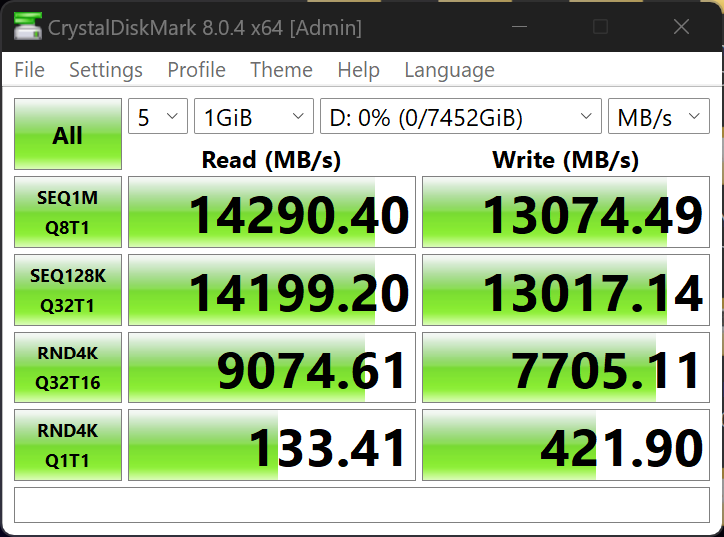
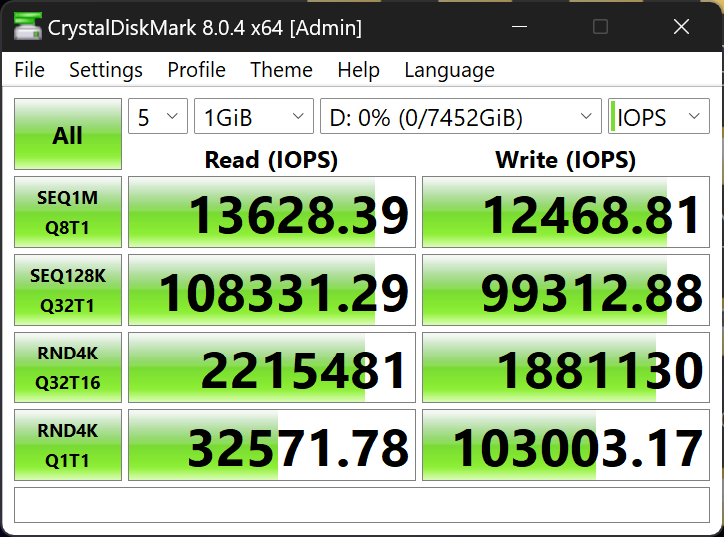
Crystal Disk Benchmark is used to measure read and write performance through sampling of random data which is, for the most part, incompressible. Performance is virtually identical, regardless of data sample so we have included only that using random data samples.
THROUGHPUT
IOPS
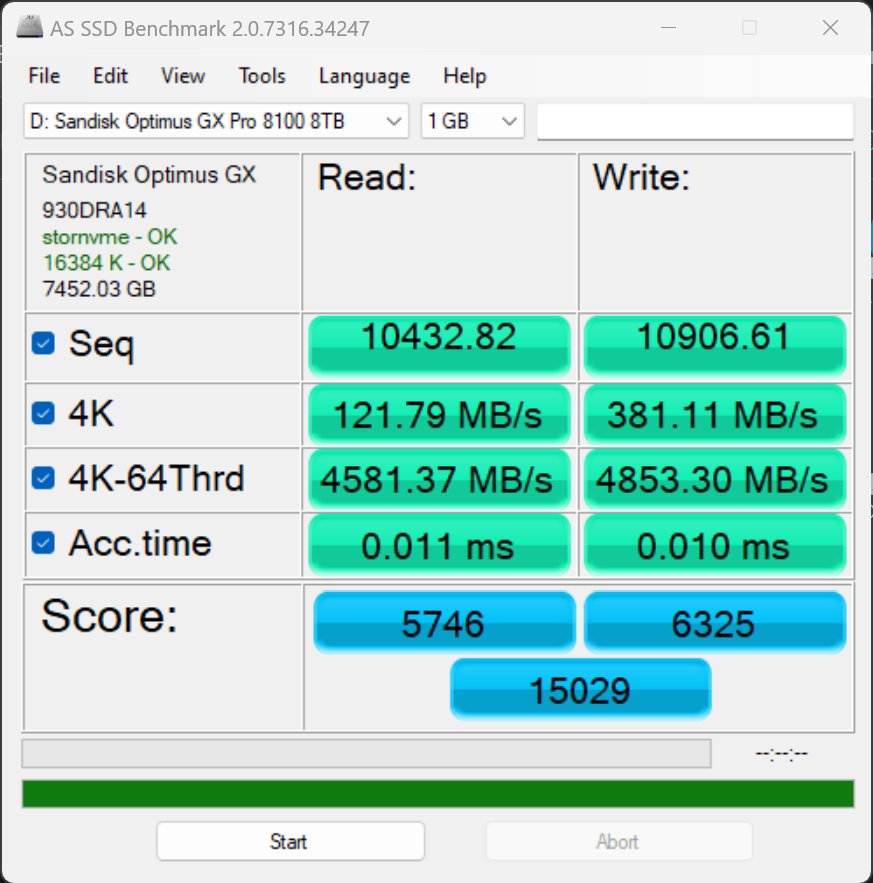
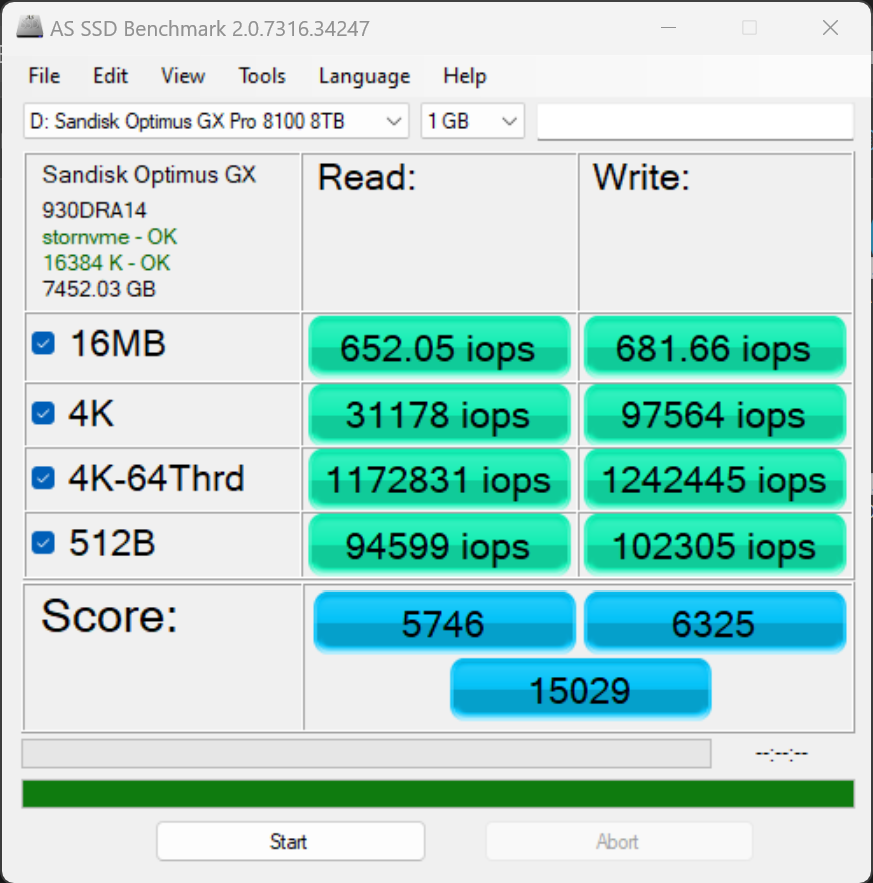
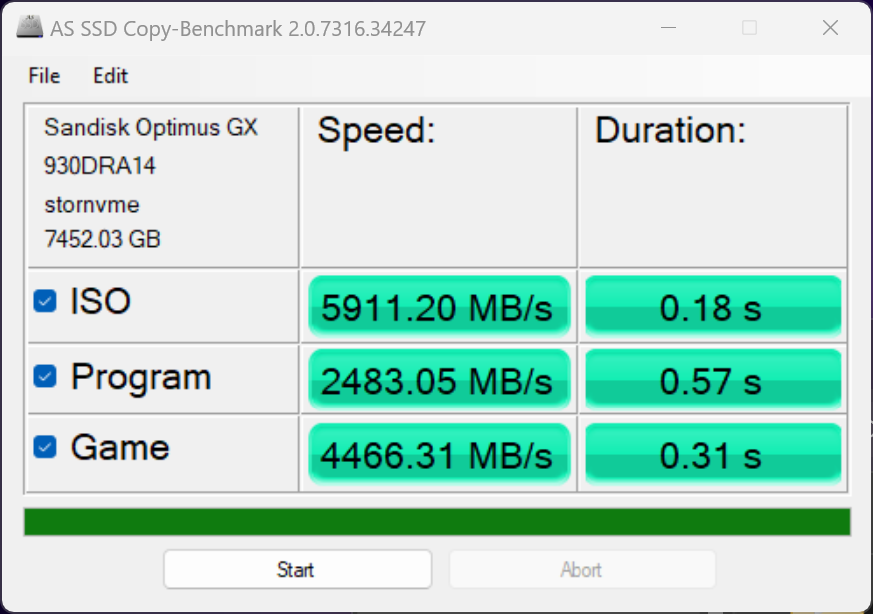
The toughest benchmark available for solid state drives is AS SSD as it relies solely on incompressible data samples when testing performance. For the most part, AS SSD tests can be considered the ‘worst case scenario’ in obtaining data transfer speeds and many enthusiasts like AS SSD for their needs.
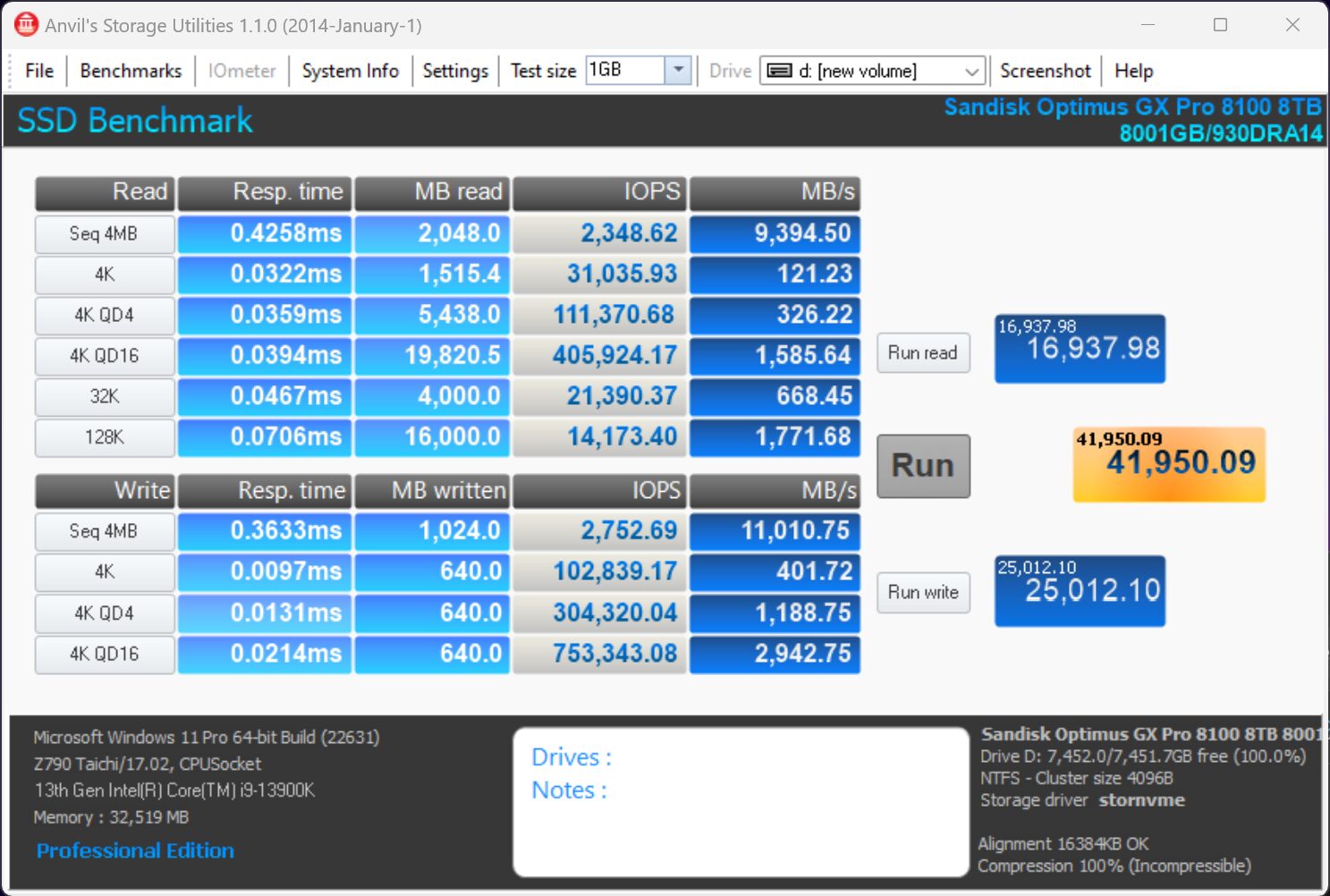
ANVIL STORAGE UTILITIES PROFESSIONAL
Anvil’s Storage Utilities (ASU) are the most complete test bed available for the solid state drive today. The benchmark displays test results for, not only throughput but also, IOPS and Disk Access Times. Not only does it have a preset SSD benchmark, but also, it has included such things as endurance testing and threaded I/O read, write and mixed tests, all of which are very simple to understand and use in our benchmark testing.
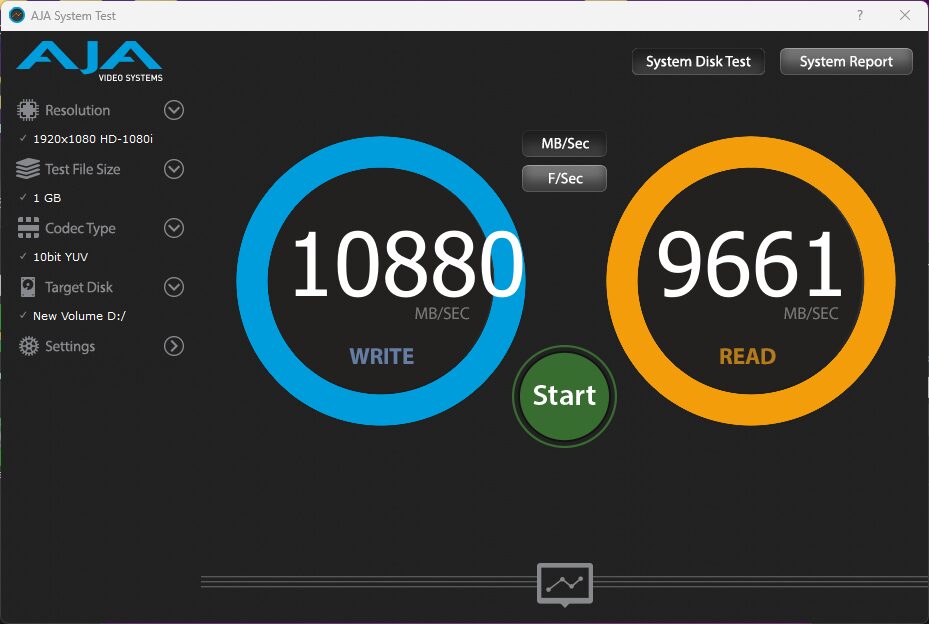
AJA VIDEO SYSTEM DISK TEST
The AJA Video Systems Disk Test is relatively new to our testing and tests the transfer speed of video files with different resolutions and Codec.
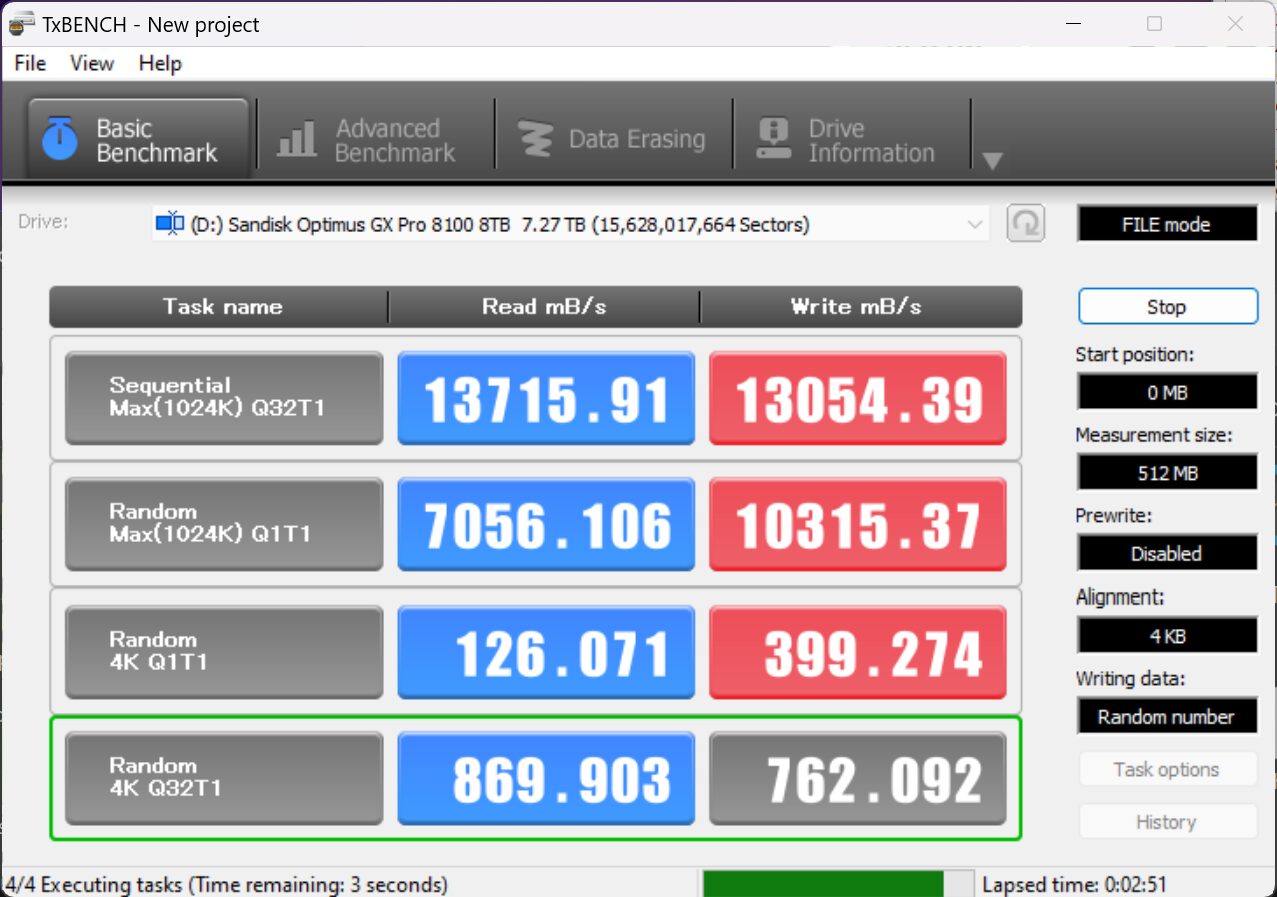
TxBENCH
TxBench is one of our newly discovered benchmarks that we works much the same as Crystal DiskMark, but with several other features. Advanced load benchmarking can be configured, as well as full drive information and data erasing via secure erase, enhanced secure erase, TRIM and overwriting. Simply click on the title for a free copy.
Impressive review of a powerful Gen5 SSD with massive capacity and speed. Do you think 8TB NVMe drives will become more affordable enough for everyday users in the future?
NAND is a cyclical market. We are in a boom, but that boom– and it’s associated high pricing, is showing cracks. Demand will diminish and pricing will return to normal. I bought the sn850x 4TB for $226 USD last year, that might never be the case again, but $379 seems like a reasonable price floor , instead of the current price of $599
The memory and storage crisis will not happen for too long. Once the AI bubble bursts (hopefully by 2028), prices for these will basically crash down back to normal prices or even be cheaper then how they were in 2024.
Same with the GPU crisis during 2021, people thought that this will happen for a long time, but then during mid-2022, prices for GPUs unexpectedly crashed down as well.
Need to tell you something important about this Txbench. Although you said to simply click on its title for a “free copy”, when I clicked on it, this website appears not to work anymore or maybe it is the wrong link. In fact a couple times when I tried, this website even redirected me to a tech support scam and scareware link where I got a false warning that my “Windows system is damaged”, and that I had to call a fake phone number to fix it. It even wanted to download some files. I completely blocked it though and pressed Alt + F4, but other users who might not know many think their system got infected. Because of this, may you please fix the link, or maybe upload a copy of Txbench somewhere else, as Txbench is very useful for even secure erasing SSDs and viewing detailed SMART information status. I could not find any other benchmark utility that could do what Txbench does. Even if you can not though, please still remove the clickable link for Txbench as this website might mislead others to a false scareware website. Thank you so much!
Thank you for your input!