 The SSD Review The Worlds Dedicated SSD Education and Review Resource |

I’d like to say change is coming to the SSD market, but the reality is that it’s already here. Looking back, it’s a bit amusing because long before the current NAND and DRAM shortages, I wondered whether SSD performance would eventually plateau with PCIe Gen4. What I didn’t anticipate, and neither did anyone else, was the memory shortage that would reshape the market. Had we seen that coming, many of us would probably have invested in companies like Micron and other NAND manufacturers.
So, what has become abundantly clear?
First, DRAMless SSDs have become the new standard. This trend began before the shortages, but today’s market has accelerated it for two key reasons. The first is that modern DRAMless SSDs are capable of delivering impressive performance while offering high capacities and strong warranty coverage. The second reason is often overlooked. Very few users actually need anything faster.
The vast majority of consumers would never notice the difference between the fastest and slowest SSDs in everyday use. Outside of specialized professional workloads, most users simply don’t have a practical need for today’s highest-performing, and increasingly expensive, drives. For web browsing, gaming, office work, content consumption, and even general productivity, a well-designed mainstream SSD delivers everything they need.
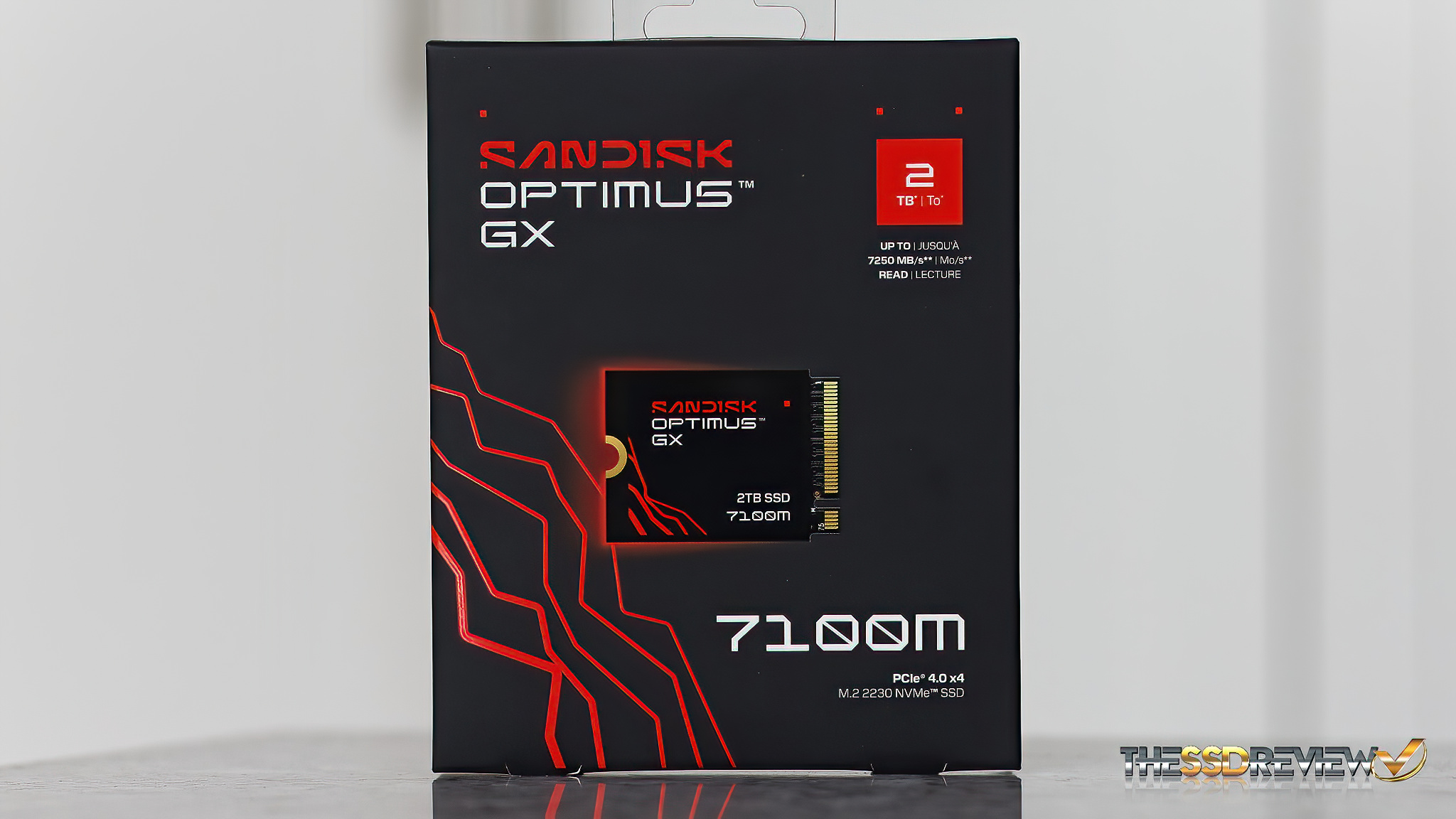
That’s exactly where drives like the SanDisk Optimus GX M7100 Gen4 fit in. It delivers fast performance, generous capacity, and a solid warranty, all in a compact M.2 form factor that is ideal for today’s ultrabooks, gaming laptops, and small-form-factor desktop systems.
Visual comparisons best illustrate just how compact modern storage has become. As you can see below, the SanDisk Optimus GX 7100M Gen4 2TB SSD is visibly smaller than a standard SDXC card, yet it operates several times faster. Measuring just 22mm by 30mm, a tiny footprint known as the 2230 form factor, it delivers blistering transfer speeds exceeding 7GB/s.
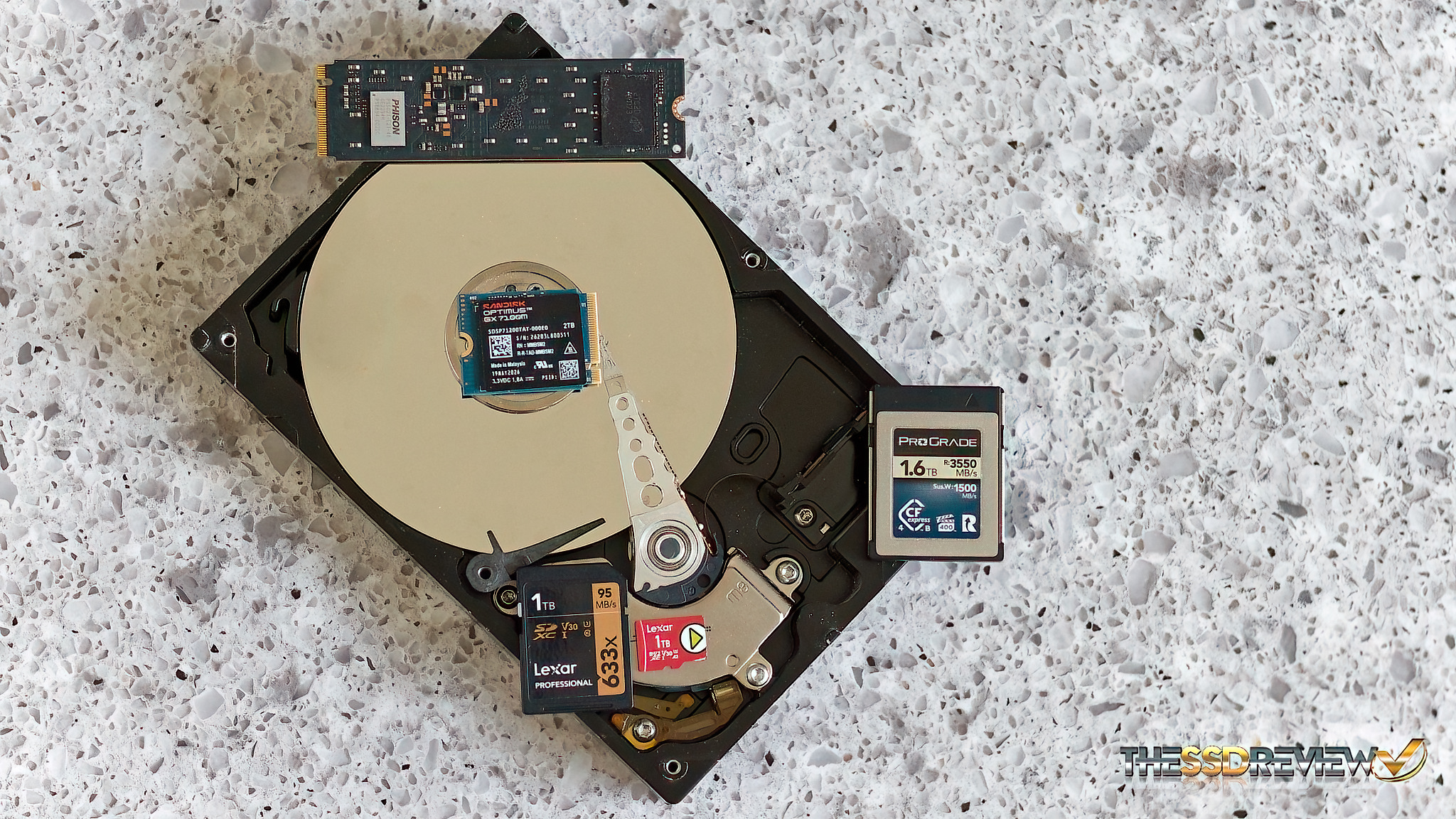
It is mind-blowing that a device weighing a mere 2.8 grams can hold up to 50 million document pages, 300 hours of HD video, 600,000 smartphone photos, or 500,000 MP3s. It feels light-years ahead of the bulky, 1.5-pound 3.5-inch hard drives many of us started with.
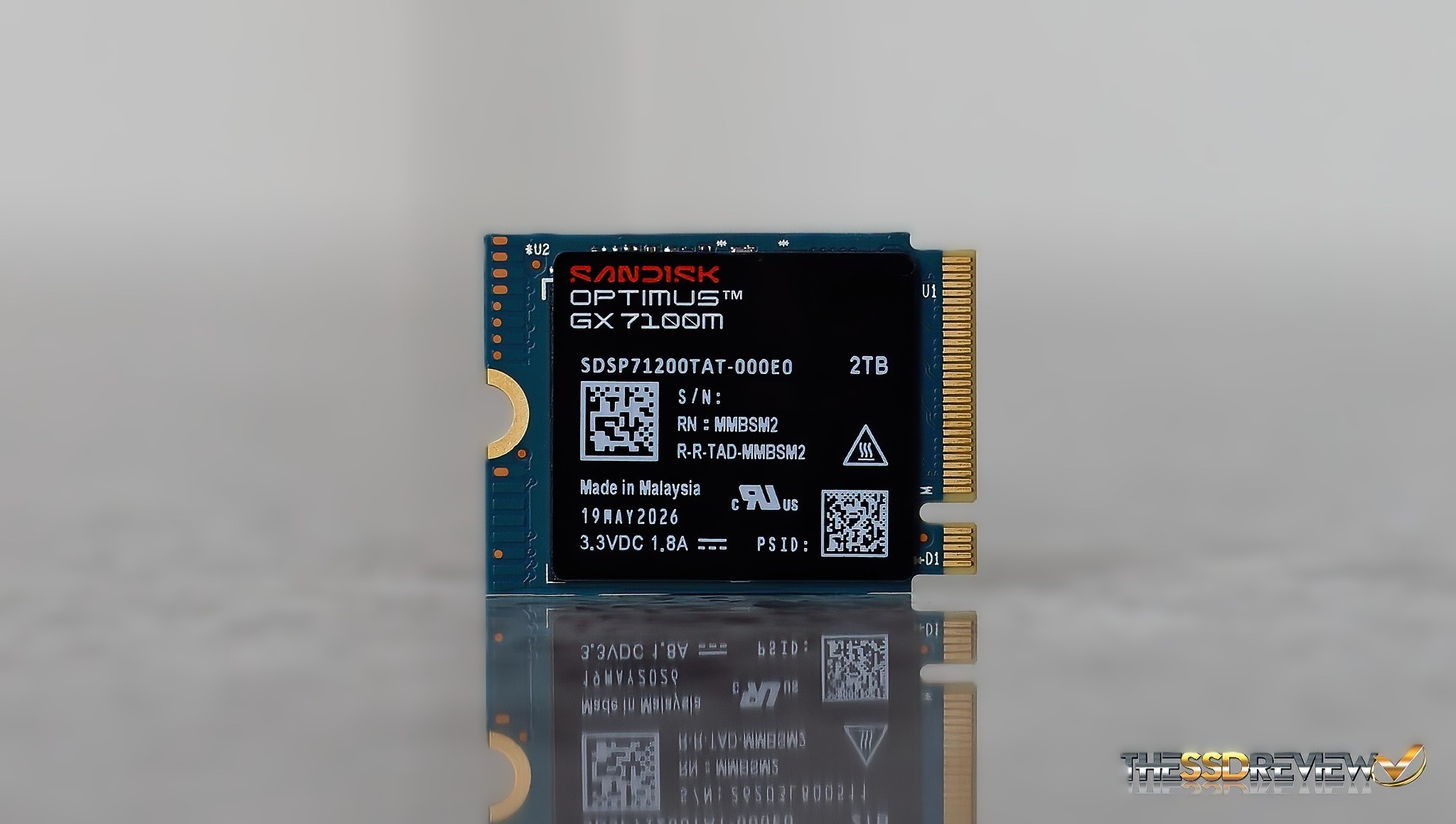
The SanDisk Optimus GX 7100M is a PCIe 4.0 (Gen4) DRAMless 4-channel SSD that is available only in the 2230 form factor. Being DRAMless, one might believe this adds value as we are eliminating the DRAM cache chip in exchange for the Host Memory Buffer (HMB). This means the system uses a tiny portion (typically around 64MB) of your computer’s system RAM to use as a temporary cache, drastically improving drive performance and speed.
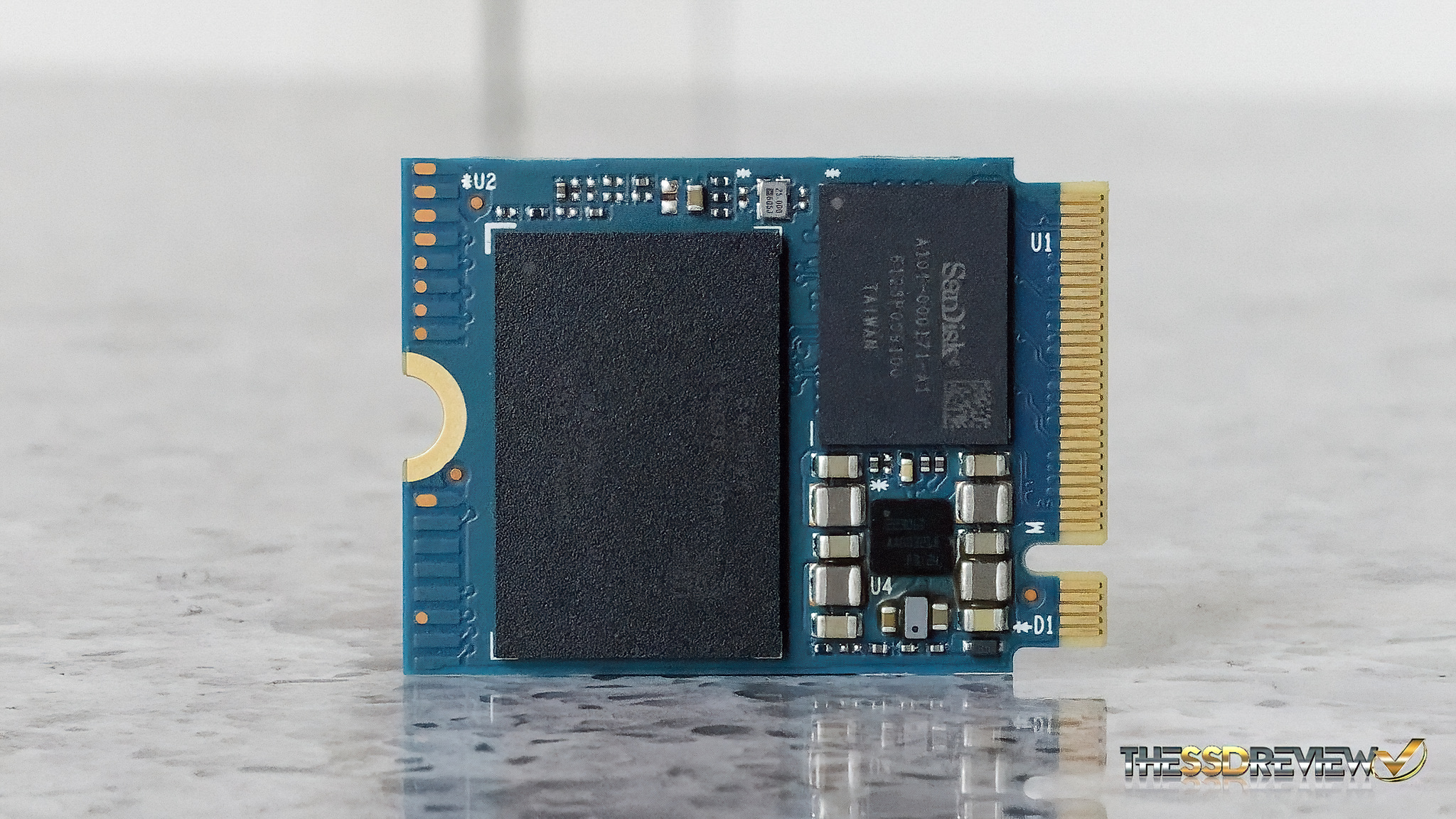
This SSD contains a SanDisk proprietary ‘Polaris 3’ 4-channel DRAMless Gen4 NVMe SSD controller, along with a single piece of SanDisk BiCS8 TLC 3D CBA NAND flash memory with integrated SanDisk nCache 4.0 technology. This single NAND piece is a whopping 2TB in capacity. Performance is identified as up to 7250MB/s read and 6900MB/s write with up to 1300 IOPS.
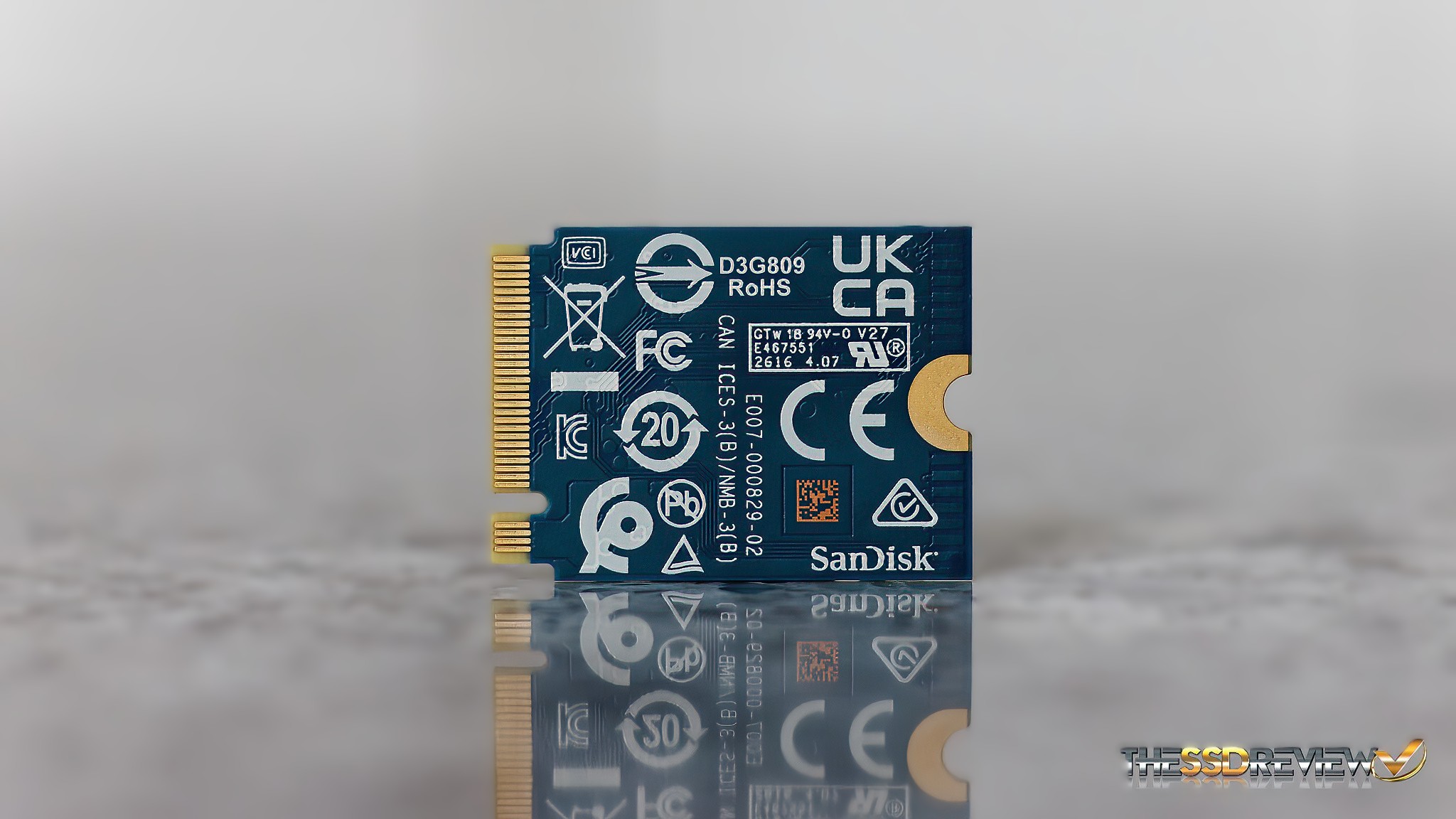
This is also a single-sided SSD and the controller is a of a very power-efficient design, requiring ‘at most’ 4 watts for active power use. This translates to a very high-performing, yet cool storage solution which is ideal for Steam Deck, MSI, Claw, MS Surface or current Dell laptops that only accept 2230 form factor SSDs.
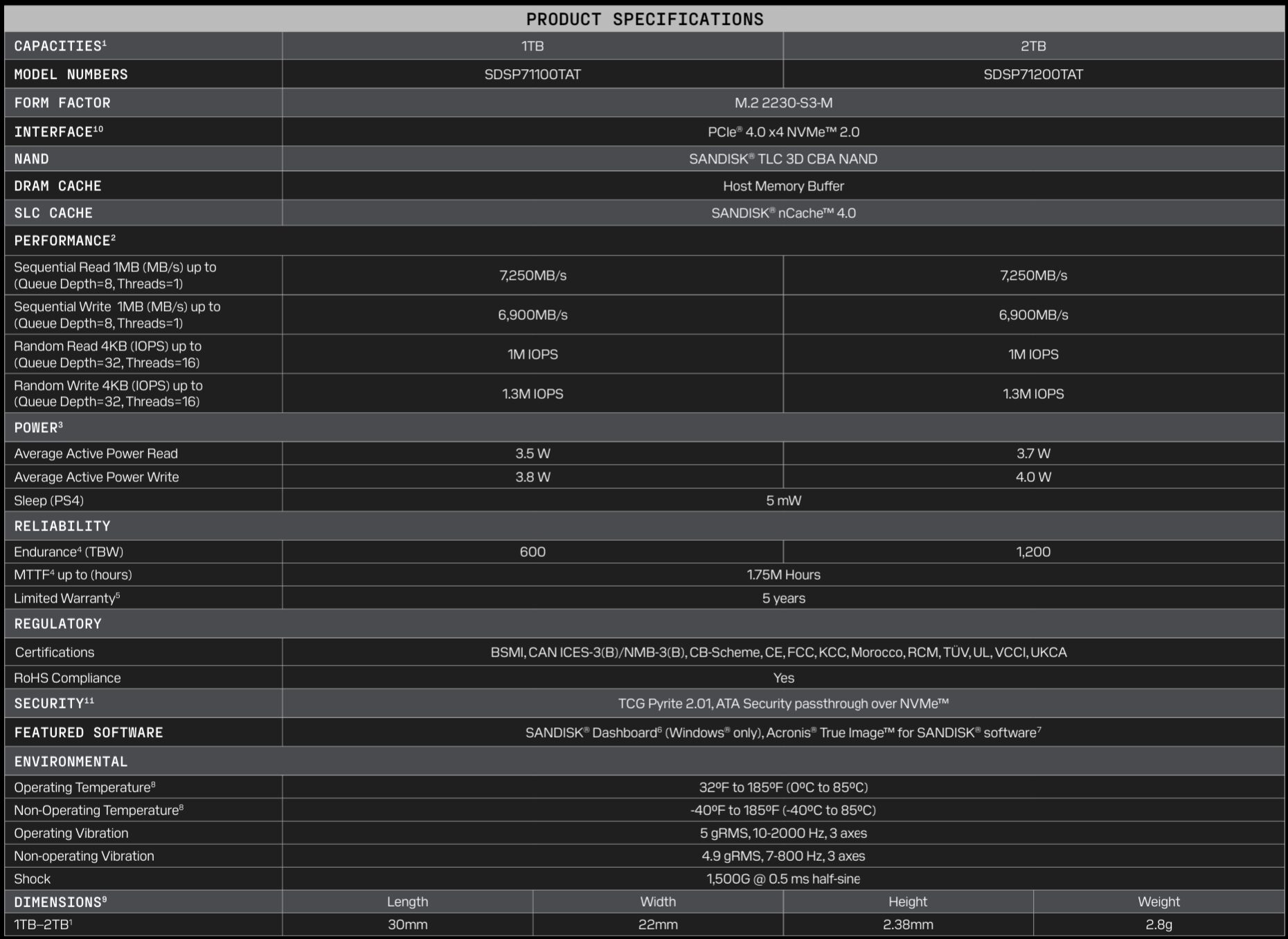
MSRP pricing for the SanDisk Optimus GX 7100M is listed at $414.99 (1TB) and $839.99 (2TB but a quick check on Amazon shows that we can get this SSD for almost half that at $229 (1TB) and $449 (2TB). This SSD comes with a 5-year limited warranty and speaks to 600TBW for the 1TB and double that for the 2TB capacity.