 The SSD Review The Worlds Dedicated SSD Education and Review Resource |

3D MARK STORAGE GAMING BENCHMARK
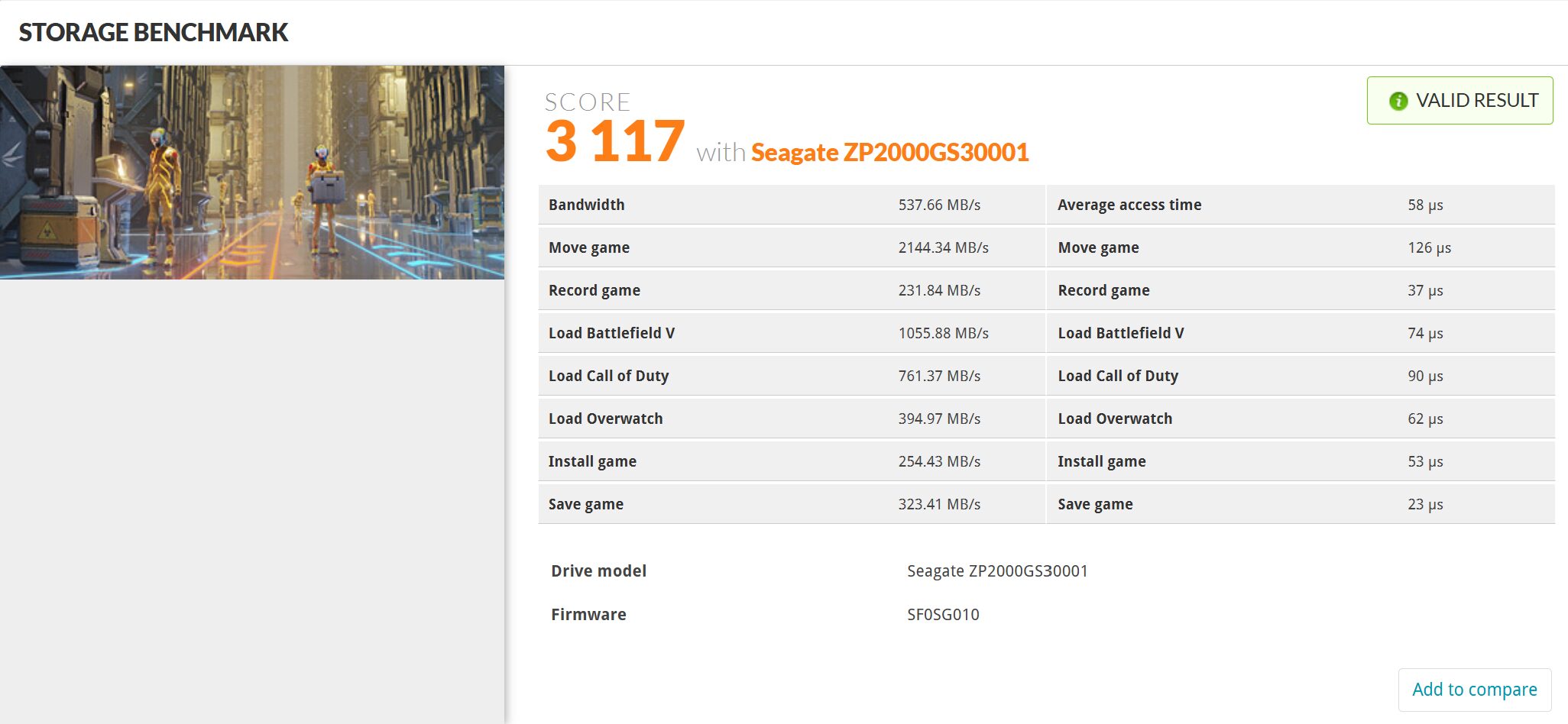
UL Solutions has created a new storage gaming benchmark that we will start to use as new SSDs come in. The 3DMark Storage Benchmark DLC extends 3DMark Advanced Edition with a dedicated component test for measuring the gaming performance of SSDs and other storage hardware. It supports all the latest storage technologies and tests practical, real-world gaming performance for activities such as loading games, saving progress, installing game files, and recording gameplay video streams.
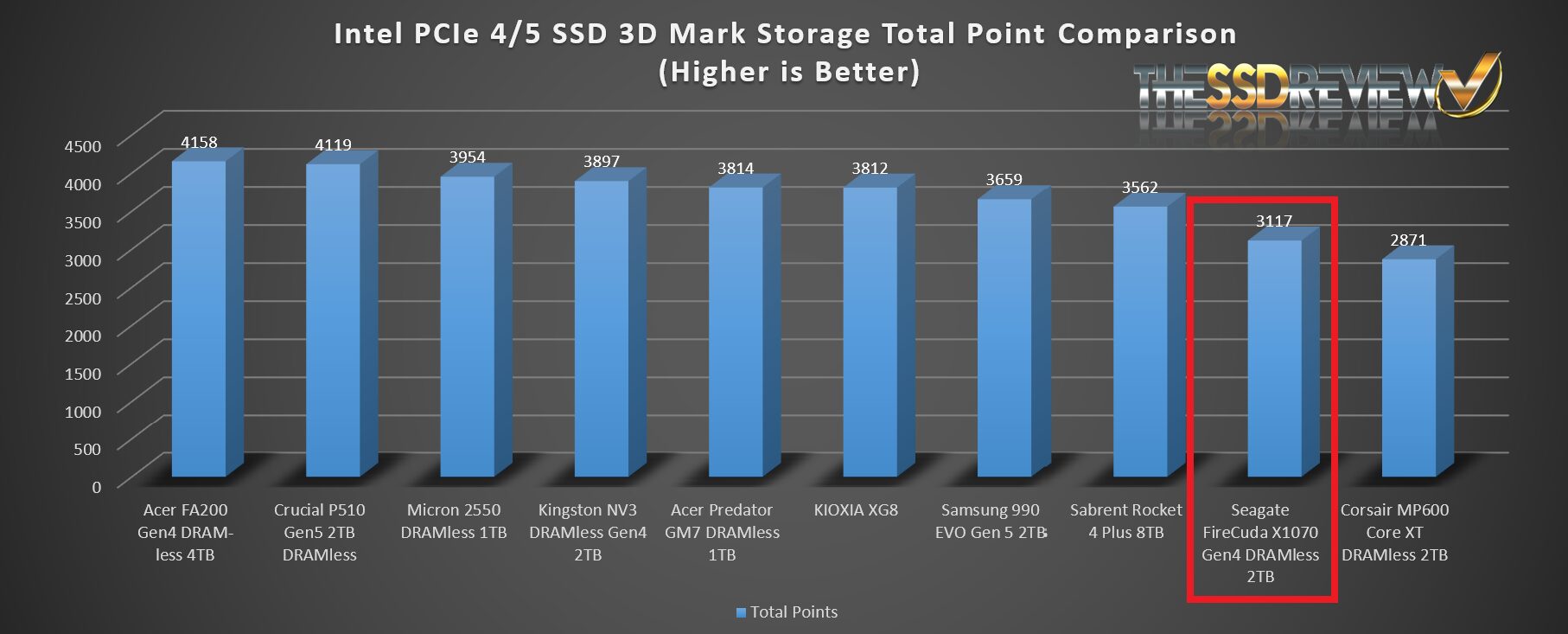
The Seagate FireCuda X1070 SSD placed in the bottom third of all SSDs tested to date. This is not a ‘best of’ chart, but rather a chart which places the FireCuda X1070 SSD amongst its peers.
3D MARK MS DIRECT STORAGE FEATURE TEST
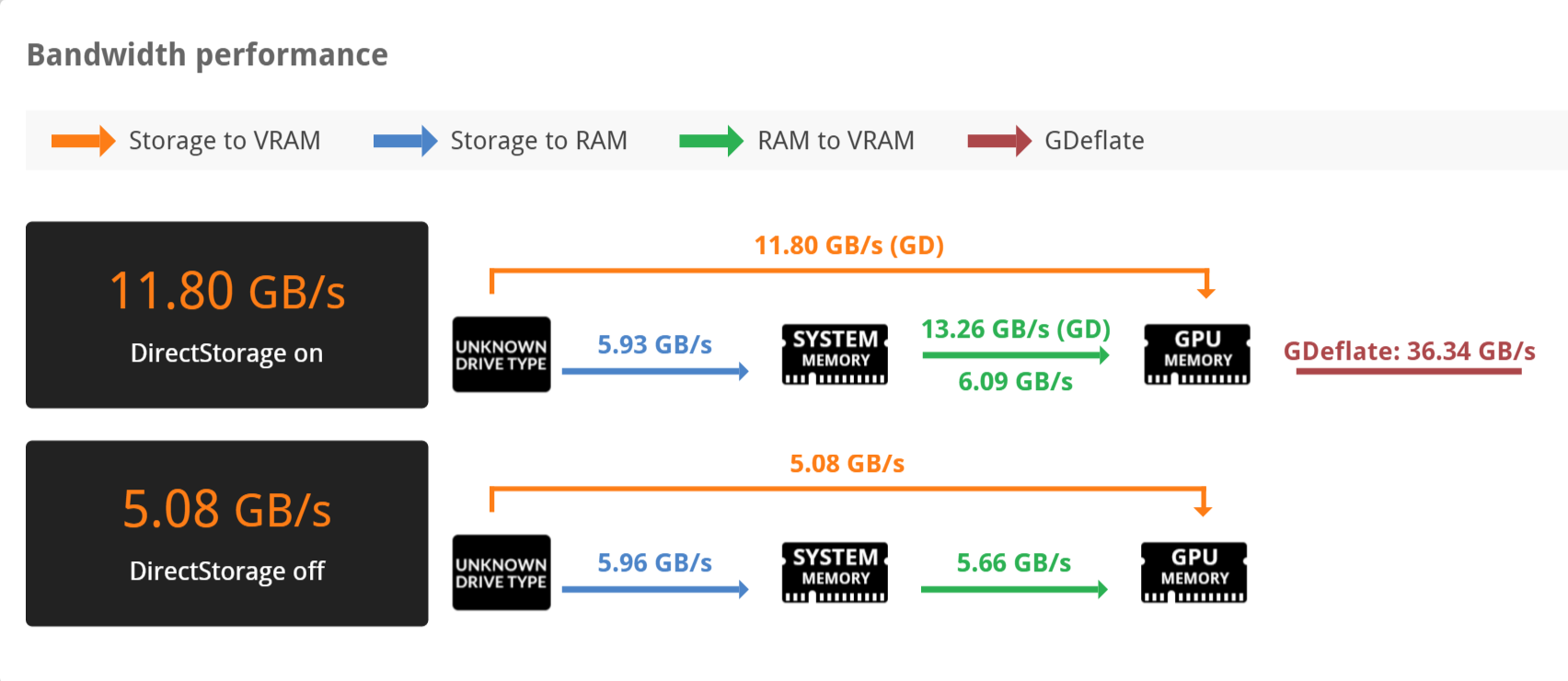
As our Seagate FireCuda 2TB SSD is MS DirectStorage compatible, we thought we might take advantage of the 3DMark DirectStorage Feature Test and see how this SSD fared. MS DirectStorage, in very basic terms, allows direct transfer of data from your SSD storage directly to your GPU, eliminating its historical necessary passage from the SSD through the CPU to RAM, back through the CPU and finally to the GPU VRAM. This is, for the most part at this time, intended on faster game load times,reducing CPU overhead and providing more detailed graphics.
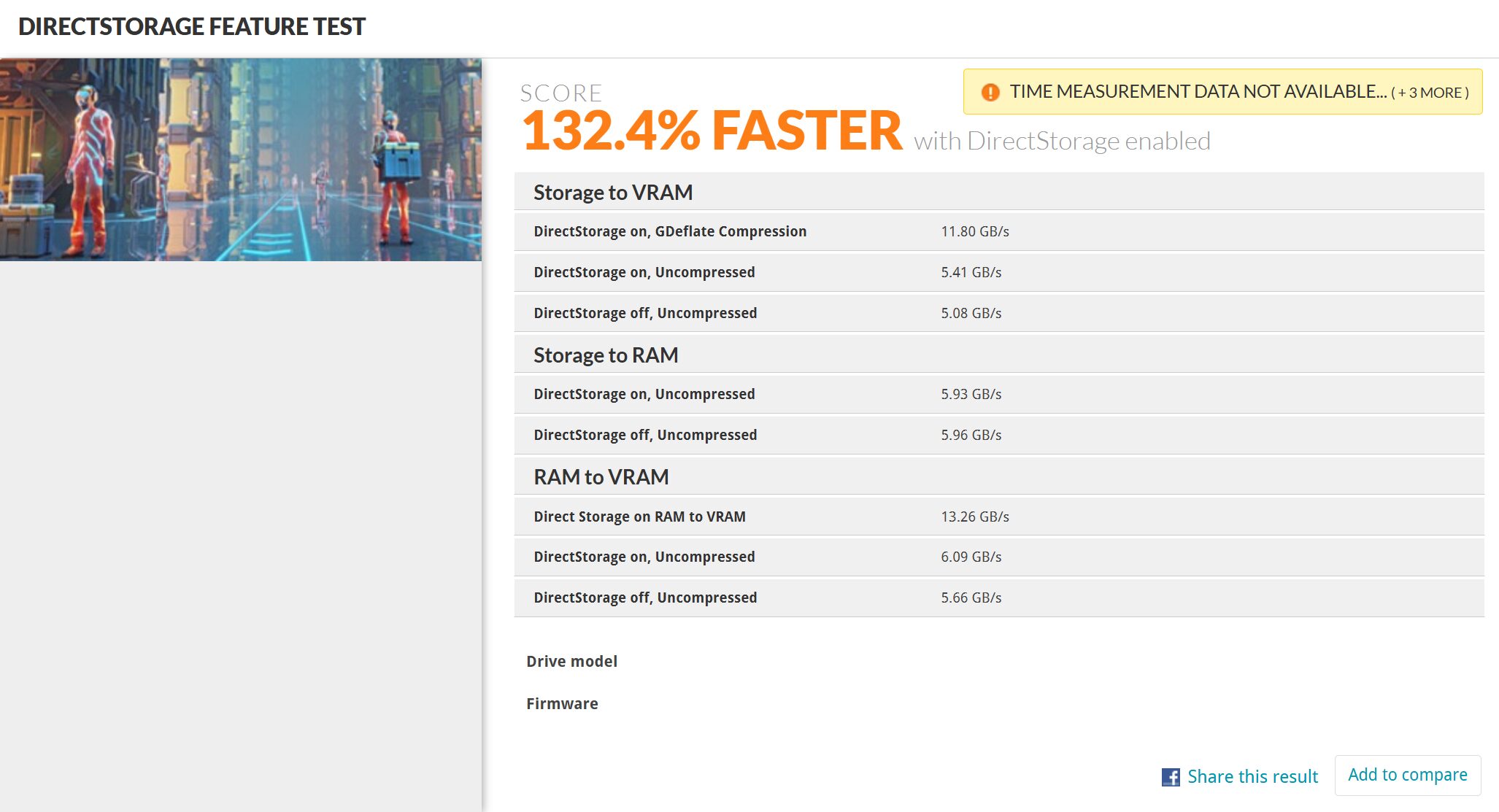
In our testing, data transfer achieved a 132.4% faster transfer of data than with MS DirectStorage disabled.
REPORT ANALYSIS AND FINAL THOUGHTS
As a rule, if I don’t have something positive to say, I often choose not to say anything at all. Having said this, The SSD Review is committed to providing honest and unbiased evaluations of the products we receive. We believe it is our responsibility, especially when a product is already available for purchase, to publish our findings, whether they are favorable or not.
Unfortunately, this is not a positive review, and the concerns begin with performance. We are puzzled by Seagate’s decision to introduce a PCIe Gen4 SSD at this stage of the market, particularly when Tenafe already offers a Gen5 controller.
The reality is that the Tenafe TC2201 Gen4 SSD controller did not make a strong first impression. Our initial concern arose when we discovered that it uses the older NVMe 1.4 protocol. More importantly, its performance in one of the most critical, yet often overlooked storage metrics, random 4K Q1T1 throughput, was disappointing. The FireCuda X1070 achieved just 76 MB/s in this test, roughly half the performance delivered by most competing SSDs today, regardless of whether they use TLC or QLC NAND. This was consistent through several different benchmarks with two separate X1070 SSDs tested.
In our view, random 4K Q1T1 performance is particularly important because it directly impacts the responsiveness of everyday tasks, including system boot times, application launches, and the handling of countless small files. Unsurprisingly, this weakness became evident throughout our benchmark testing, where the Seagate FireCuda X1070 consistently ranked in the bottom third of the comparison group. While some growing pains may be expected from a lesser relied upon controller, the overall results remain difficult to overlook.
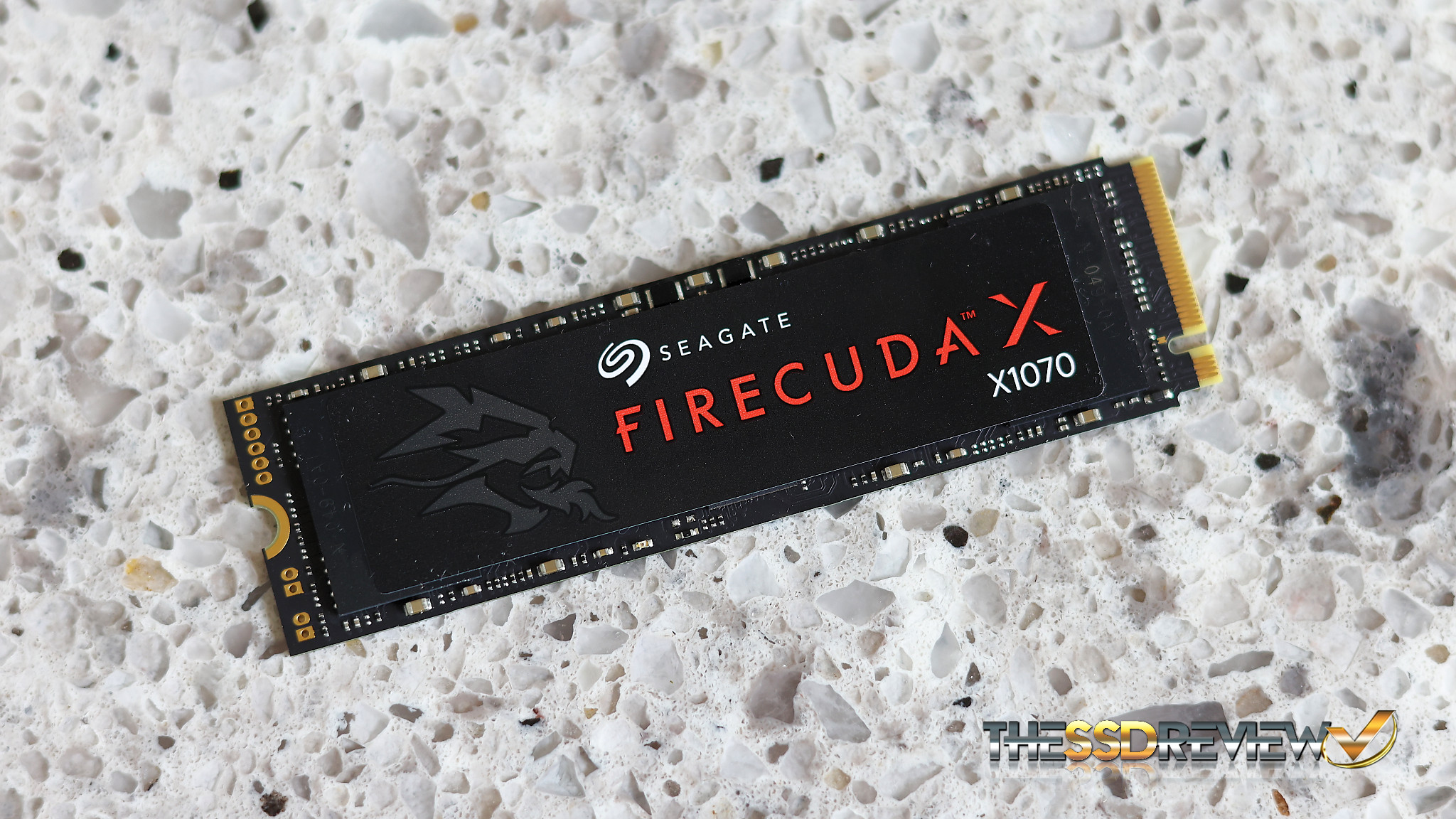
Another significant concern is pricing. Gen4 DRAMless SSDs did not show the popularity that we see with Gen5 SSDs, especially when using QLC NAND. The Seagate FireCuda X1070 is currently positioned well above competing SSDs in its class,,as well as that of Gen5, making its value proposition difficult to justify. We have already compared it against the highly regarded Samsung 9100 Pro, but the issue becomes even more apparent when considering Seagate’s own marketing message, which describes the drive as a “high-performance M.2 internal SSD storage for gamers without the premium price tag.” One of the traditional advantages of DRAMless SSDs is lower manufacturing cost, as they eliminate the need for a dedicated DRAM cache chip. Unfortunately, that expected cost savings does not appear to be reflected in the FireCuda X1070’s market pricing.
As we conclude this review, it remains difficult to understand Seagate’s decision to launch a new SSD based on a controller that, at least in this first implementation, delivers underwhelming performance. This is particularly surprising given the company’s historically strong relationship with Phison and its proven controller ecosystem. In fact, one could argue that Seagate may have been better served by moving directly to a Gen5 solution using the Phison E31T controller, potentially achieving both stronger performance and a more compelling marketing position.
The launch also raises broader questions about Seagate’s long-term SSD strategy. A quick look at the company’s recent business performance and management decisions suggests that its greatest strengths continue to lie in traditional hard drive technology rather than flash storage. With NAND flash pricing remaining volatile, Seagate may ultimately benefit more from increased demand for high-capacity platter-based storage than from competing in the increasingly crowded SSD market.
Perhaps this is simply an isolated product misstep. Or perhaps it reflects a larger strategic direction for Seagate’s storage business. Time will tell. As Seagate CEO Dave Mosley recently suggested at a J.P. Morgan conference, the company’s future opportunities may be more closely tied to its leadership in hard drive technology than to the flash storage segment.
CHECK SEAGATE FIRECUDA XX1070 PRICING AT AMAZON