The SSD Review The Worlds Dedicated SSD Education and Review Resource |


CRYSTAL DISK BENCHMARK VER. 8.0.4 x64
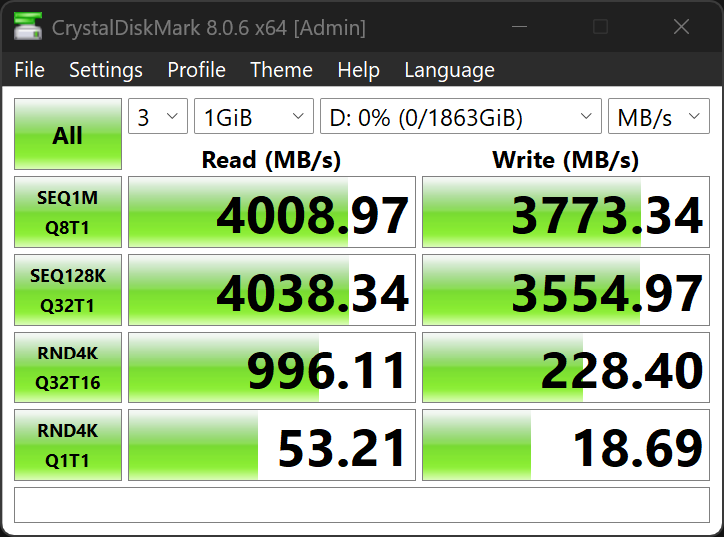
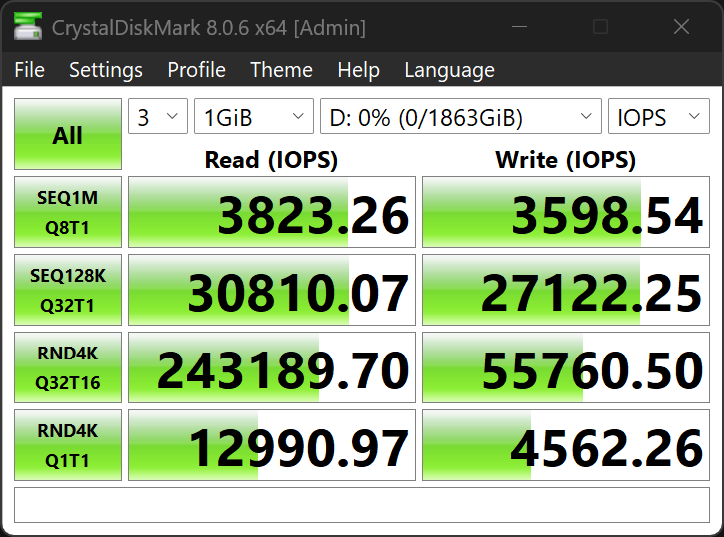
Crystal Disk Benchmark is used to measure read and write performance through sampling of random data which is, for the most part, incompressible. Performance is virtually identical, regardless of data sample so we have included only that using random data samples.
THROUGHPUT
IOPS
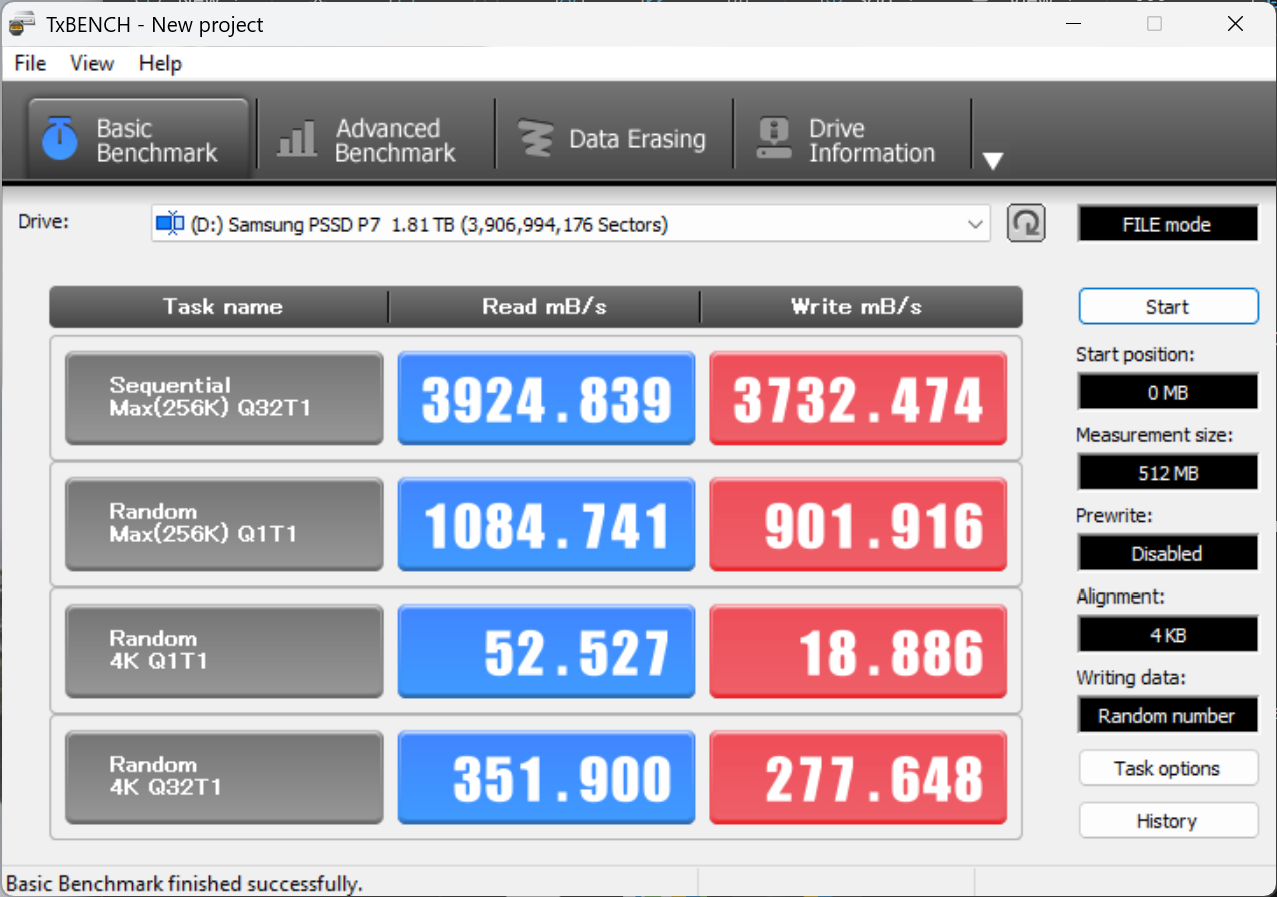
TxBENCH
TxBench is one of our newly discovered benchmarks that we works much the same as Crystal DiskMark, but with several other features. Advanced load benchmarking can be configured, as well as full drive information and data erasing via secure erase, enhanced secure erase, TRIM and overwriting.
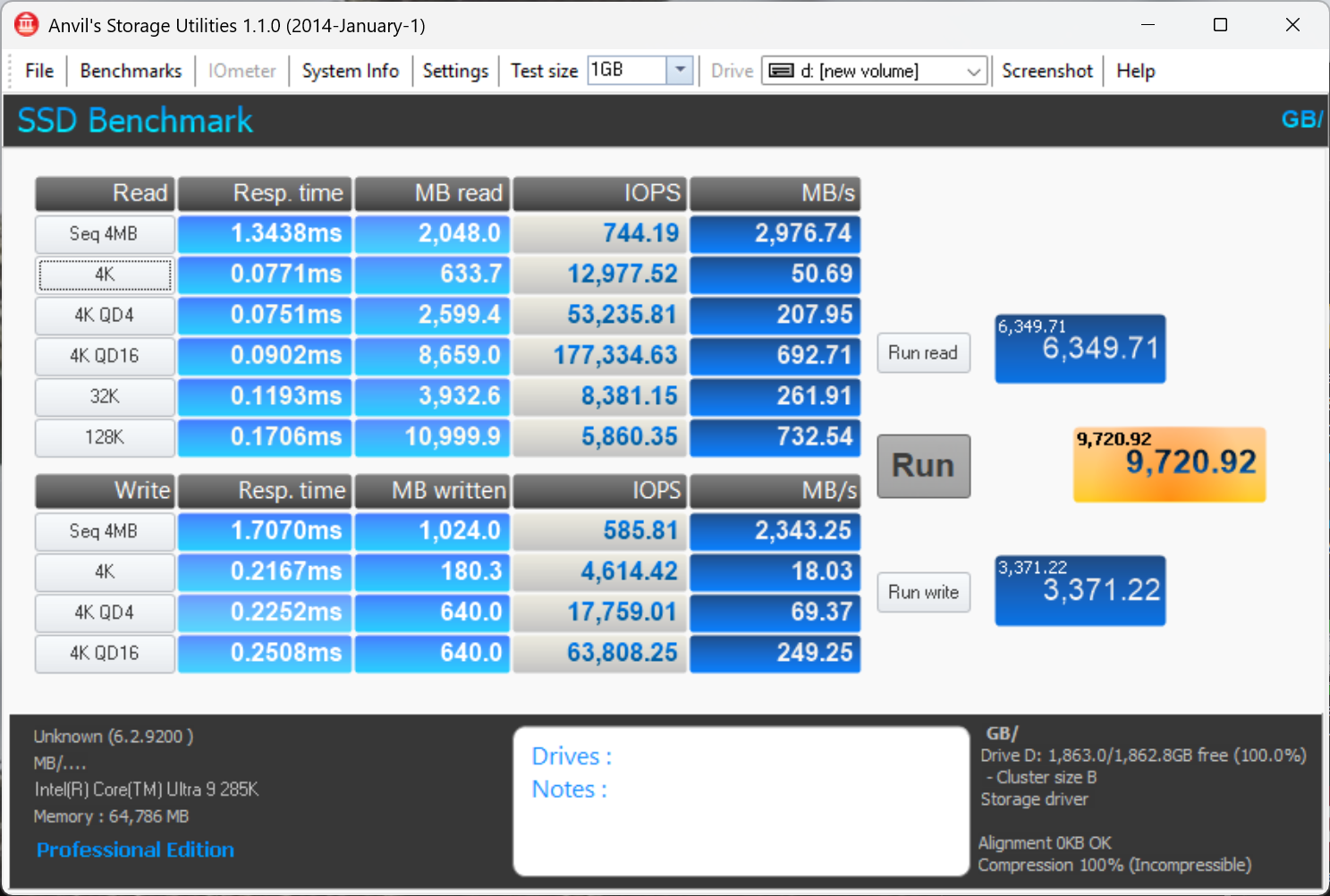
ANVIL STORAGE UTILITIES PROFESSIONAL
Anvil’s Storage Utilities (ASU) are the most complete test bed available for the solid state drive today. The benchmark displays test results for, not only throughput but also, IOPS and Disk Access Times. Not only does it have a preset SSD benchmark, but also, it has included such things as endurance testing and threaded I/O read, write and mixed tests, all of which are very simple to understand and use in our benchmark testing.
SUSTAINED WRITE PERFORMANCE
In this benchmark, we created a 391GB 8K file and transfered it onto the Samsung P7 in order to validate its sustained performance.
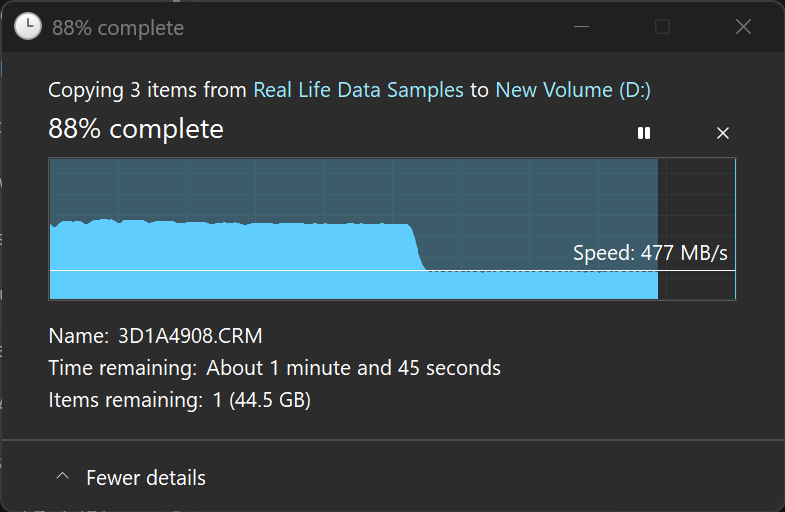
Our transfer test validated that the entire file was transfered at a sustained rate of just over 1GB/s for the first half of the test, then dropping to a steady 477MB/s. This is where things differ from the Samsung Portable SSD P9.
REPORT SUMMARY AND FINAL THOUGHTS
It is not often that we see a manufacturer market a consumer and professional version of a product as we have with the Samsung Portable SSDs P7 and P9. As we have shown earlier, the price difference is somewhere in the area of $100 for siimilar capacities. It is a great thing to be able to demonstrate how these SSDs differ and that is with sustained data transfers. Take a look at this result from the Samsung P9 we tested a few weeks back:
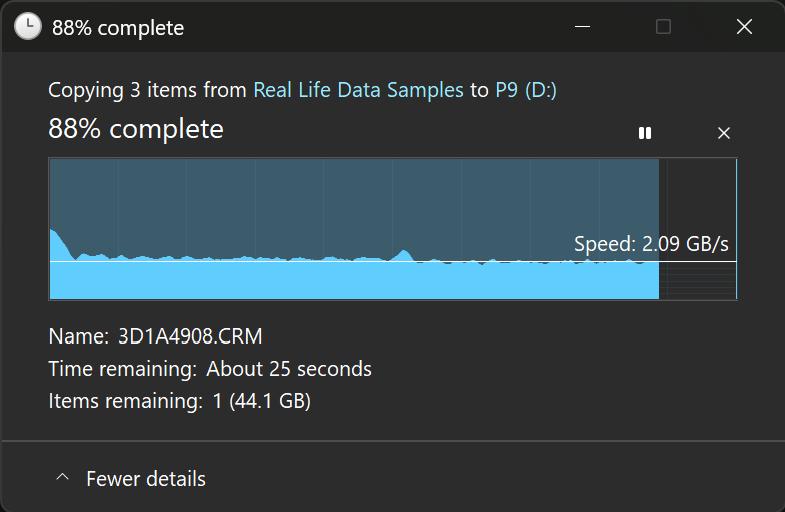
The P9 has a sustained write speed of 2GB/s where the consumer version P7 has a sustained write speed half of that which drops sharply at one point to 477MB. The question for potential buyers is what exactly is the intended use and does the longer transfer speed of the P7 (less than 30 seconds in our scenario) affect one at all? Both SSDs have a 5-year limited warranty but I might also consider the value of the information I was storing on this device.
In reaching a final opinion of the Samsung Portable SSD P7, it is evident that this is a very well constructed external SSD, capable of up to 4GB/s data transfer and it comes with a 5-year warranty. Might it be worth the financial jump to the P9? As a consumer, this SSD would suffice well for their needs we think. Silver Seal!
CHECK SAMSUNG PORTABLE SSD P7 PRICING AT AMAZON