 The SSD Review The Worlds Dedicated SSD Education and Review Resource |
It is not often that a new SSD brings alot to the table. Sure, many might introduce new memory, or a new SSD controller, but it is rare that we are introduced to an SSD that literally changes the landscape of what is possiible with flash media. The Micron 2600 Gen 4 QLC SSD we are testing today does just that, and then more. The 2600 is a DRAMless SSD debuting Micron’s own G9 276-layer 4-bit QLC NAND and that G9 NAND is paired with Phison’s latest PS5029-E29 4-channel Gen4 DRAMless SSD controller. But that’s only the start of things…
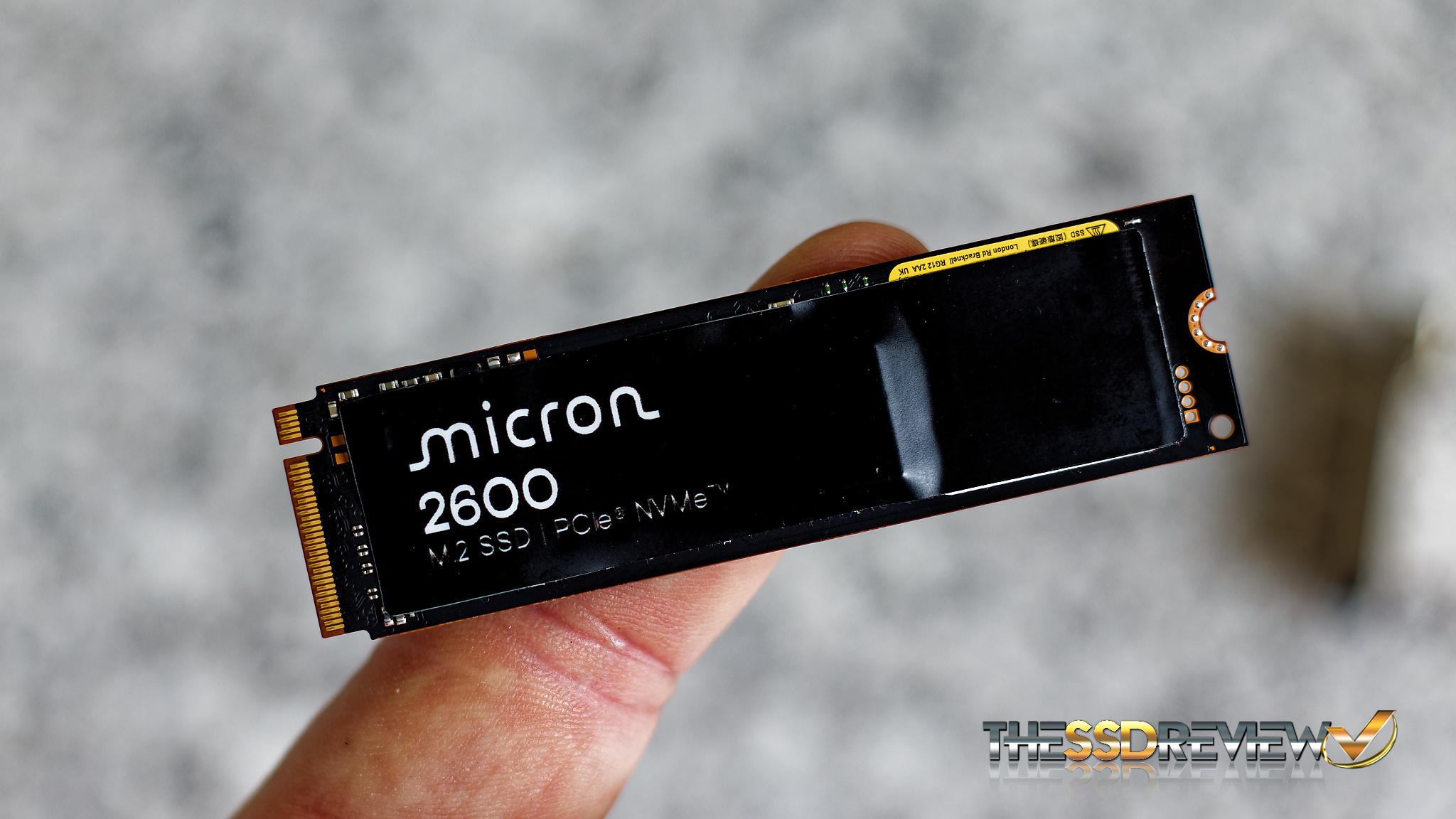
The Micron 2600 is the first to demonstrate a very new software code within the SSDs firmware; Advanced Write Technology (AWT). AWT does something we have never seen prior but will no doubt be seeing in the near future, whether it be in client, enterprise or retail SSDs. What AWT does is it monitors incoming data being written to the SSD and, depending on that datas properties, it can alter the way that QLC NAND operates and save the data in SLC, TLC or QLC mode. Our latest article, ‘Understanding SLC, MLC, TLC, and QLC NAND Flash‘ from our series, Learning to Run with Flash 2.0, describes each NAND type in detail, but lets just say that SLC data transfer is optimized for speed, TLC for speed and capacity, while QLC is optimized for maximum capacity.
The beauty of AWT is that, depending on the PCs present operations, it can adjust the size of the data stored in SLC and TLC mode, and even move that data to QLC in times of low system operations. Let’s make it real simple. Consider water moving into three buckets. The SLC bucket is the smallest capacity followed by a larger TLC bucket, and finally the largest QLC bucket. Just as water would fill the SLC bucket quickly, data is written in SLC mode at the fastest possible speeds. When this bucket is filled, the water then fills the TLC bucket, or data written in TLC mode still very quickly but with more capacity. As the SLC and TLC buckets are filled, or later when the water flow has decreased, the SLC and TLC buckets move their water to the QLC bucket. This would be SLC and TLC mode moving their data to QLC mode as they fill, or later at times when PC operations are not as pressing. Easy enough to comprehend? Check out Micron’s AWT Technical Brief here!
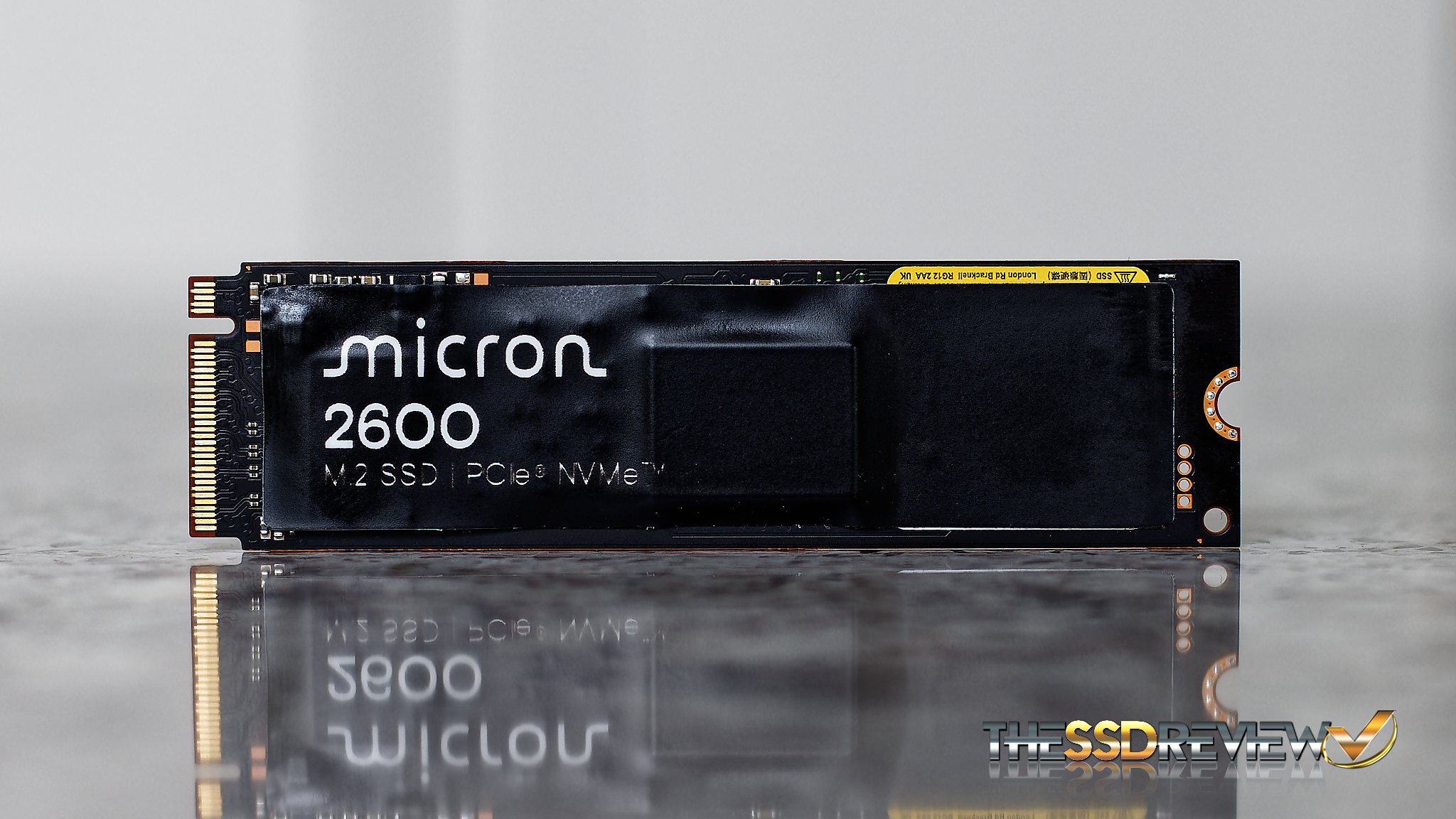
So… Micron has introduced to the world their newest G9 276-layer QLC NAND flash memory paired with Phison’s newest E29T Gen4 DRAMless 4-channel SSD controller, as well as Micron’s brand new Advanced Write Technology (AWT). This entire package fits into the Micron 2600 Gen 4 QLC DRAMless SSD which provides the best performance we have ever seen from QLC NAND, performance right up there with TLC based SSDs… and it is not available to the public. True fact. Well kind of. This is a client SSD available to manufacturers and you can bet it is going to become an extremely popular SSD integrated into PCs, laptops and ultras… and most will never know of this amazing technology in their systems as it is simply one integrated component.
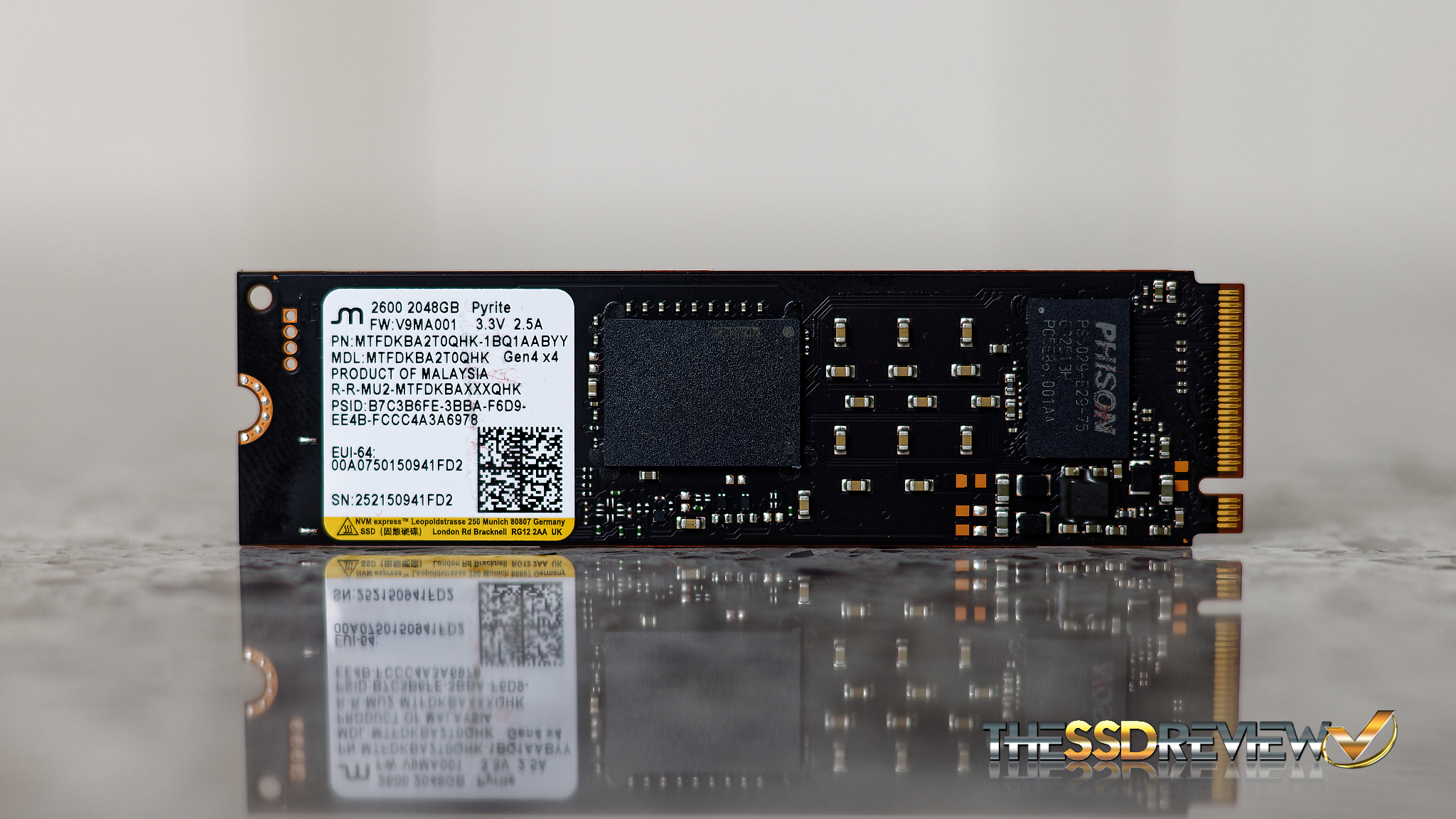
This photo depicts why the Micron 2600 is so special. It contains only two chips; the 2TB capacity Micron G9 276-layer QLC NAND flash chip on the left and Phison PS5029-E29 Gen4 DRAMless 4-channel SSD controller on the right. This is a single sided SSD which will be offered in 512, 1 and 2TB capacities (all single chip) as well as M.2 sizes of 2280 (80mm long), 2242 (42mm long) and 2230 (30mm long)… all offering exactly the same capacity and speeds. The Micron 2600 is also capable of an incredible 3.6GB/s which is the fastest I/O rate in the industry for client SSDs. There is something that should become obvious with the above photo. There is definitely better power efficiency with a 2-chip design which means significantly lower temps. After all, it is also single-sided.
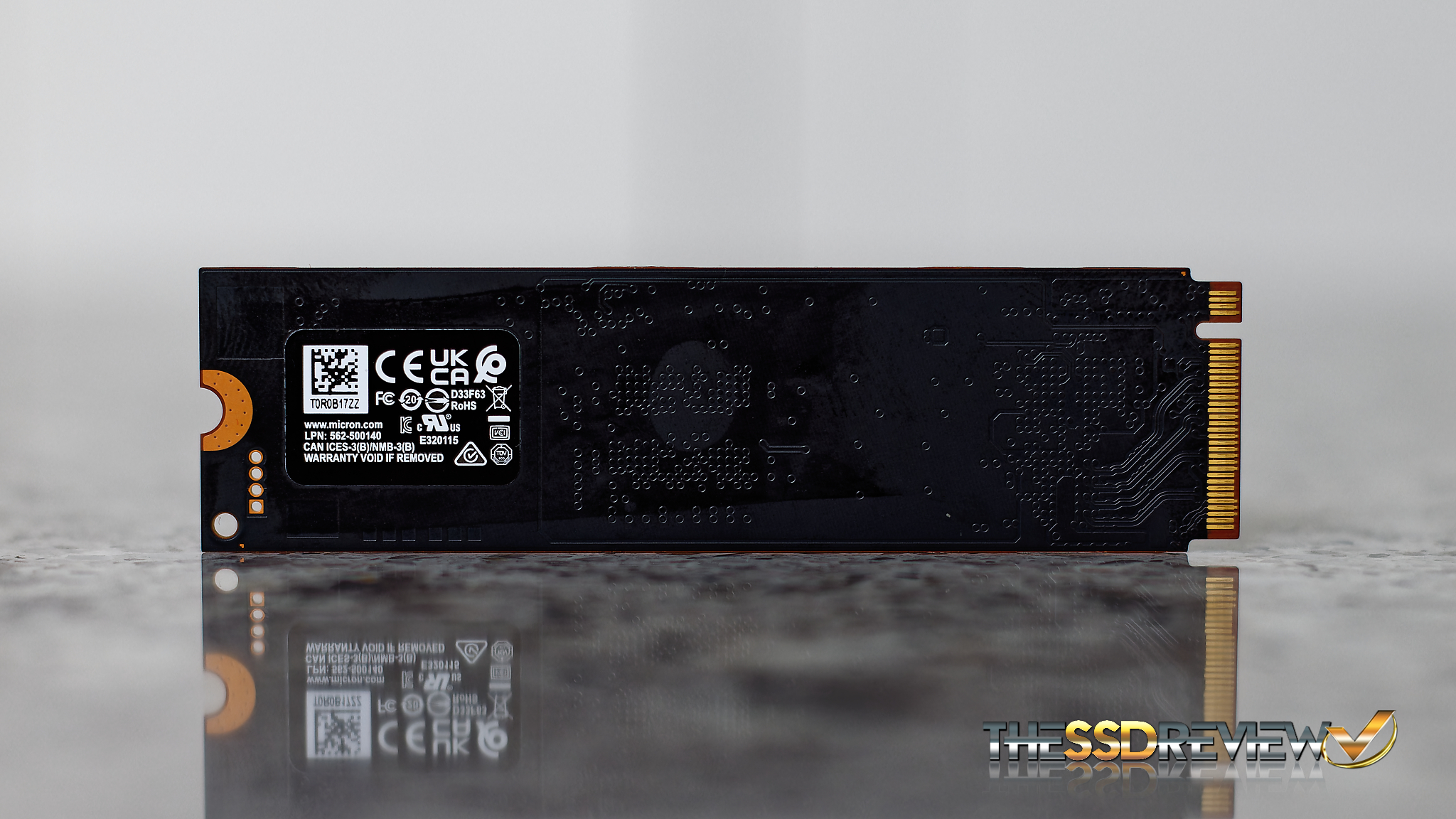
The Micron 2600 is a PCIe 4.0 (Gen4) SSD that uses the latest NVMe 2.0d SSD protocol. It’s peak performance is 7.2GB/s read and 6.5GB/s write with over a million read and write IOPS but this is specific to the 2TB version and speeds drop as capacity is reduced. Micron’s own chart relates the 2600 features rather well:
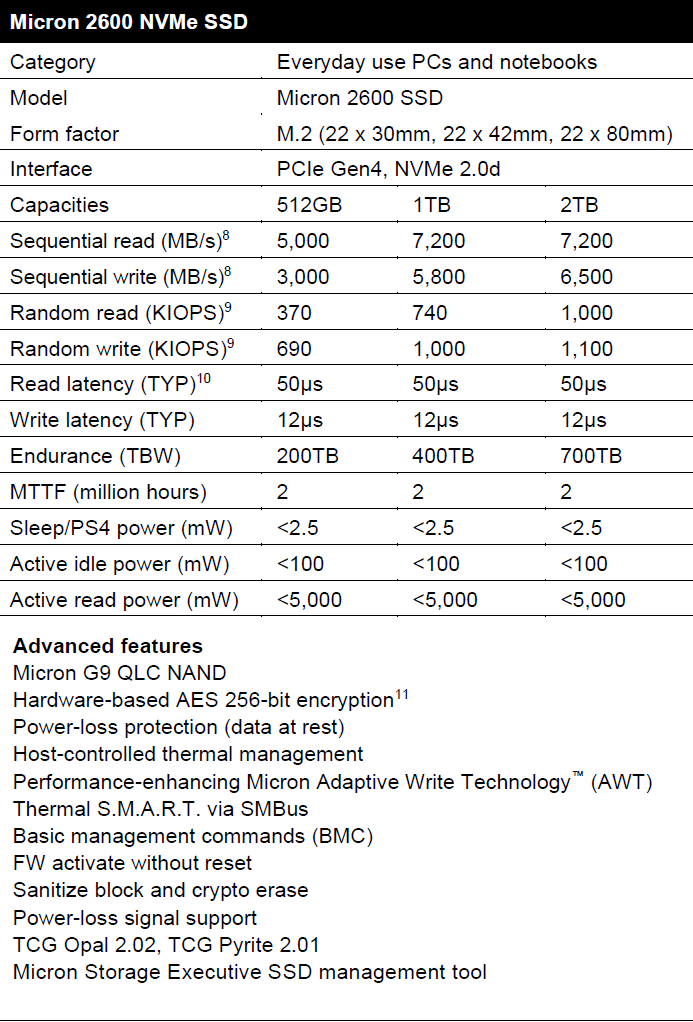
Again, this is a very value oriented SSD but we see features such as AES 256-bit hardware based encryption, power loss protection, MS DirectStorage compatibility as well as TCG Opal 2.02 and TCG Pyrite 2.0.
So does the Micron 2600 QLC Gen4 SSD really compete with TLC Gen 4 based SSDs? Let’s take a look…