 The SSD Review The Worlds Dedicated SSD Education and Review Resource |
TEMPS, SUSTAINED WRITES AND TRUE DATA TESTING
TEMPERATURES
Two characteristics that became very important with the introduction of CFexpress as a mainstream storage medium were temperature and sustained write speeds. We measure temperature by monitoring and updating a Crystal DiskInfo Benchmark while a large 85GB 8K file transfer is being performed. This is the extreme of what one might see in this environment. An important aspect to remember is that the temperature results we obtain are the extreme. They are the hottest the card got during any period of our testing which was constantly monitored. It does not speak to the median or typical temperatures one might expect which would be around the low 30°C mark.
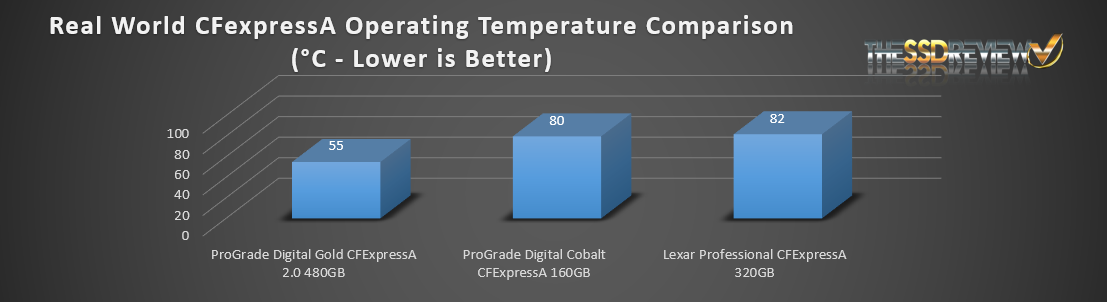
The ProGrade Gold CFExpress Type A 2.0 480GB Memory Card is, by a long shot, the coolest card we have tested to date, be it Type A or B Memory Cards.
SUSTAINED WRITE PERFORMANCE
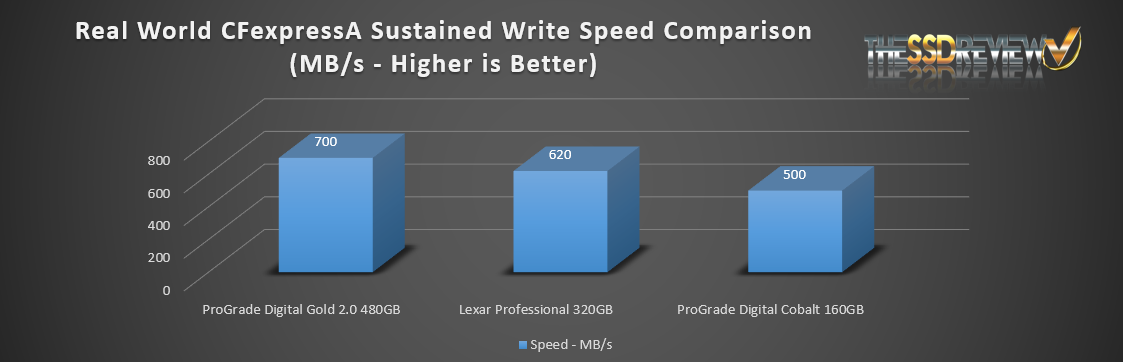
We determine sustained write performance by transferring a 85GB 8K media folder from the PC to the CFexpress Type A card. This test is vital to those looking at digital storage for high end 4K and 8K video recording.
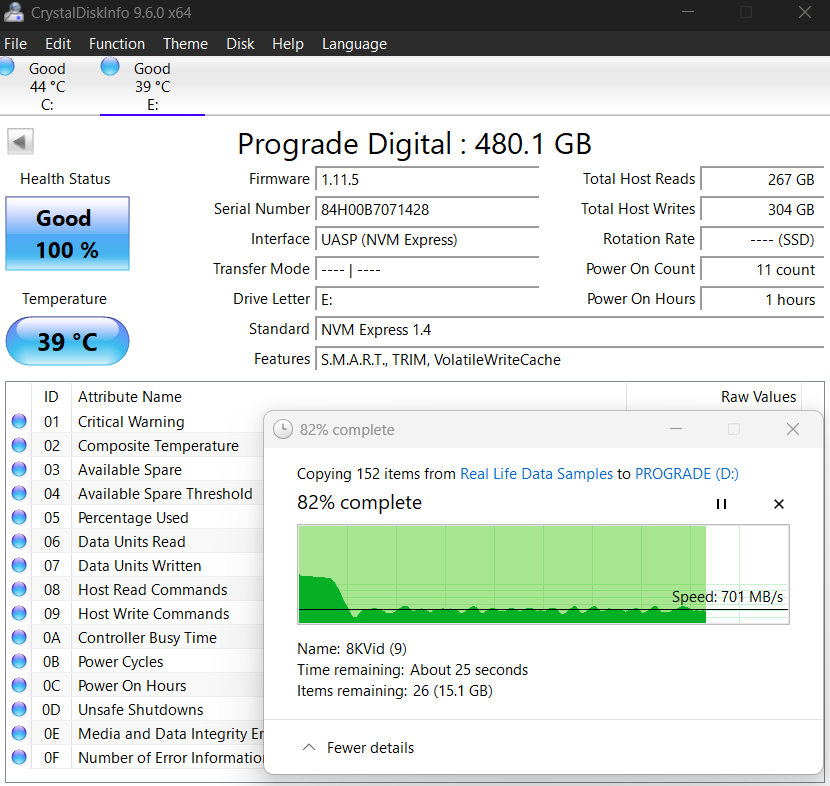
The ProGrade Digital Gold 2.0 CFExpressA 480GB Memory Card held a sustained write speed average of 700MB/s throughout the transfer which is well above the minimum standard of 500MB/s.
REAL WORLD FILE TRANSFER COMPARISON
Our Real World File Transfer Test is conducted through the transfer of data from one spot on the test drive to another to give us the truest of transfer speed results for that device.
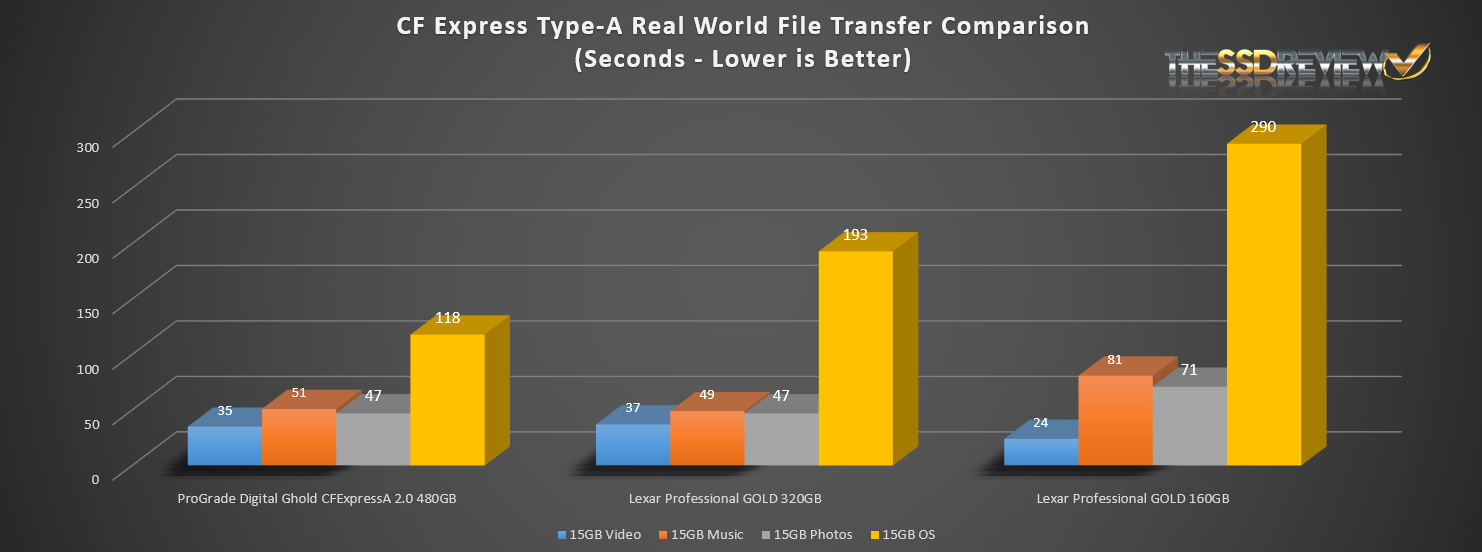
The PG Gold 4.0 placed first ahead of both the Lexar and previous Gen ProGrade Type A card.
REPORT ANALYSIS AND FINAL THOUGHTS
Type A memory cards are somewhat the ugly duckling of the CFExpress world. In one hand, we have CFExpress Type B now hitting capacities of 2TB and speeds of 3550MB/s, while Type-A (in the other) pales in comparison with 1TB cards reaching 900GB/s. Actually, the only cameras that we know of that use these cards are the Sony A1 and Sony A7S III. It is for this reason that all the respect has to go to ProGrade for still marketing such a ‘niche’ item. It is that infamous Beta vs VHS comparison of too many years back.
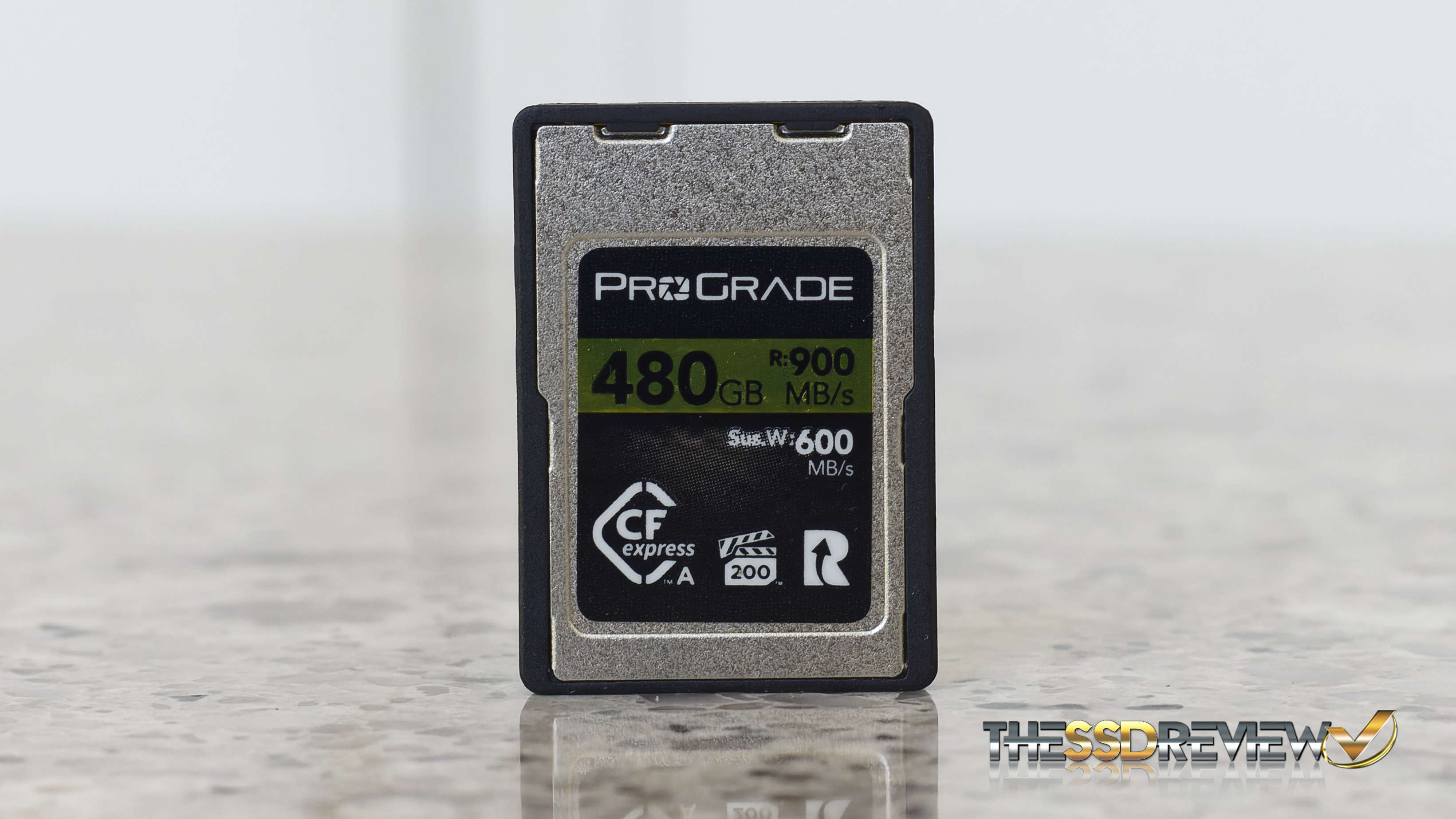
With this in mind, the ProGrade Digital Gold CFExpress Type-A 2.0 480GB speeds of 900MB/s read with 600MB/s sustained write are as good as it gets, especially when we can now get a 960GB card in this small footprint. This card is smaller thatn a typical SD card.
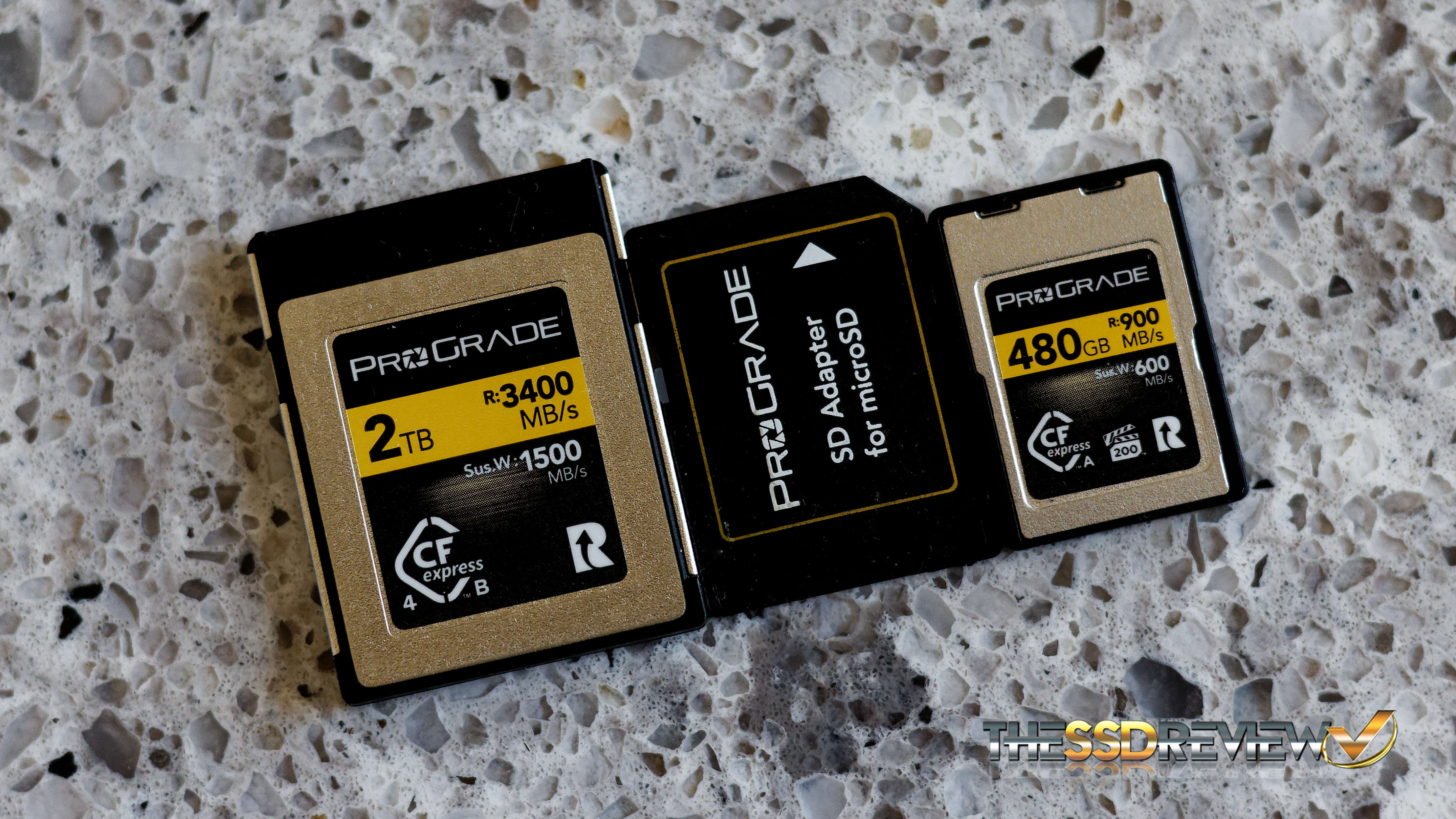
All in all, the ProGrade Gold CF-Express Type A 2.0 Memory Card has a highh capacity of 960GB with a great selection of different sizes to fit ones needs, decent speed of 900MB/s with a 3-year warranty and good pricing for its niche standing. Gold Seal.
CHECK PG GOLD CFEXPRESS A 2.0 PRICING AT AMAZON

Hi
There is quite a few Sony cameras that use CFExpress Type A cards including the A9, A9II, A9II and the A1 II. Plus, the Sony FX video cameras. Sony is the only major brand using Type A cards. The value of Type A cards is their small size and exceptional speed. They are slower than Type B cards, but the alternative for Sony cameras is SDXC cards, and the Type A are way faster. Type A cards work in the field with no issues for my A1 and the Sony A9III (whose top speed is 120fps). One case where raw stats does not tell the whole story, here camera frame rates, the camera’s cache and a card’s sustained transfer speed means more than raw stats.
I hear ya but unfortunately we haven’t got the means to have that equipment in hand for testing. The purpose of RAW stats is to demonstrtate the absolute maximum performance that can be achieved. By testing frame rate, internal camera cache size as well as the cameras sustained transfer speed, we are testing the camera…and not the storage medium. Digital cameras are notorious for cheaping out on the data transfer interface. Stay tuned though as we have a 2TB Type A report which will be published soon.