 The SSD Review The Worlds Dedicated SSD Education and Review Resource |
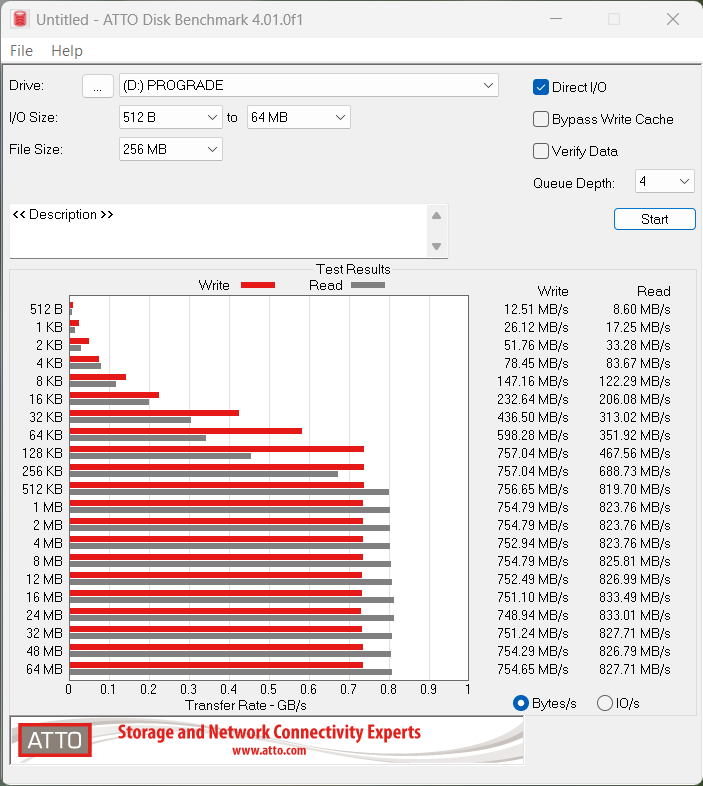
ATTO Disk Benchmark is perhaps one of the oldest benchmarks going and is definitely the main staple for manufacturer performance specifications. ATTO uses RAW or compressible data and, for our benchmarks, we use a set length of 256mb and test both the read and write performance of various transfer sizes ranging from 0.5 to 8192kb. Manufacturers prefer this method of testing as it deals with raw (compressible) data rather than random (includes incompressible data) which, although more realistic, results in lower performance results.
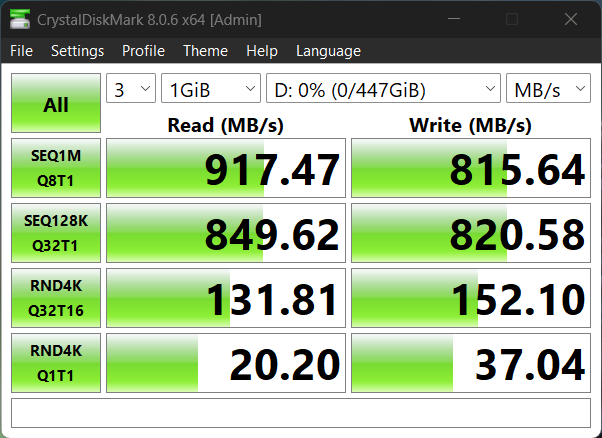
CRYSTAL DISK BENCHMARK VER. 8. 0.6 X64
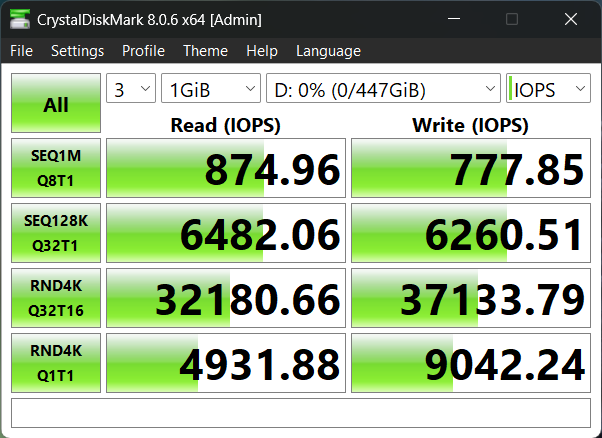
Crystal Disk Benchmark is used to measure read and write performance through sampling of random data which is, for the most part, incompressible. Performance is virtually identical, regardless of data sample so we have included only that using random data samples.
THROUGHPUT
IOPS
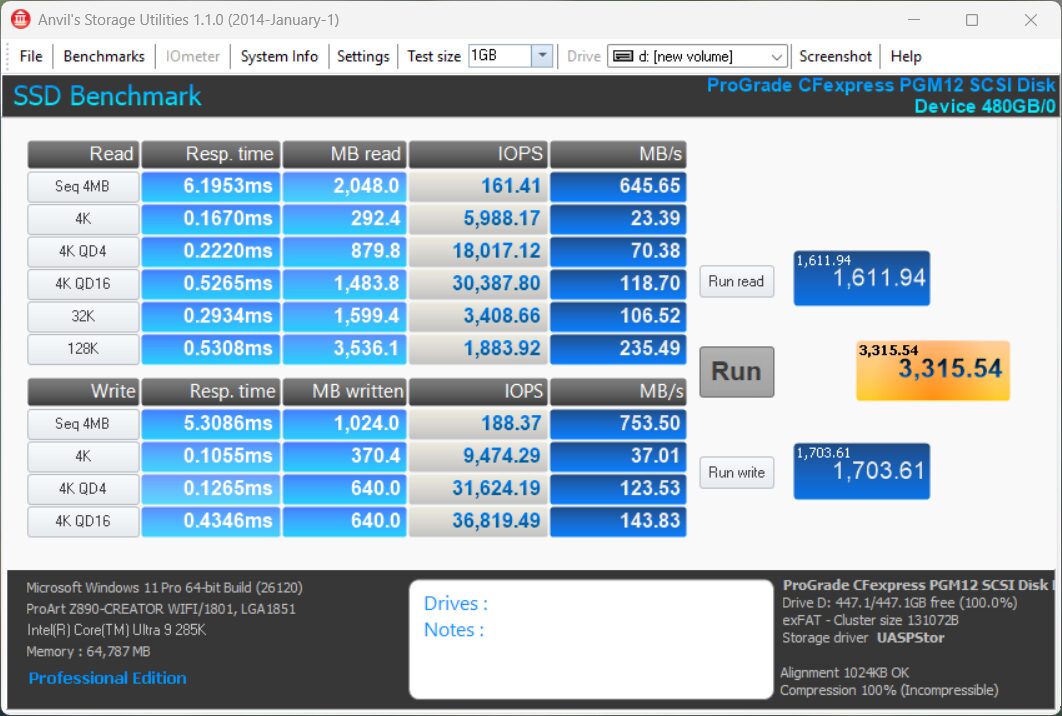
ANVIL STORAGE UTILITIES PROFESSIONAL
Anvil’s Storage Utilities (ASU) are the most complete test bed available for the solid state drive today. The benchmark displays test results for, not only throughput but also, IOPS and Disk Access Times. Not only does it have a preset SSD benchmark, but also, it has included such things as endurance testing and threaded I/O read, write and mixed tests, all of which are very simple to understand and use in our benchmark testing.
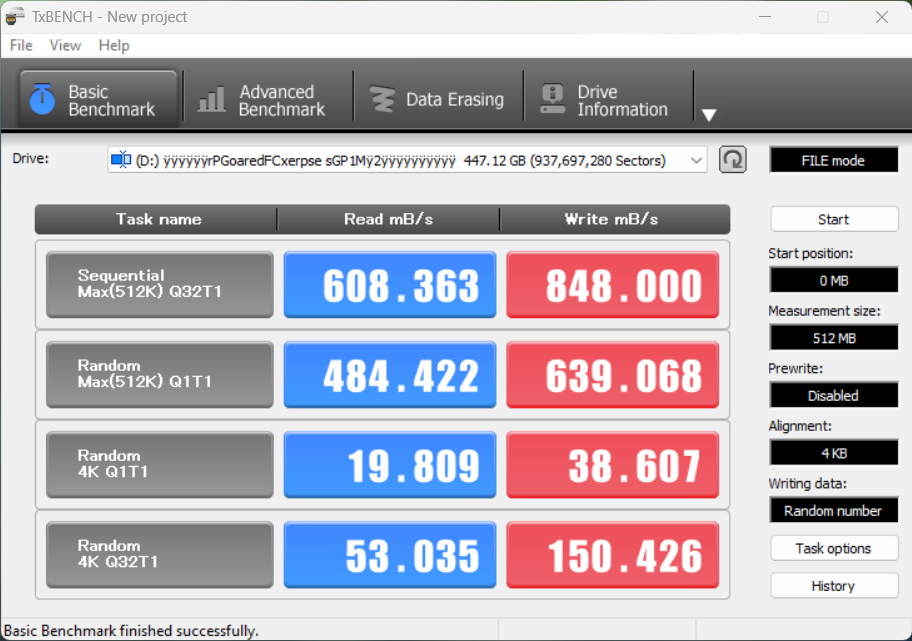
TxBench is one of our newly discovered benchmarks that we works much the same as Crystal Diskmark, but with several other features. Advanced load bench-marking can be configured, as well as full drive information and data erasing via secure erase, enhanced secure erase, TRIM and overwriting. Simply click on the title for a free copy.
Hi
There is quite a few Sony cameras that use CFExpress Type A cards including the A9, A9II, A9II and the A1 II. Plus, the Sony FX video cameras. Sony is the only major brand using Type A cards. The value of Type A cards is their small size and exceptional speed. They are slower than Type B cards, but the alternative for Sony cameras is SDXC cards, and the Type A are way faster. Type A cards work in the field with no issues for my A1 and the Sony A9III (whose top speed is 120fps). One case where raw stats does not tell the whole story, here camera frame rates, the camera’s cache and a card’s sustained transfer speed means more than raw stats.
I hear ya but unfortunately we haven’t got the means to have that equipment in hand for testing. The purpose of RAW stats is to demonstrtate the absolute maximum performance that can be achieved. By testing frame rate, internal camera cache size as well as the cameras sustained transfer speed, we are testing the camera…and not the storage medium. Digital cameras are notorious for cheaping out on the data transfer interface. Stay tuned though as we have a 2TB Type A report which will be published soon.