 The SSD Review The Worlds Dedicated SSD Education and Review Resource |

RANDOM PERFORMANCE BENCHMARKS
4K RANDOM WRITE/READ
We precondition our enterprise SSDs using 100% random 4K writes at QD256 for two drive fills. Performance data is recorded every second. We track this data to monitor the enterprise SSDs transition to steady-state and to verify that steady-state conditions are achieved before initiating queue depth testing. Steady-state is established after a full drive fill and the average steady-state 4K random write performance is approximately 1200K IOPS.
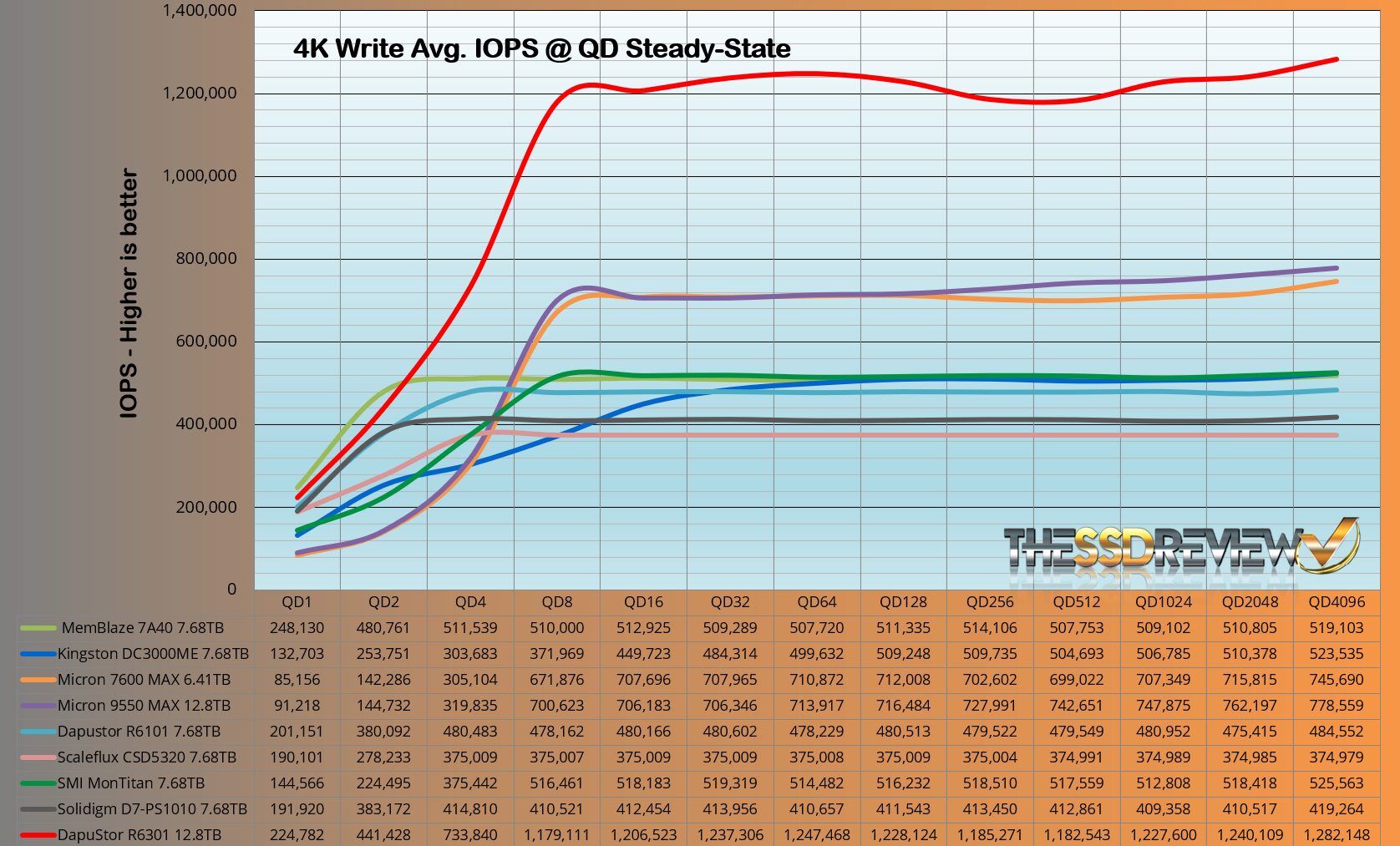
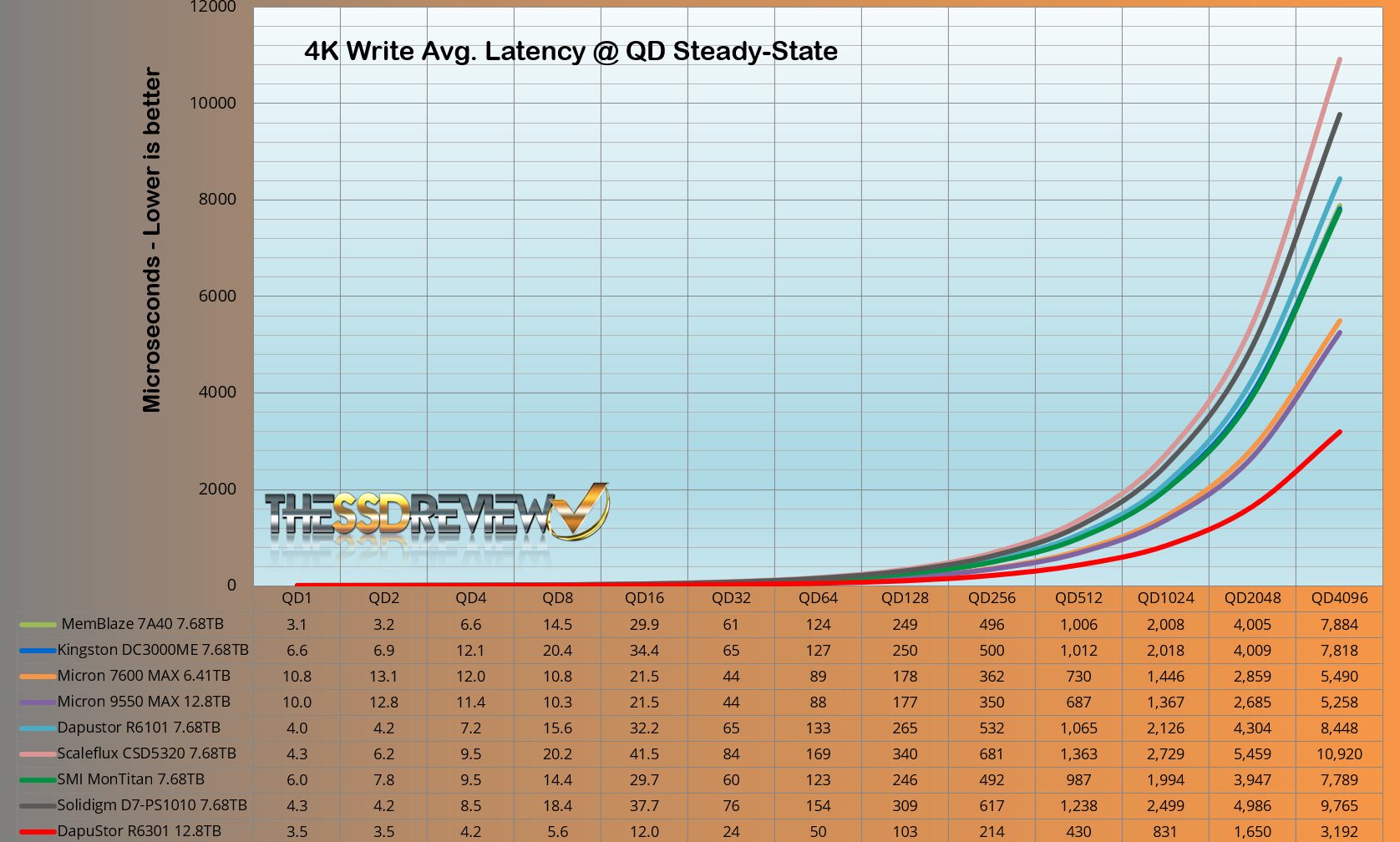
Listed specification for the R6301 Gen5x8 SSD is 1080K IOPS for sustained random write 4K IOPS during steady-state operation and this SSD exceeded that spec at 1282K IOPS.
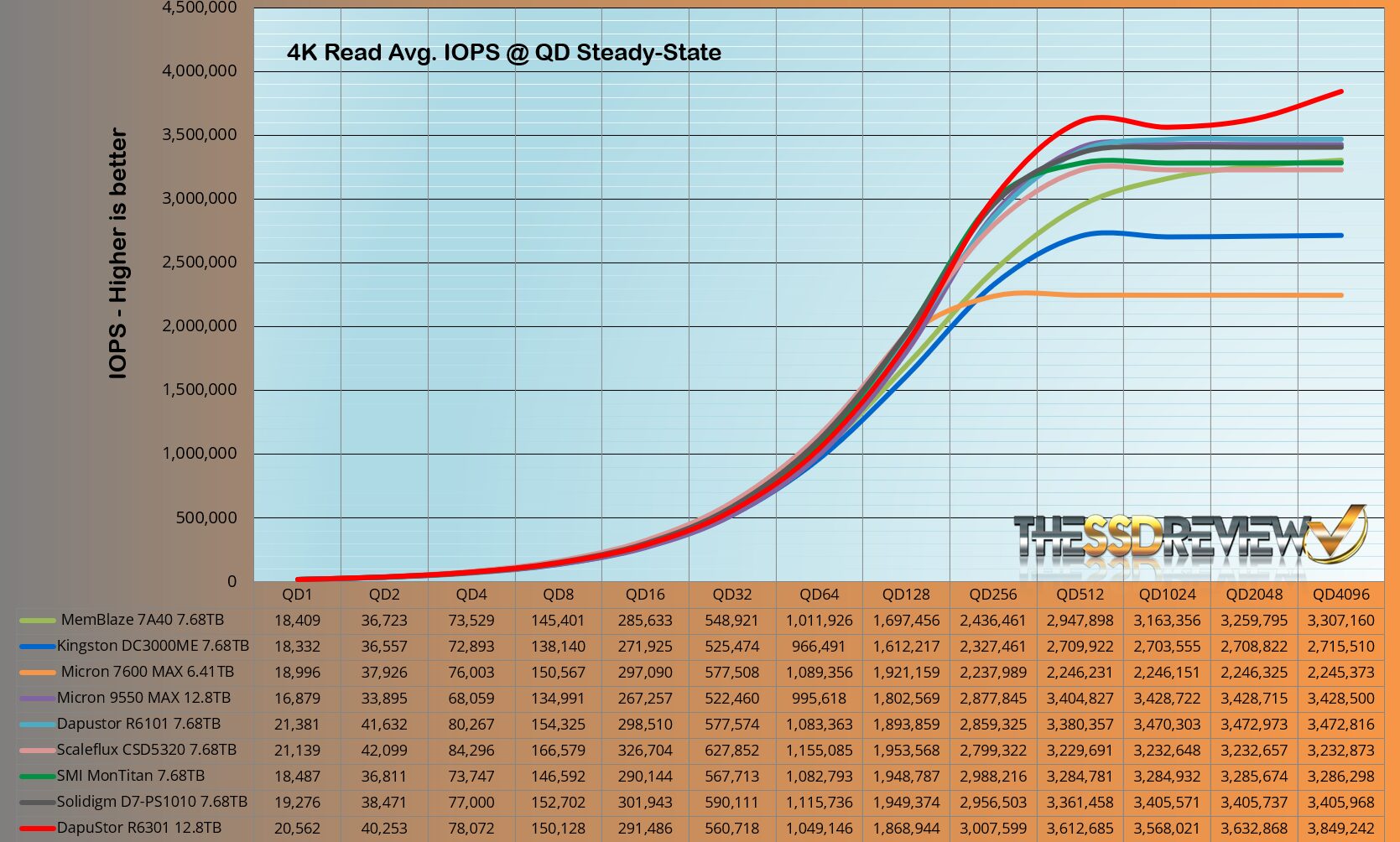
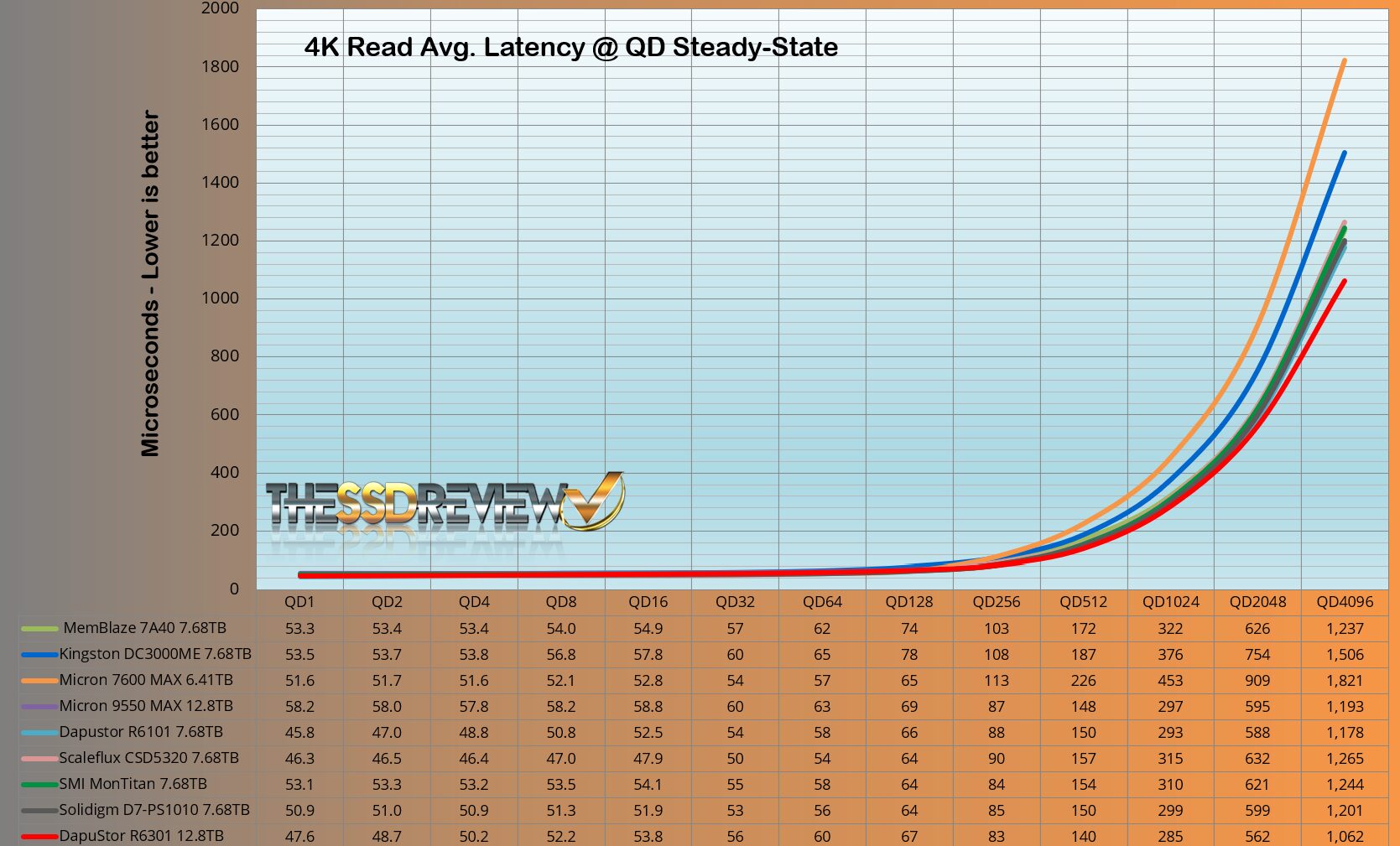
Listed specification for the R6301 Gen5x8 SSD is 4450K IOPS for sustained random read 4K IOPS during steady-state operation and our testing came below that at 3849K .
4K 70/30
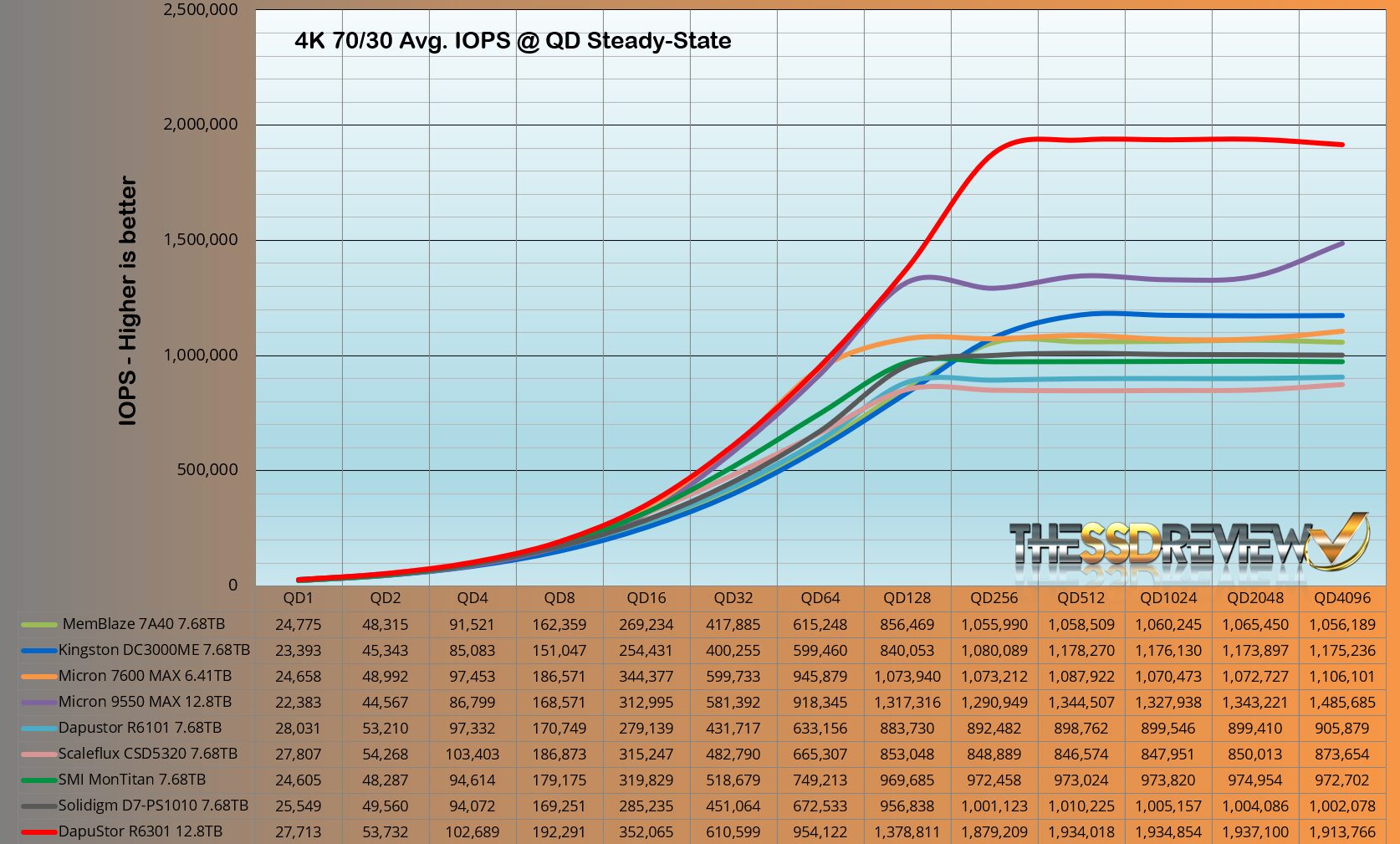
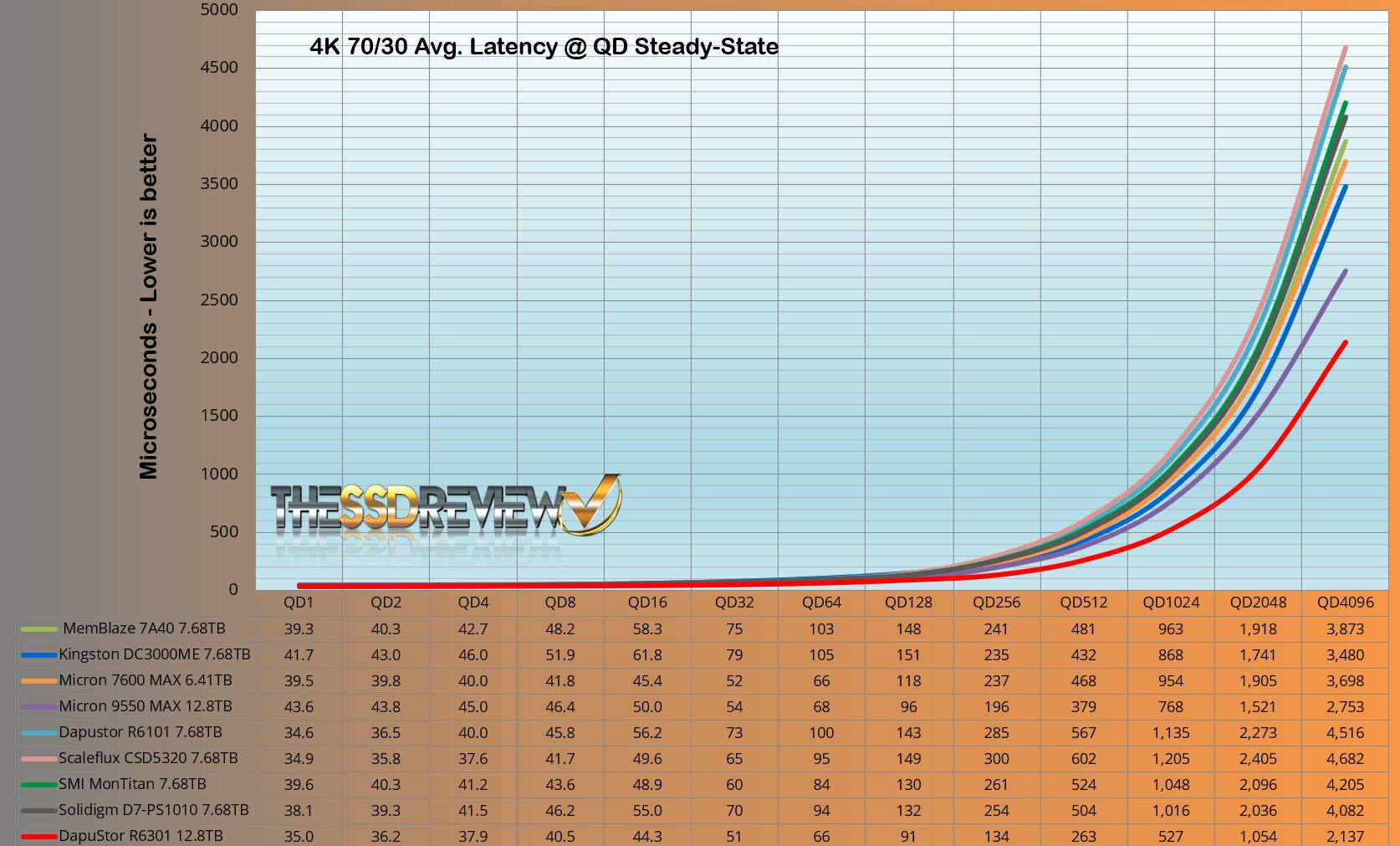
The DapuStor Roealsen6 demonstrates amazing 4K 70/30 mixed read/write results with an average of 1930K IOPS.
4K 50/50
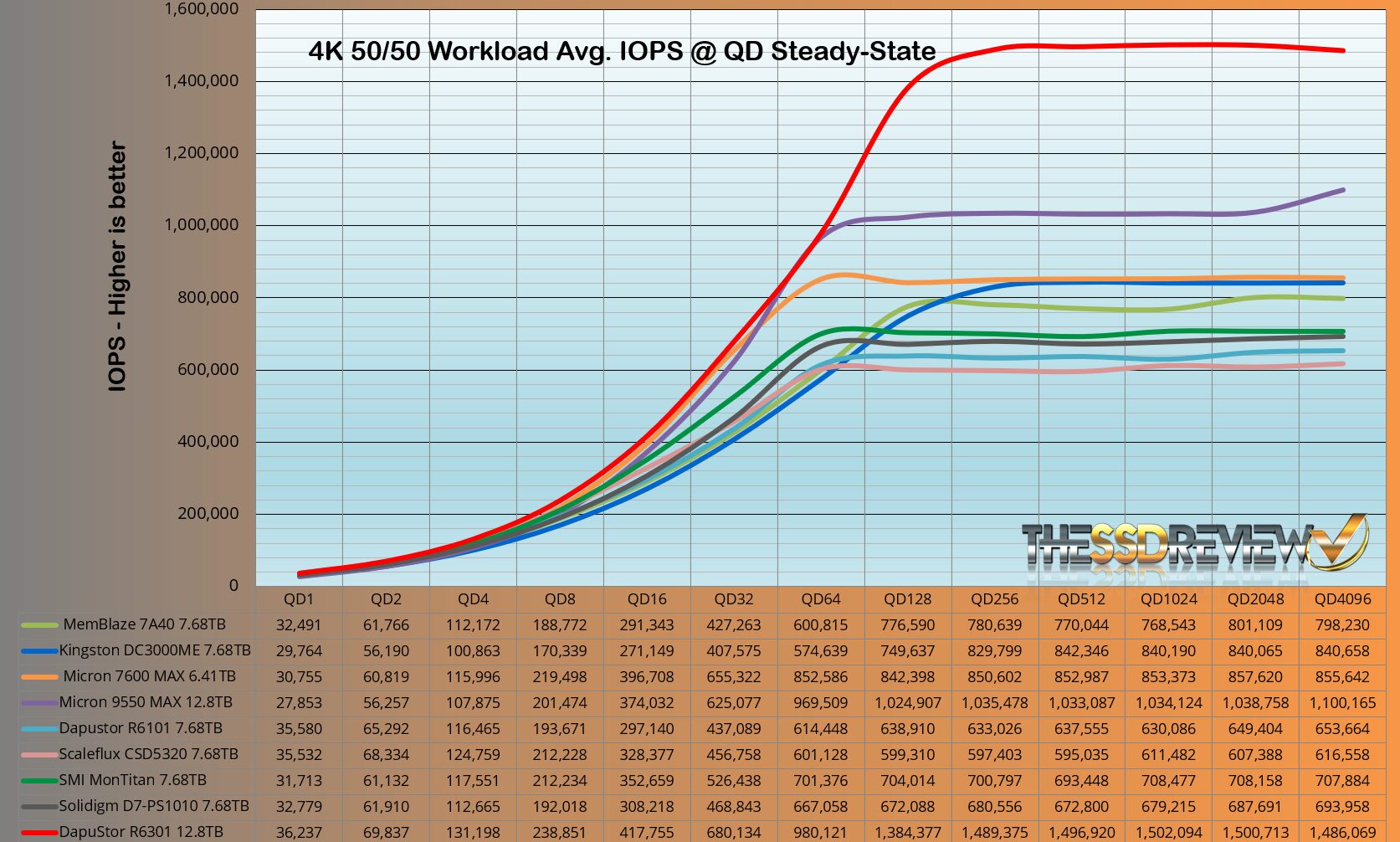
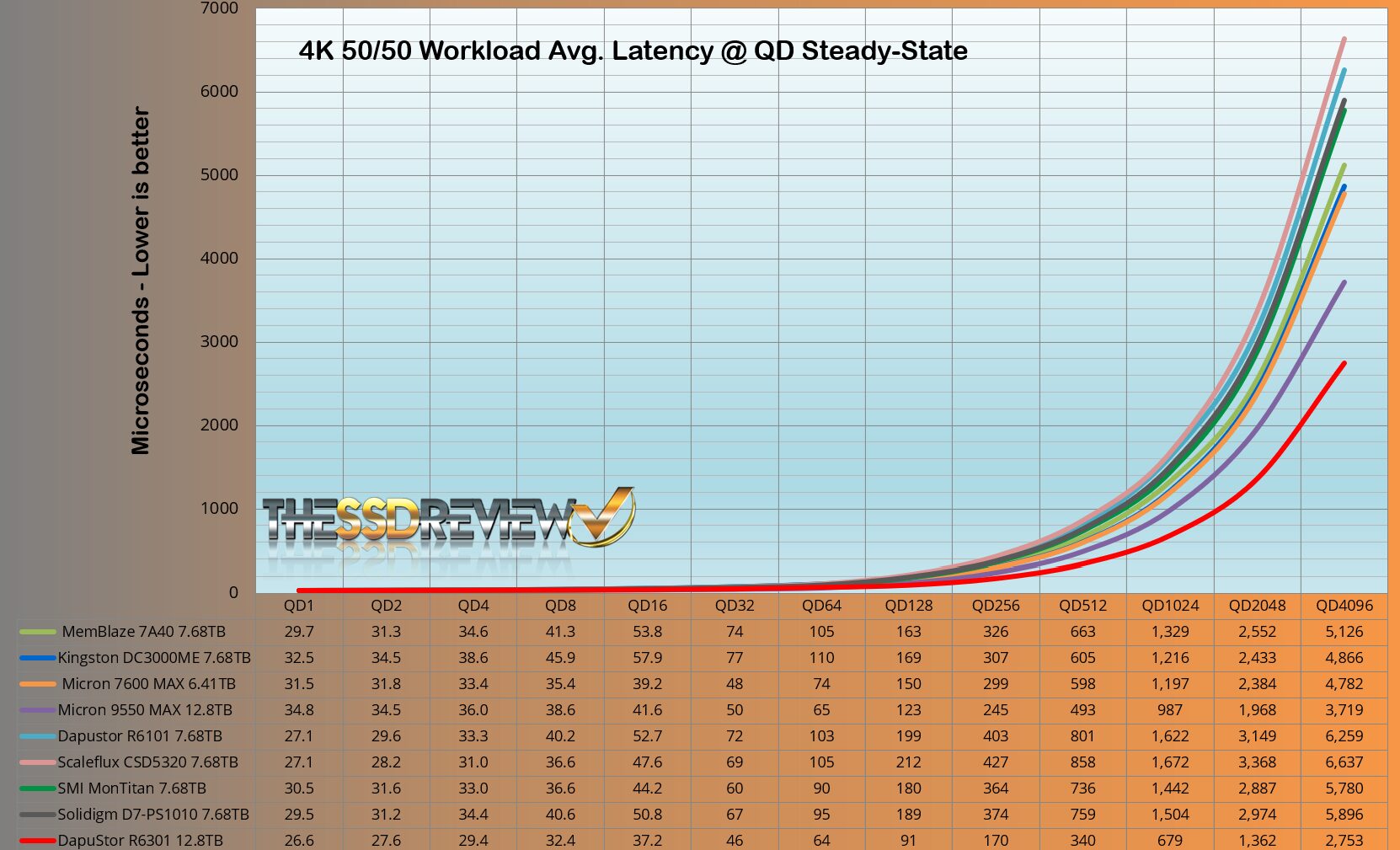
The R6301 pulled off an average performance result of 1502K IOPS through QD512-QD4096.
Let me guess–if you have to ask how much it costs you can’t afford it.
Even the company cannot suggest a price as of yet, but yes with the new norm in flash prices, this will be a very niche item.
Honestly, I was excited about the x8 native SSD, then realized part way through the review they had just done two x4 SSDs under the covers instead. Guessing some of the under performance can be explained by the overhead of managing the two SSDs under the covers being presented as a single logical unit to the outside world.
There is no trickery here as it would have shown its face during enterprise testing. The trickery of which you speak kind of goes back all the way to the old Intel 910 SSD or even Kingston DCP 1000 where you can RAID two separate onboard volumes. The DP800 controller functions as an eight lane controller and the volume is full capacity. Can you clarify your thoughts any further?