The SSD Review The Worlds Dedicated SSD Education and Review Resource |
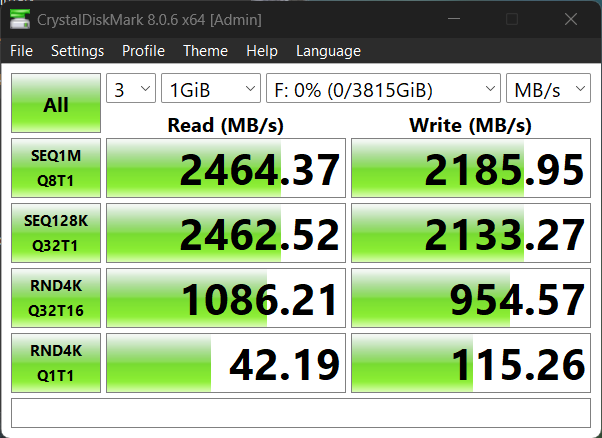
CRYSTAL DISK BENCHMARK VER. 8.0.4 x64
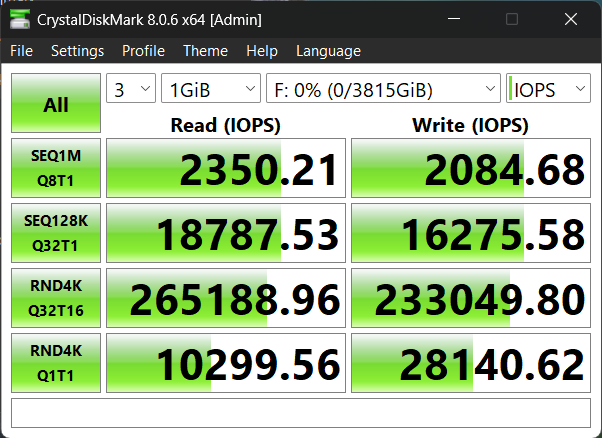
Crystal Disk Benchmark is used to measure read and write performance through sampling of random data which is, for the most part, incompressible. Performance is virtually identical, regardless of data sample so we have included only that using random data samples.
THROUGHPUT
IOPS
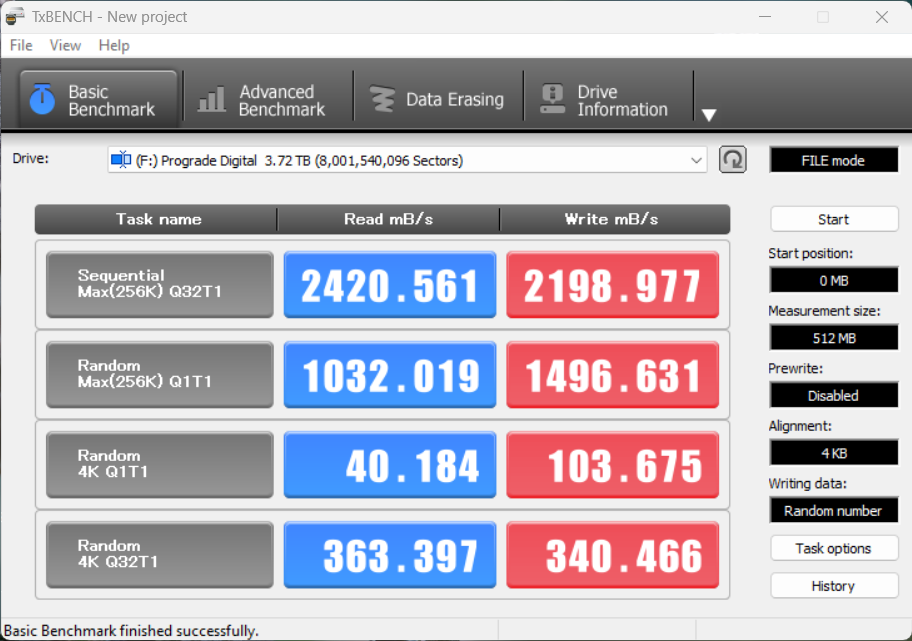
TxBench is one of our newly discovered benchmarks that we works much the same as Crystal DiskMark, but with several other features. Advanced load benchmarking can be configured, as well as full drive information and data erasing via secure erase, enhanced secure erase, TRIM and overwriting. Simply click on the title for a free copy.
ANVIL STORAGE UTILITIES PROFESSIONAL
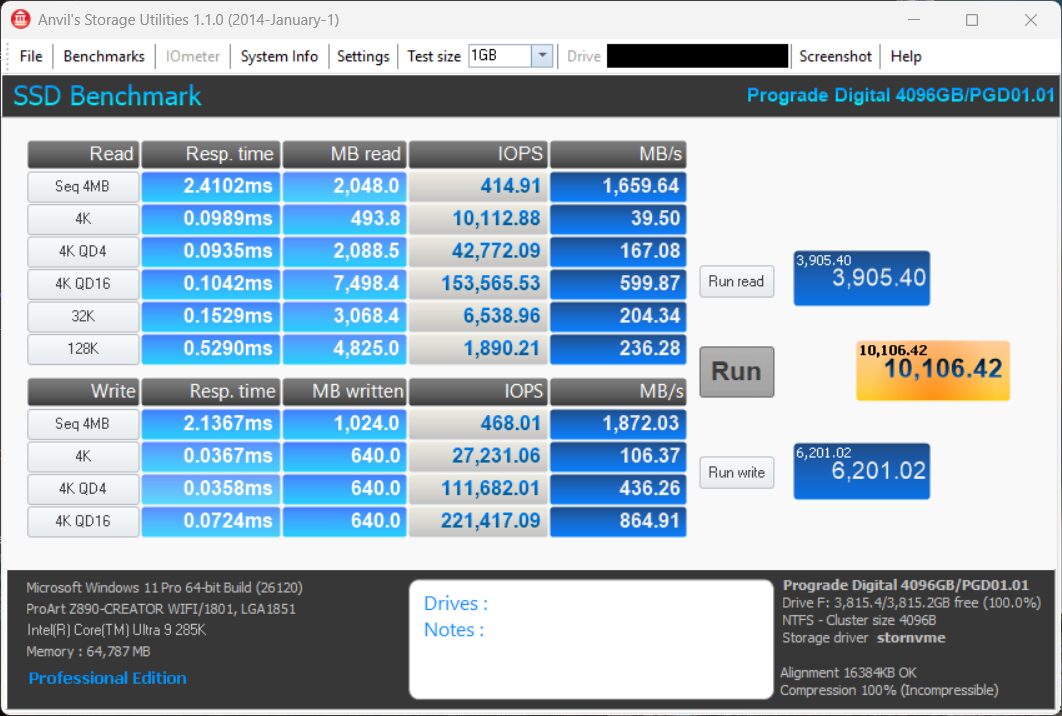
Anvil’s Storage Utilities (ASU) are the most complete test bed available for the solid state drive today. The benchmark displays test results for, not only throughput but also, IOPS and Disk Access Times. Not only does it have a preset SSD benchmark, but also, it has included such things as endurance testing and threaded I/O read, write and mixed tests, all of which are very simple to understand and use in our benchmark testing.
REPORT SUMMARY AND FINAL THOUGHTS
I have always had alot of good things to say about ProGrade Digital and that is well deserved. Their product designs and the thought that goes into each product is beyond reproach. Simple things such as the included branding plate in each package so the peripheral can be attached by its magnetic base, as well as their very well designed unibody construction in just about all peripherals, sets ProGrade apart from the rest.
Having said that, I am not ashamed to admit that even reviewers seem to see things through jaded glasses at times. I couldn’t get over why exactly ProGrade Digital would go with a slower Gen3 SSD in a USB4 device that would normally call for Gen4 SSD performance of 4GB/s. Then David Saucedo Director of Marketing at ProGrade Digital explained this to me:
“We chose that specific design for the PG10 as it enabled us to achieve the performance that we were looking for. This design enabled us to maintain consistent sustained performance throughout the entire duration of transfers by ensuring the unit does not thermal throttle. While PCIe 4.0 offers slightly higher performance, it raises more challenges to control any throttling that may occur in a bus powered USB4 device. Our focus for the PG10 is for individuals such as Digital Imaging Technicians, etc. to be able to have a drive that will keep up with their demanding workflow of consistently offloading data throughout the entire day while maintaining peak performance every time. To our knowledge, the PG10 is the only SSD on the market that performs at these levels.”
So…where we might not normally do sustained write performance for consumer level SSDs, we threw a folder of 8K files totalling 170GB at the PG10:
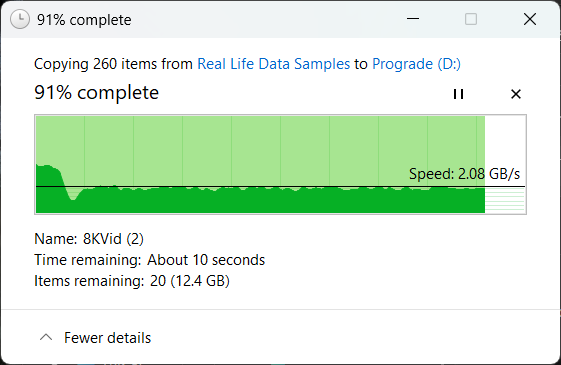
We cannot quiote understand what the initial dip signifies but the PG10 puts out sustained write performance of 2GB/s as advertised. The ProGrade PG10 USB4 4TB Portable SSD may be a bit larger than most expect but its design is created to accomodate placement under the PG20 Pro Hub. Or at least that’s where I find it works best. It has a massive internal passive heatsink with ribbing on both sides for effective heat dissipation…and it works. Even when pushing this SSD, it barely breaks a sweat.
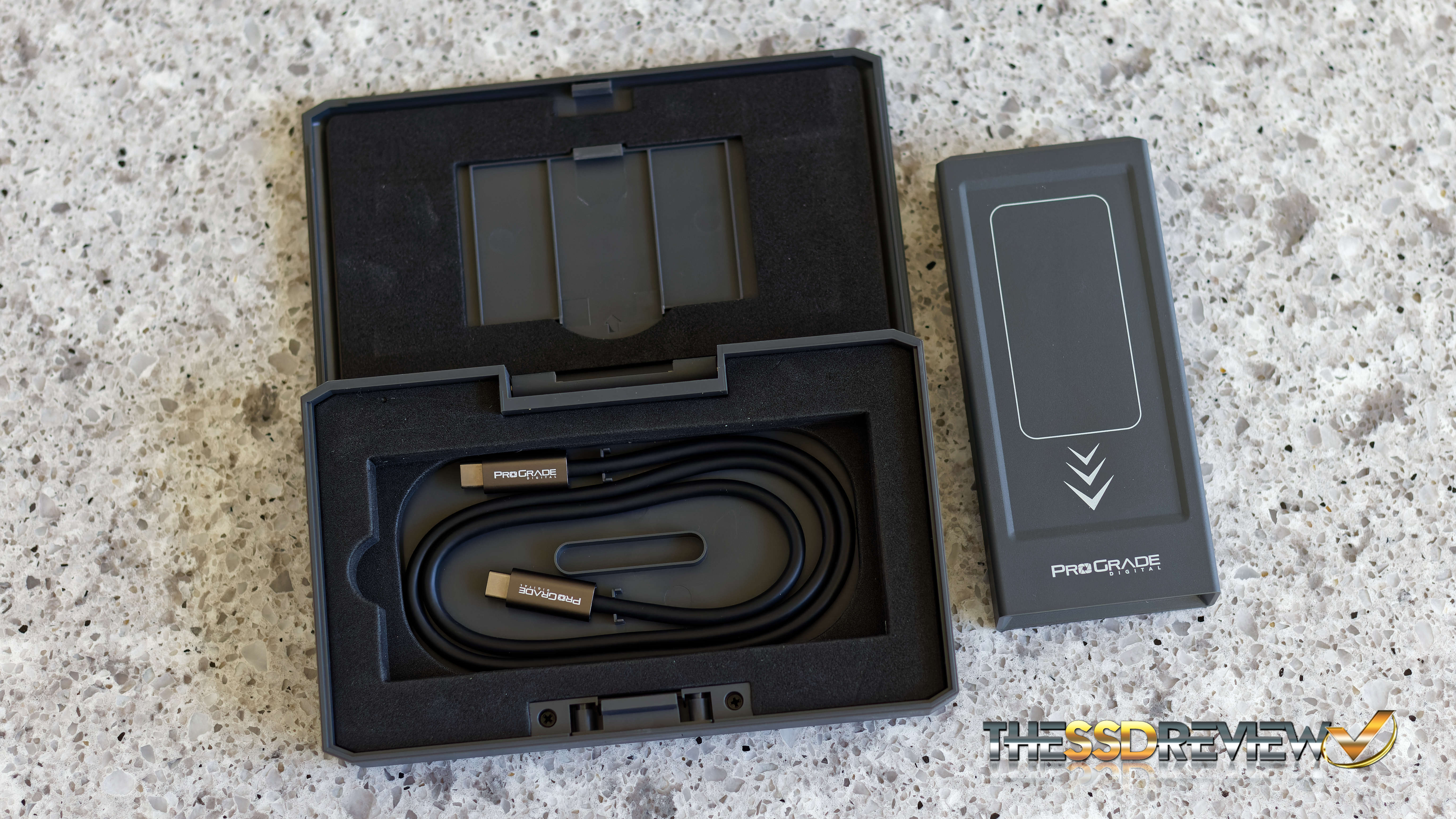
Ours is a 4TB version but this SSD is one of the few that comes in 8TB, with separate products for PC or Mac. This is such a benefit to media professionals. The PG10 comes with a 3-year limited warranty and the pricing… Understanding what went into this design, we can see the added cost for the PG10, but we feel it could settle just a bit.
CHECK PROGRADE PG10 USB4 EXTERNAL SSD PRICING AT AMAZON