 The SSD Review The Worlds Dedicated SSD Education and Review Resource |

The Storage Products Business Unit of Toshiba America Electronics Components, Inc., a global technology leader, is announcing its next generation of enterprise solid-state drives (eSSDs). The new PX04S series represents an expansion of the PX lineup, and it will feature four SCSI eSSD models that are optimized for a wide range of enterprise applications. Usage scenarios include database servers, virtualized enterprise file servers and e-mail servers; also primary storage for read, mixed read/write, and write workloads.
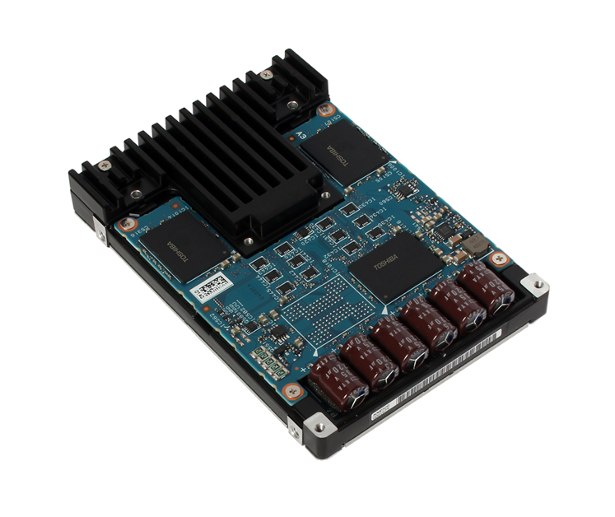 The PX04S utilizes its dual-ported 12Gb/s SAS interface to achieve remarkable performance levels, including random 4K read speeds of (up to) 270,000 IOPS and random 4K write speeds of (up to) 125,000 IOPS. The PX04S series is offered in capacities of up to 3.84TB.
 Toshiba’s PX04S series is comprised of four model groupings, separated by total drive writes per day (DWPD): High-Endurance (up to 25 DWPD), Mid-Endurance (up to 10 DWPD), Value-Endurance (up to 3 DWPD), and Read-Intensive (up to 1 DWPD).
PX04SHB / High-Endurance (up to 25 DWPD): For usage scenarios requiring top levels of eSSD performance, reliability and endurance. This version is geared toward write-intensive virtualized data centers, high-performance computing, and big data analytics. The PX04SHB is available in capacities up to 1.6TB.
PX04SMB / Mid-Endurance (up to 10 DWPD): For mixed-usage scenarios such as mission-critical hyperscale and virtualized environments, offering very high levels of predictable performance. Ideal for e-commerce and online transaction processing, the PX04SMB is available in capacities up to 3.2TB.
PX04SVB / Value-Endurance (up to 3 DWPD): Optimized for read-intensive storage and server usage, featuring a balance of capacity, reliability and endurance. The PX04SVB is geared toward web servers, data warehousing and media streaming. It is available in capacities up to 3.84TB.
PX04SRB / Read-Intensive (up to 1 DWPD): Targeted to read-intensive web-based workloads, such as data warehousing and video-on-demand (VOD). The PX04SRB is also available in capacities up to 3.84TB.
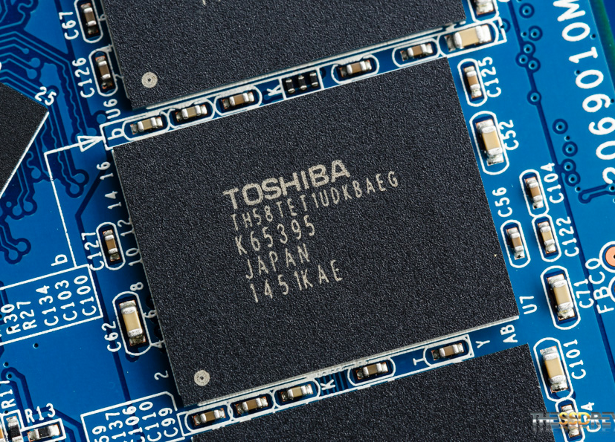 According to Cameron Brett, director of SSD product marketing at Toshiba Storage Products Business Unit, “This is our third generation of SAS SSDs and our second with 12Gbits/s. The new PX04S Series leverages years of Toshiba innovation and vertical integration. The result is an SSD architecture designed and optimized for the next-generation of virtualized enterprise and hyperscale data centers.”
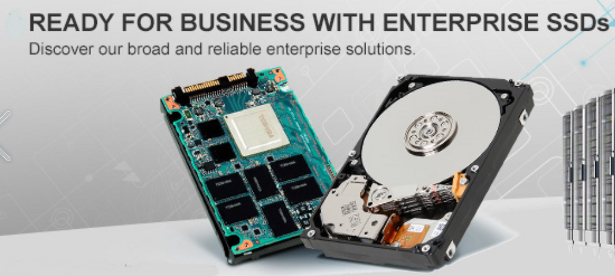 Toshiba’s PX04S series is built in the 2.5″ x 15mm form factor that is typical in enterprise servers and storage arrays. The PX04S series also feature power-loss protection, full data path protection, self-encryption, customer-tunable power and performance, and is backed by a five-year limited warranty.
 Toshiba has samples of the PX04S Series available today, and will have the PX04S series on display at the Flash Memory Summit next week in San Jose, CA. You can visit Toshiba at booth #407. For more information on the PX04S series of 12Gb/s SAS SSDs, you can visit the PX04s product page here.
No thermal tape for these babies. Looks like some serious heat sinking here. They even have to extend it to the interface connector area.
These babies cost between 4200 and 6200 EUR a Pop from the cheapest PX04SRB 3.84TB SSD, to the PX04SHB 1.6TB which probably has the same amount of Flash Memory, but with a lot of over provisioning to allow for the huge number of writes per day.
Now imagine 8 of These in Raid for a gaming , it will probably last for 20 years, allthough i must say, Flash evolves pretty rapidly. Who know maybe well have 16TB 2.5″ ssd at 500 eur in a few years.
TEN Years Later: 122TB SSD’s are a reality and soon double, but they are all QLC 3D-NAND based, and are mostly off limits to consumers, not only because of high pricing – availability is a big problem.
AI has changed the Landscape, and we are in a never before seen crisis, DRAM prices got up by 300% to 400% or sometimes more (for DDR5 RDIMM’s). HBM… the “VRAM” for A.I. GPU’s which eat up an extreme amount of wafers – they have up to 288GB of “on-chip” VRAM and cost easily 50’000$. The few big DRAM producers have contracts for years and there is simply no more left for the small people.
15,36TB NVMe PCI 5.0 enterprise SSD’s don’t cost 500$… they cost you about 7000US$ (April 2026) or more.
There was a technology which could have changed the SSD market forever, it was 3DXpoint aka Intel Optane, latency was reduced to near 10µs (write and read) the first generation (P4800X) had 30DWPD and later 60DWPD, the second generation (P5800X) was PCIe 4.0 and had a whopping 100DWPD, sizes maxed out at 1,5TB for the first generation and 3,2TB for the second generation.
It was based on some sort of chalcogenide based phase-change memory with an ovonic threshold switch, which changed electrical resistance to save data. It was much less complex in terms of memor y management, no DRAM buffer needed and is was faster than anything for many years. Only one core in the controller. Power consumption was high because of the memory chips power hunger.
But despite the high price of this new type of memory, Intel made a loss on every sale. The project was discontinued, and the entire memory division was sold to SK-Hynix, which created a new brand now called Solidigm.
SSD’s with 1DWPD or less are standard, 3DWPD are the highest you can get. 7,68TB to 15,36TB is the new sweetspot with up to 2TB per package/chip. SSD-controllers with sometimes more than ten cores.
There was a time (July 2023) when NAND was really “too” cheap, due to an overproduction. But they will not do the same mistake again…
Thank you for taking the time to write and I couldn’t agree with you more. Feel free to jump in with similar educated comments whenever you get the urge!