 The SSD Review The Worlds Dedicated SSD Education and Review Resource |
When we think about data centers or any other large-scale, network-integral computing systems, we often focus on enterprise SSDs… and perhaps rightly so. Personally, I believe there is no other historical technological advance that truly compares to flash storage. We tend to overlook just how much we take for granted in the rapid evolution from hard drives to solid-state storage, and then to modern flash, all within the span of roughly 15 or 16 years. The unfortunate reality is that a full appreciation of this transformation really lies with Baby Boomers and Gen X. We experienced rotary phones, pagers, dial-up modems, and much more, and that perspective is key to understanding just how miraculous flash technology truly is. This report digs a bit deeper into that story.
While we can all appreciate what flash brings to enterprise storage, we don’t often stop to consider the heart and soul of these systems. It’s much like a smartphone or a car. We’re conditioned to value that it works, not necessarily how or why it works as well as it does. Today, however, we’re taking a closer look. Our report on the SSSTC (Solid State Storage Technology Corporation) PJ1 Gen4 NVMe SSD highlights just how integral foundational network components really are. Even more compelling, SSSTC is a subsidiary of KIOXIA.
At days end, one can expect the SSD tested here to remain in our test bench as the primary boot drive, as it leverages the system chipset directly and does not draw on valuable CPU resources that we so value in our enterprise reports.
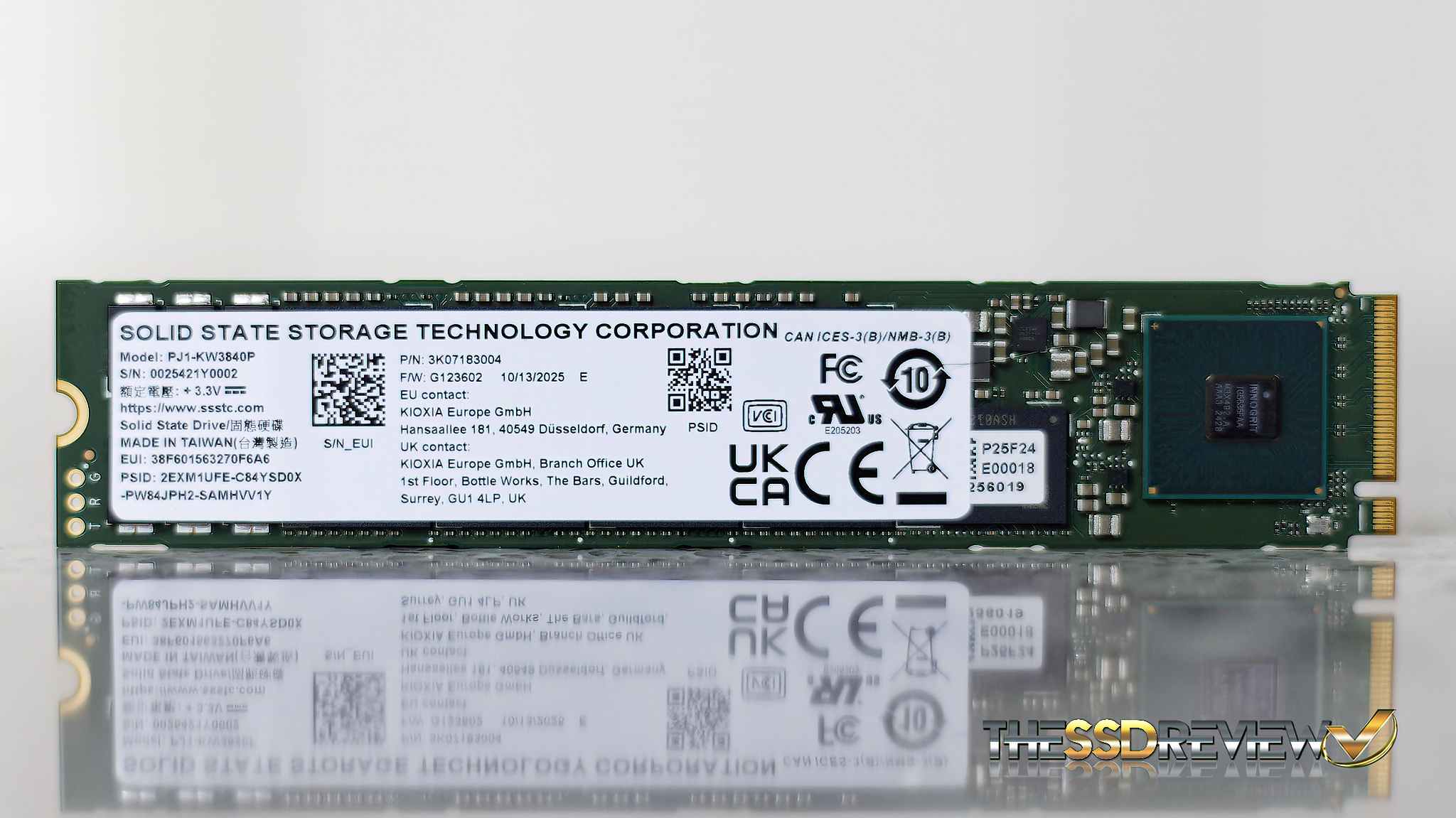
The SSSTC PJ1 is a PCIe 4.0 NVMe enterprise SSD that is available in U.2, E1.S, as well as M.2 2280 and 22110 sizes. This model has a capacity range of 480-7680GB and performance can peak at 7GB/s read and 6.2GB/s write with up to 900K read and 160K write IOPS at low 4K random data transfer. Our test sample today is the M.2 22110 form factor at 3.84TB which is rated for up to 5GB/s read and 2GB/s write.
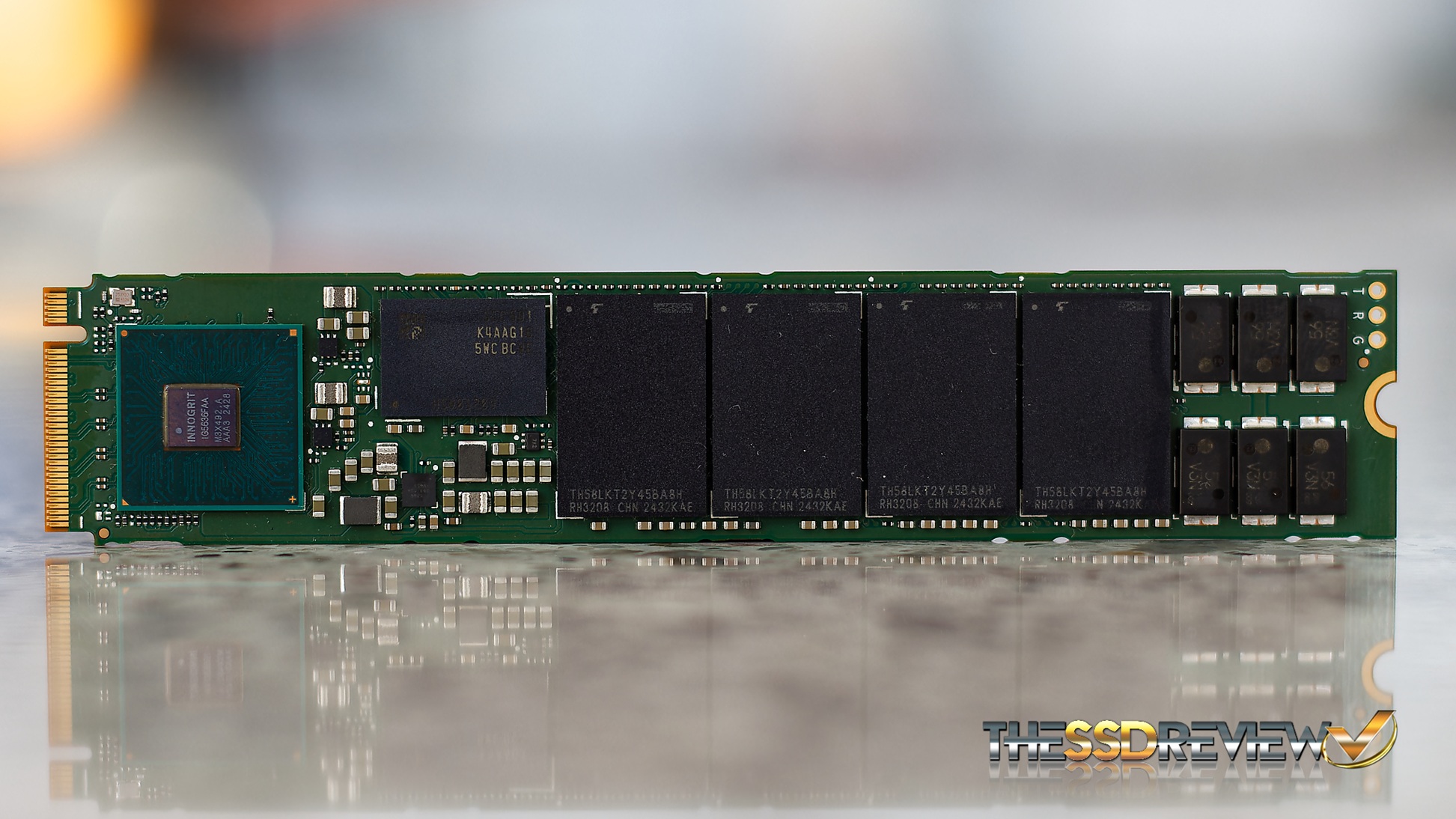
Our SSSTC PJ1 Gen4 enterprise SSD contains components situated the largest available M.2 form factor which is the 22110 (22mm wide x 110mm long). It contains the Innogrit Ranier IG5636 8-channel Gen4 NVMe SSD controller which brings with it an amazing feature set.
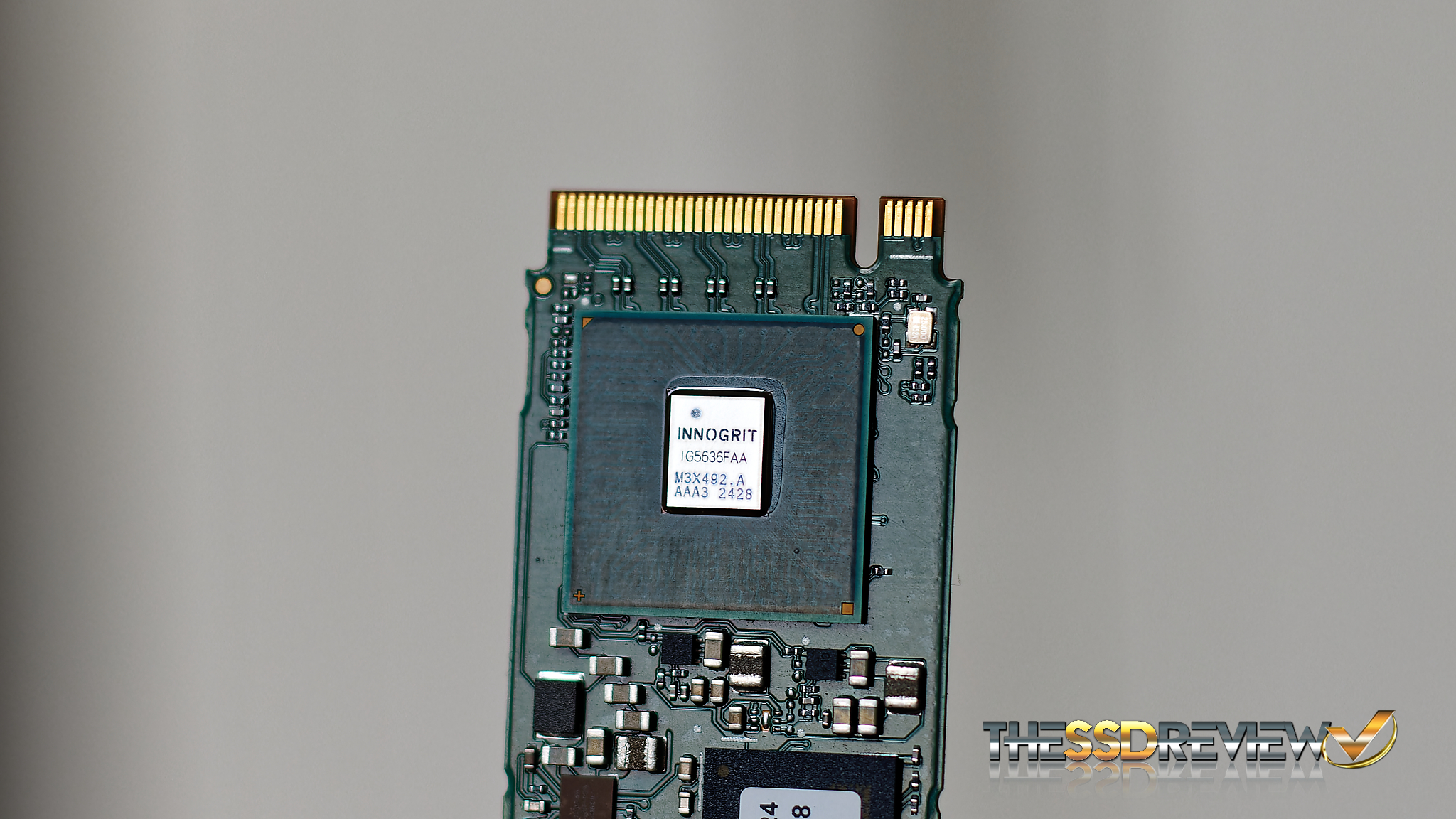
The Innogrit IG5636 is NVMe 1.4c compliant, and includes features such as 512b/4KB sector size, up to 32 Namespaces, TCG Opal 2.0, AES 256-bit Encryption, End-to-end Data Path Protection, RAID Protection, Digital Signature, Secure Boot, Temperature Sensor and Online Firmware Update. This SSD is 3 million MTBF and comes with a five-year limited warranty.
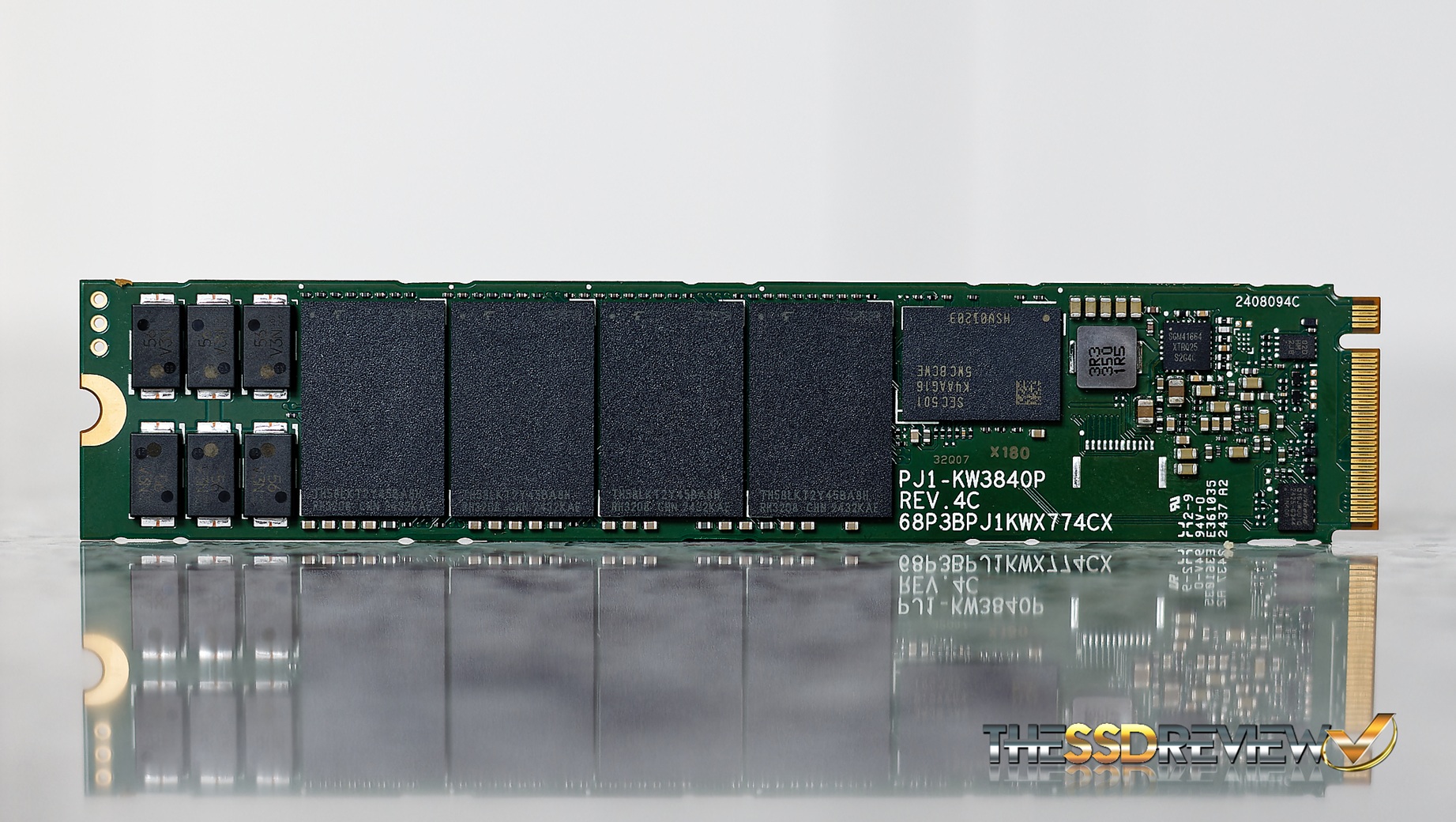
Our SSSTC PJ1-KW3840P sample contains eight pieces of KIOXIA 112-layer 3D eTLC NAND flash memory, two DRAM buffer packages, 12 polymer solid state capacitors and runs at a cool 8.25 watts. Listed performance for all formats and capacities is as follows:

Let’s get to some performance metrics and see how listed specs matches up.