The SSD Review The Worlds Dedicated SSD Education and Review Resource |
8K RANDOM READ/WRITE
We precondition our enterprise SSDs using 100% random 8K writes at QD256 for two drive fills. Performance data is recorded every second. We track this data to monitor the enterprise SSDs transition to steady-state and to verify that steady-state conditions are achieved before initiating queue depth testing. Steady-state is established after a full drive fill and the average steady-state 8K random write performance is approximately 207K IOPS.
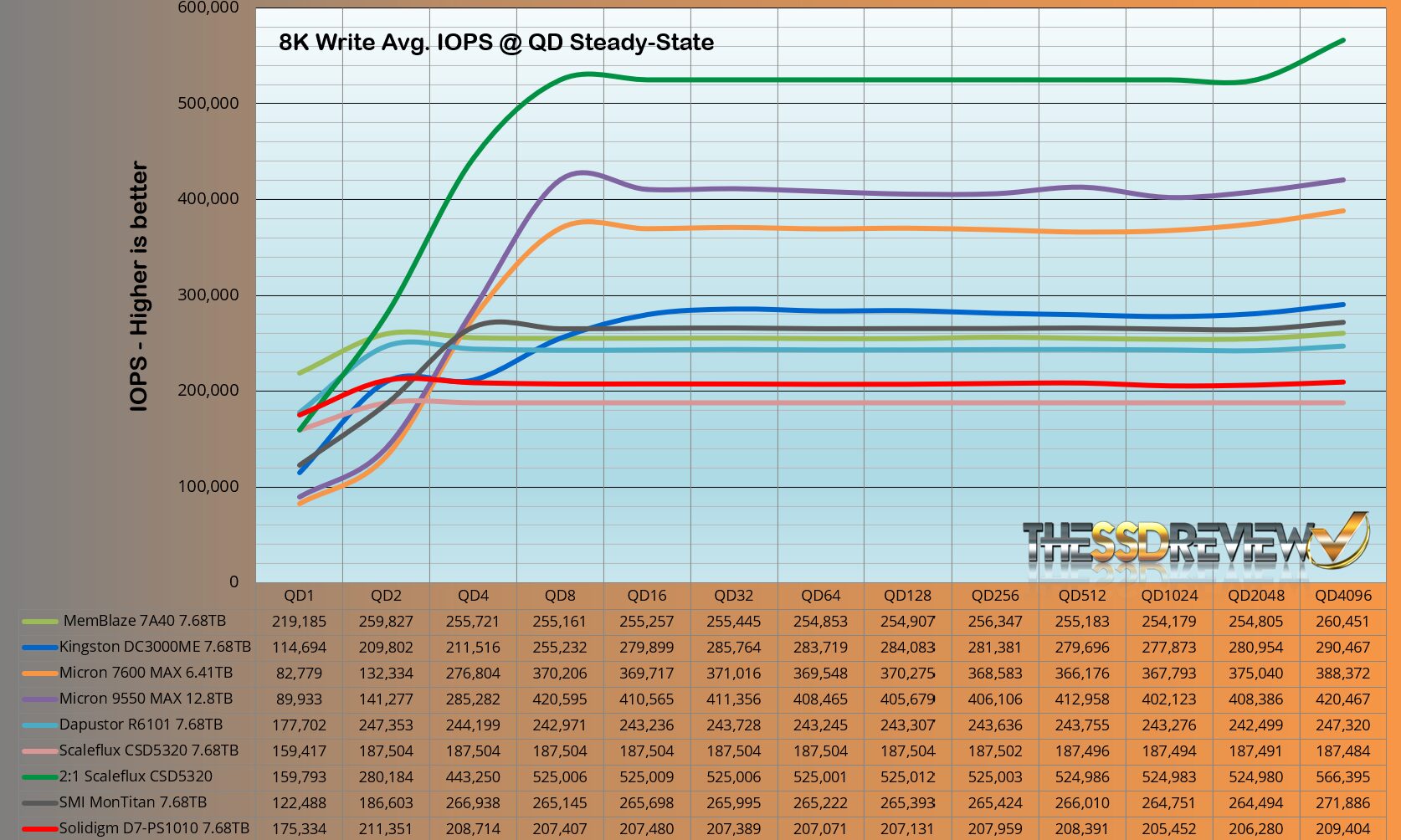
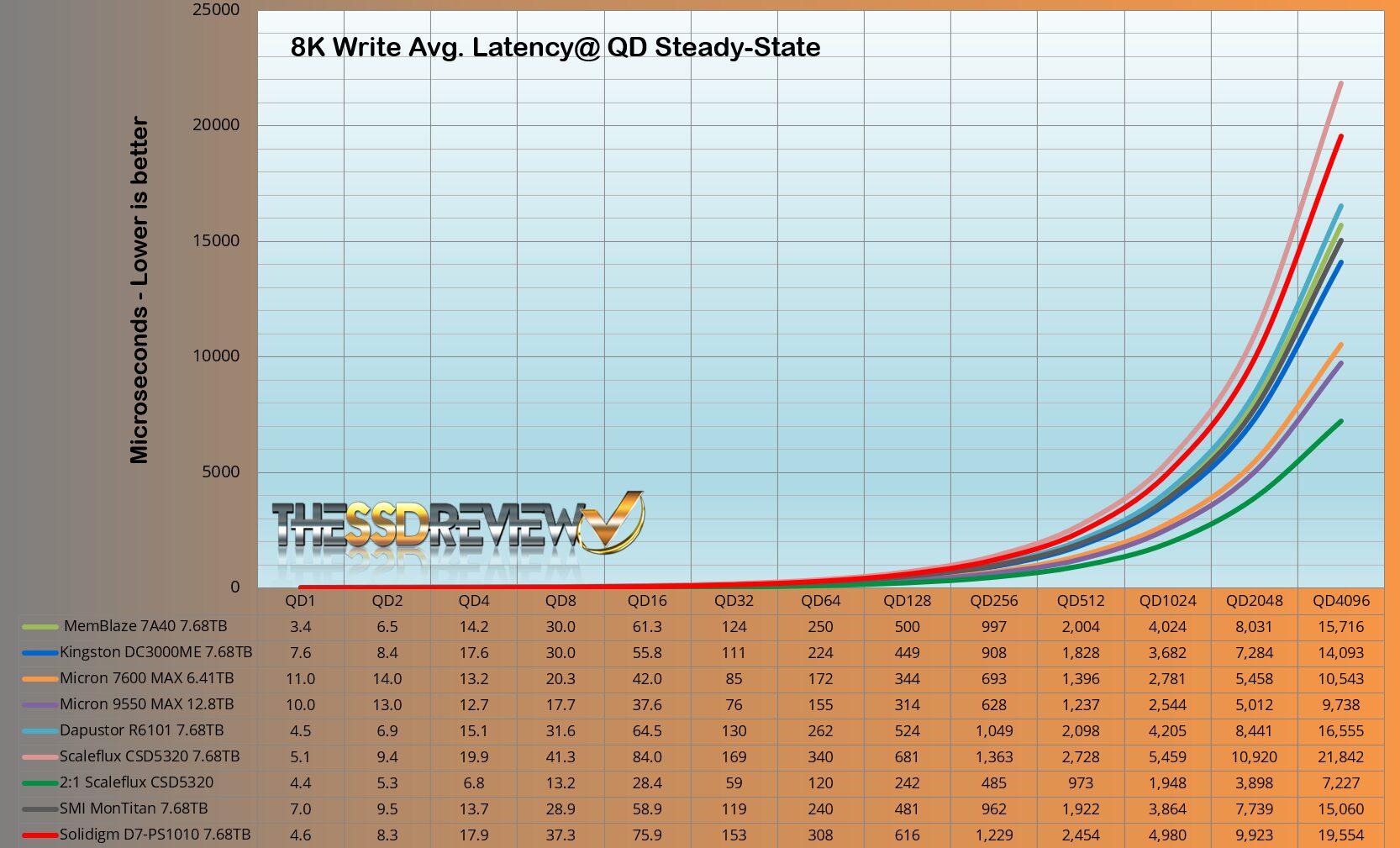
The performance average of the Solidigm D7-PS1010 in 8K random write is 207K IOPS which is half that of our 4K result as twice as much data is being moved.
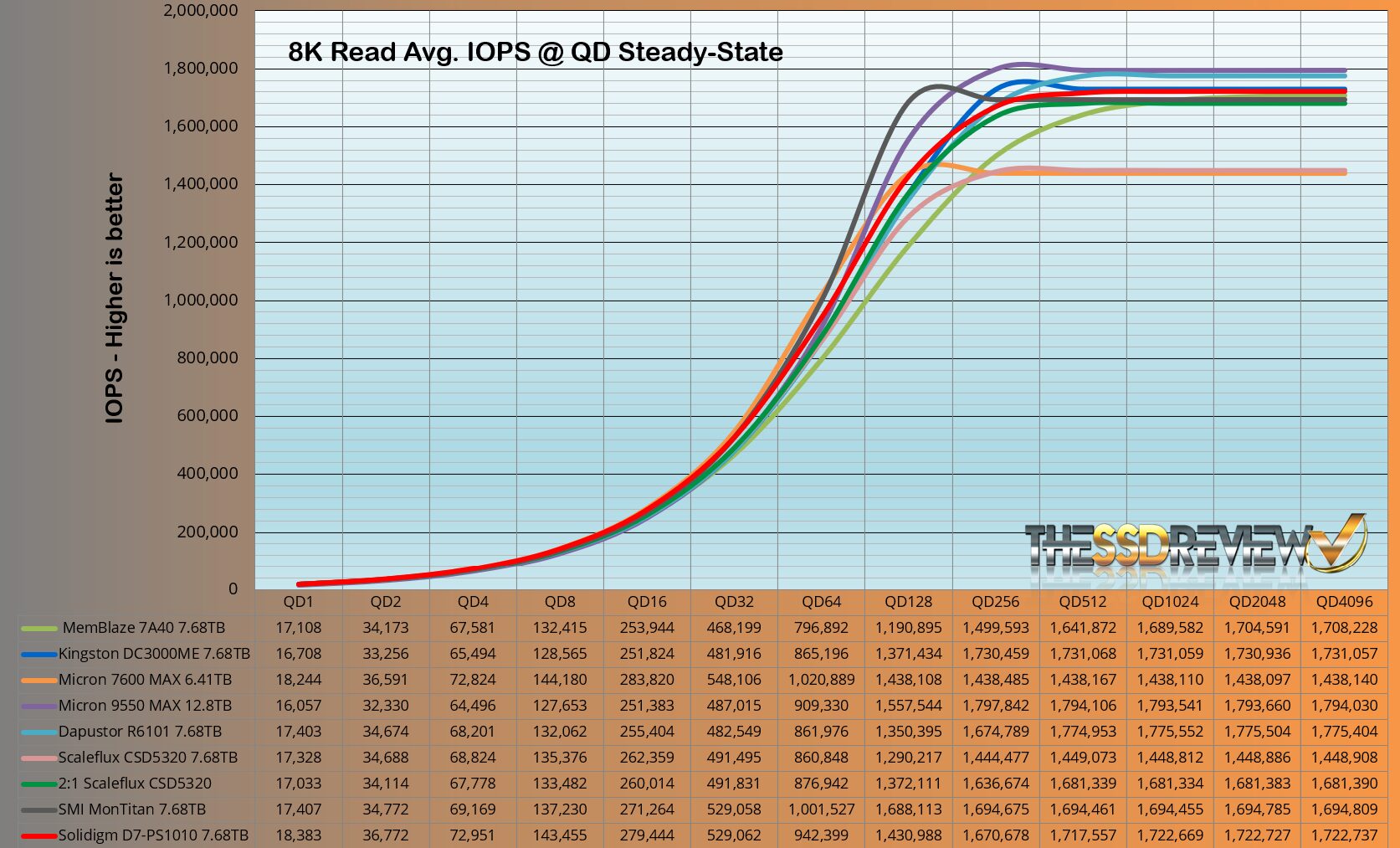
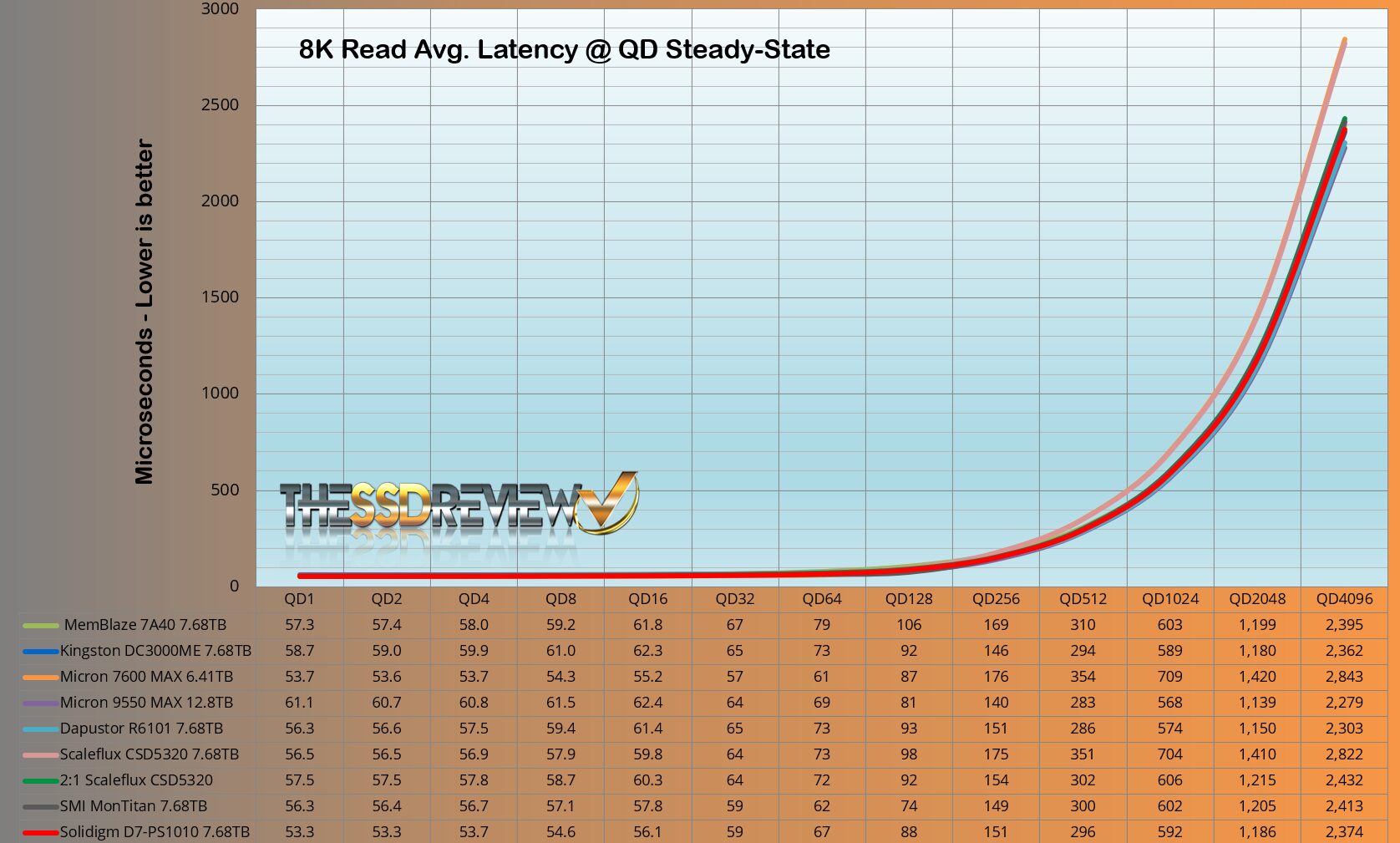
The D7-PS1010 8K read average performance of 1722K is very impressive.
8K 70/30
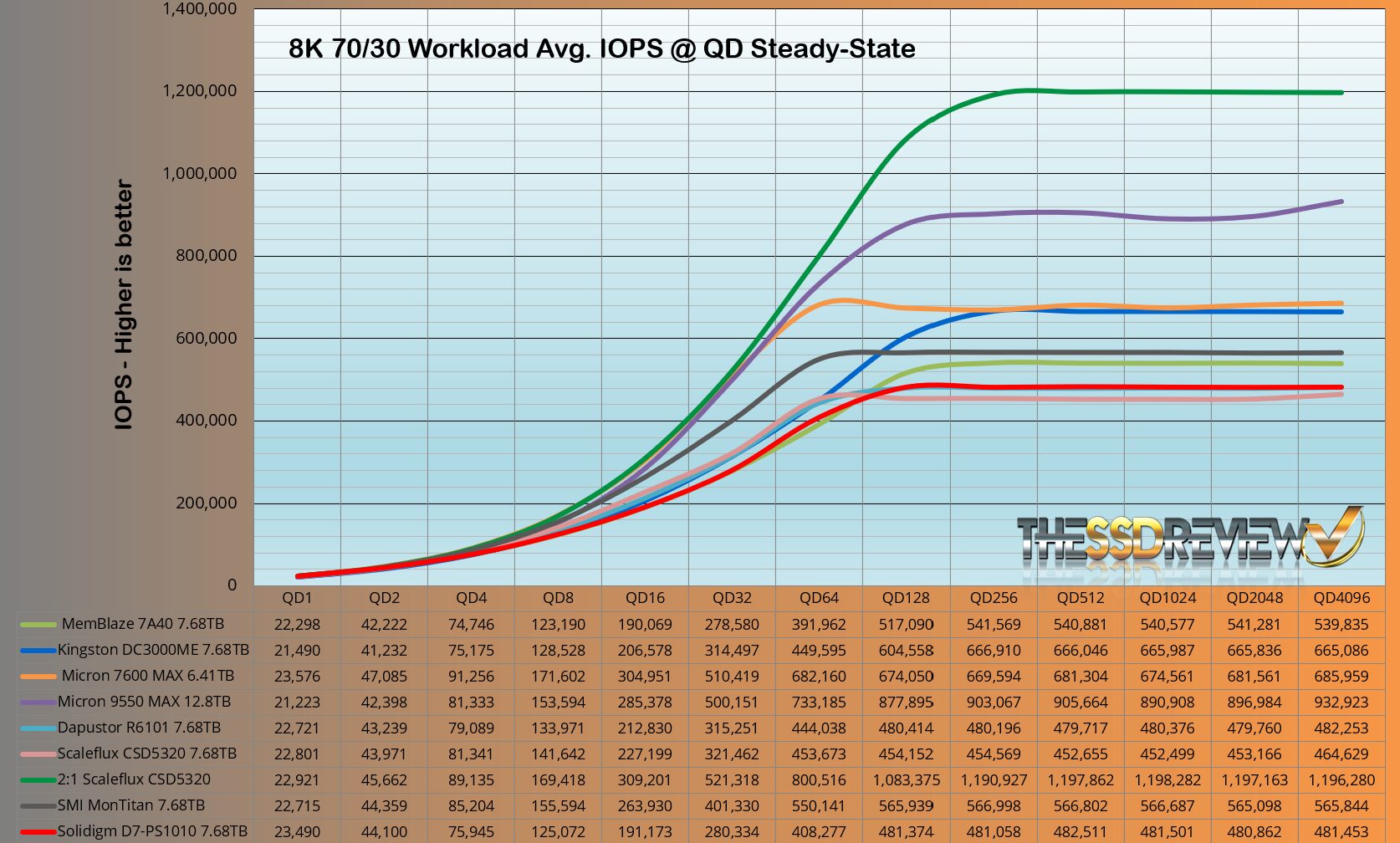
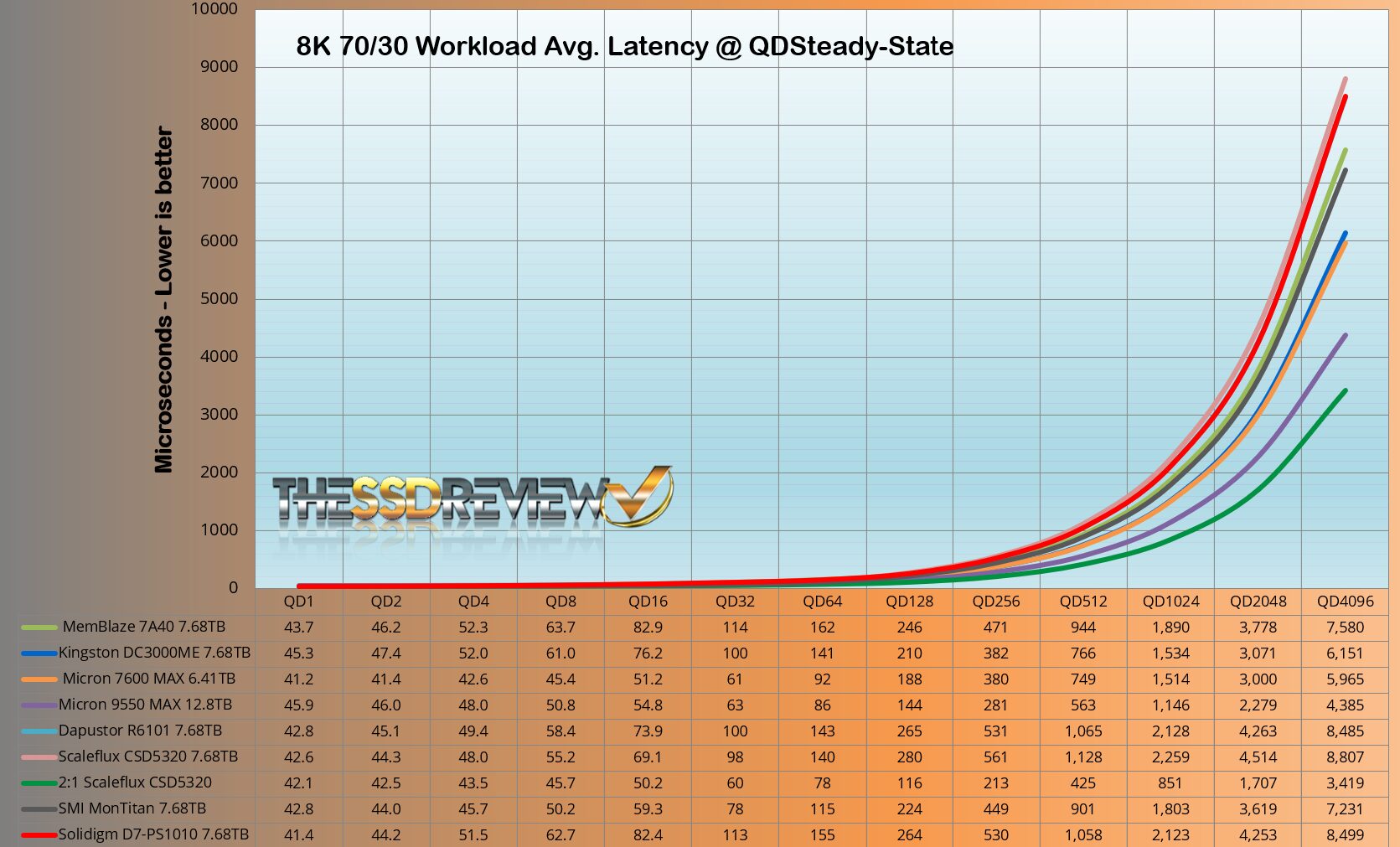 8K 70/30 is representative of a typical database workload and 481K IOPS decent.
8K 50/50
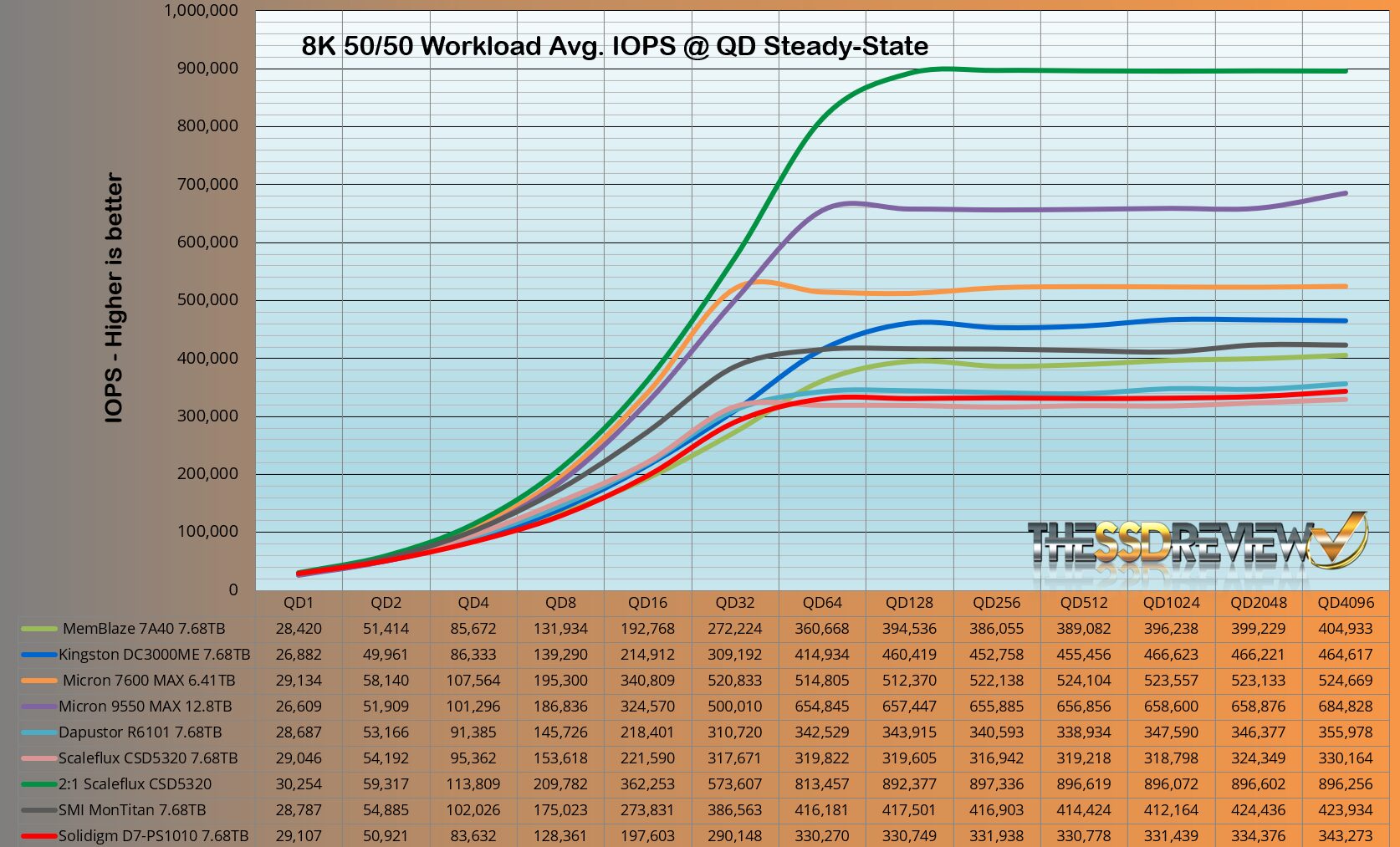
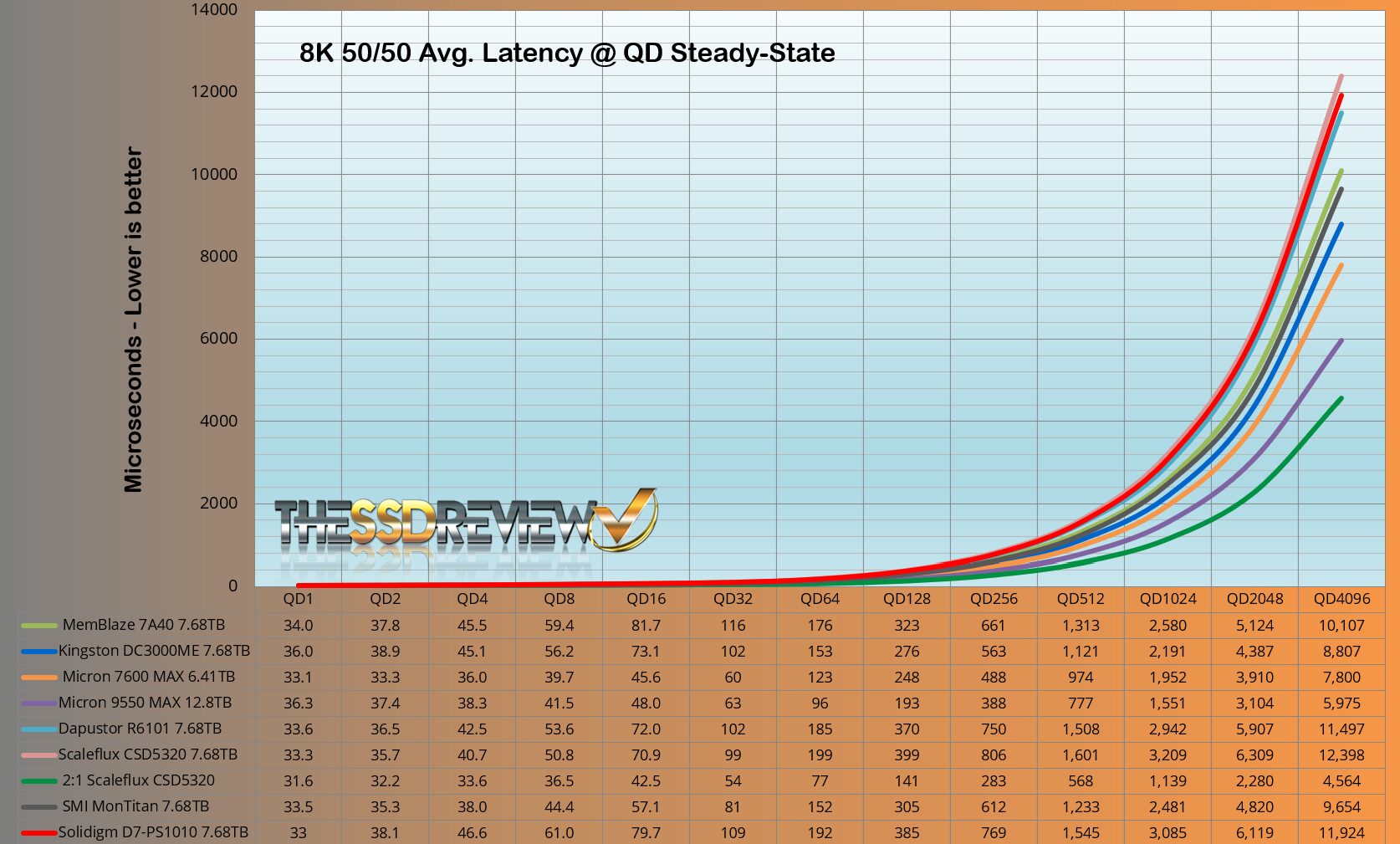
330K 8K 50/50 write IOPS trails behind most but is still a good result.
REPORT SUMMARY AND FINAL THOUGHTS
While overall performance often dominates discussions around data center SSDs, the significance of the E1.S form factor cannot be overstated. It enables PCIe Gen5 speeds of up to 14.5 GB/s while delivering substantially higher storage density. The cold-plate-cooled D7-PS1010 is the result of a collaboration between Solidigm and NVIDIA and is specifically designed for the NVIDIA NVL72 platform. This solution increases rack density, improves energy efficiency, and delivers a clear and compelling competitive advantage.
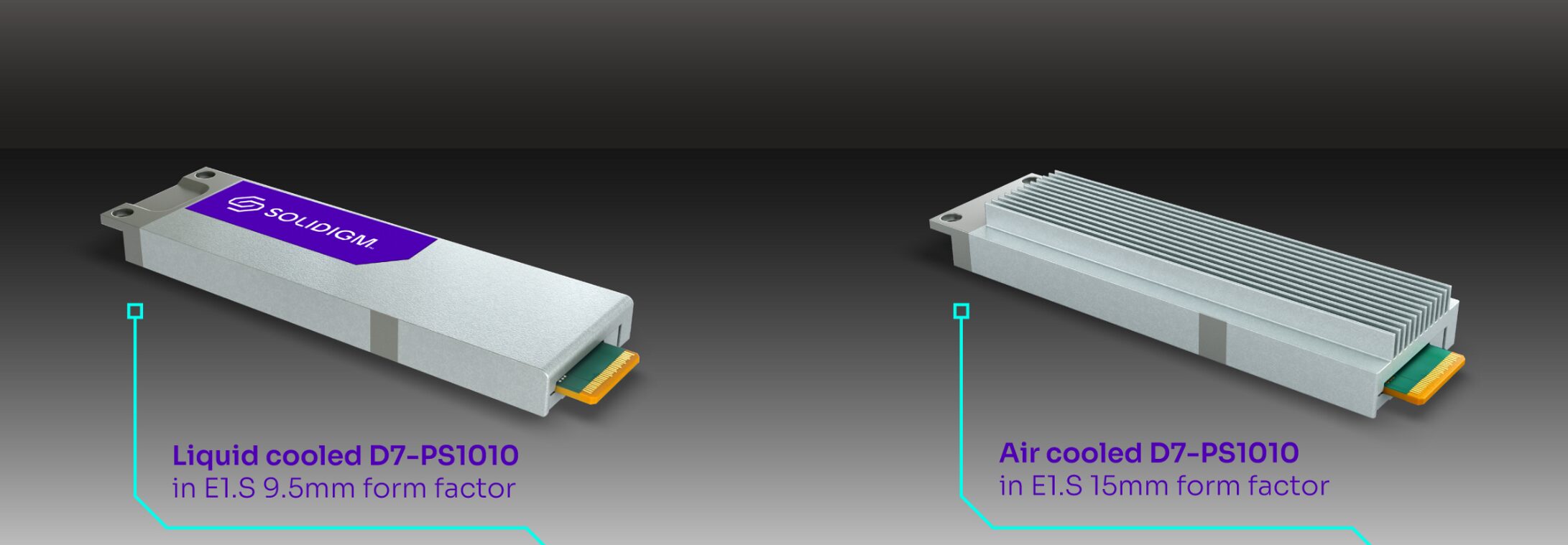
Through this collaboration, the liquid-cooled D7-PS1010 is the first SSD approved for the direct liquid-cooled NVIDIA GB300 NVL72 platform. It achieves PCIe 5.0 performance of 14.5GB/s read and 9GB/s write data throughput with up to a very impressive 3.4 million IOPS.

The D77-PS1010 is ideally suited for cloud data centers, HPC, general purpose servers (GPS) and OLAP databases (online analytical processing) and would fit right at home in an AI environment. Editor’s Choice!