 The SSD Review The Worlds Dedicated SSD Education and Review Resource |
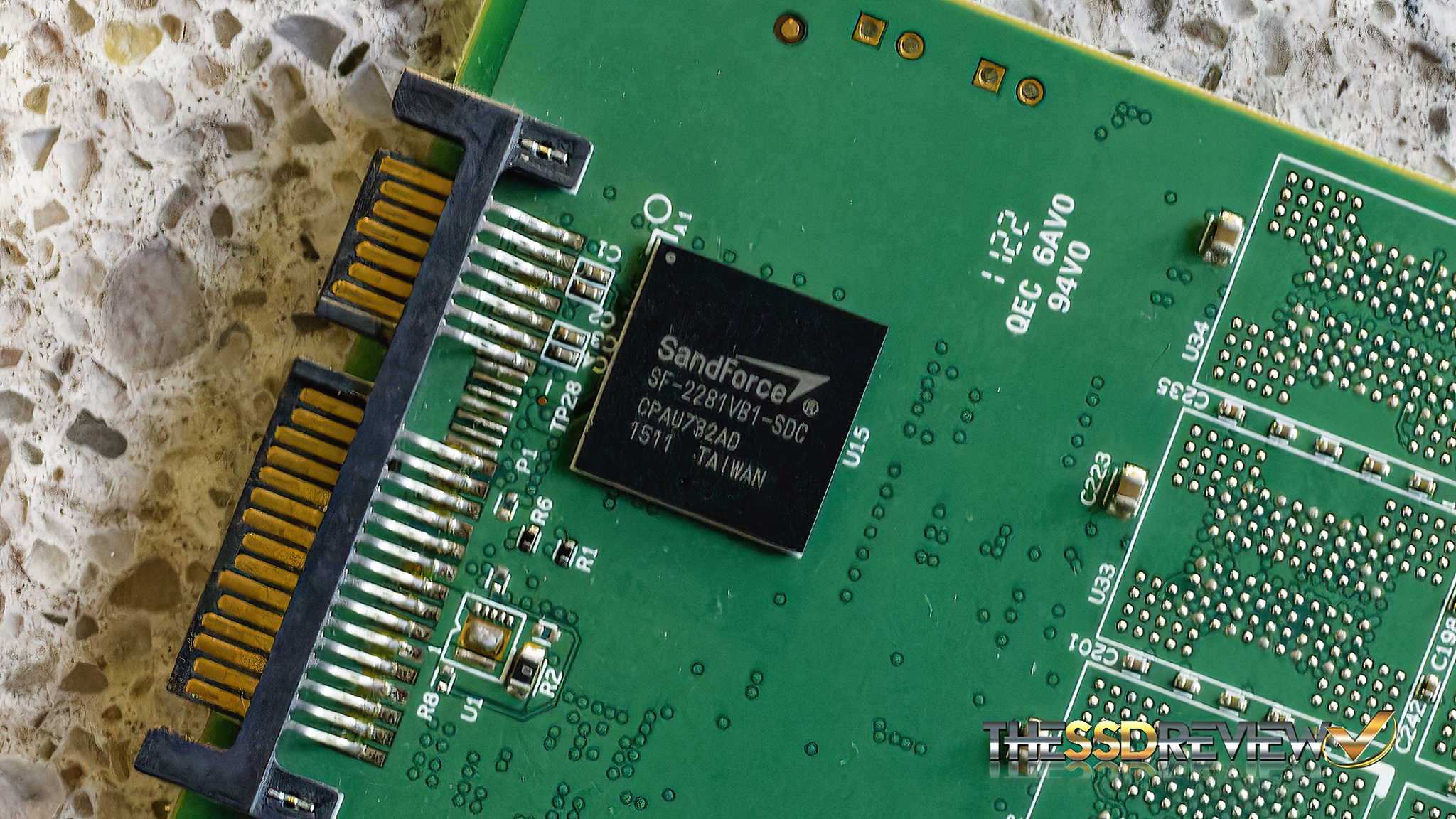
It’s funny how things come full circle. In many ways, The SSD Review is where it is today as a result of a close friend named Kent Smith way back in 2009. Kent worked for a company named Sandforce. SandForce was an early pioneer of solid state drive controllers and, as coincidental as it may seem, SandForce’s SSD controllers contained the companies proprietary ‘Durawrite’ technology. Durawrite used lossless data compression to reduce the amount of data physically written to the NAND flash memory. Data compression. As is the norm in the tech world, SandForce was eventually sold to LSI Corporation, who were sold to Avago and then later to Seagate. Companies exchange hands… and so does the expertise that brought us to where we are today.
There was a time when The SSD Review was the ‘go-to-‘ resource for everything SSDs, including enterprise SSD reviews. Through blame that I can only attribute to myself, we gradually strengthened our consumer and client SSD review portfolio and enterprise reports faded. Actually they dissappeared completely with the last posting way back in 2018, some seven years ago. Well, that has changed primarily because of a close friend in Jon Coulter. Jon kicked me in the ass and taught me everything there was to know about compiling detailed and somewhat complex enterprise and data center SSD reviews. I’ve been on an enterprise testing roll lately. Believe it or not, reporting on SSDs (and specifically enterprise SSDs) first hand can be a very satisfying, enjoyable and even calming experience.
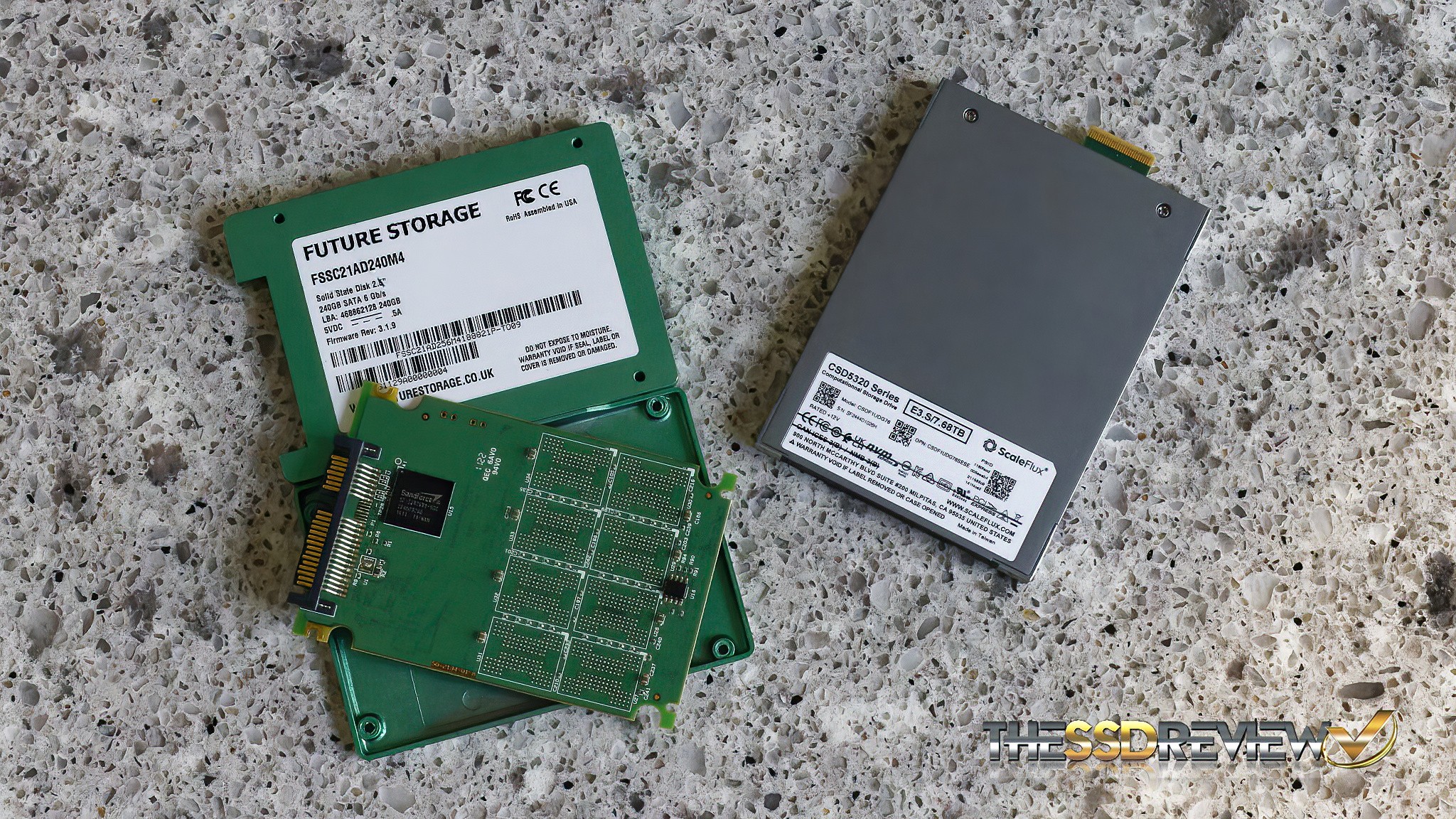
So anyway, the inevidable contact was made with Keith McKay of ScaleFlux, a company that specializes in enterprise SSDs and SoC controllers. Our interest was exploring ScaleFlux’s CSD (Computational Storage Drive) 5320 Enterprise SSD which utilizes data compression, a highly parallel and very low latency implementation of DEFLATE written in RTL without software or firmware. This could honestly be a modern day version of Durawrite. At the time, however, I had no clue that Keith’s ‘pedigree’ as an Application Engineer included (but not limited to) employ with SandForce, which became LSI and then Seagate.
Digging a little deeper into ScaleFlux, we were surprised to learn that Hao Zhong, the CEO and Co-Founder, was also a key component of early SandForce success. In fact, taking a quick check of the ScaleFlux Leadership Team as a whole, there isn’t a corner of the industry missed with respect to expertise. Micron… Marvell…WD… SanDisk…EMC… HP… and of course, SandForce, LSI and Seagate.
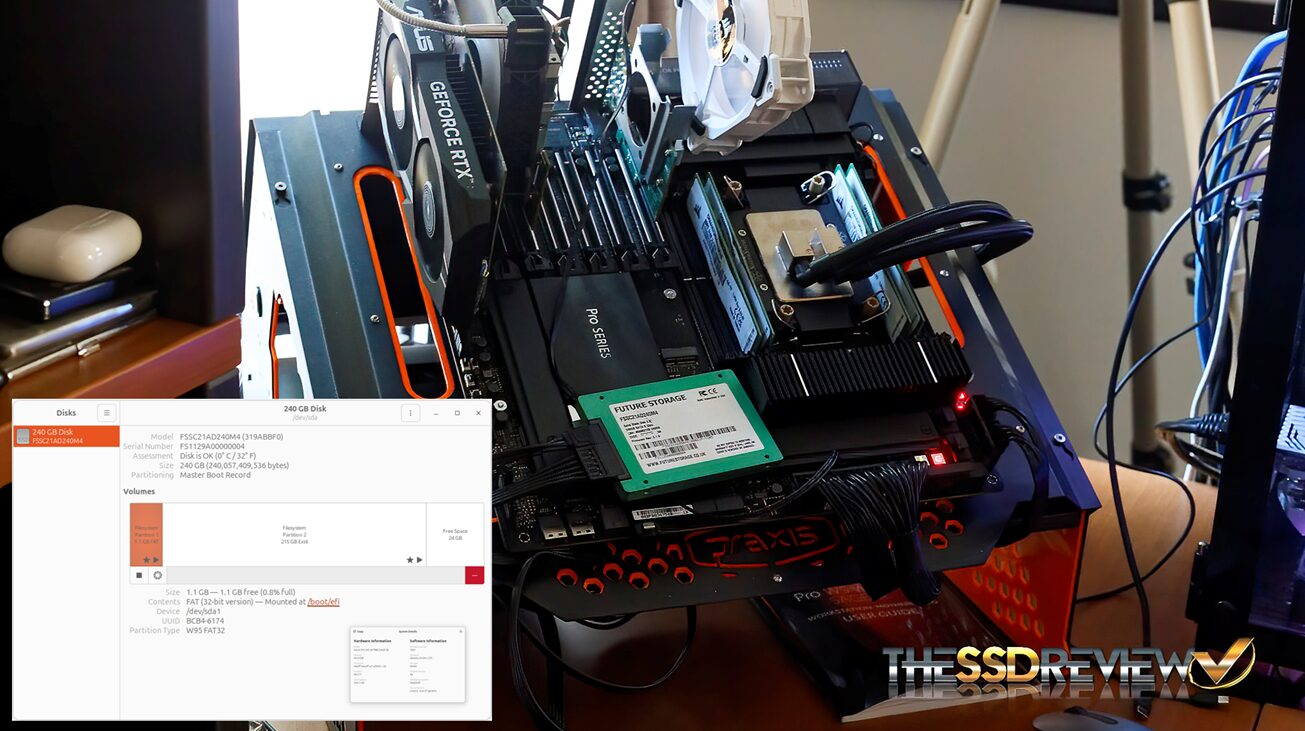
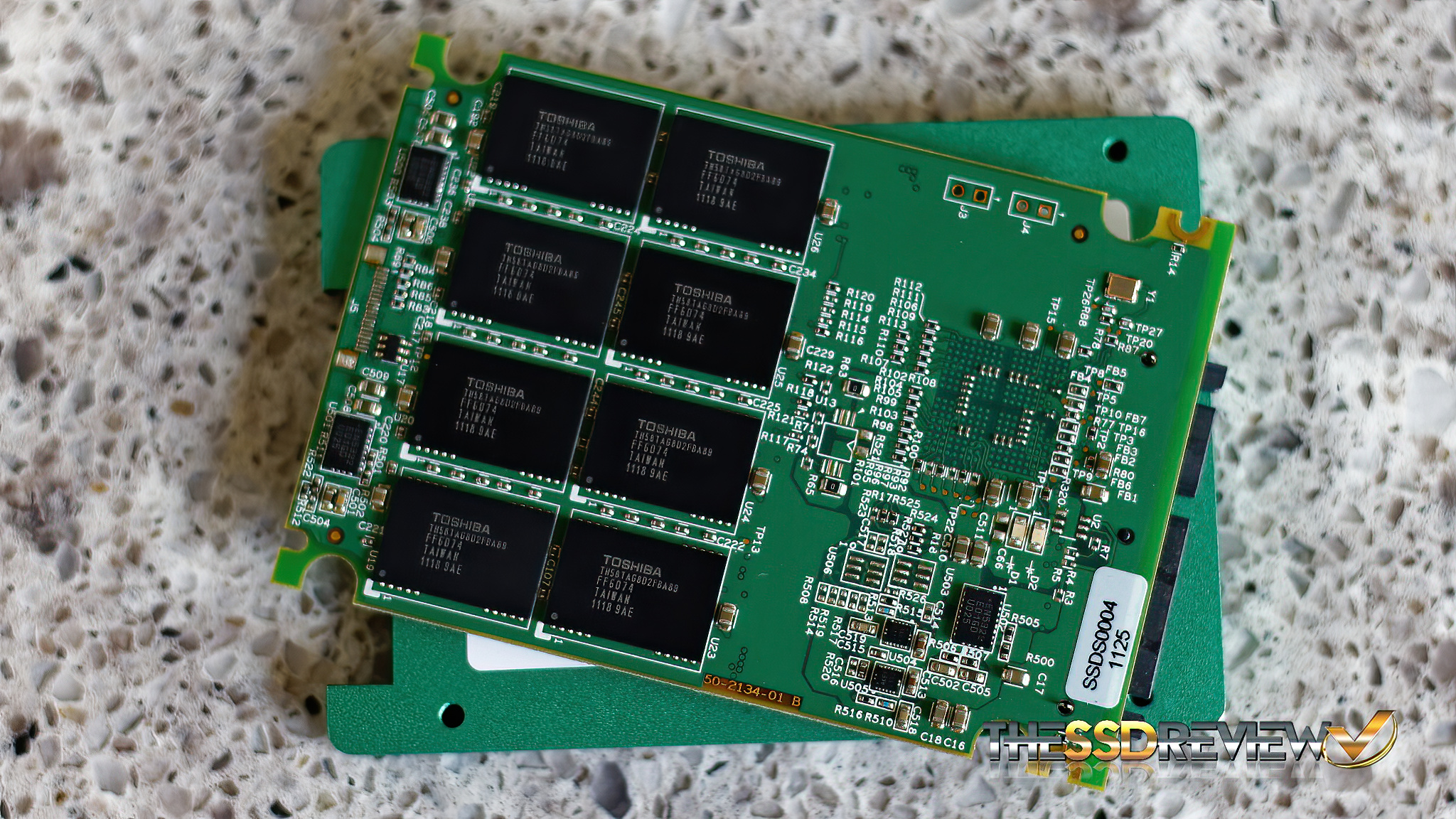
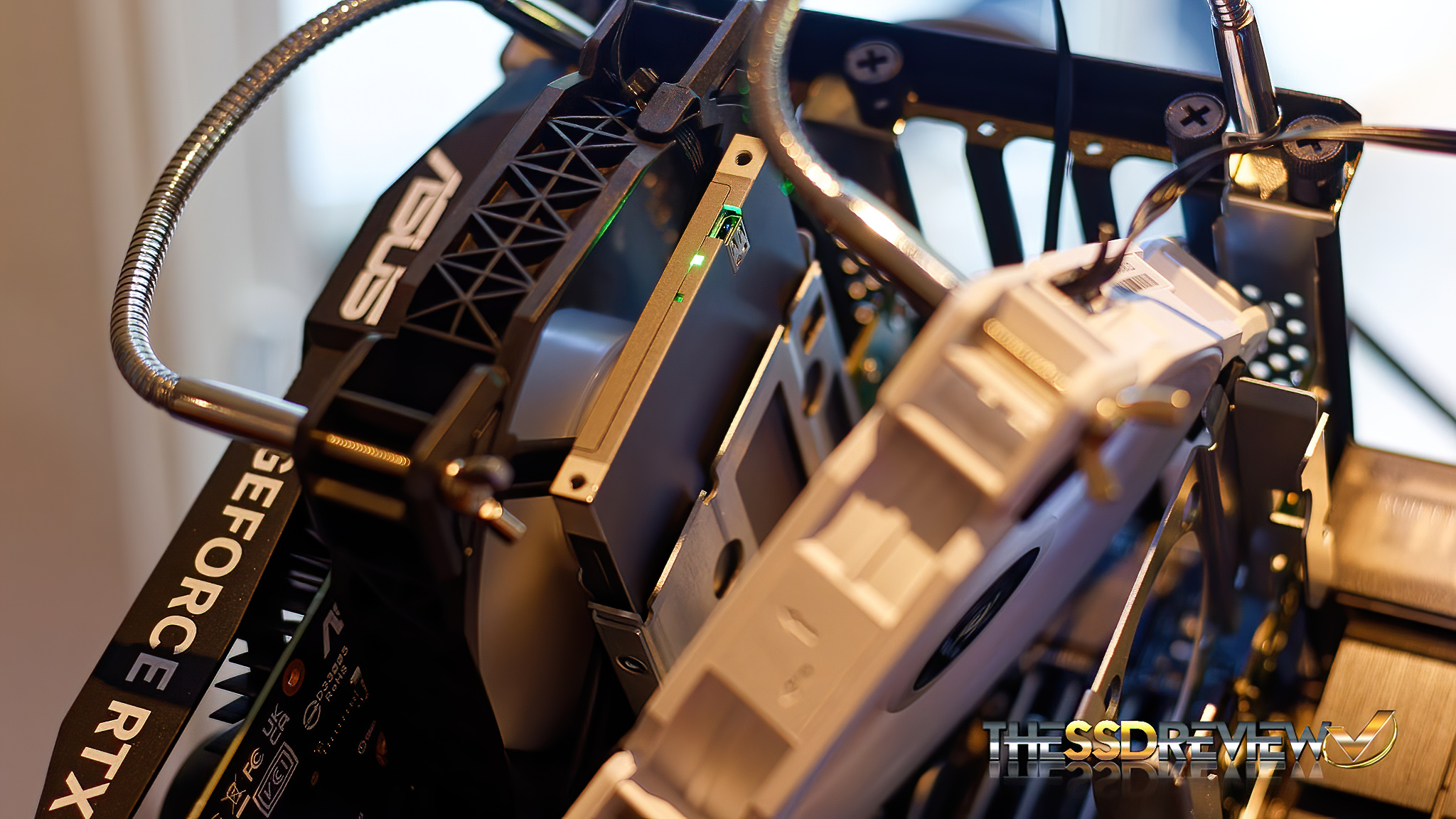
So…. let’s be different. We dug into our vault of tested SSDs and pulled out a Future Storage 240GB SATA 3 SSD that we reviewed way back on August 20, 2011. This SSD contains a SandForce SF2281 SATA 3 controller … yes with Durawrite SSD data compression. Might you think this still works? Check the above photo from our TSSDR Enterprise Test Bench in action. We migrated our Ubuntu/FIO Test environment onto this ‘ancient’ SSD and our testing of the Scaleflux CSD5320, in its entirety, was completed using this SandForce controlled Future Storage SATA 3 SSD. The things we do right? If you think about it though… this is a pretty good representation of a compressible data SSD in action…14 years after it was stored. Great place to start!
The ScaleFlux CSD5320 Gen5 Enterprise SSD. Let’s start our discussion with a few key points to ensure we are all on the right track. First off, this SSD is as plug and play as it gets. It doesn’t require special drivers, software or application configuration. It can be utilized in 1:1 uncompressed mode, or with 2:1 data compression where this enterprise SSD truly spreads its wings. The end result? The ScaleFlux CDS5320 can provide unmatched PCIe 5.0 performance while accomplishing up to 20x storage density, 4x power efficiency and up to 6x the endurance of its competitor.
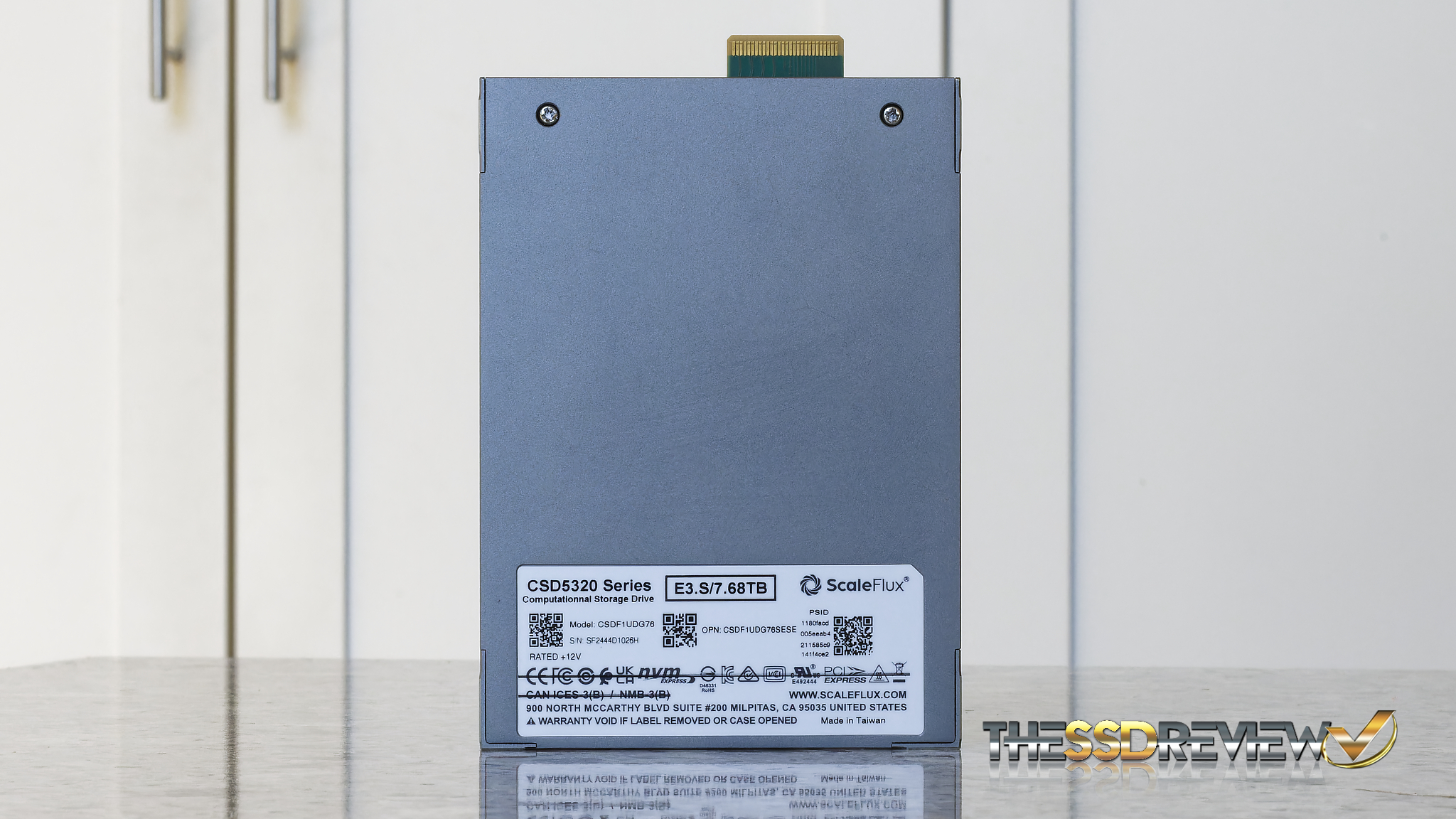
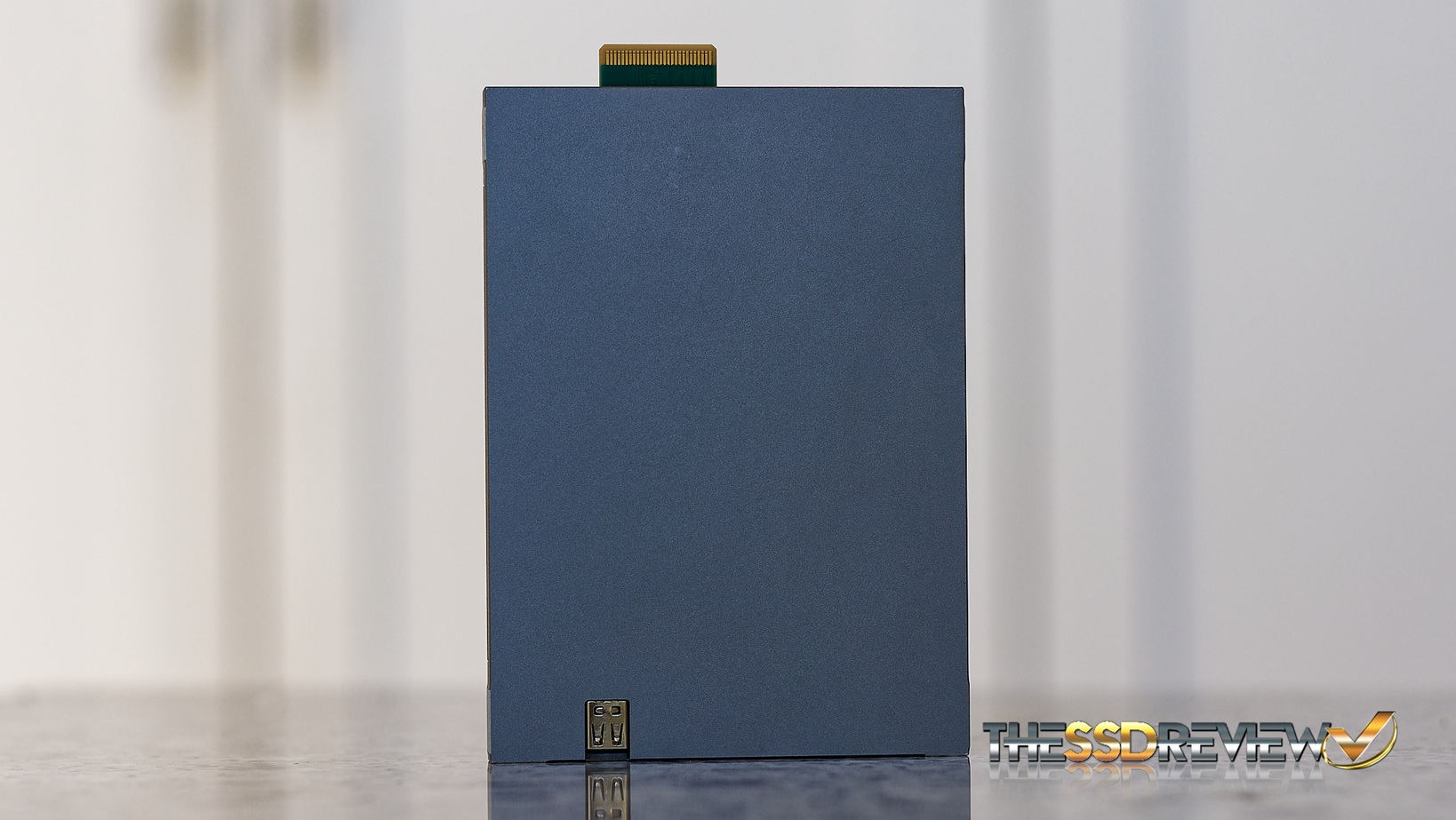
The Scaleflux CSD5320 is a PCIe 5.0 four channel single port (or 2×2 dual) enterprise SSD that is (or will be) available in U.2, U.3, E3.S, E1.S and E1.L form factors. It has 3.84TB, 7.68TB, 30.72GB, 61.44TB, and 122.88TB size variations, and its security feature set includes AES-256 encryption, TCG Opal 2.02, Key per IO and SED. This is a NVMe 2.0b SSD that is OCP DC SSD compliant, has latency monitoring, NVMe Thin provisioned Namespaces Virtualization (48PF/32VF) and OCP Telemetry data.
The CSD5320 houses a two-sided PCB which contains their proprietary SFX5000 16-channel Gen5 SSD controller and 16 pieces of KIOXIA BiCS8 218-layer 3D eTLC NAND flash memory. It also contains two pieces of SKHynix LPDDR5x DRAM, one piece being 16GB and the other 8GB for 24GB in total.
Performance of the CSD5320 is variable depending on whether 2:1 compression has been activated, but even at 1:1 compression, this is a pure Gen5 SSD capable of 14GB/s read and 11GB/s write sequential throughput and up to 3200K IOPS. When running at 2:1 compression, there isn’t a competing SSD in the industry that can match the performance of the CSD 5320 as it reaches 13GB/s write sequential throughput and 1.2 million random write IOPS.
The CSD5320 speaks to under 5 watts idle and under 18 watts active power efficiency, has user configurable power states, comes with a 5-year limted warranty and has 2 million hour MTBF. This is not a retail item and Scaleflux related that the price for this SSD is presently $880 when purchased directly, although pricing is subject to change quarter to quarter. We are aware, and buyer beware, that this SSD is advertised on the internet ‘grey market’ for about 3x the available price from ScaleFlux directly. Check Amazon. Our testing today includes both uncompressed and compressed modes and are detailed within the same charts.
Strange, could not find ANY information about the Future Storage FSSC21AD240M4 (and other capacities) online. Seems like it was just a prototype that you have. However, based on the SSD you have with Toshiba NAND, it is most likely to be equivalent to the Mushkin Chronos DX 240GB as it also used Toshiba NAND and even almost has the same circuit board layout!
That being said, SSDs had evolved a lot over the recent years with these new Gen5 SSDs and even soon, Gen6 SSDs!! The performance of the Scaleflux CSD5320 is just INSANE!!