The SSD Review The Worlds Dedicated SSD Education and Review Resource |
RANDOM PERFORMANCE BENCHMARKS
4K RANDOM WRITE/READ
We precondition our enterprise SSDs using 100% random 4K writes at QD256 for two drive fills. Performance data is recorded every second. We track this data to monitor the enterprise SSDs transition to steady-state and to verify that steady-state conditions are achieved before initiating queue depth testing. Steady-state is established after a full drive fill and the average steady-state 4K random write performance is approximately 707K IOPS.
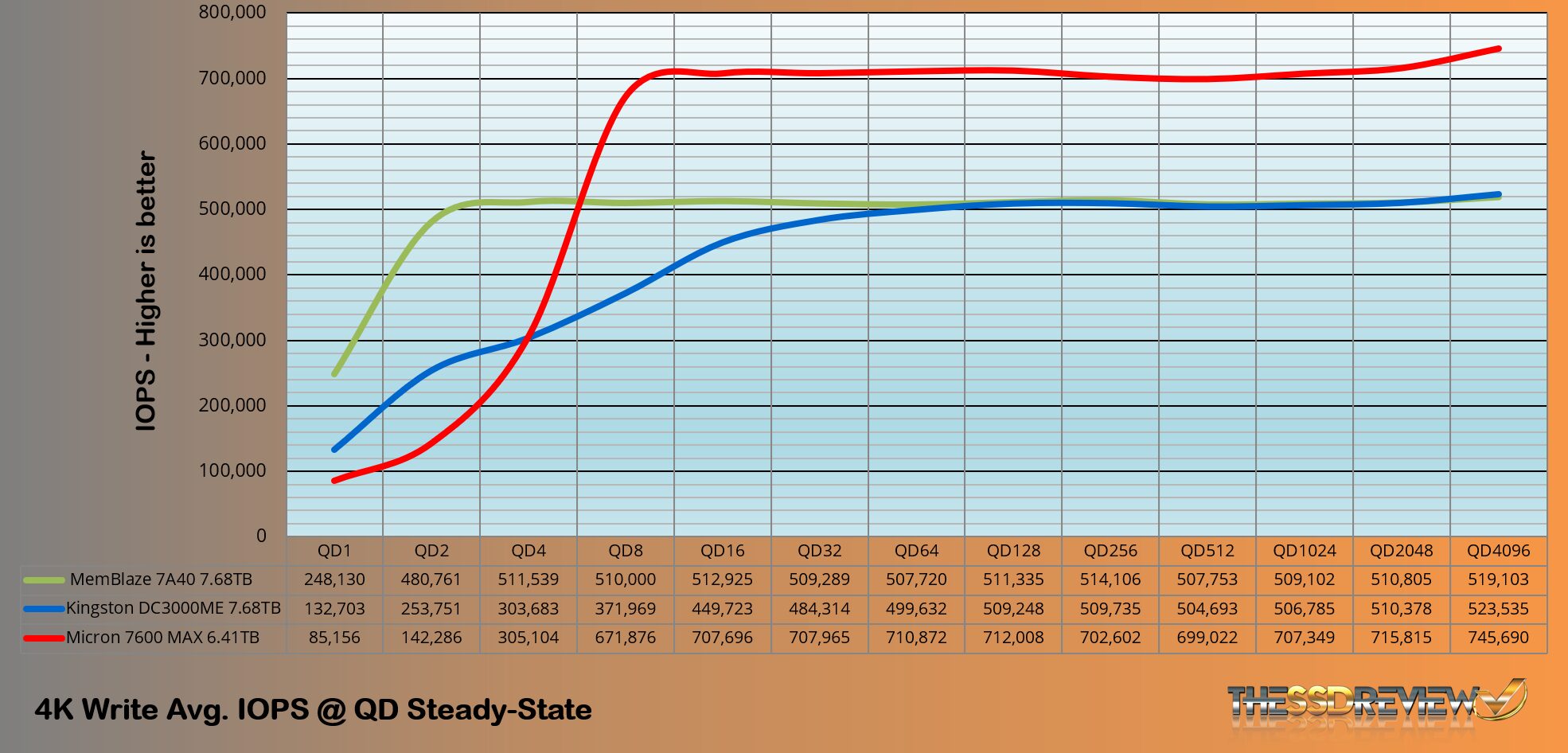
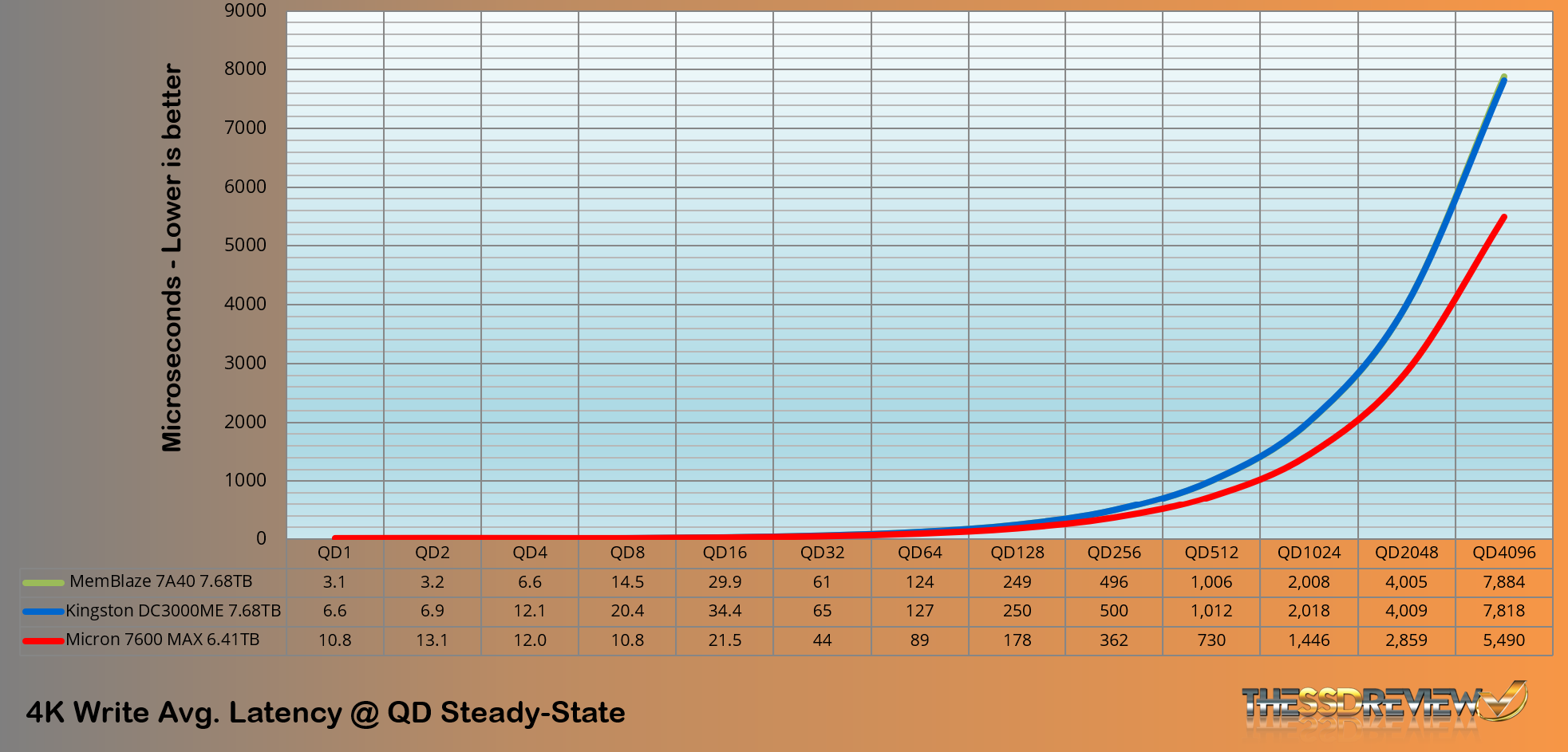
This was easily the best result we have achieved for the Micron 7600, or any other enterprise SSD to date for that matter. Not only did its performance curve level off relatively early at QD16, but also, it maintained a spread of 200K IOPS higher than both the Memblaze and Kingston SSDs. These are the performance numbers many don’t see when seeking out those high sequential industry-standard speeds.
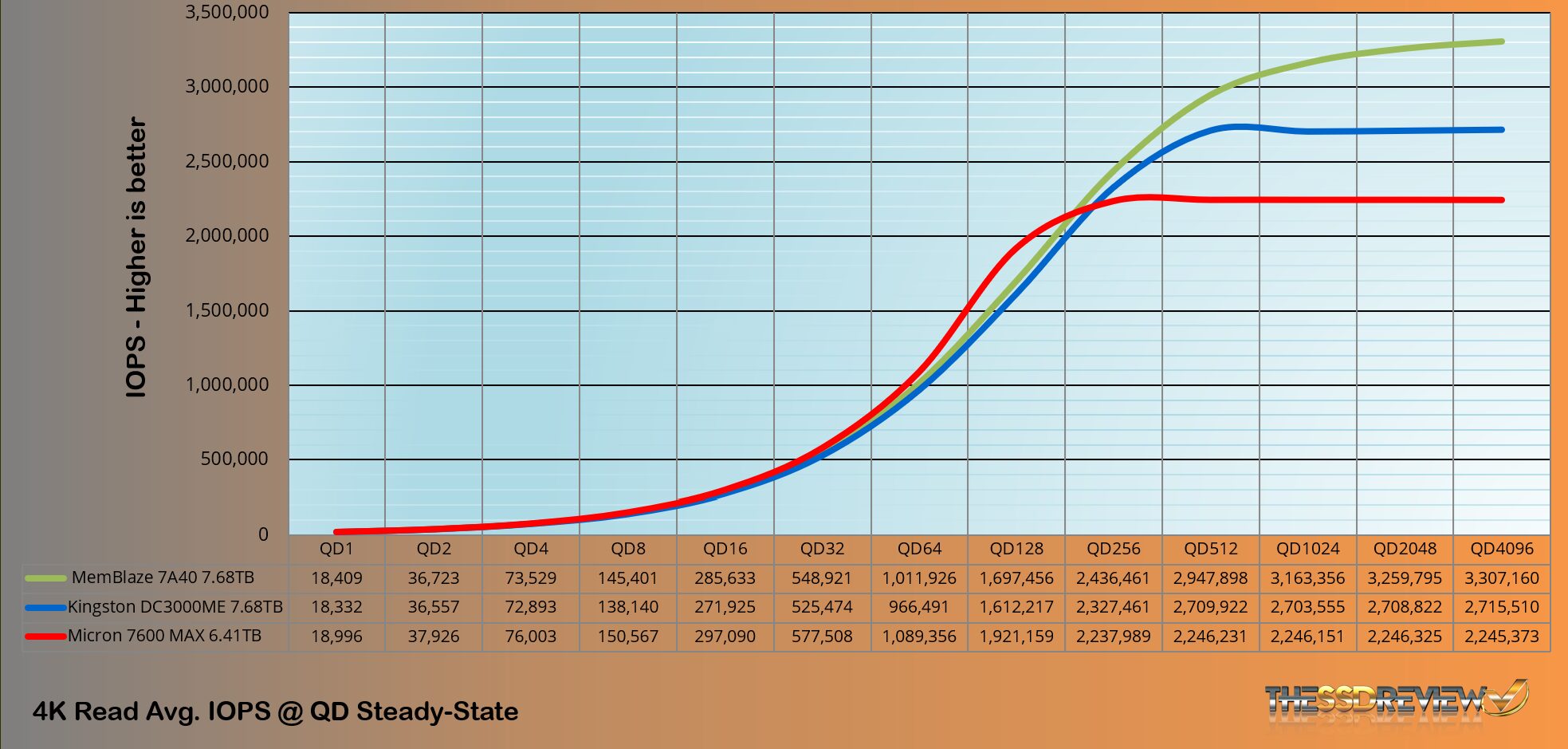
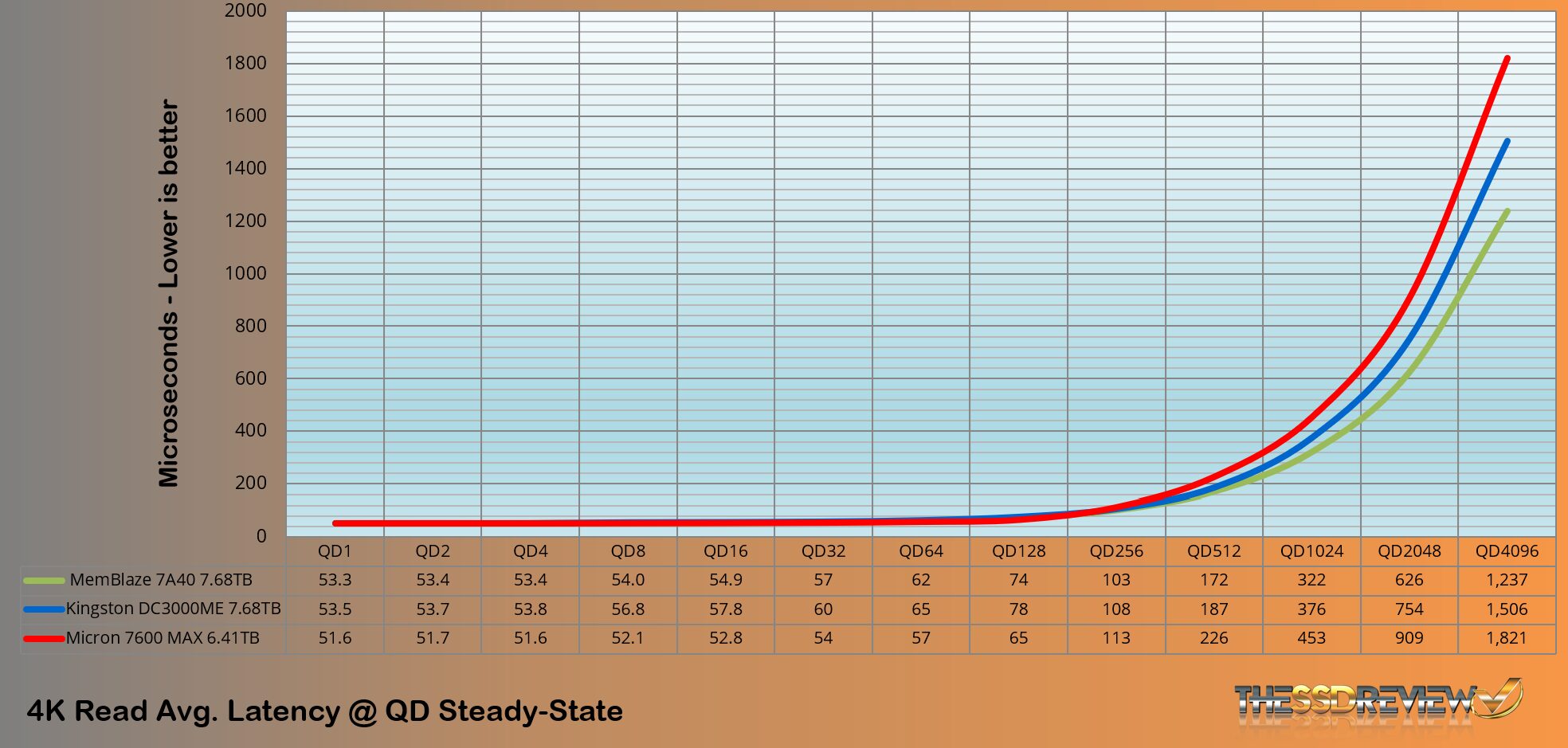
The listed spec for the Micron 7600 MAX Gen5 SSD is 2100K IOPS for sustained random read 4K IOPS during steady-state operation and our testing hit 2246K IOPS.
4K 70/30
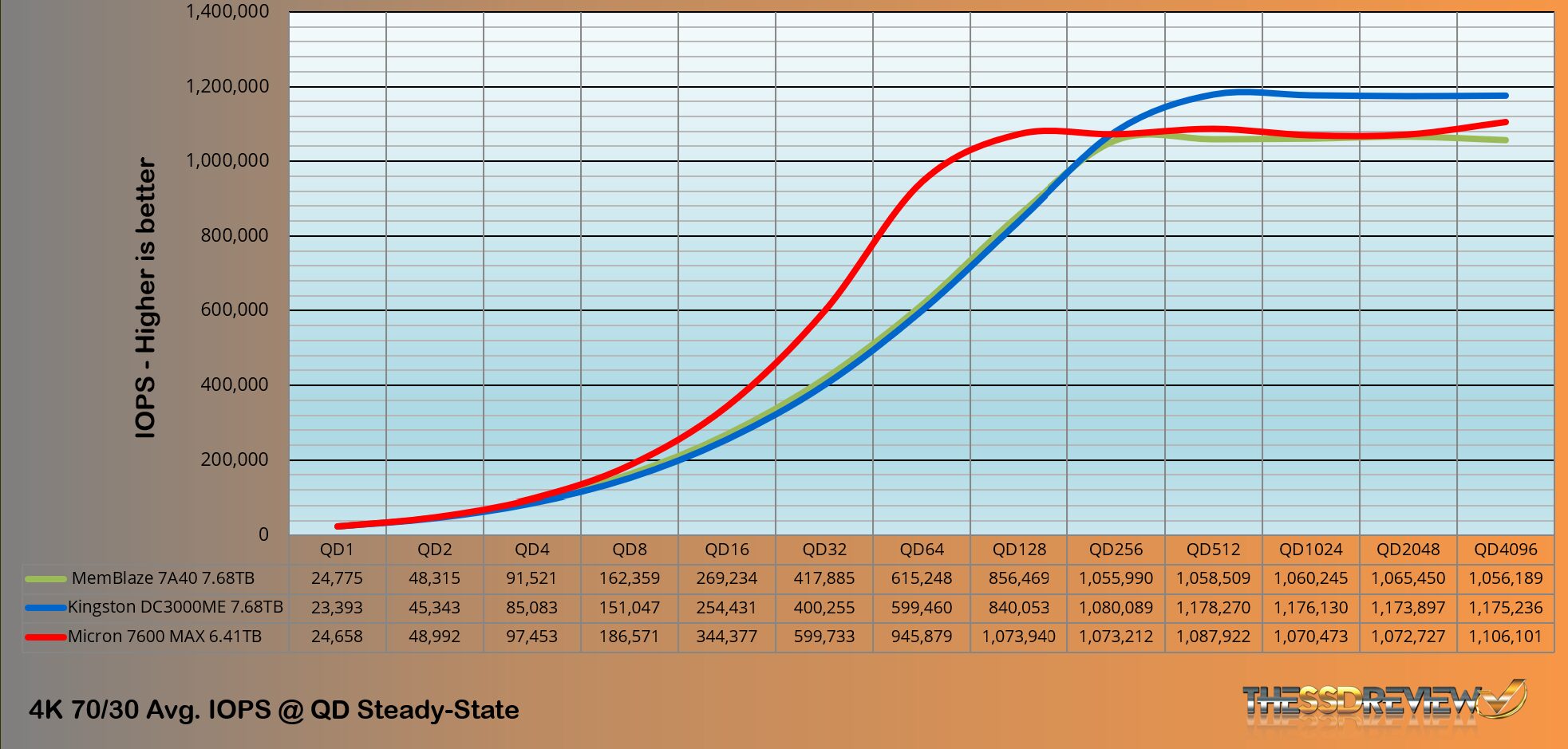
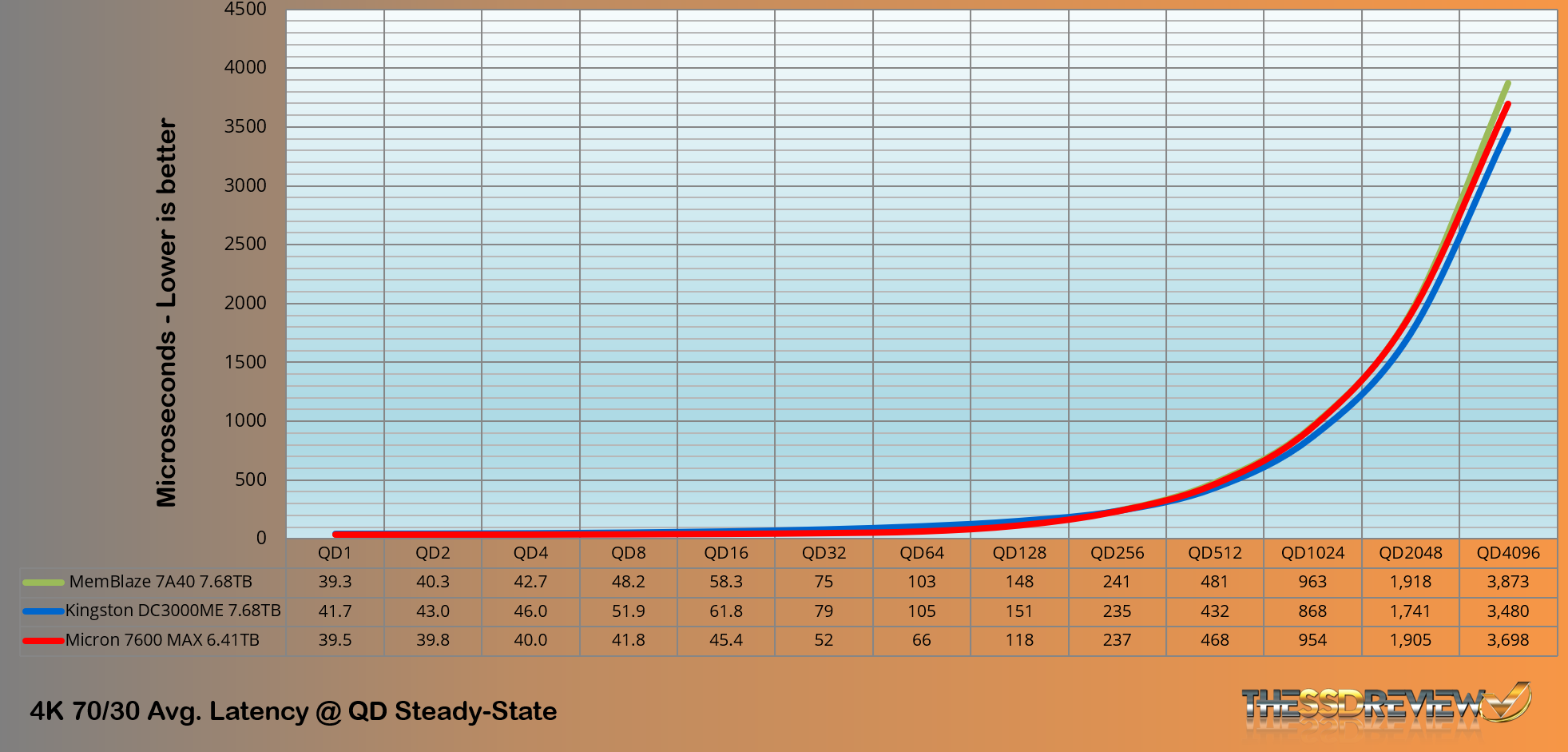
There is not a 50K spread between all three SSDs tested, yet the Micron performance curve hit top marks much sooner than the Memblaze and Kingston SSDs.
4K 50/50
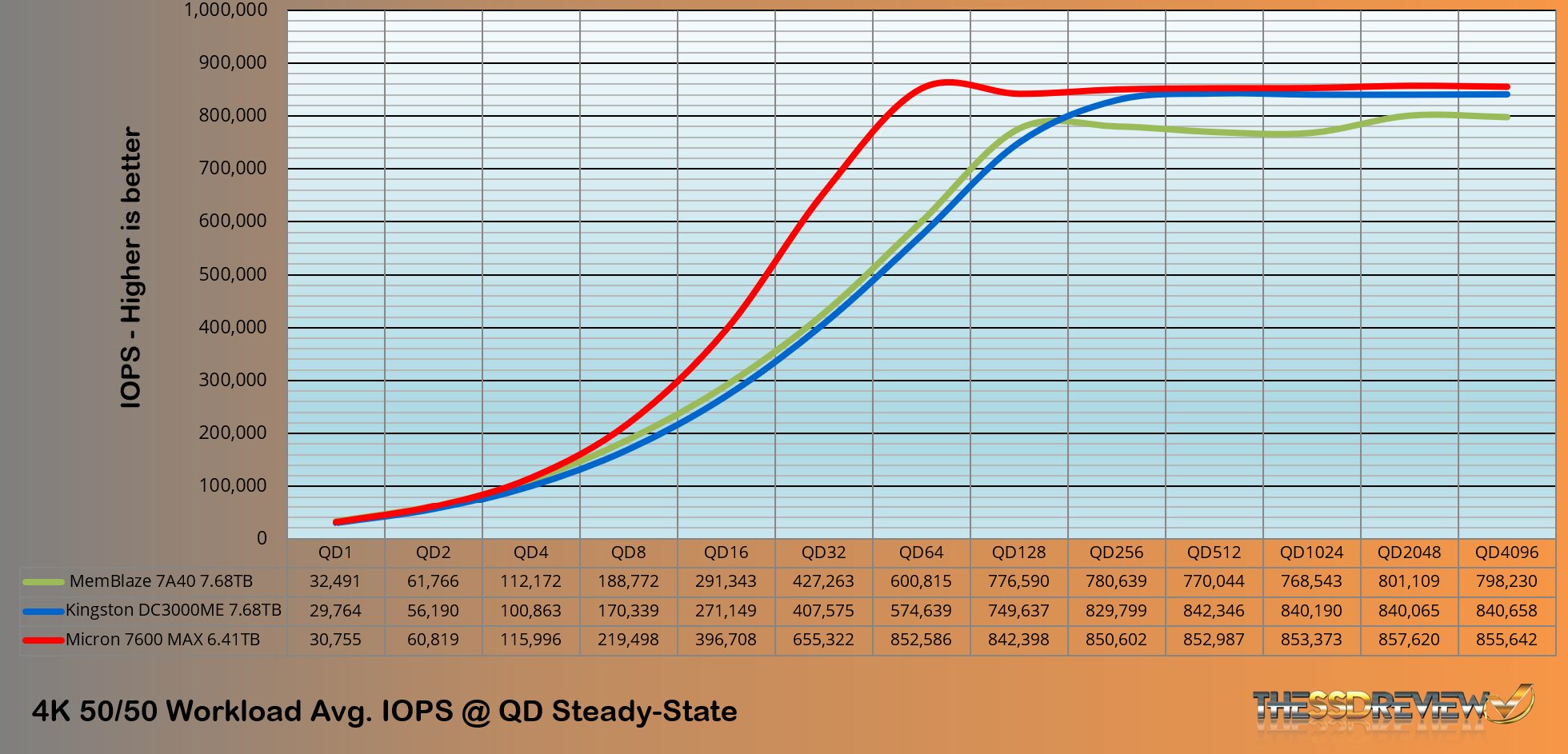
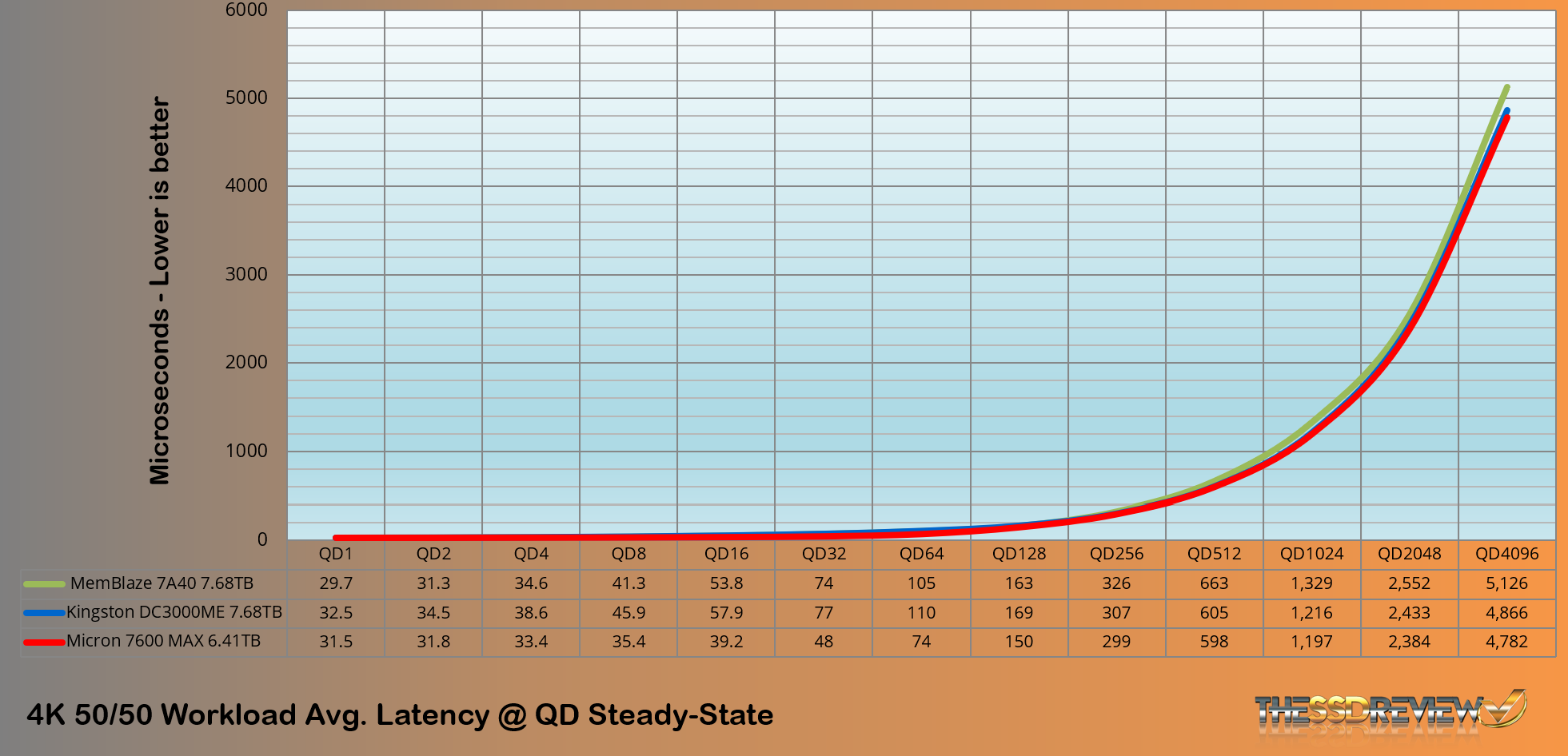
The Micron 7600 MAX pulled off an average performance result of 854K IOPS through QD128-QD4096, which is very impressive. We were also surprised how that curve leveled off well ahead of the group and maintained that 840K mark dead on through QD128-QD4096.