 The SSD Review The Worlds Dedicated SSD Education and Review Resource |
Micron’s latest addition to the enterprise and data center market is the 7600 Gen5 SSD, offered in two variants. The 7600 PRO is optimized for read-intensive workloads like database queries or web servers, while the 7600 MAX, which we have on the test bench today, is engineered for mixed read/write applications. Although the PRO version offers higher maximum capacity, it supports up to 1 drive write per day (1-DWPD). The 7600 MAX, on the other hand, is built for endurance, rated at 3-DWPD, making it a better fit for mixed write-intensive environments.
The Micron 7600 MAX is an excellent choice for applications such as Online Transaction Processing (OLTP), high-performance computing (HPC), AI workloads, data logging, content creation, video surveillance, and certain big data analytics tasks that require continuous, frequent, and intensive data writes.
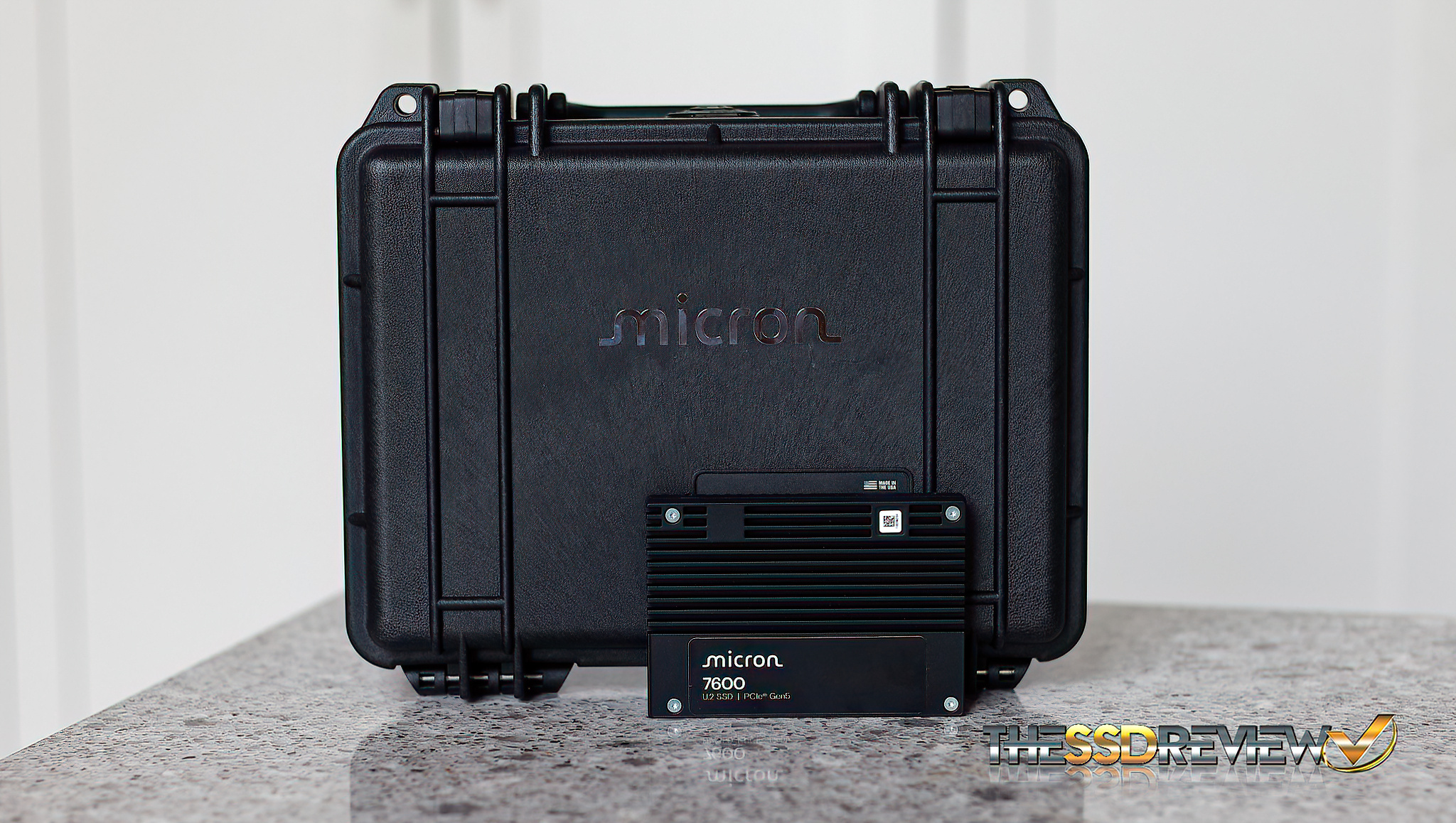
Both the 7600 PRO and MAX are offered in multiple capacity points, but the MAX version reserves more NAND for overprovisioning, resulting in lower usable capacities. For instance: 1.92TB (PRO) vs. 1.6TB (MAX), 3.84TB vs. 3.2TB, 7.68TB vs. 6.4TB, and 15.36TB vs. 12.8TB. This highlights the trade-off between the two; the PRO prioritizes capacity, while the MAX focuses on endurance and sustained performance. Two SSDs, each tailored for distinct enterprise workloads.
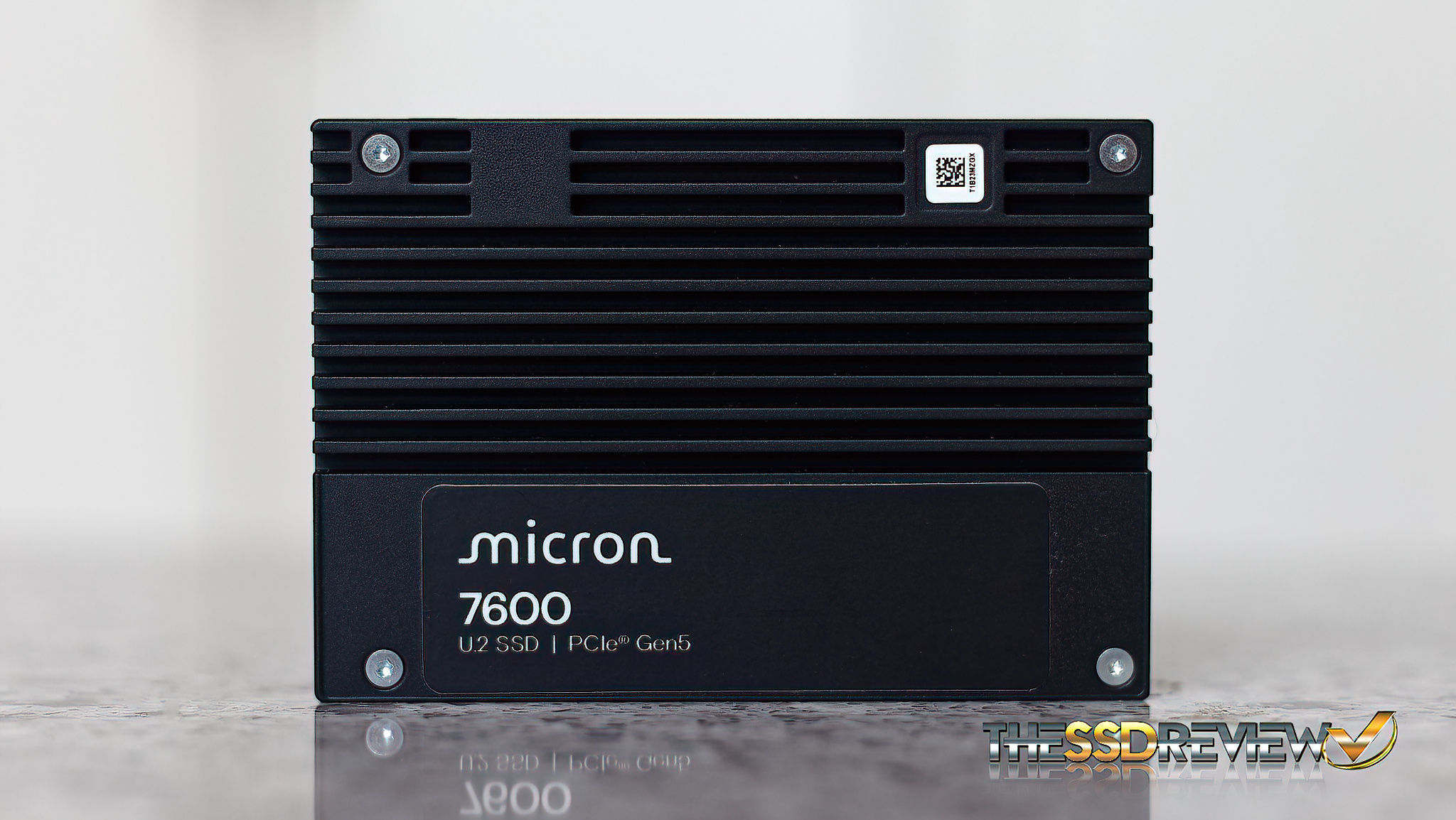
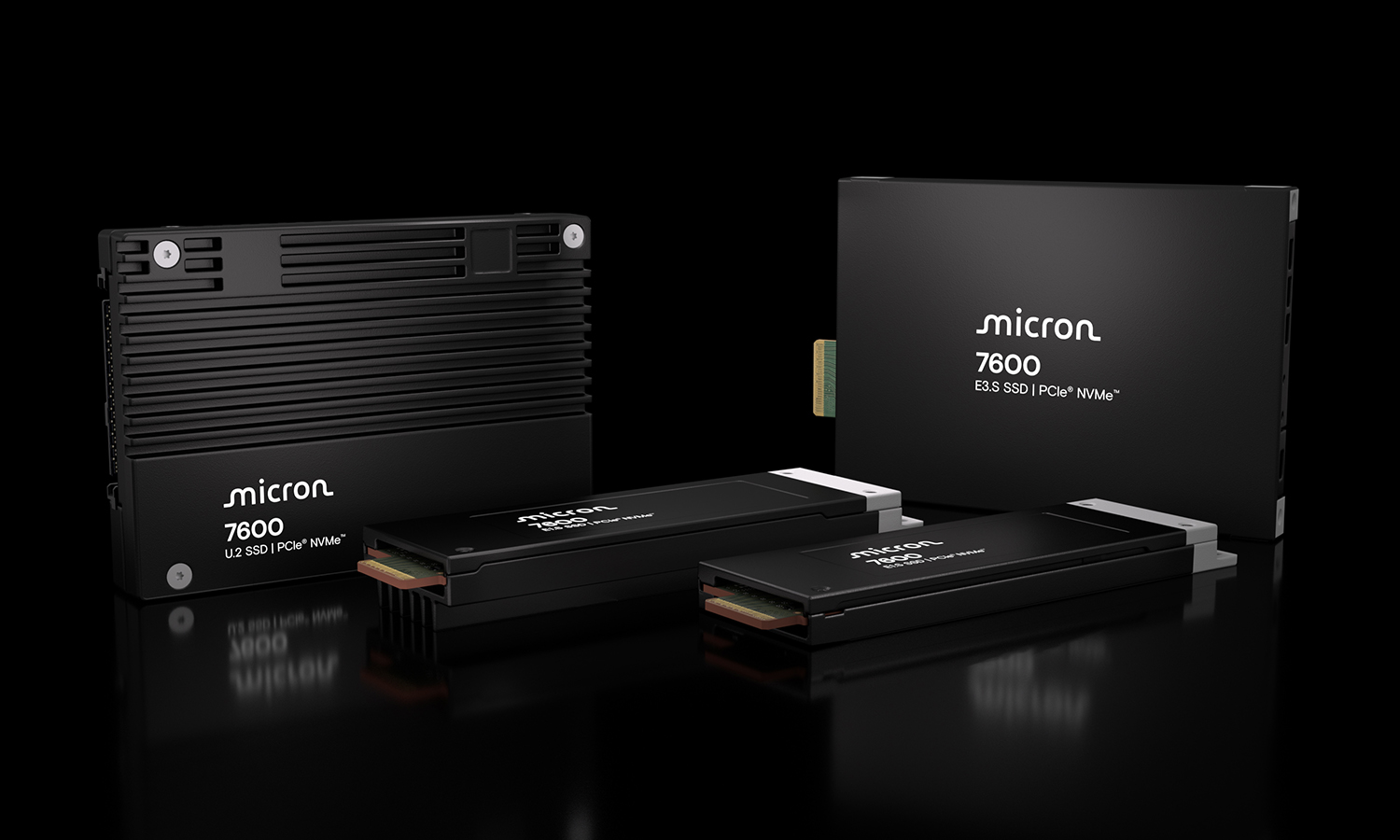
The Micron 7600 is a PCIe 5.0 (Gen5) x4 (4-lane) SSD that is available in 2.5″ x 15mm U.2 , E1.S and E3.S form factors. Both versions come with a 5-year limited warranty with the condition that the PRO is limited to 1-DWPD use while the MAX can be used up to 3-DWPD. We can find the 7600 PRO 7.68TB SSD available online for $1061 with the MAX version a bit higher at $1166. Check Amazon.
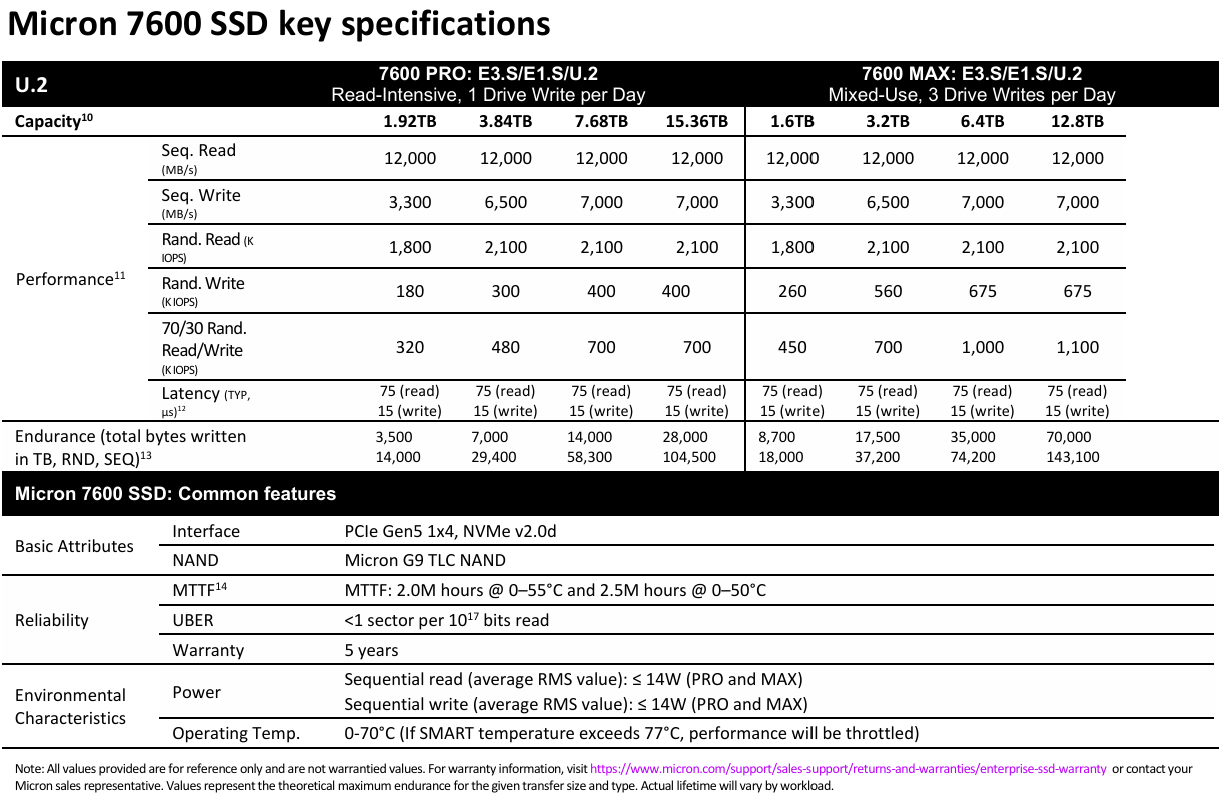
Our 7600 MAX sample delivers impressive performance, with up to 12GB/s sequential read and 7GB/s sequential write speeds, along with up to 2.1 million random read IOPS and 675K random write IOPS. These figures can vary depending on chosen capacity and whether it’s the PRO or MAX variant. The performance gap becomes especially noticeable in demanding workloads. For example, in 4K random write testing, the MAX achieved an outstanding 745,690 IOPS, significantly surpassing the PRO’s rated 400K IOPS. The chart below from Micron provides a detailed comparison of performance and endurance across different versions and capacities:
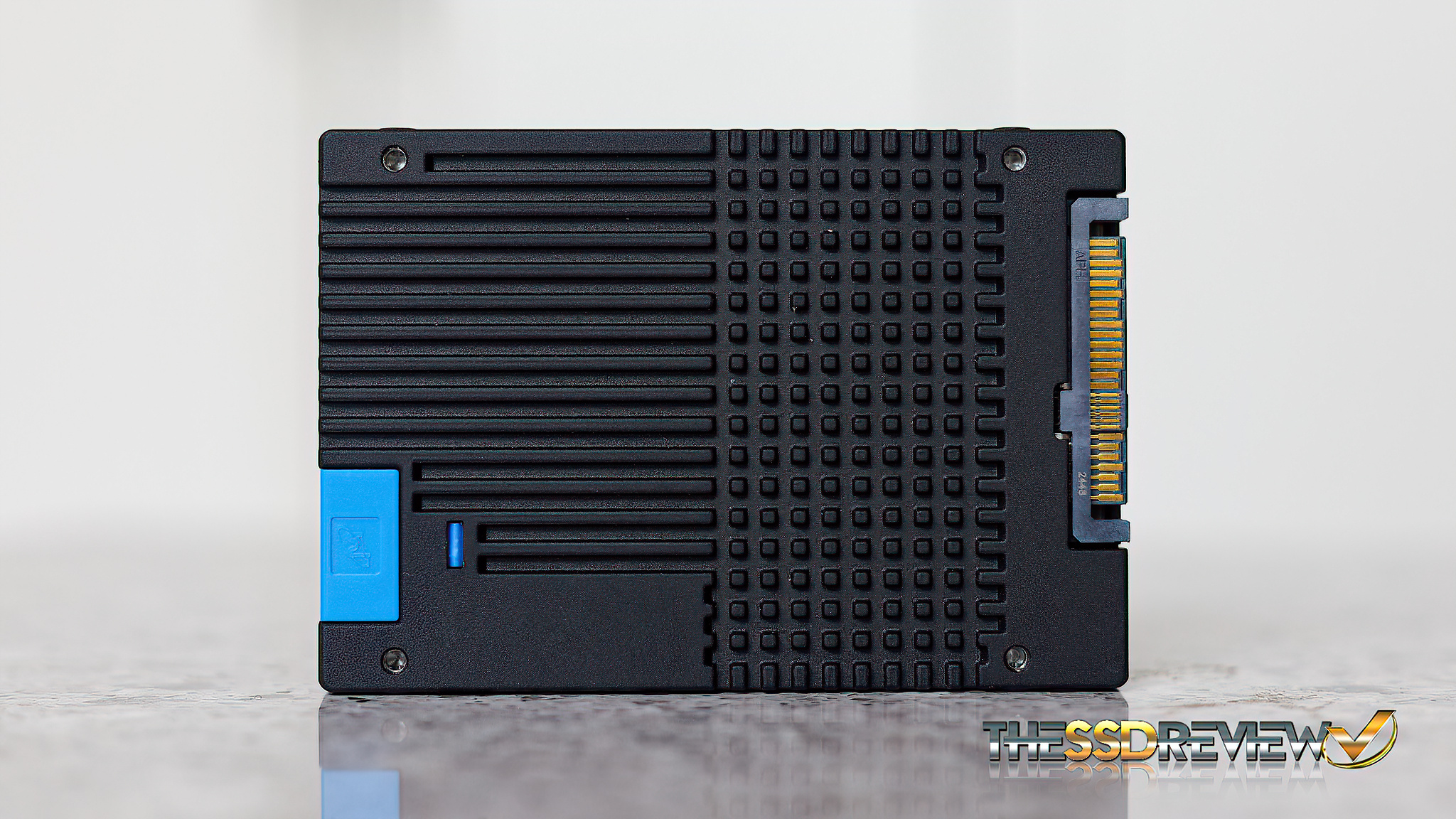
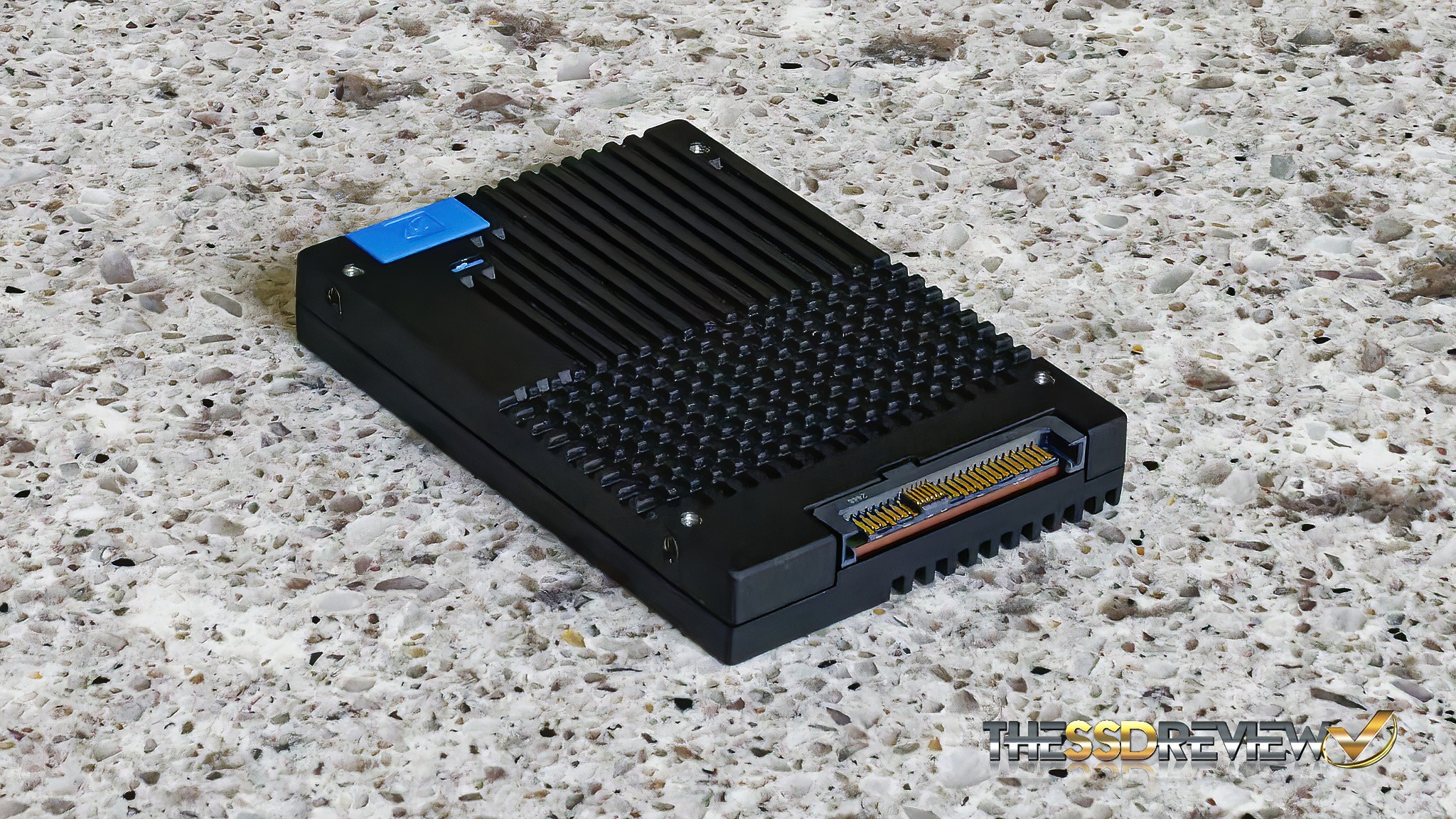
The 7600 features a sleek, flat black aluminum casing with integrated ribs designed to enhance external heat dissipation. The enclosure consists of two pieces secured by four T4 Torx screws. Inside, you’ll find a printed circuit board (PCB) housing a Micron-designed 16-channel controller ASIC (Application-Specific Integrated Circuit), along with Micron’s own NAND components, which include eight packages of Micron’s latest 9th-generation (G9) 276-layer 3D TLC NAND flash and a Micron DRAM cache chip.
This advanced memory utilizes a 6-plane architecture, enabling more simultaneous operations and thereby boosting overall throughput. Additionally, the NAND operates at an industry-leading transfer rate of 3.6 GB/s while keeping power consumption below 14W.
The Micron 7600 Gen5 SSD family feature set includes power loss protection,, enterprise data path protection, TCG Opal v2.02, OCP 2.6, and firmware update without reset. It is a NVMe 2.0 SSD that includes SED with AES 256-Bit hardware encryption, Micron’s Secure Encrypted Environment (SEE), FIPS 140-3 Level 2 and TAA compliance, along with SPDM 1.2 device security.