The SSD Review The Worlds Dedicated SSD Education and Review Resource |
RANDOM PERFORMANCE BENCHMARKS
4K RANDOM WRITE/READ
We precondition our enterprise SSDs using 100% random 4K writes at QD256 for two drive fills. Performance data is recorded every second. We track this data to monitor the enterprise SSDs transition to steady-state and to verify that steady-state conditions are achieved before initiating queue depth testing. Steady-state is established after a full drive fill and the average steady-state 4K random write performance is approximately 507K IOPS.
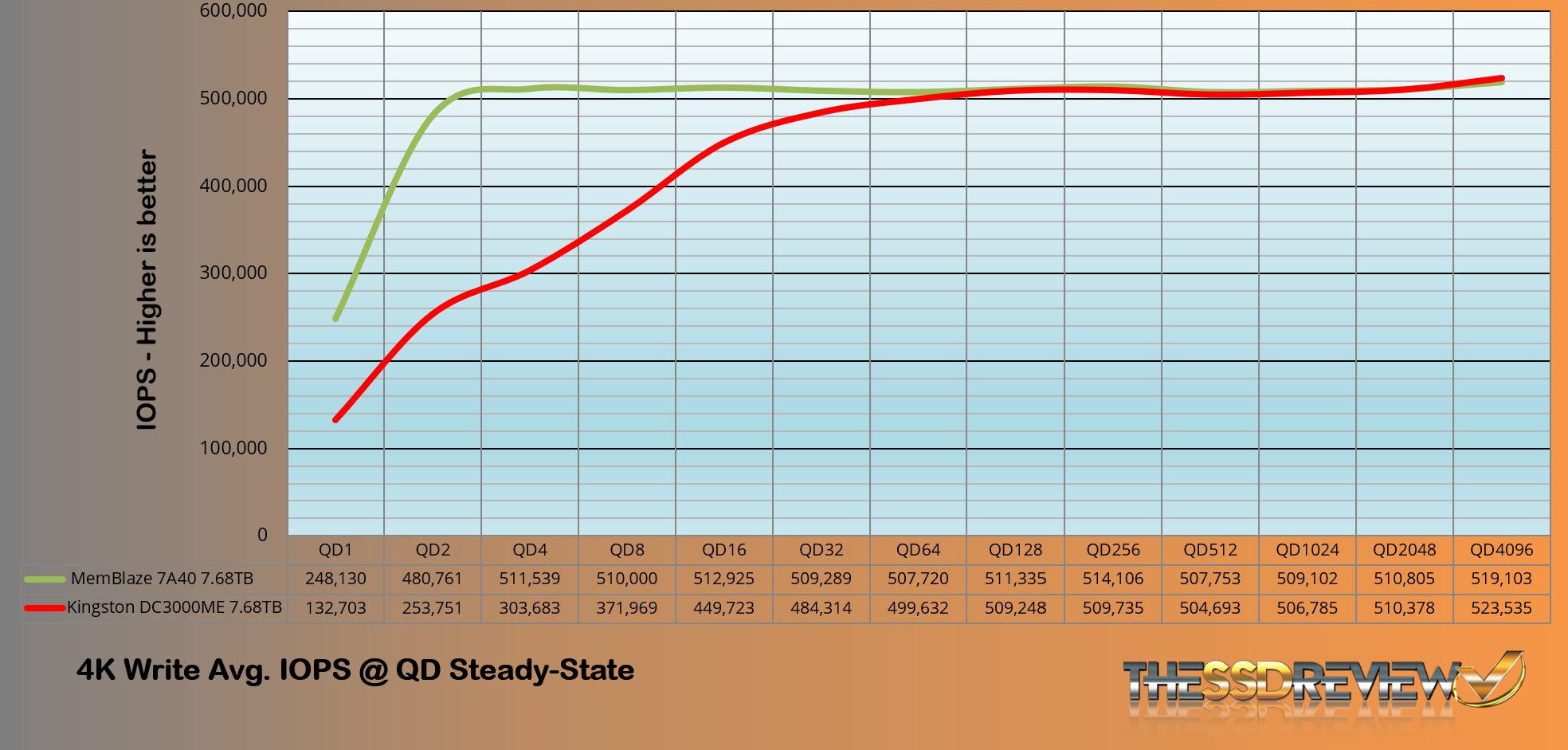
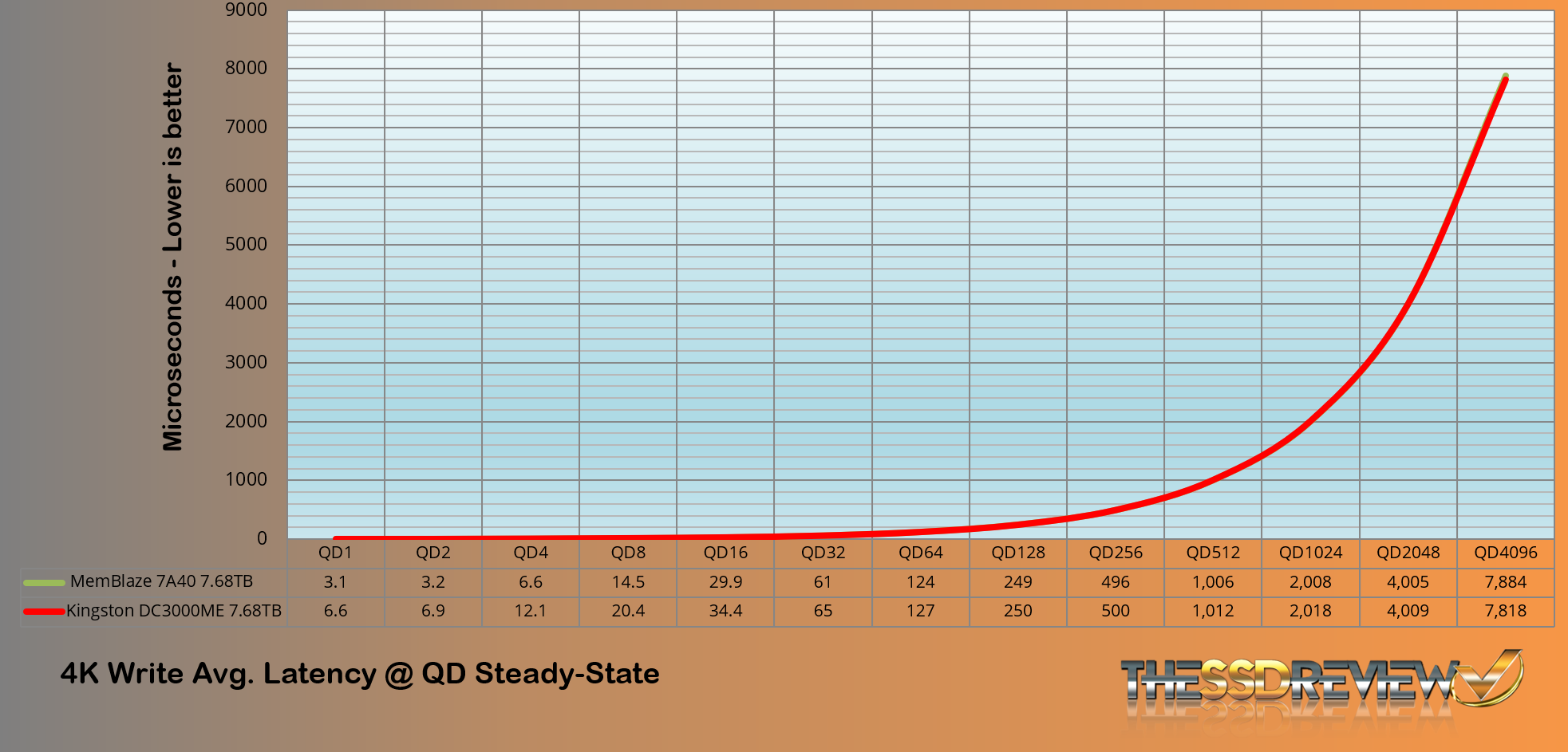
Listed specifications for the Kingston Gen 5 SSD is 500K IOPS for sustained random write 4K IOPS during steady-state operation, whereas our results demonstrated an average of 507K throughout QD64 to QD4096. Comparing the results of the Kingston to the MemBlaze, it is rather amazing how close the latency is between the two for this test, yet the MemBlaze 7A40 gets the upper hand reaching level IOPS at QD2 compared to the Kingston CD3000ME reaching same at QD64. If you look at the very end of the red line at QD4096, you can just barely see the MMemblaze line behind it, validating how close both are.
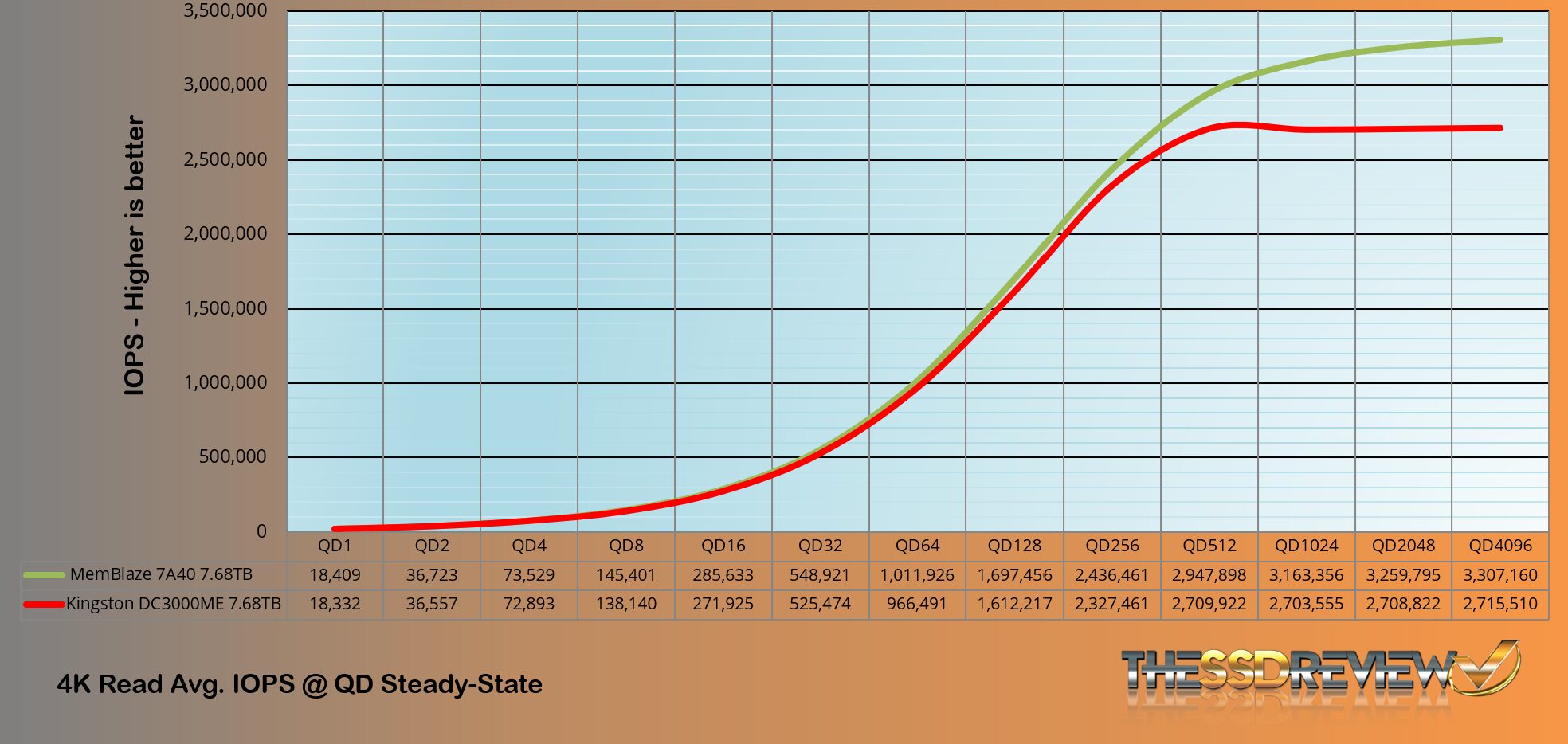
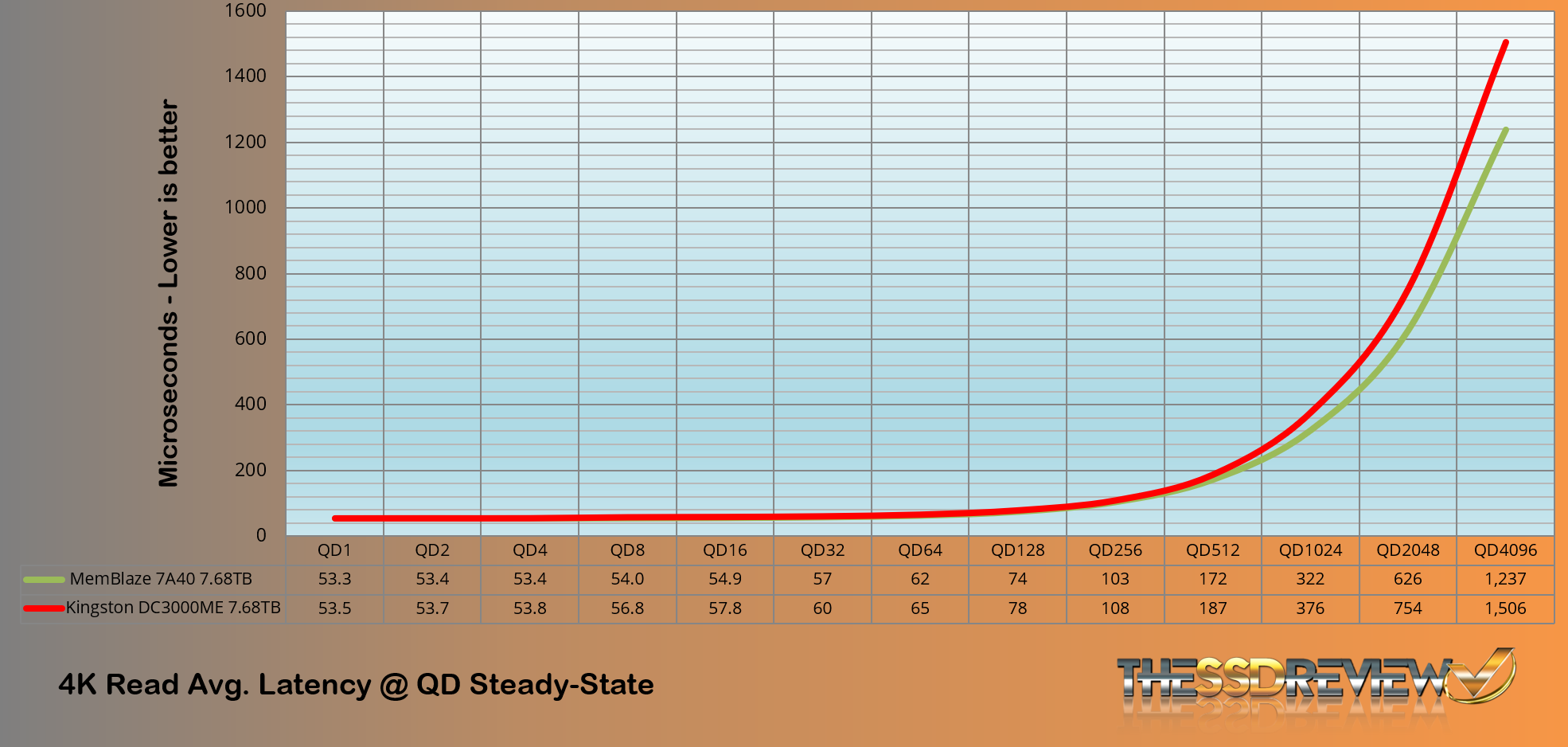
The listed spec for the Kingston DC3000ME Gen5 SSD is 2800K IOPS for sustained random read 4K IOPS during steady-state operation and our testing hit just below that at 2715K IOPS.
4K 70/30
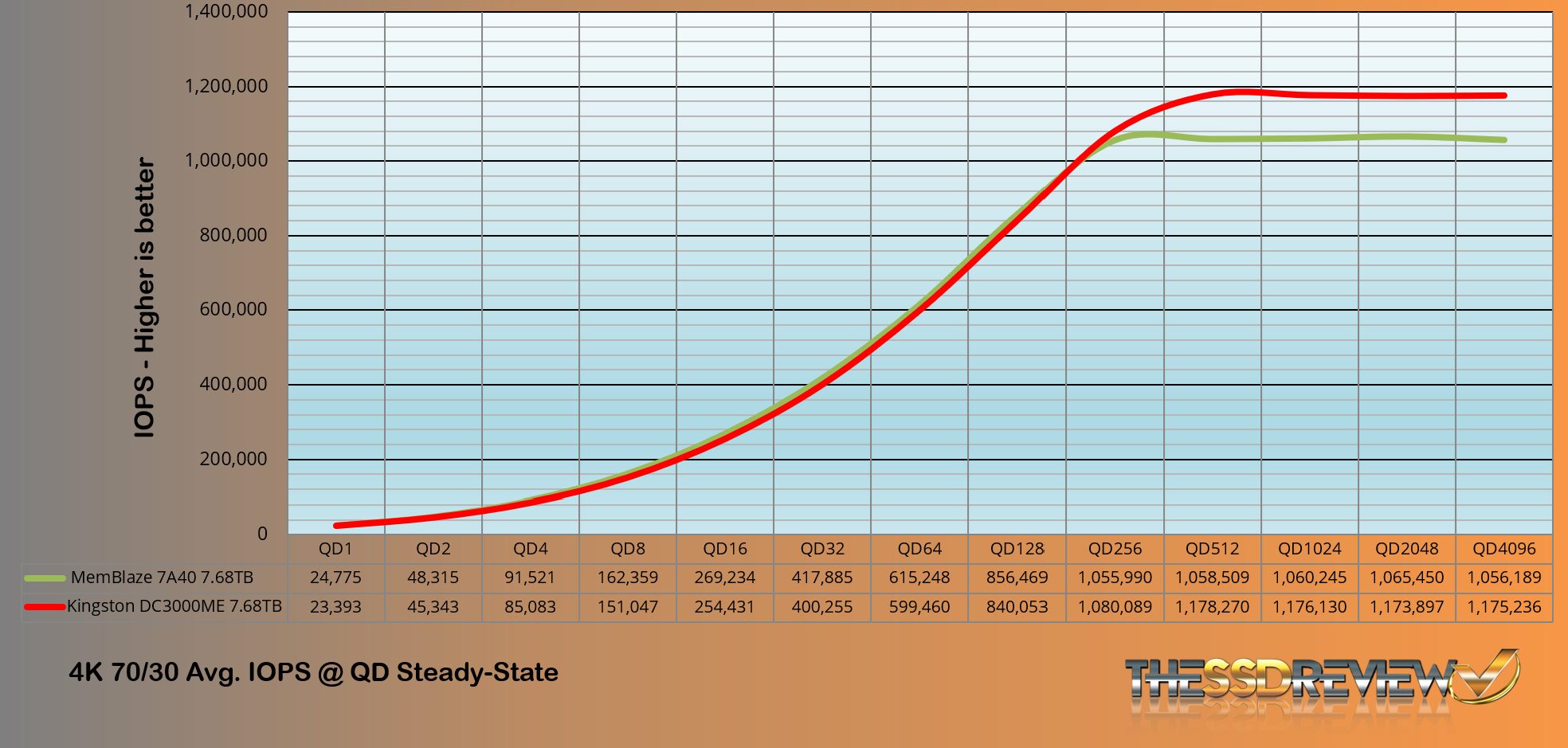
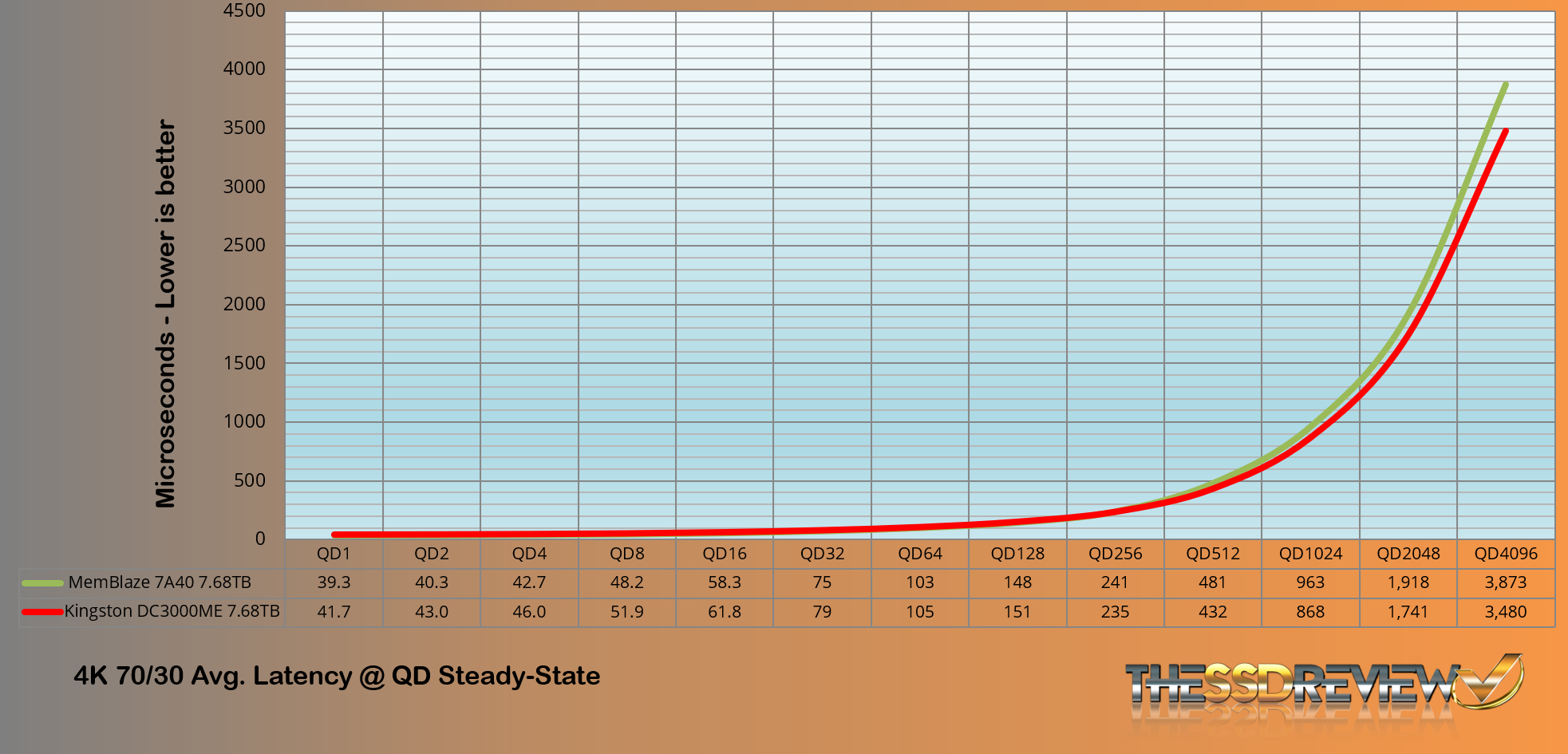
The DC3000ME demonstrates a very impressive performance curve for large datasets involving read-intensive mixed workloads, although it did level off a bit later than the Memblaze Pblaze 7.
4K 50/50
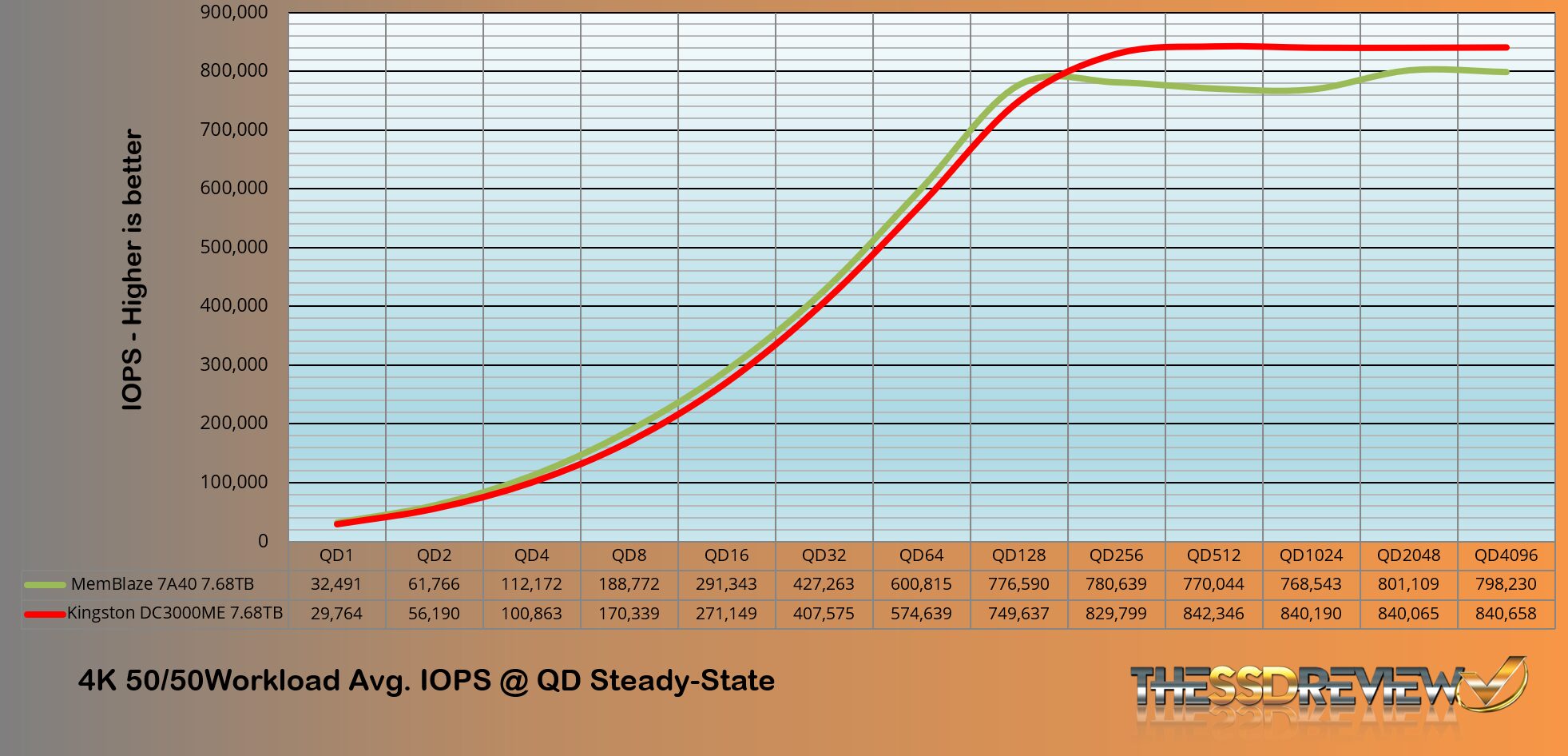
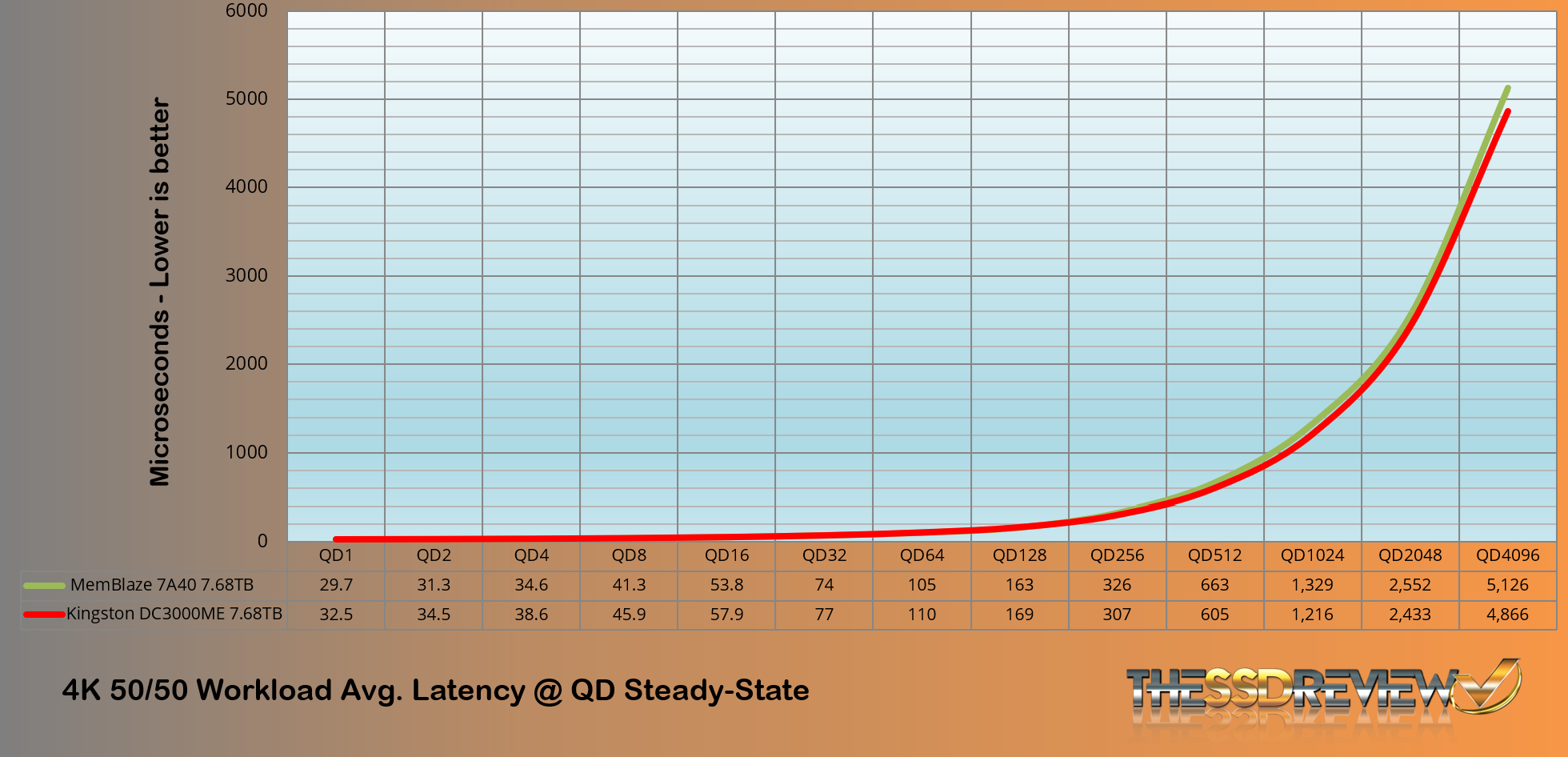
The Kingston DC3000ME pulled off an average performance result of 840K IOPS through QD128-QD4096, which is very impressive for any 1-DWPD SSD. We were very impressed how that curve leveled off an maintained that 840K mark dead on through QD1024-QD4096.