 The SSD Review The Worlds Dedicated SSD Education and Review Resource |
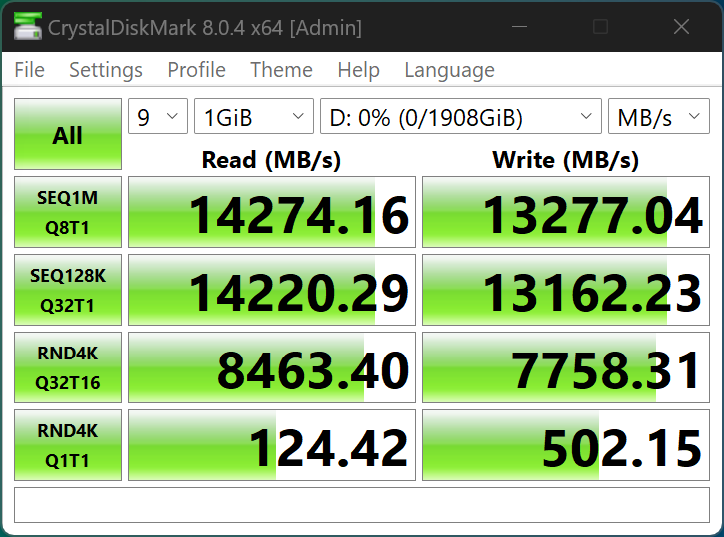
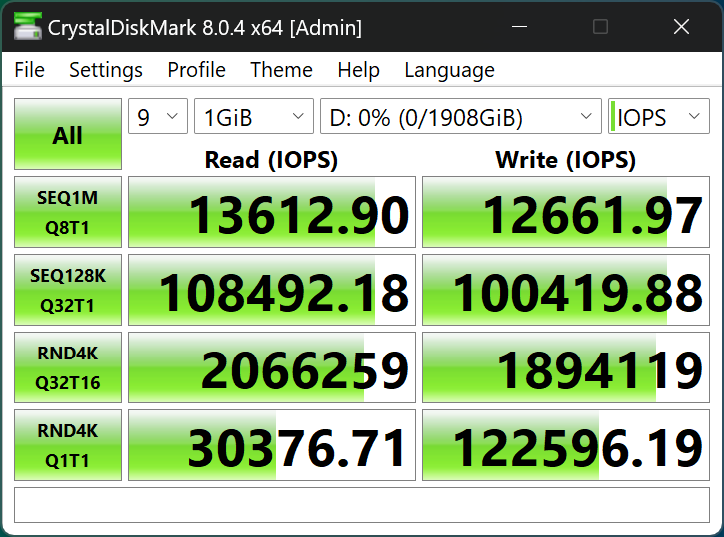
CRYSTAL DISK BENCHMARK VER. 8.0.4 x64
Crystal Disk Benchmark is used to measure read and write performance through sampling of random data which is, for the most part, incompressible. Performance is virtually identical, regardless of data sample so we have included only that using random data samples.
THROUGHPUT
IOPS
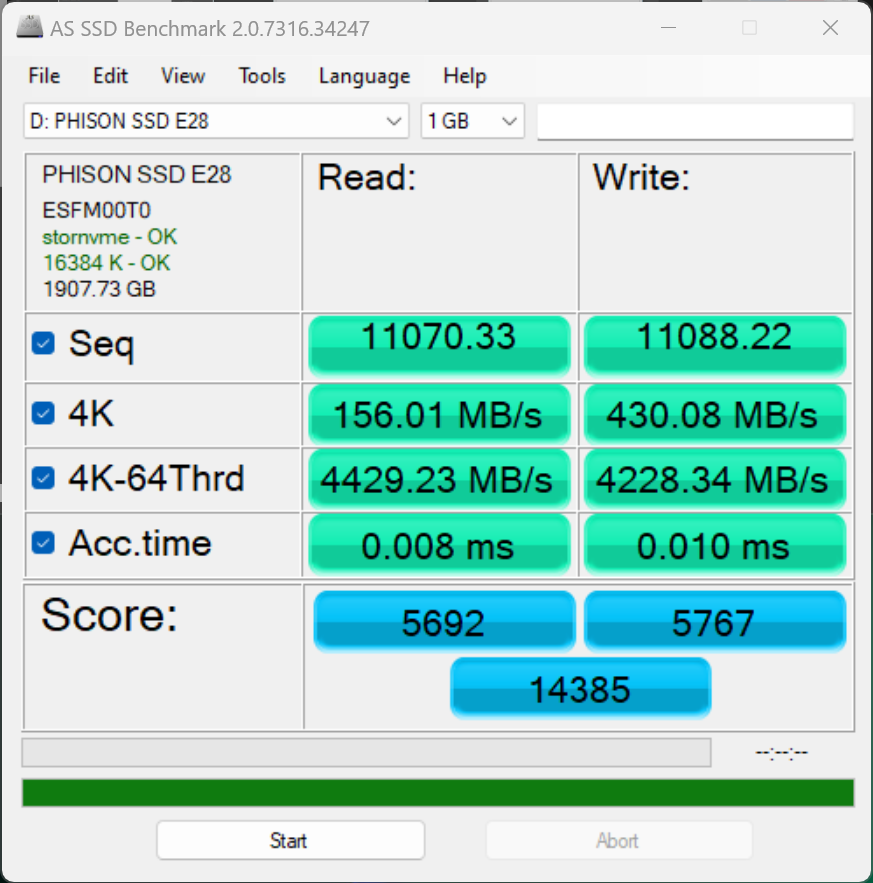
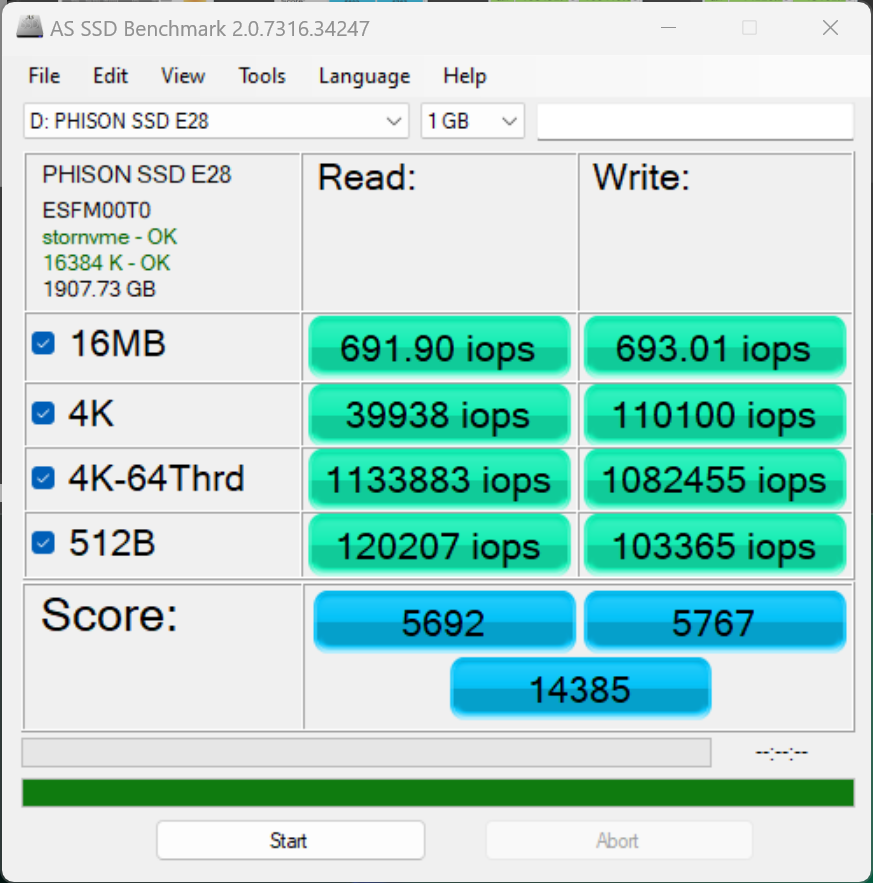
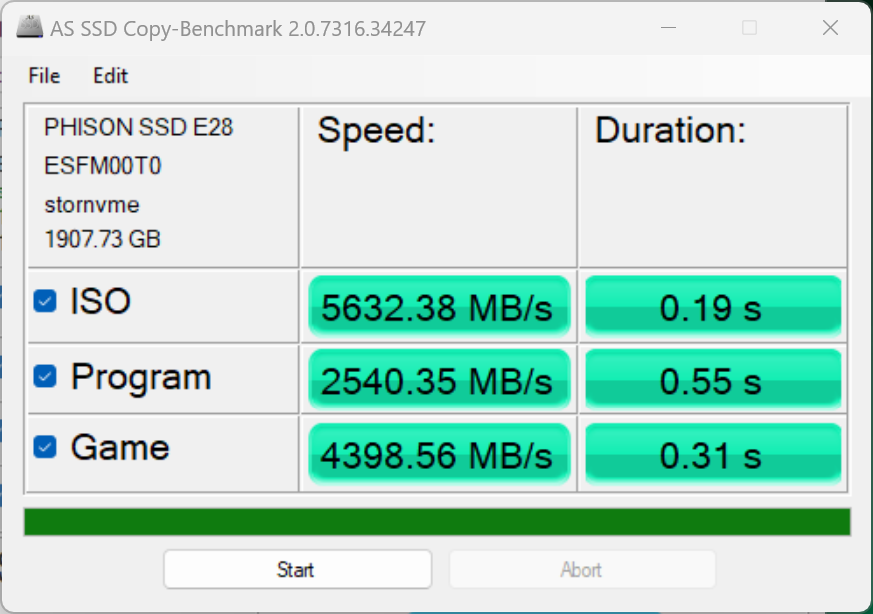
The toughest benchmark available for solid state drives is AS SSD as it relies solely on incompressible data samples when testing performance. For the most part, AS SSD tests can be considered the ‘worst case scenario’ in obtaining data transfer speeds and many enthusiasts like AS SSD for their needs.
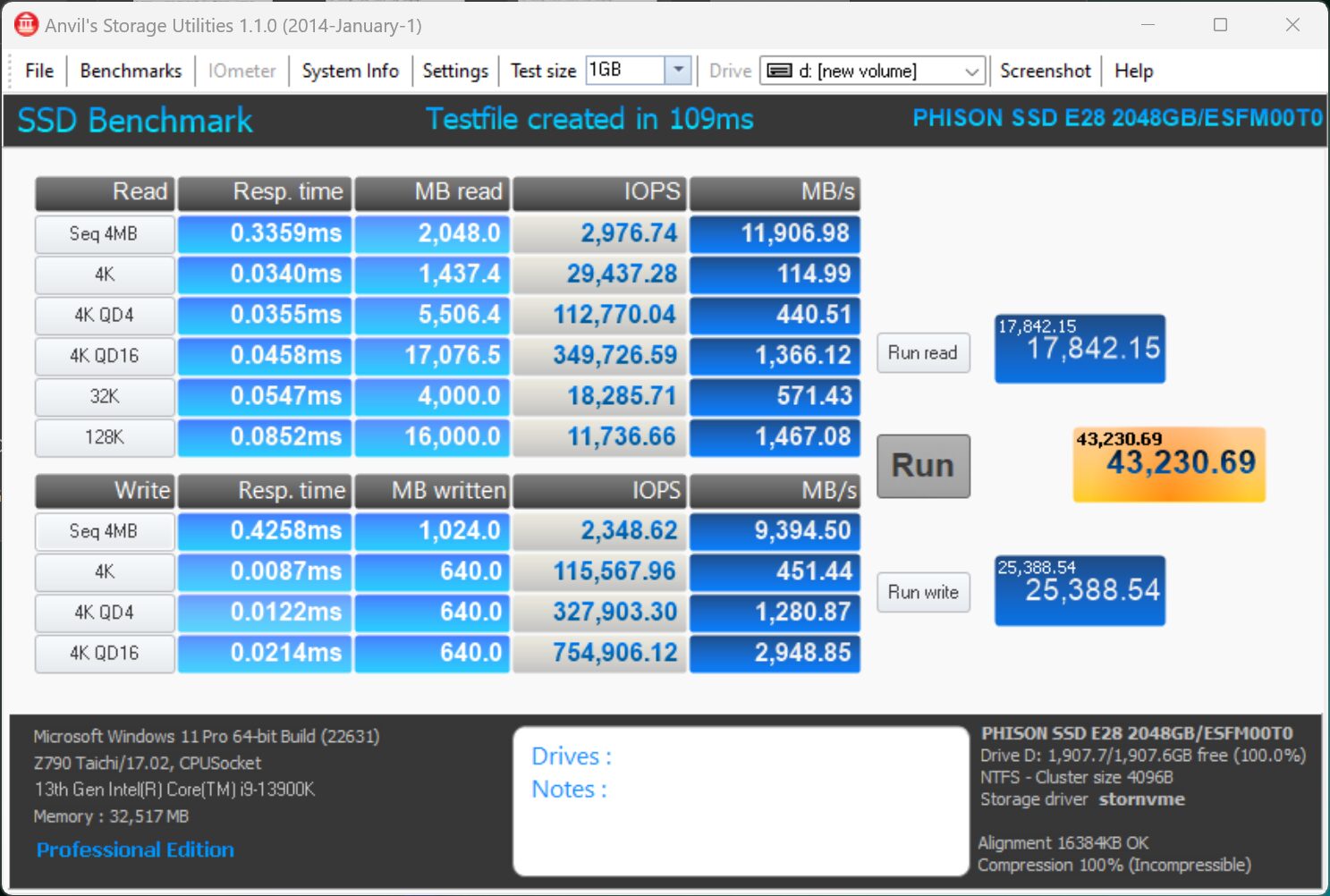
ANVIL STORAGE UTILITIES PROFESSIONAL
Anvil’s Storage Utilities (ASU) are the most complete test bed available for the solid state drive today. The benchmark displays test results for, not only throughput but also, IOPS and Disk Access Times. Not only does it have a preset SSD benchmark, but also, it has included such things as endurance testing and threaded I/O read, write and mixed tests, all of which are very simple to understand and use in our benchmark testing.
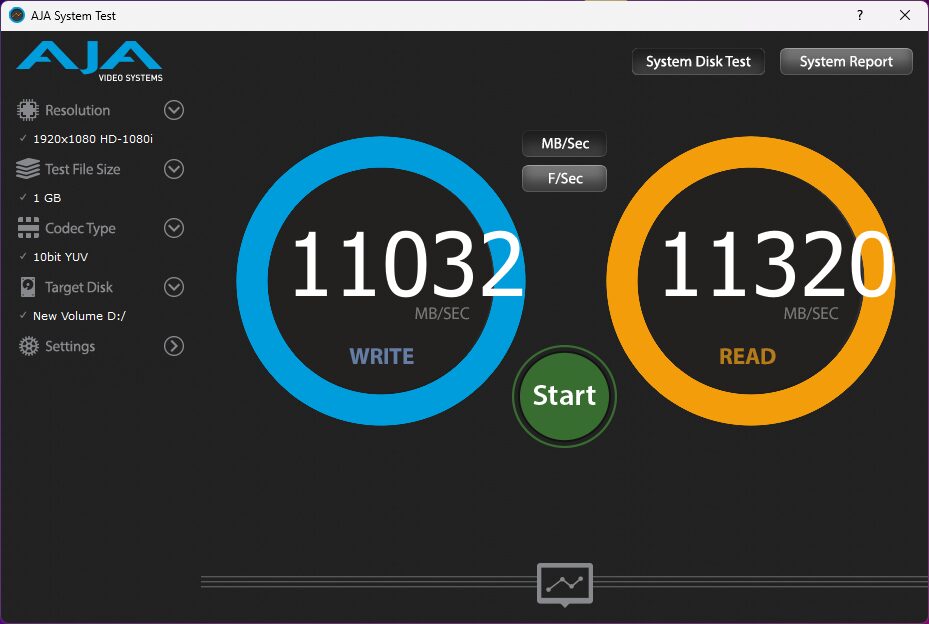
AJA VIDEO SYSTEM DISK TEST
The AJA Video Systems Disk Test is relatively new to our testing and tests the transfer speed of video files with different resolutions and Codec.
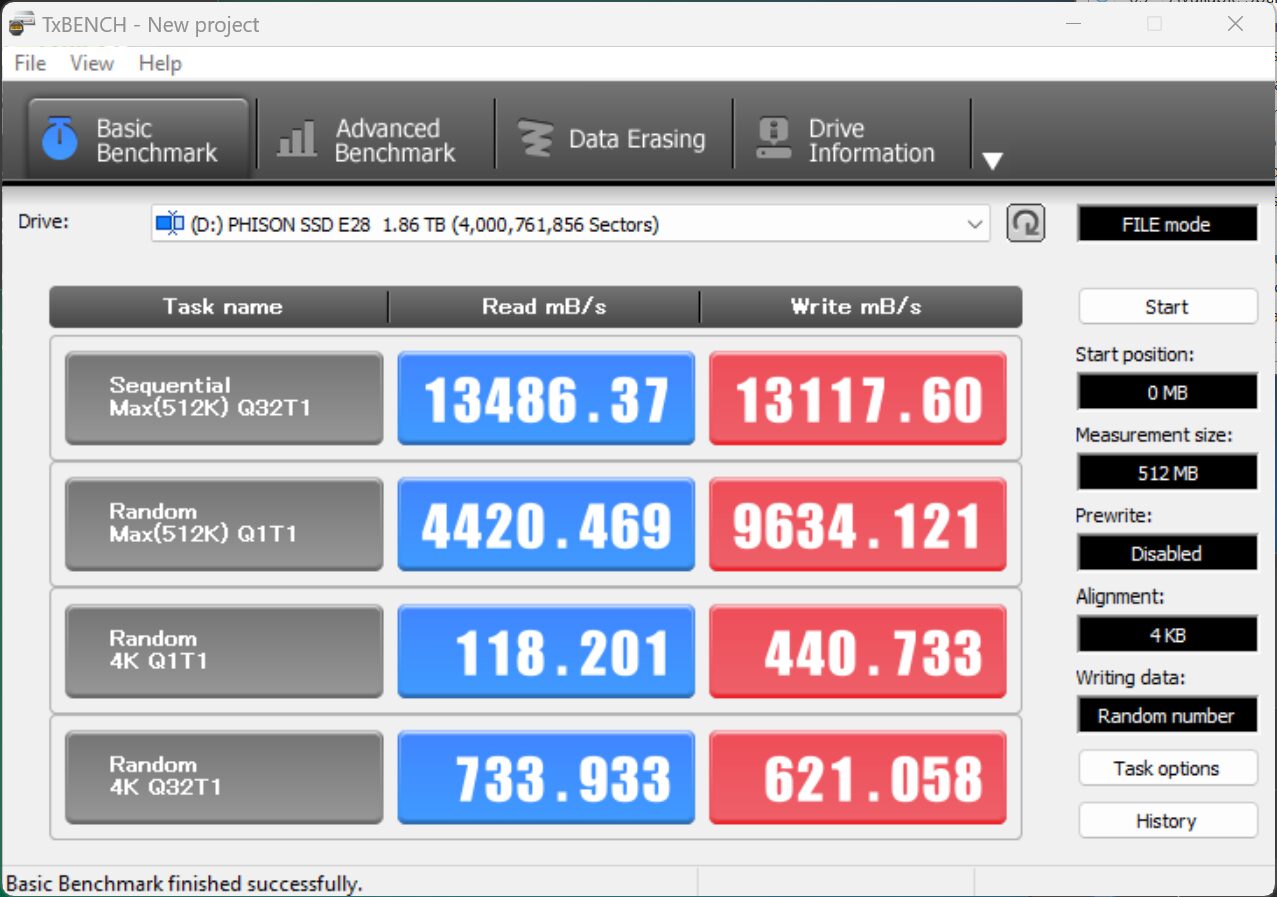
TxBench is one of our newly discovered benchmarks that we works much the same as Crystal DiskMark, but with several other features. Advanced load benchmarking can be configured, as well as full drive information and data erasing via secure erase, enhanced secure erase, TRIM and overwriting. Simply click on the title for a free copy.
When drives with E28 will be available in shops and at what price ? Any rumors on it ?
As for testing with Z890, try to use motherboard with M2 connected directly to graphics PCIE. Mobos like ASUS ROG Strix Z890-E Gaming WIFI or GIGABYTE Z890 AORUS Master have such m2 slots. Additional card used as bridge, may add latencies lowering results. Tweak Town use such motherboard, with great results.
My guess is that E28 SSDs will start appearing within 2 months. The identified problem is global with all 200 series motherboards and Intel, ASUS, ASRock and other motherboard manufacturers have identified and spoken to this. Before our article we tested alongside Tweaktown to verify our discovery as Jon is a very close friend of mine. The most effective way to gain accurate readings is using an M.2 AIC adapter directly to the CPU PCIe lanes. We do this as does Tweaktown. It is easy to identify websites testing using the M.2 slots by their sub=par results with respect to the Intel chipset. They are much the same as the article. Thanks for commenting
Any idea on what the power consumption would be like on the E28? PCIe 5 SSDs have seen their power consumption go up compared to the previous generation and many PCIe 5 SSDs need a heatsink.
Also, any idea if this will out pressure on pricing? Right now PCIe 5 drives cost almost 2x per GB compared to the PCIe 4 SSDs.
Please read the article as there is a paragraph dedicated to those numbers.