The SSD Review The Worlds Dedicated SSD Education and Review Resource |
8K RANDOM READ/WRITE
We precondition our enterprise SSDs by performing two full drive writes using 100% random 8K writes at a queue depth of 256 (QD256). Performance metrics are recorded every second throughout the process. This data allows us to monitor the SSDs as they transition into steady-state and ensures that steady-state conditions are fully established before beginning queue depth testing. Once steady-state was reached, typically after one complete drive fill, the average 8K random write performance stabilized at approximately 497K IOPS.
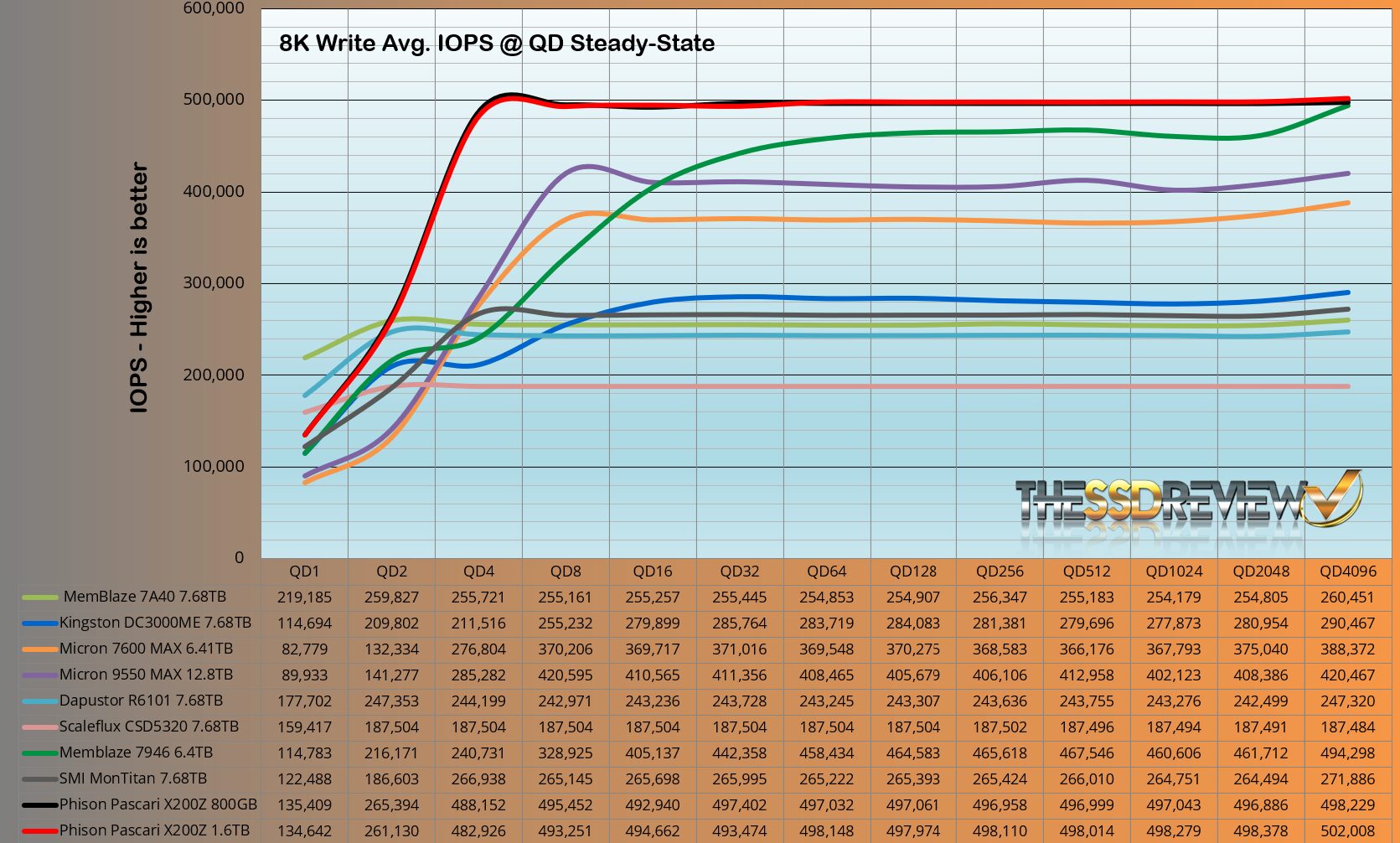
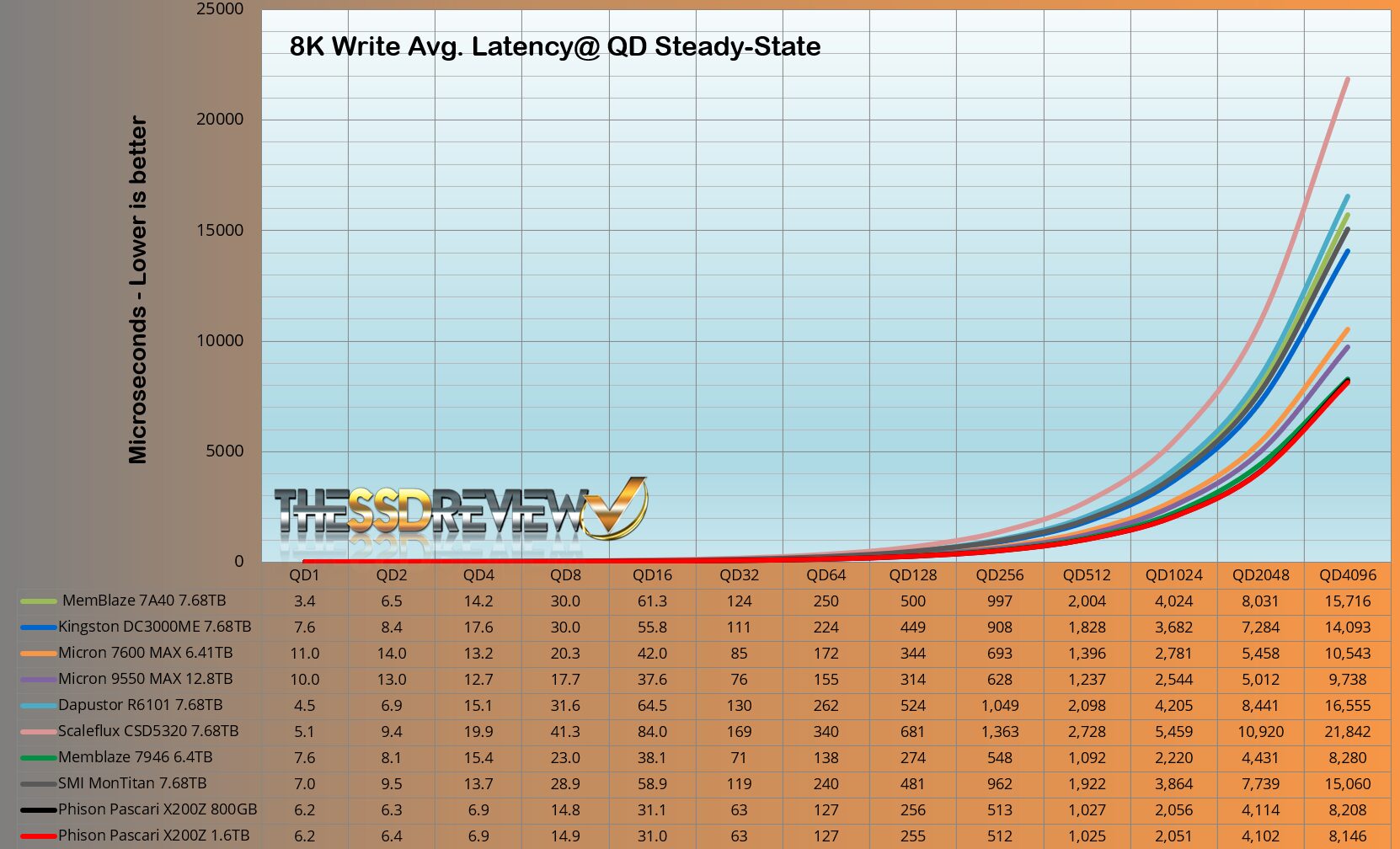
The performance average of both capacities of the X200Z is 497K IOPS in 8K random write which is one of the top, actually two of the top returns to date.
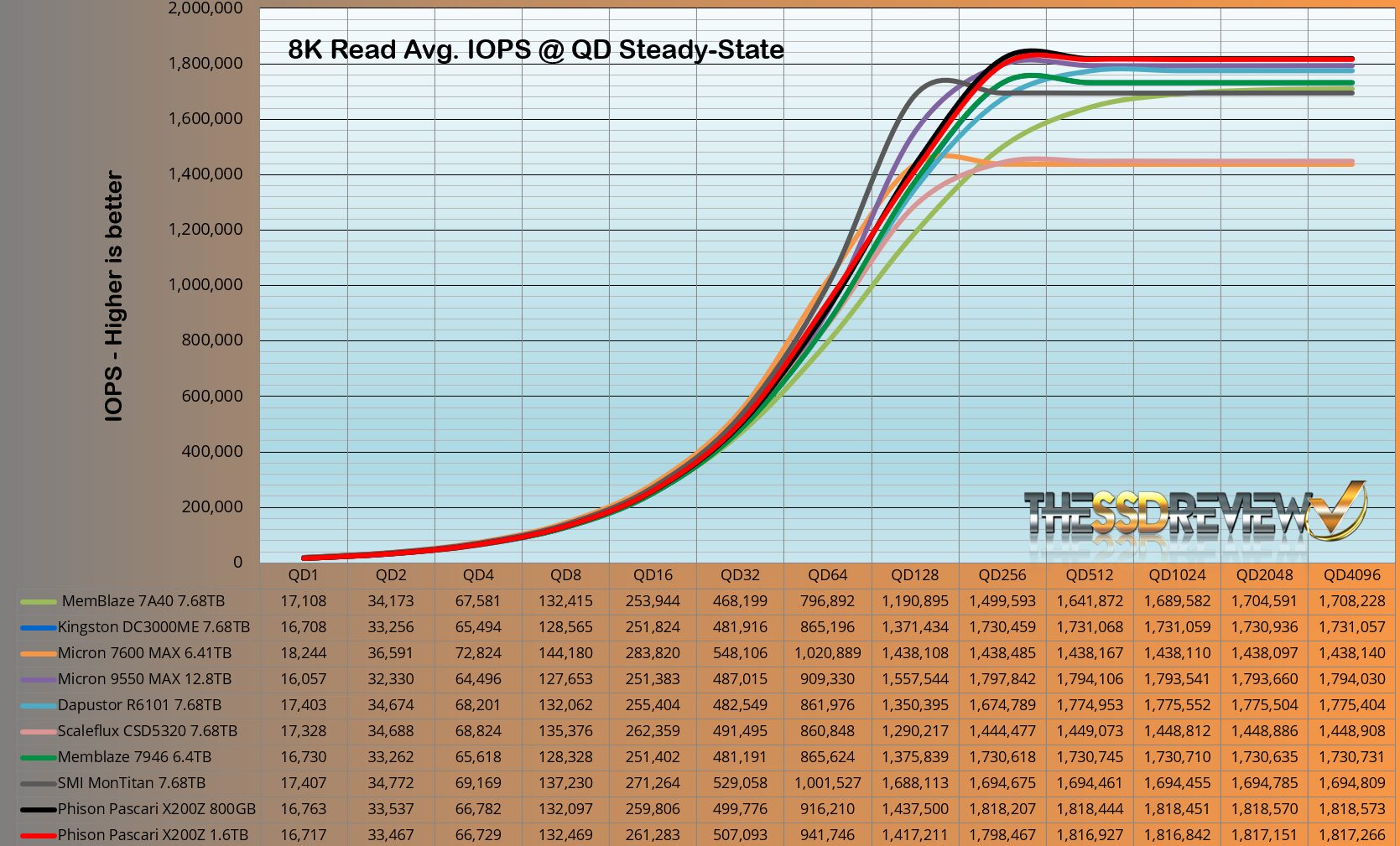
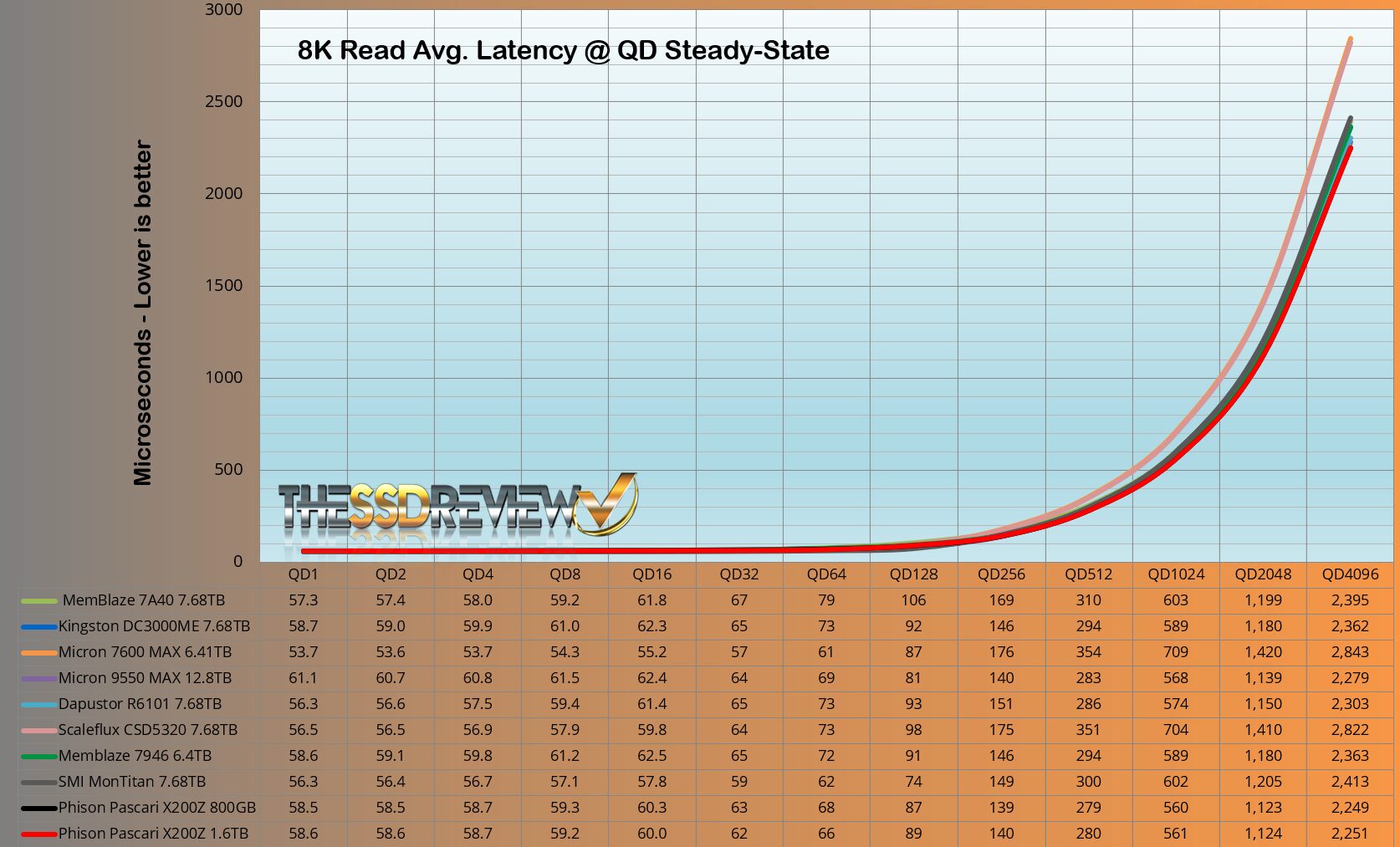
The X200Z 8K read average performance of 1800K is very impressive, and once again, the top results for this test to date.
8K 70/30
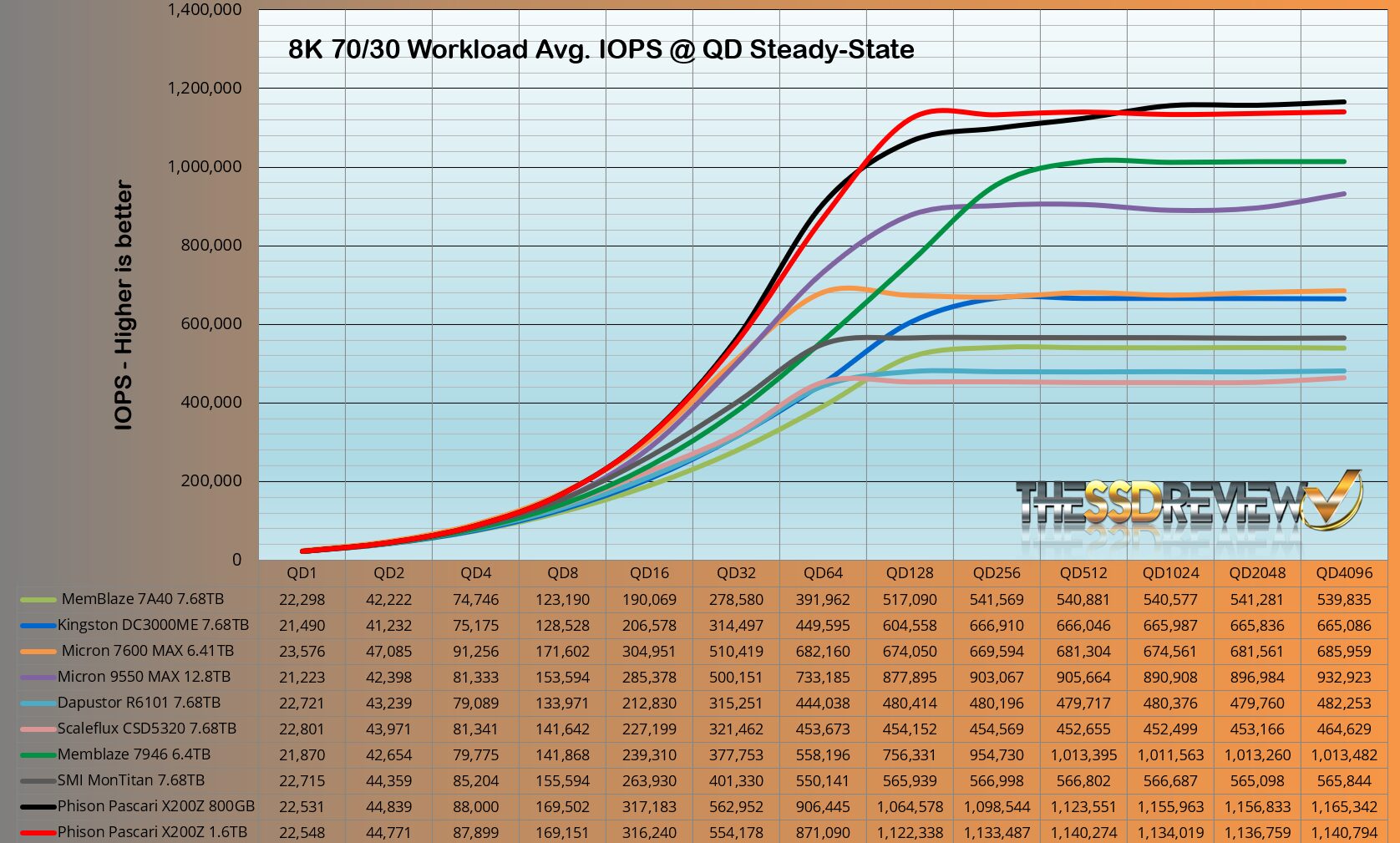
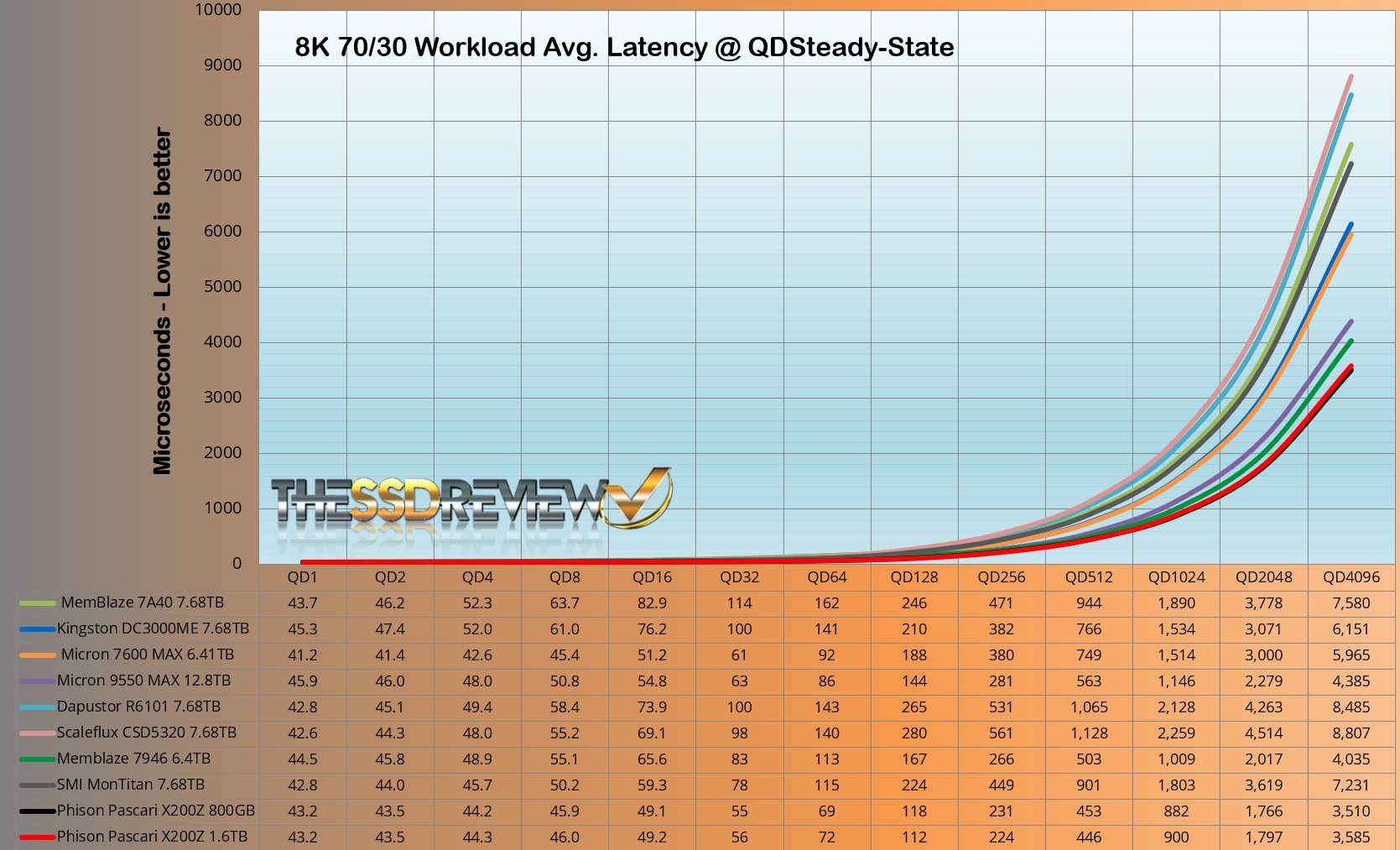
8K 70/30 is representative of a typical database workload and 1100K IOPS is very impressive, and again, one of the top results to date.
8K 50/50
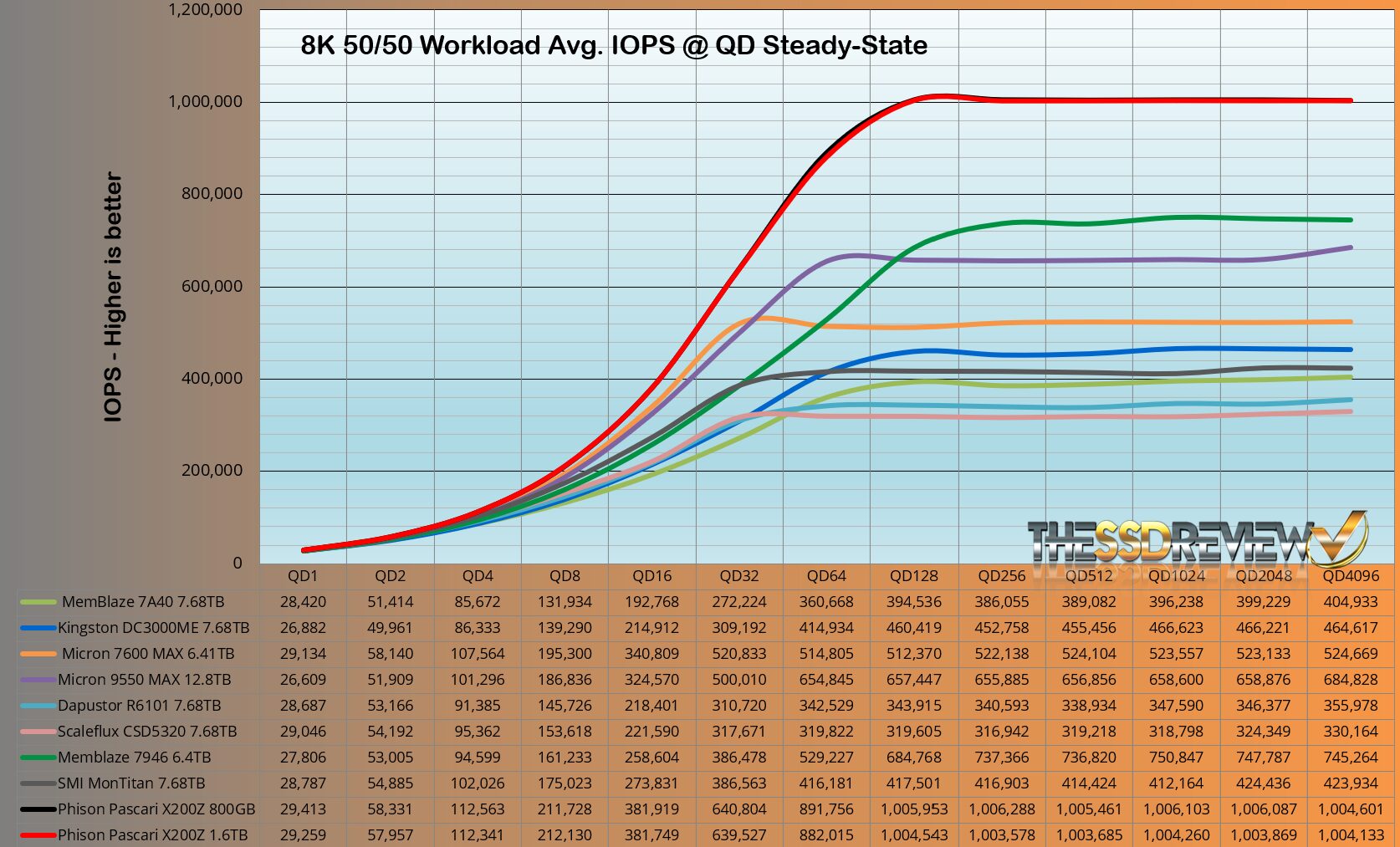
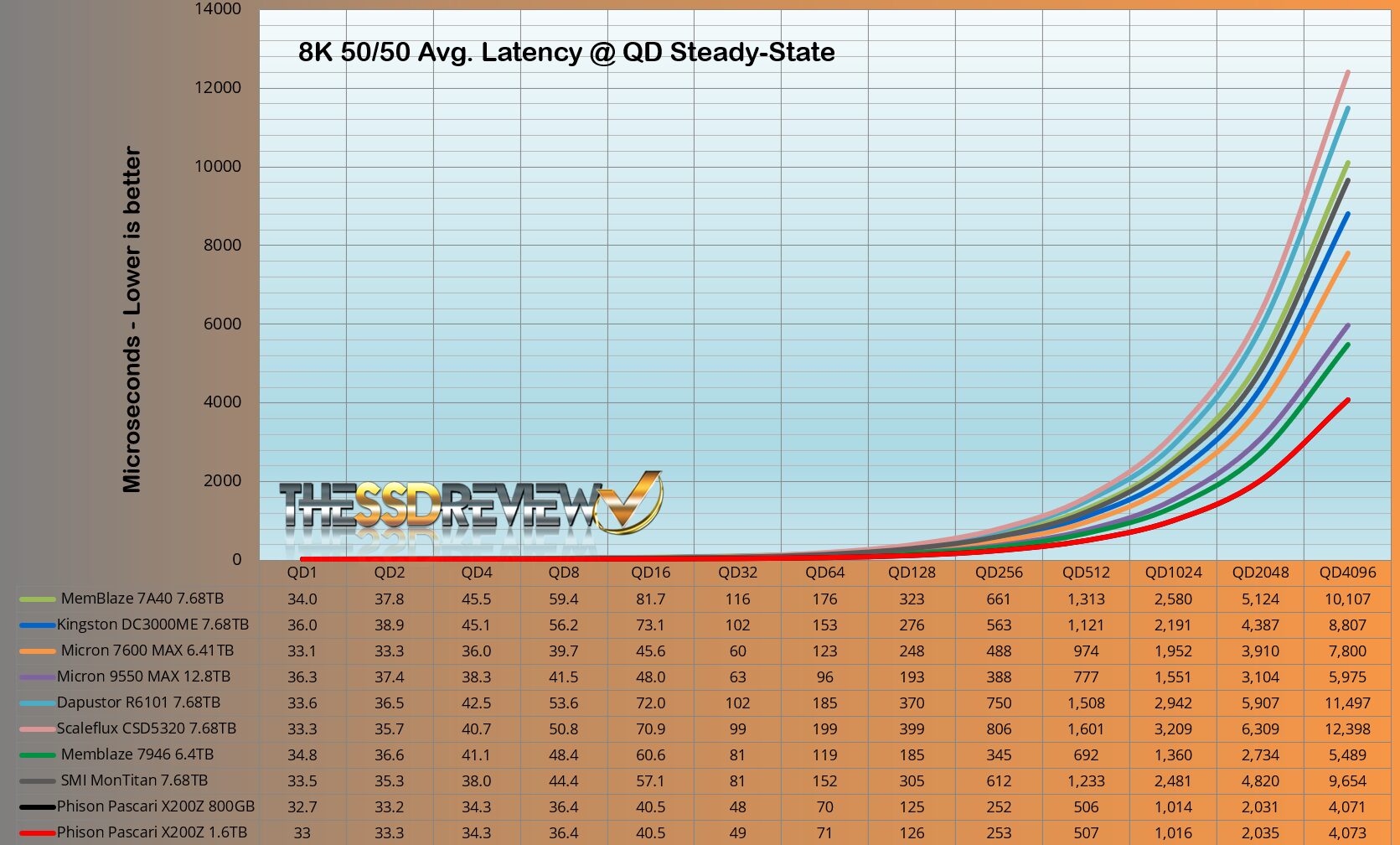
1000K 8K 50/50 write IOPS is a very impressive return for both capacities of the Phison Pascari X200Z Gen5 SSD.
REPORT SUMMARY AND FINAL THOUGHTS
If you’ve been with us from the start of this report, you’ll likely agree. We’ve never seen anything quite like the Phison Pascari X200Z. While most enterprise SSDs are rated for 1 DWPD or 3 DWPD, the X200Z delivers an astounding 60 DWPD every single day. That level of endurance is virtually unheard of. On paper, the official specifications are impressive, but they don’t even come close to reflecting what this drive can actually do. And although we normally hesitate to use sequential benchmarks to define an SSD’s performance, this is the first time we’ve ever seen any SSD reach 15 GB/s read throughput. But here’s the thing… That’s barely scratching the surface of what the X200Z is truly capable of.
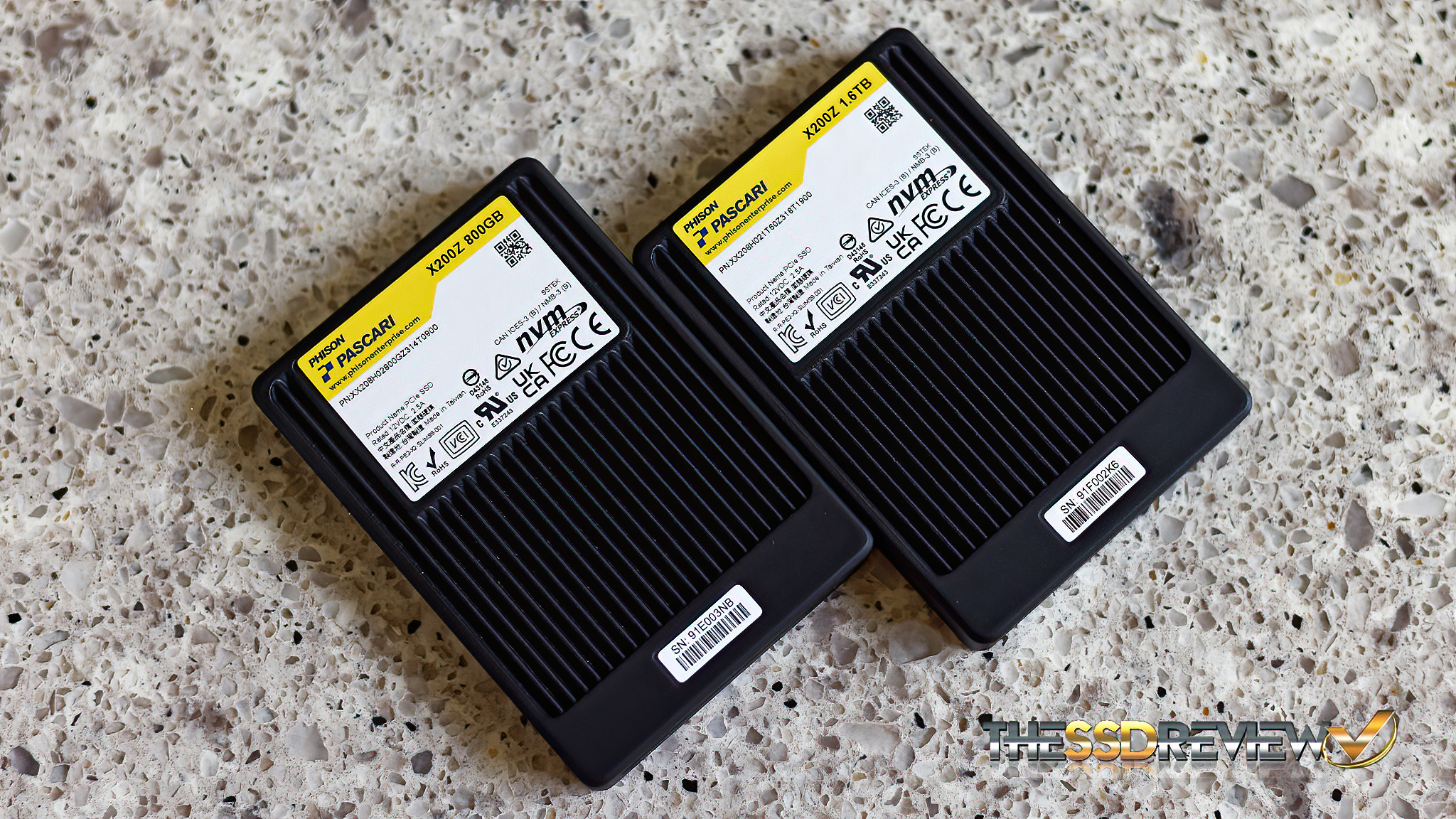
With the sole exception of the ScaleFlux CSD5320, and only when it’s using 2:1 compression, there is no other SSD that even comes close to the Pascari X200Z. And honestly, there shouldn’t be. Both drives tested use pseudo-SLC NAND, and if you can believe it, a 6.4TB version may be on the way!
Digging into the charts, tests like 4K write IOPS, 4K 70/30, 4K 50/50, 8K write, 8K 70/30, and 8K 50/50 don’t just show the X200Z edging out other enterprise SSDs, it crushes them. In many cases, it’s ahead by a typical margin of 200K–250K IOPS. But it gets even more impressive. In 4K 70/30, the 1.6TB X200Z outperforms the competition by over 450K IOPS. The 800GB model? It’s an incredible 900K IOPS faster than the rest of the field.
This isn’t a small advantage… It’s a whole new performance tier.
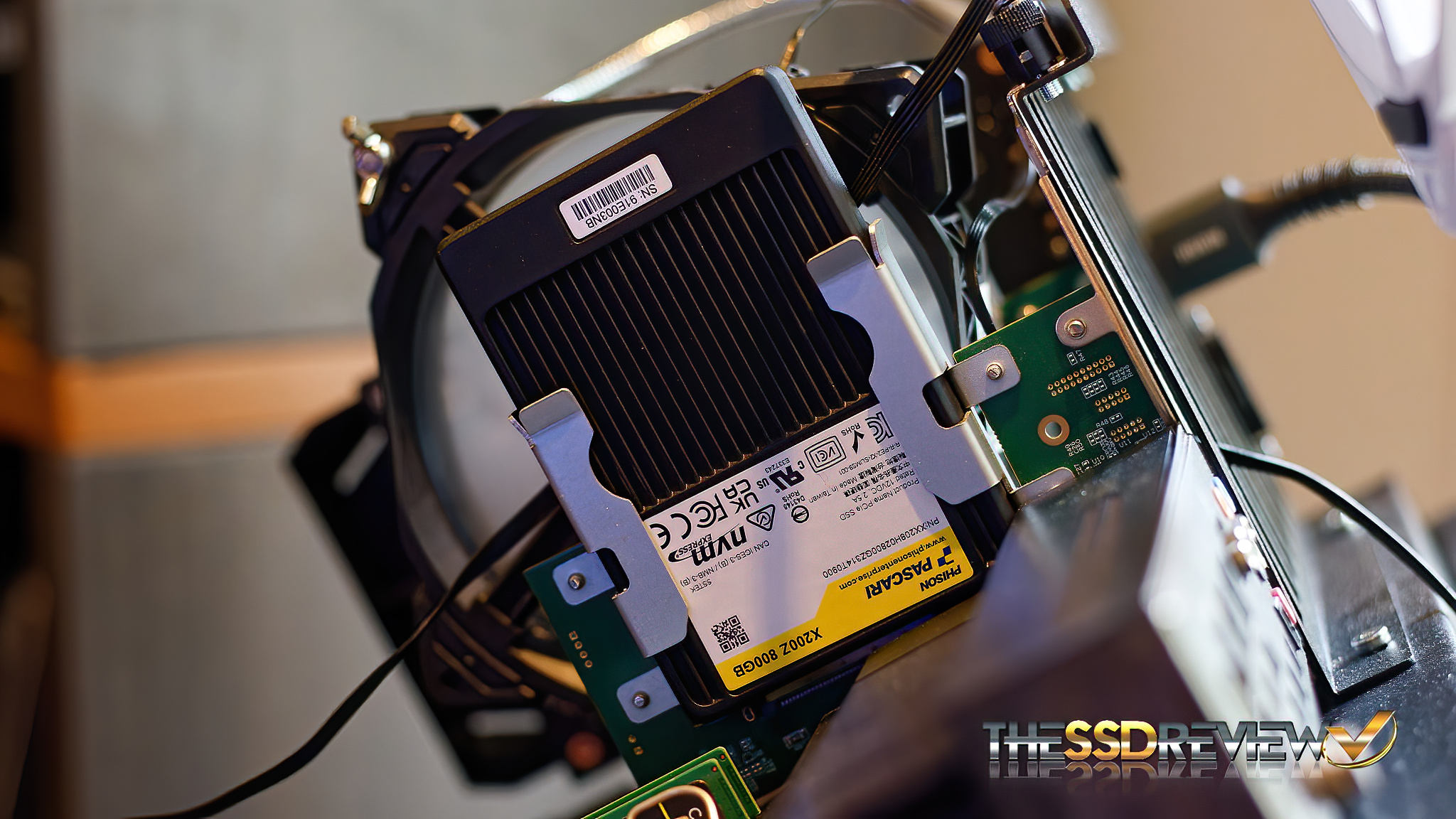
These performance levels make the X200Z an ideal choice for write-intensive enterprise caching and AI workloads such as real-time analytics, AI training, and transactional databases. With up to 60 DWPD endurance, near-SCM latency, and extreme throughput on PCIe Gen5 NVMe, it delivers everything these demanding environments require. Editor’s Choice.
CHECK AMAZON FOR PHISON PASCARI ENTERPRISE SSDS