 The SSD Review The Worlds Dedicated SSD Education and Review Resource |
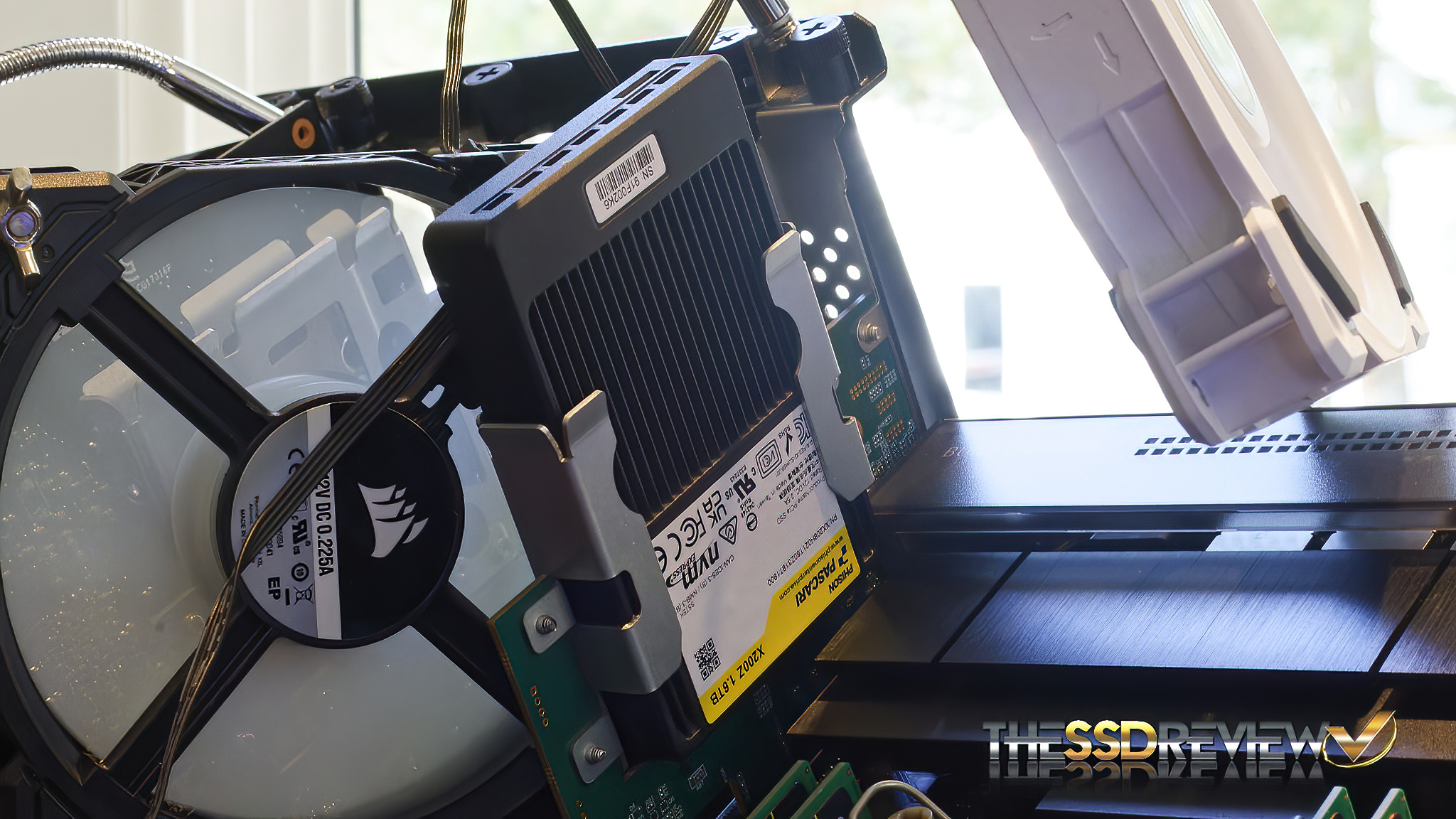
Today’s review covers the Phison Pascari X200Z Gen5 SSDs in both 800GB and 1.6TB capacities. We have two in our hot little hands in fact! Now, if you’ve been around long enough, that “Z” in the name might spark a bit of nostalgia. Yes, we’re talking about SLC flash. Credit where credit’s due: Samsung helped popularize the term. But for many readers, especially those newer to the SSD world, the significance of true SLC and how it differs from pseudo-SLC may not be clear. And that’s important, because understanding that difference is key to appreciating what makes the Phison Pascari X200Z special. Let’s keep it simple.
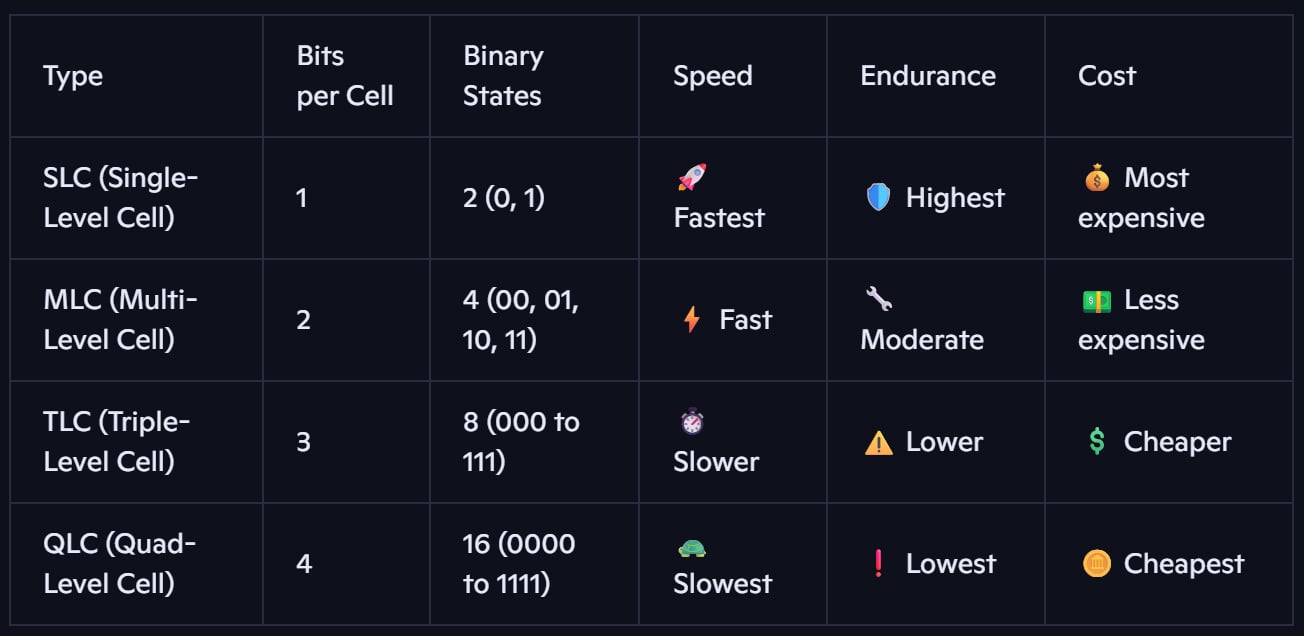
SLC stands for Single-Level Cell. Think of it like a one-story house with a single occupant… lots of space, no bumping into things. Technically, it is only one bit but that bit reflects two possible states: high or low voltage, on or off, programmed or erased. Fast, efficient, reliable. Then came MLC (Multi-Level Cell), which crammed two people into that same house.. or four states in a cell.
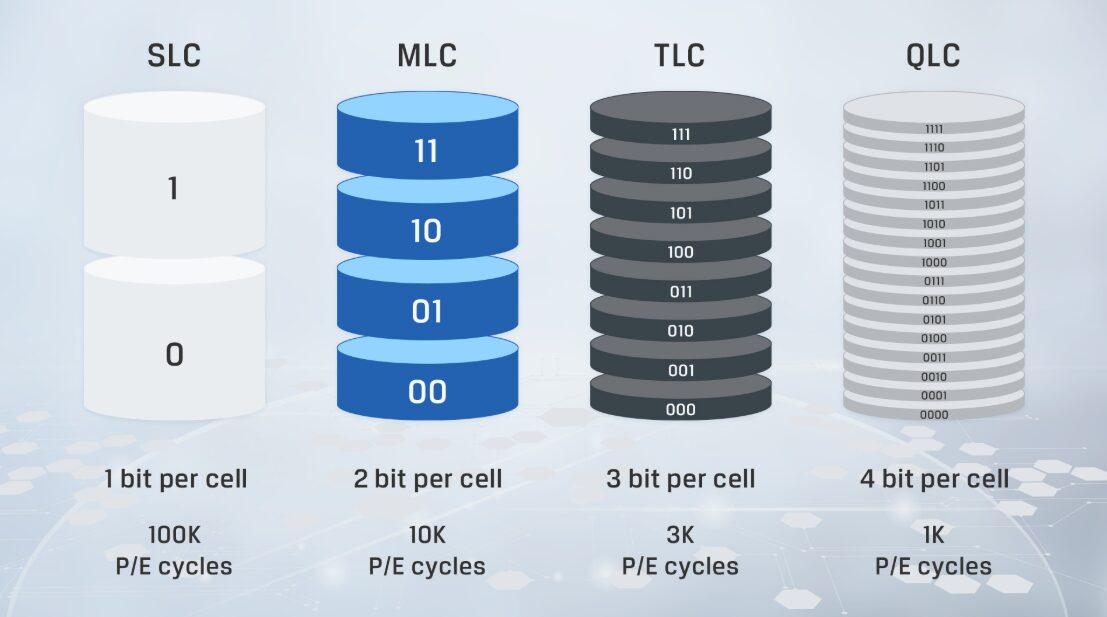
Suddenly, things got crowded. The threshold voltages, or basically, the signals that tell the system what data is stored, got closer together. That made everything a bit trickier and slower, and introduced more room for error. And then came TLC…Triple-Level Cell introducing three bits per cell, or metaphorically, three people or eight states crammed into the same room. Naturally, they’re constantly bumping into each other. Technically speaking, the voltage states (used to read and write data) are now packed much closer together, which increases the chance of errors. This is especially true when electrons aren’t fully cleared during an erase cycle, leading to reliability issues over time.
In the early days, SLC (and even MLC) NAND existed on a single layer, what we call 2D planar NAND. Imagine a massive city like Toronto built entirely from one-story houses. No apartment buildings, no skyscrapers, just endless ground-level homes. Eventually, the city runs out of space and becomes overcrowded. And when everything is built so close together, mistakes and collisions become inevitable. In NAND terms, those “collisions” are data errors.
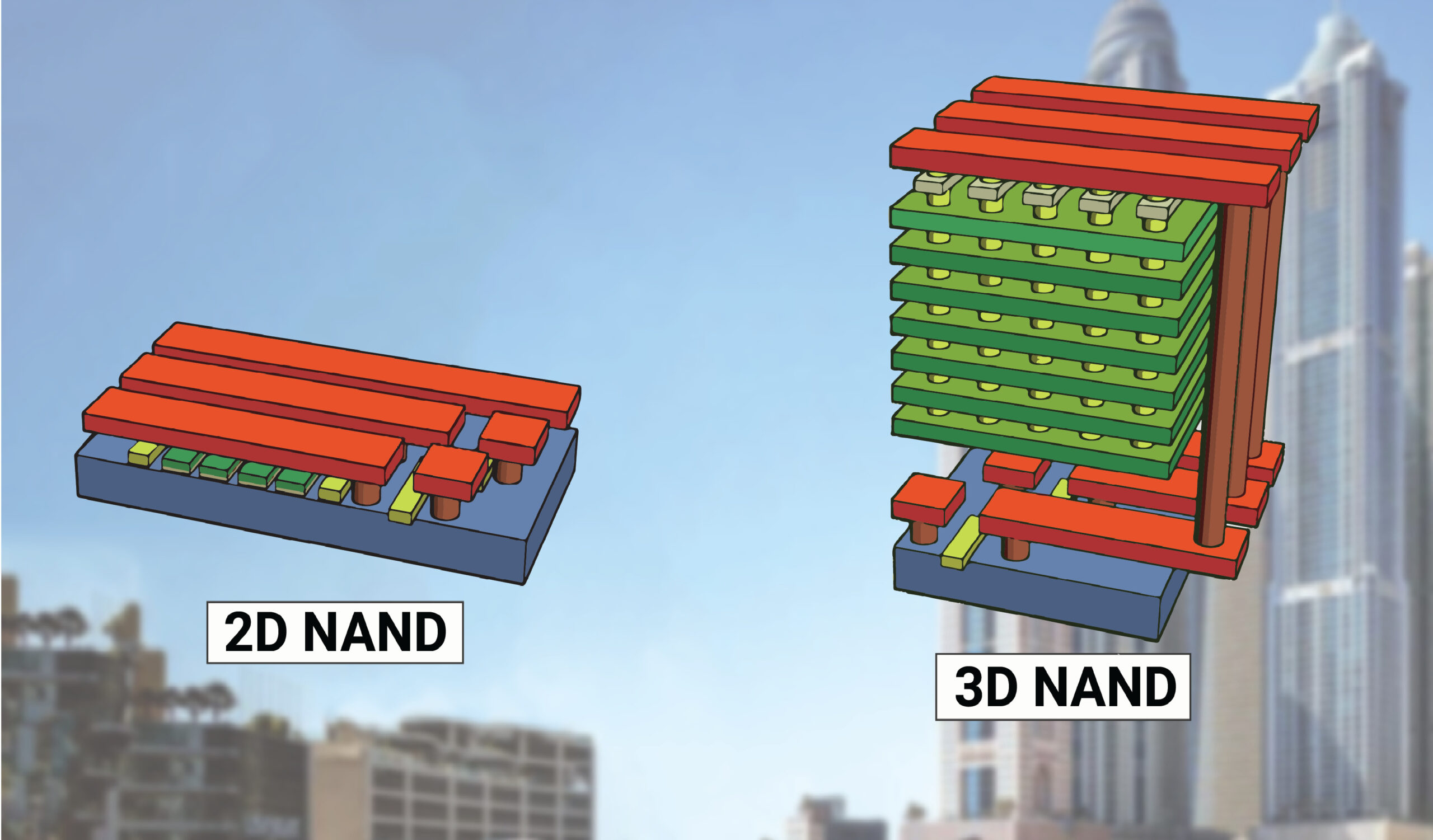
The big advantage of planar SLC memory has always been its speed and endurance. But its downside? Density… or more accurately, lack of it. SLC takes up a lot of physical space for the amount of data it stores. That’s where 3D NAND comes in, and the Phison Pascari X200Z Gen5 SSD might be our first real taste of just how good this can get. What we have here is not pure SLC, but pseudo-SLC, a clever trick where TLC flash is treated like SLC… but in layers to optimize SLC space. The physical characteristics of the flash have not changed; the firmware has. It gives us significant upgrade of the performance and endurance benefits of SLC, without that astronomical price tag of true SLC.
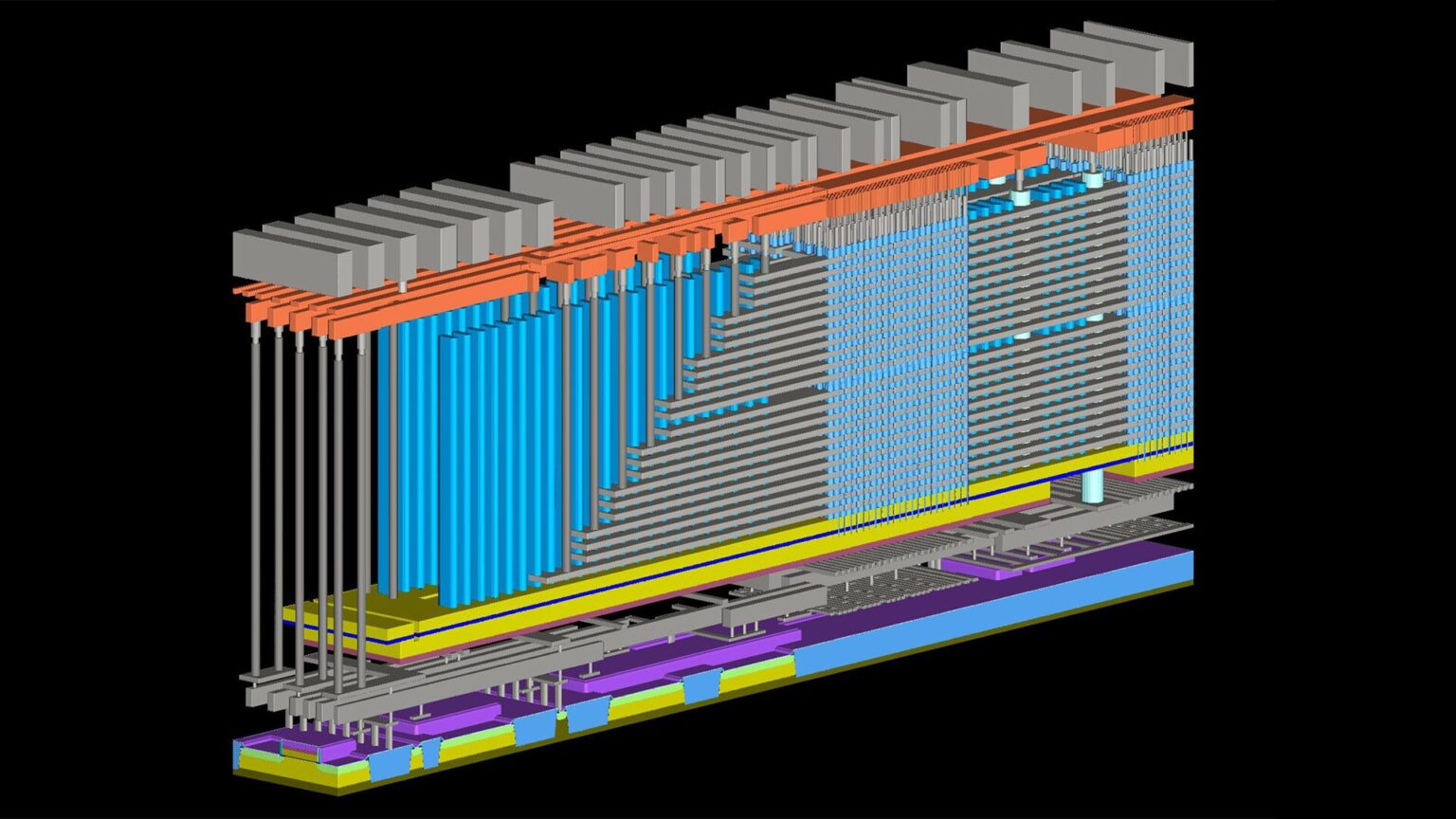
This diagram is KIOXIA’s BiCS 8 3D TLC NAND, simply for clarity as we could not find a representative SK Hynix 176-layer diagram. It has 218-layers as an apartment might have 218 floors, and each layer has electronic connects as an apartment might have elevators. This provides our understanding of ‘3D’ memory. Instead of building out, we build up. As the technology matures, we can keep stacking more layers, or more floors, which increases capacity without needing more land, or silicon in this case. That’s how we’ve arrived at today’s high-capacity consumer M.2 8TB SSDs. Multi-layer TLC and QLC NAND enables this.
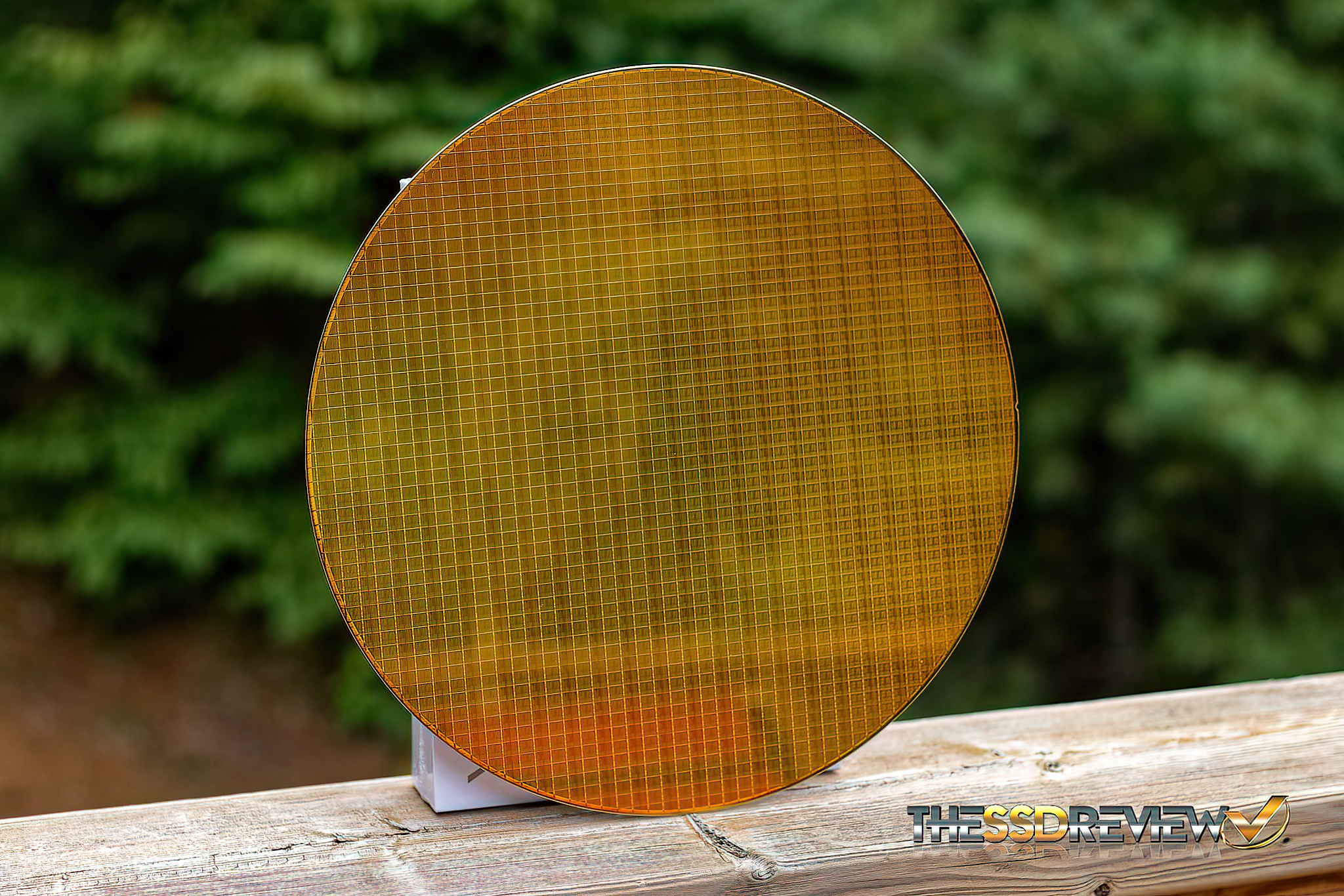
But here’s where it gets interesting. What if we took a 3D TLC wafer and re-engineered it so that each cell behaves like an SLC cell? In apartment terms: same building, but now only two people (remember states) per unit. That’s pseudo-SLC. Yes, doing this cuts the usable capacity to about a third of what TLC would offer, but the payoff is huge. You get a massive leap in performance, endurance, and still far better density than the old-school planar SLC drives we started with. The Phison Pascari X200Z Gen5 Enterprise SSD.
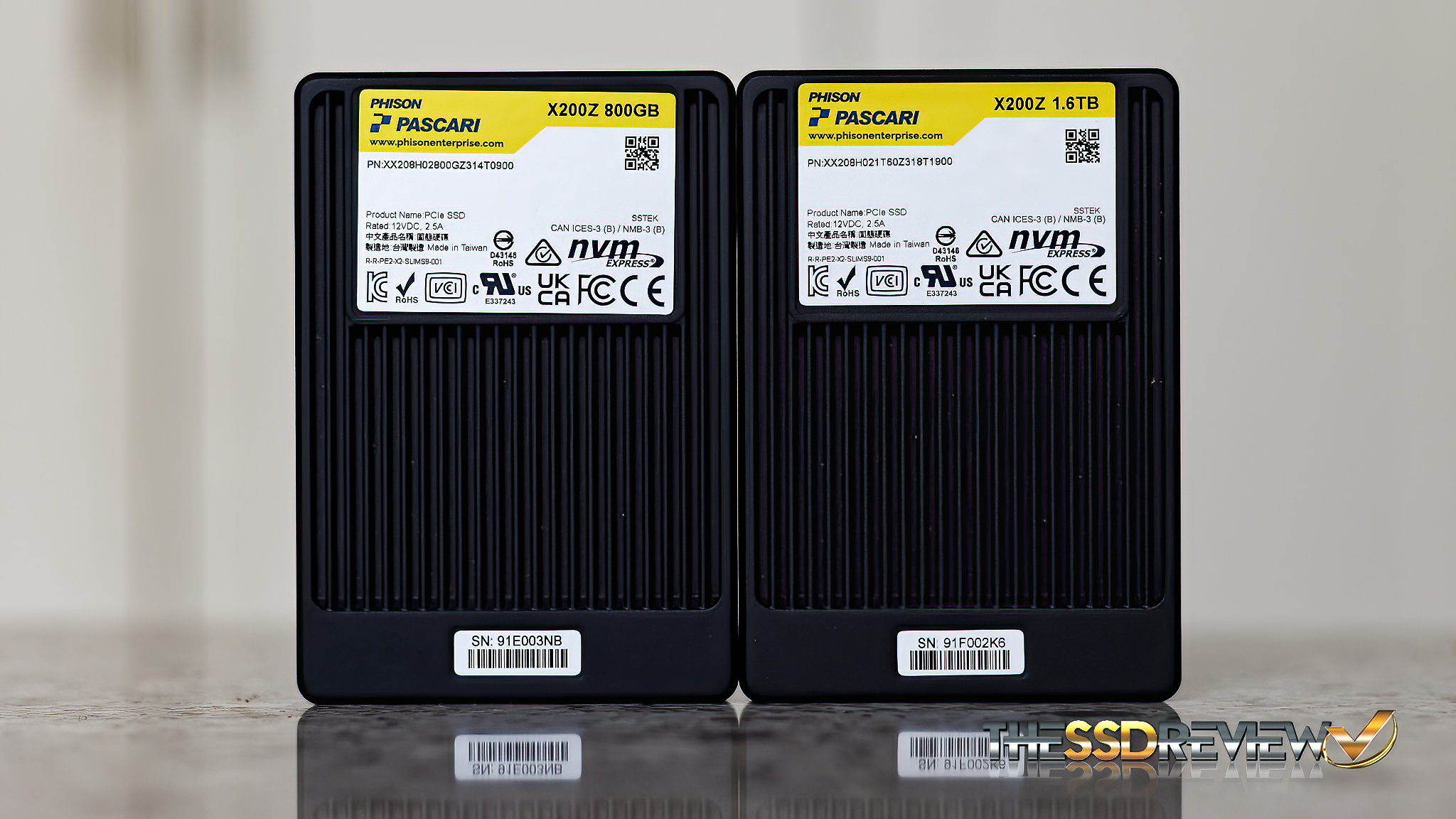
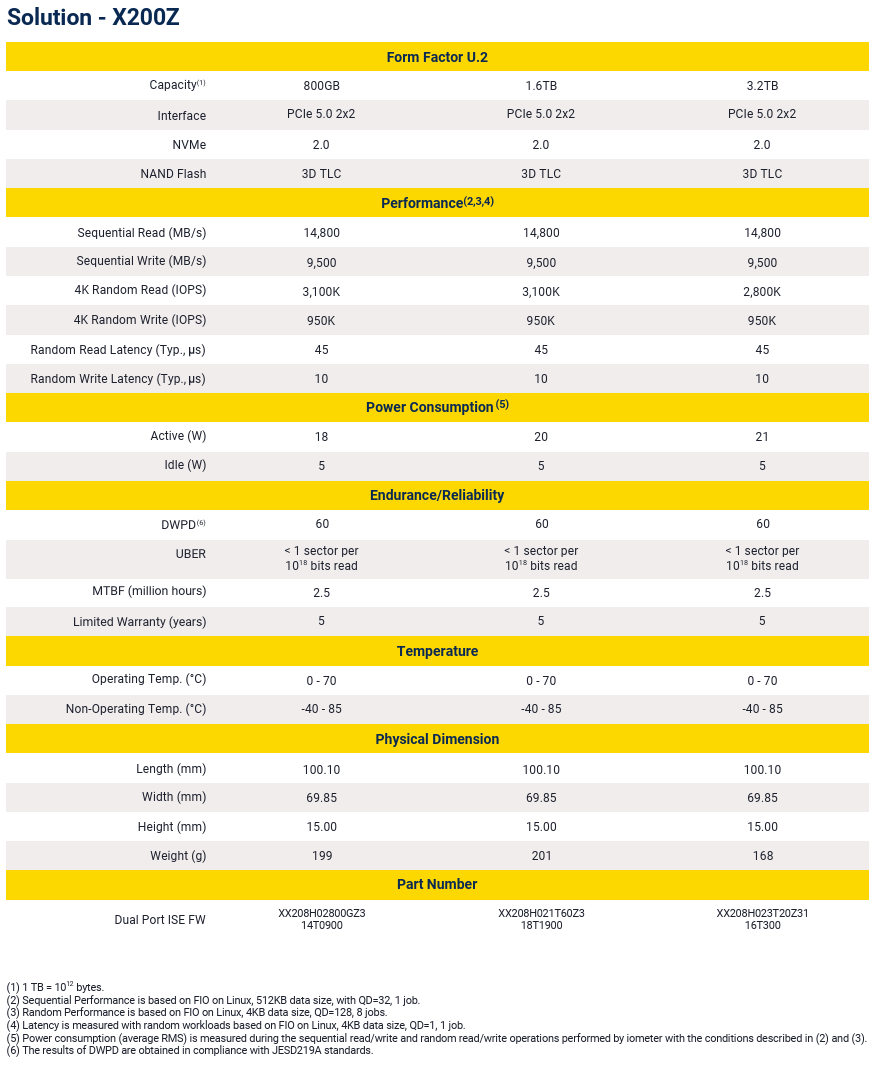
The Phison Pascari X200Z is a PCIe 5.0 2×2 (dual-port) NVMe 2.0 SSD, offered in capacities of 800GB, 1.6TB, and 3.2TB, with a U.2 15mm form factor. It features the Phison PS5302-X2 16-channel Gen5 NVMe controller paired with SK Hynix V7 176-layer 3D SLC NAND flash. Let’s not get off track here. This SSD is best suited as a caching solution, and may even be a paradigm shift in QLC server components.
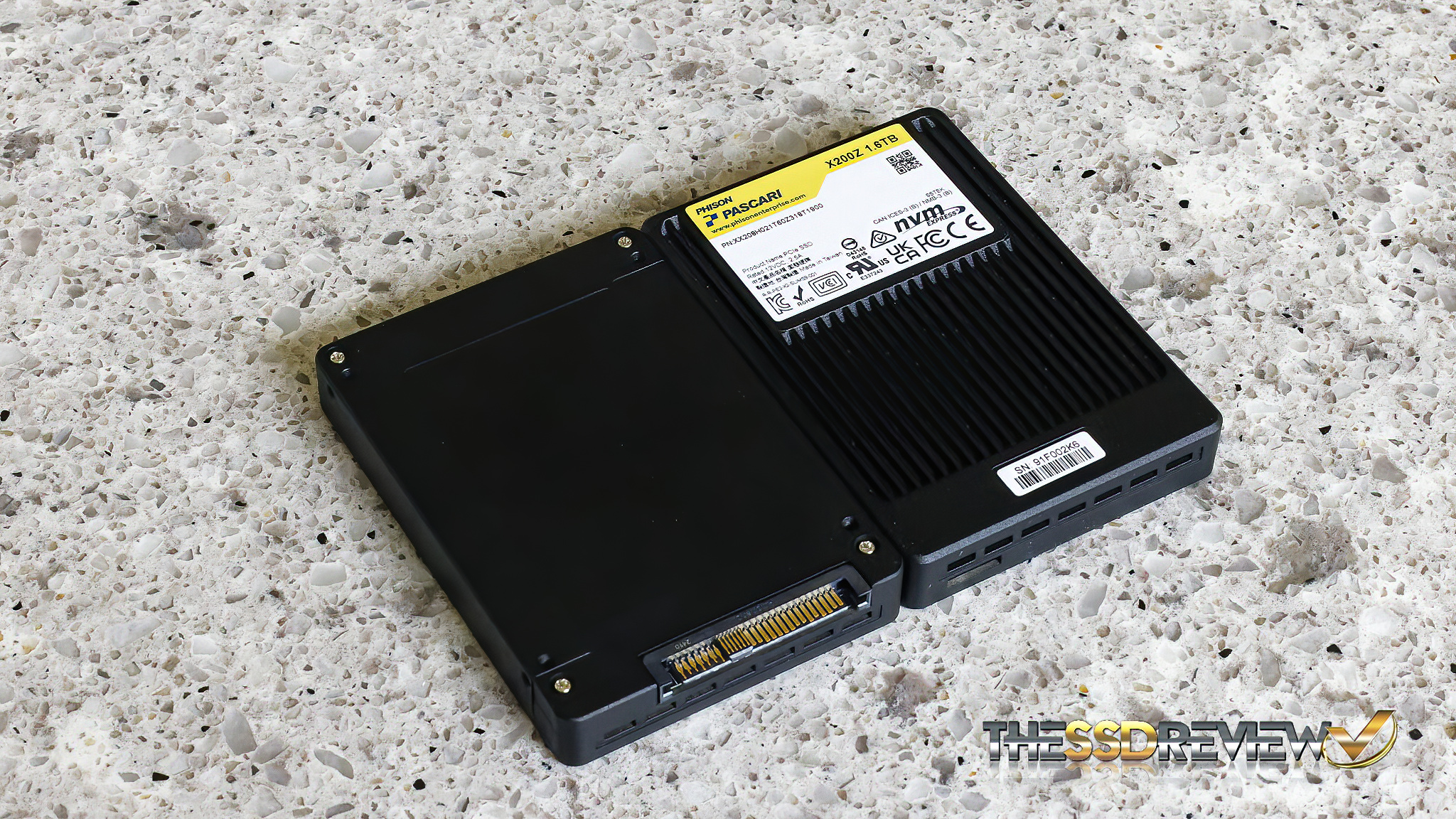
The X200Z delivers impressive performance, offering up to 14.8 GB/s sequential read and 9.5 GB/s sequential write speeds, with up to 3.1 million read IOPS and 950K random write IOPS. Its standout feature is its industry-leading endurance rating of 60 drive writes per day (DWPD), all while maintaining active power consumption below 20W. Backed by a 5-year warranty, the X200Z sets a high bar for enterprise-grade SSDs. For the full list of specifications, see here:
In terms of features, the X200Z offers support for up to 128 namespaces, power loss protection (PLP), Instant Secure Erase (ISE), and AES-XTS 256-bit encryption. It also includes robust data protection features such as end-to-end data path protection, metadata protection, SECDED (Single Error Correction, Double Error Detection), and sanitize functionality. Management capabilities include NVMe Management Interface and SMBus support. The X200Z is optimized for compatibility with leading operating systems, including Ubuntu, Windows Server, RHEL, SLES, CentOS, and VMware ESXi.