The SSD Review The Worlds Dedicated SSD Education and Review Resource |
In any environment, it is always nice to find a product that qualifies as one of those hidden gems you would never expect to find. With respect to travel, it may be a little known vacation spot. Or it might be a local coffee shop that only a few know about in your town. Or if you have recently bought a home, it may be a secret room you discovered, jewelry, a painting or even hidden money in a wall. In flash storage, it is finding that small company of 150 employees or so that markets an enterprise SSD that nobody might truly expect. Our review of the Memblaze PBlaze 7A40 Gen5 NVMe enterprise SSD is just that, and let’s just say we truly never expected to find IOPS of 3.3 million in our first testing of an enterprise SSD in some time. Steady-state yet!
Now, I am sure we are going to have a large number of followers that don’t quite understand the difference between enterprise SSDs and the typical consumer SSDs. Along with this phenomenon comes the terms. FOB vs. steady state. In consumer SSDs, we typically tests FOB (fresh out-of-box) for synthetic benchmarks as it is the best means to demonstrate to the buyer that the product is capable of its manufacturers specifications…read and write data transfer speeds.
With enterprise testing, it is a bit different as the drive has to be 100% filled with tests being run for an extended period of time to push the performance into what’s typically called its steady-state performance. What is the SSDs best performance under pressure, or under constant data transfer?
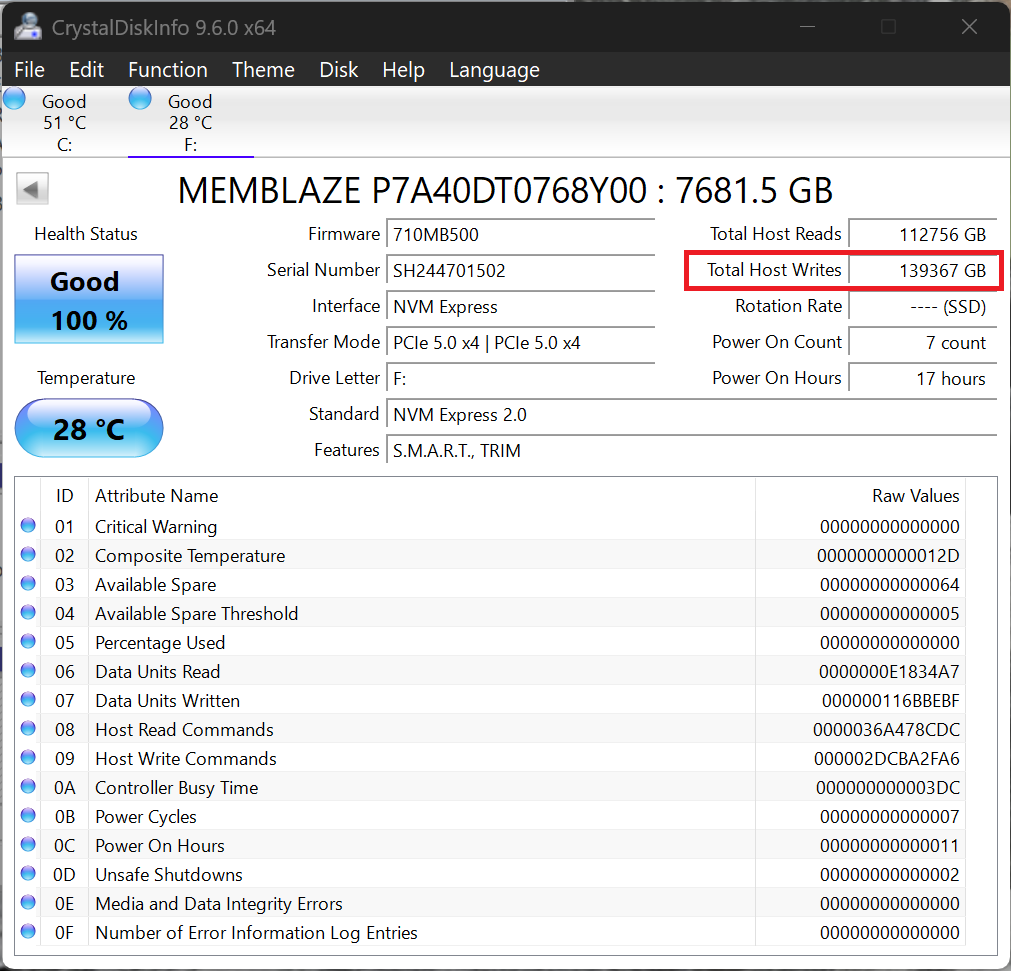
With a typical consumer SSD, we might see a few terabytes of TBW (terabytes written) post testing and physical testing might take 4-6 hours in total, where we have used 12-13 different software benchmarks to establish performance consistency. This testing is done in Windows whereas enterprise testing is conducted in an enterprise test bench and within the Linux Distribution of Ubuntu. Testing for our PBlaze 7 consisted of 17 hours continuous operation and, when all was said and done, there was a total of 139TBW written to that drive. Continuous data transfer is expected of an enterprise or data center SSD. It is not for a consumer SSD.
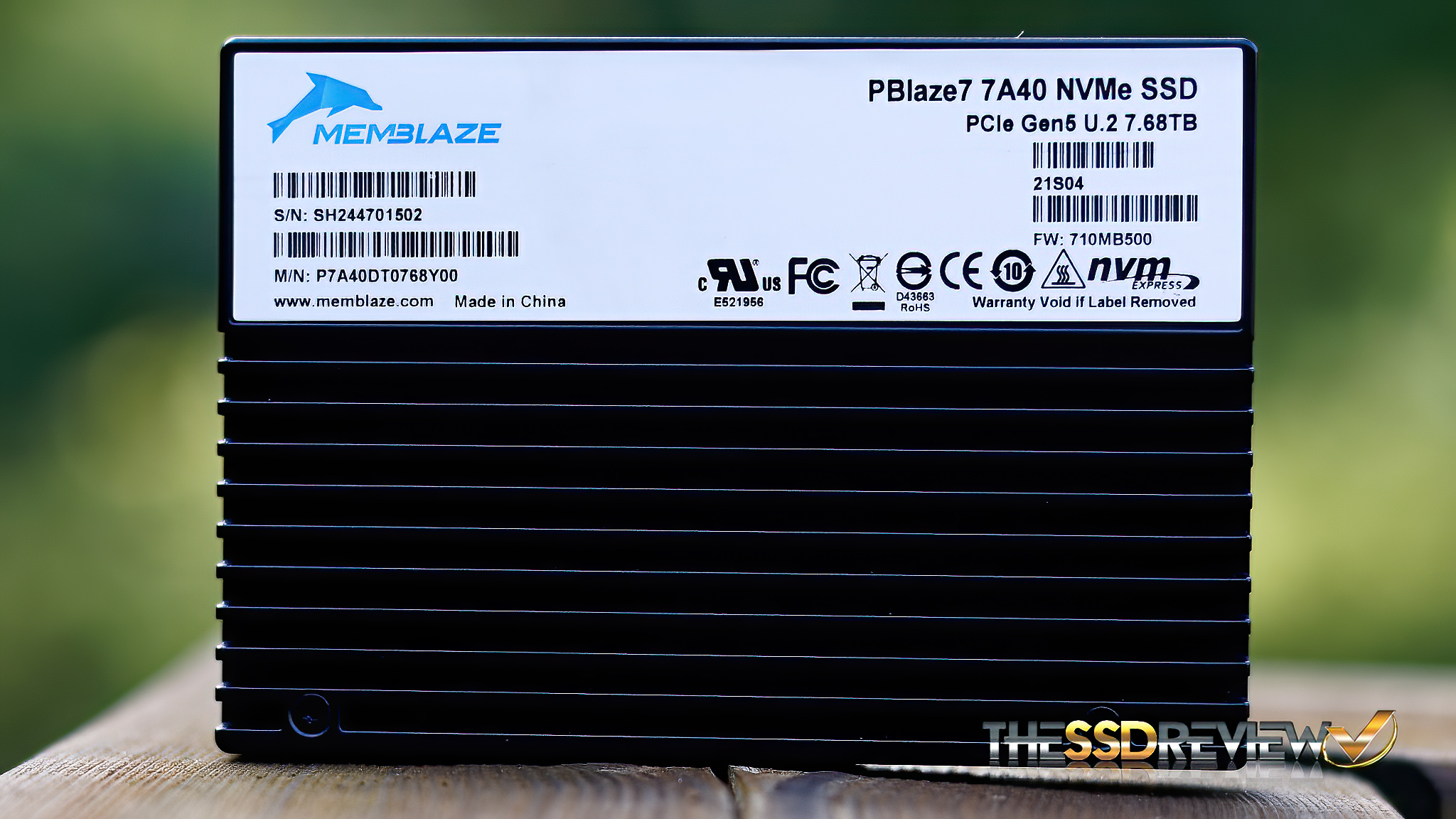
MEMBLAZE PBLAZE 7 7A40 GEN5 7.68TB SSD
The Memblaze PBlaze 7 is a rather unique SSD as it is available in two configurations, the 7A40 and the 7940. Our sample, the 7A40 is for the Asias and Europe (to include Canada) and the 7940 is for United States and contains different more ‘US-centric components’ as Memblaze is China-based. With this in mind, we are trying to get the US version in hand to do a first-hand comparison as we have worldwide reach and a very strong US readership presence…stay tuned.
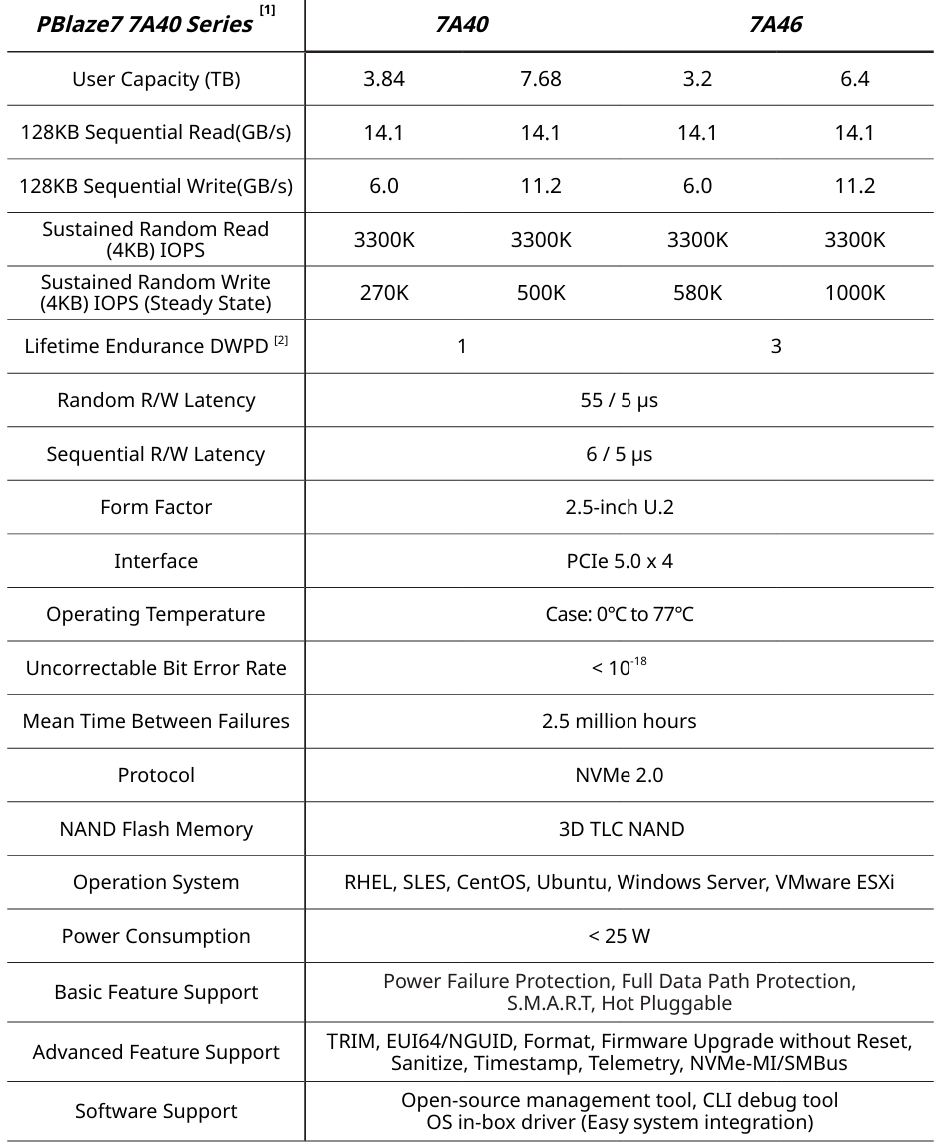
Both versions are PCIe 5.0 (Gen5), come in the 2.5″ by 15mm U.2 interface, are built on the Memblaze Unified Framework Platform (MUFP) and are available in 3.8, 7.68 and 15TB configurations. Our 7A40 utiliizes 7% overprovisioning and claims 1 Drive Write per Day (1-DWPD) whereas this same SSD is available in the 7A46 configuration of 27% overprovisioning which claims 3DWPD; or triple the endurance. Our 7A40 SSD has a 2.5 million MTBF along with a limted 5-year warranty.
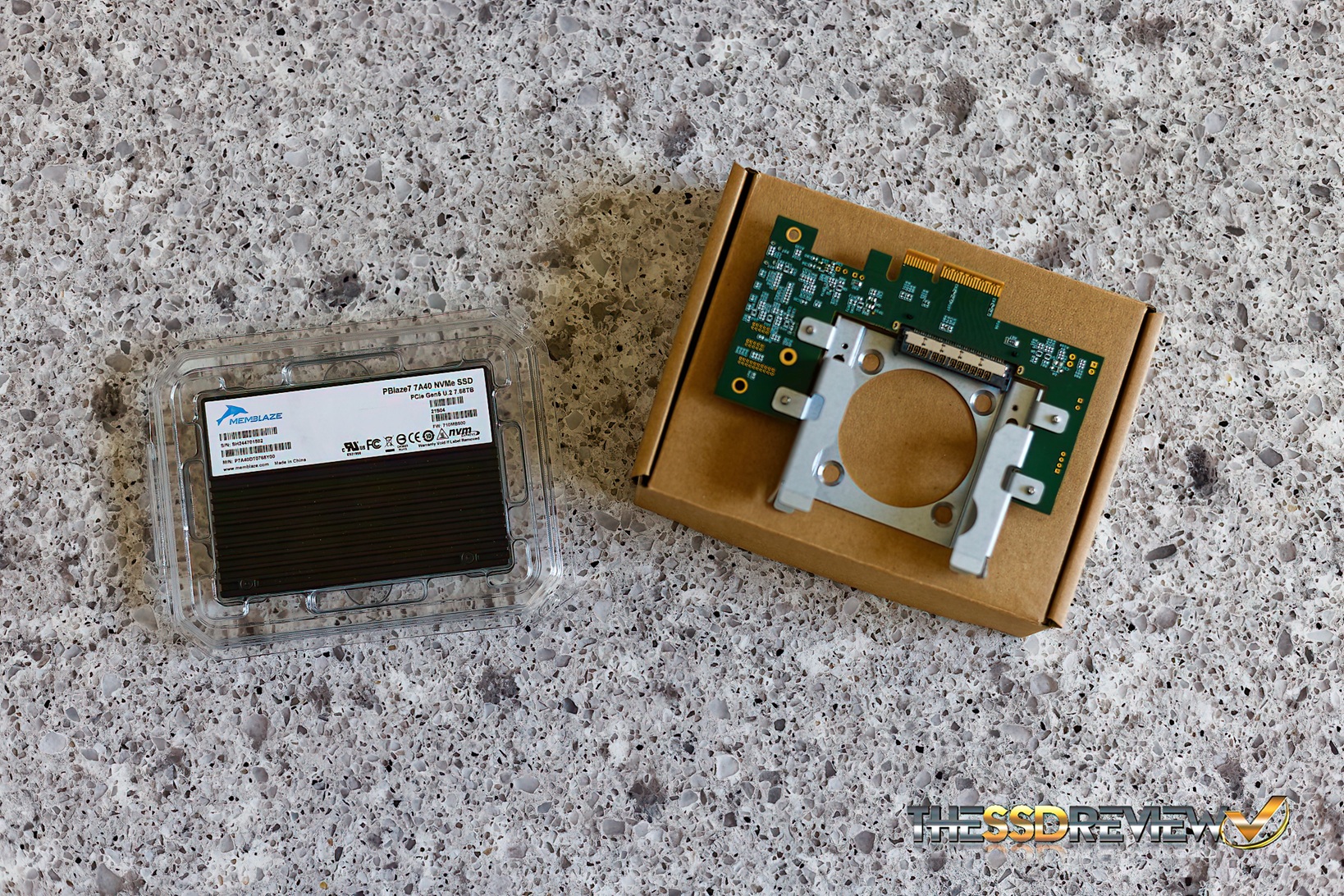
Our Memblaze PBlaze 7 7A40 enterprise SSD sample arrived with an included U.2 AIC card for testing. The outer casing is of black anodized aluminum with a ribbed top for effective heat dissipation.
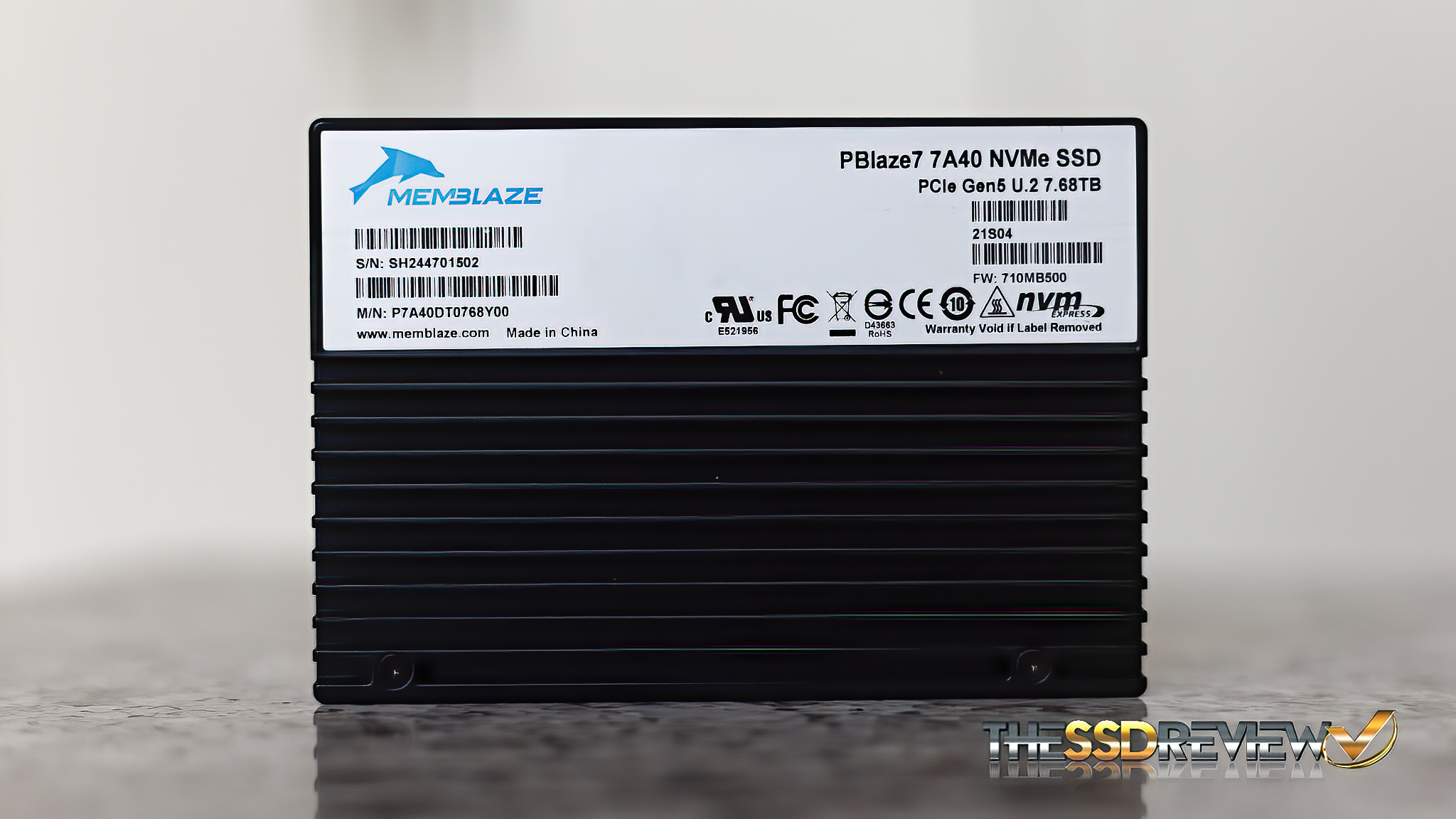
Within the casing lies a two-sided PCB which contains the T-Head Zhenyue 510 (also known as TH7700) 16-channel Gen5 SSD controller. This is based on an 8-core 64-bit RISC-V architecture. There are also 8-pieces (4 on each side) of YMTC Xtacking 3.0 (X3-9070) 232-layer 3D TLC NAND flash memory capable of running at up to 2400MT/s.
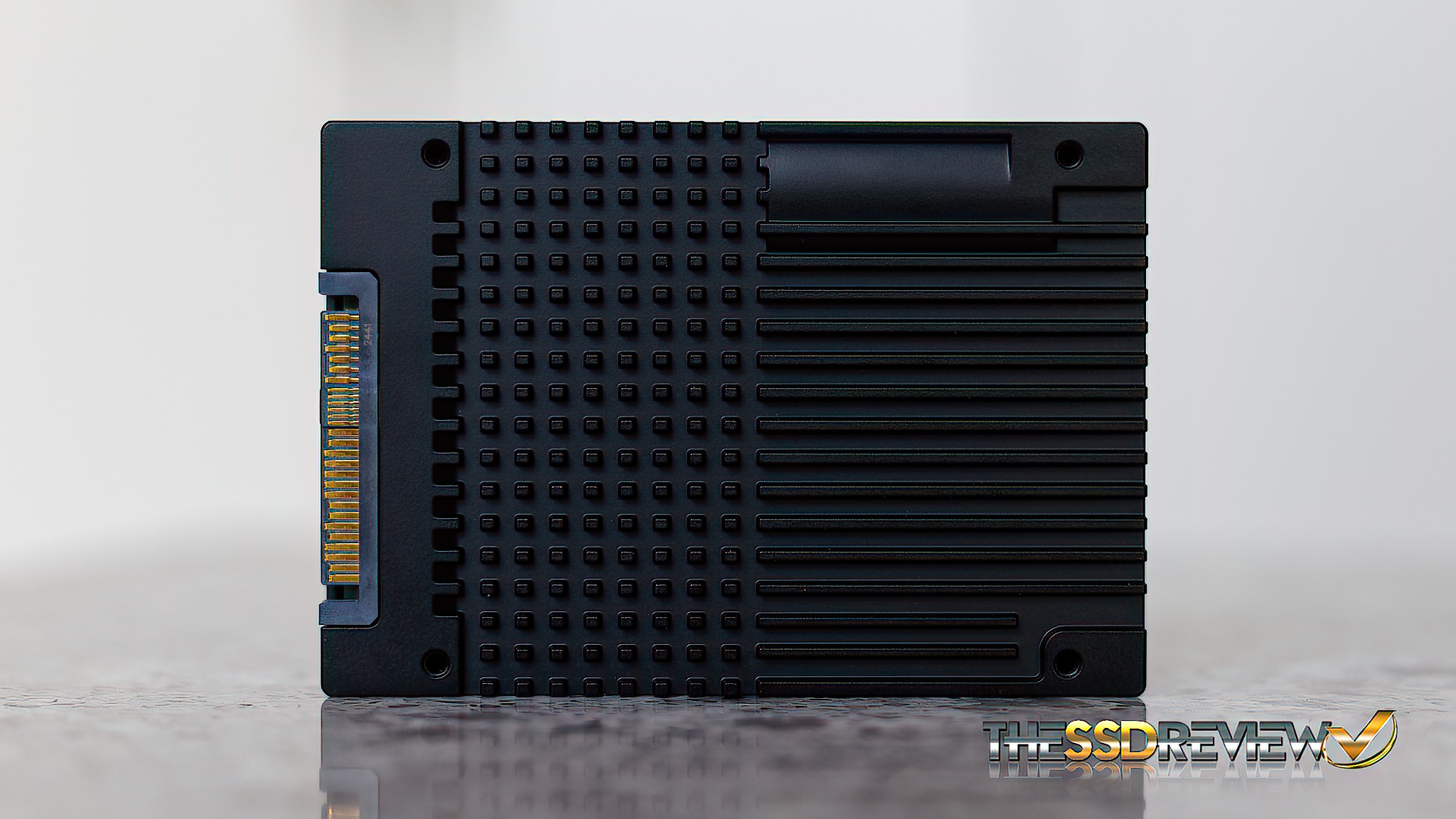
There are five 2GB SK Hynix DDR4 DRAM modules with ECC support within. Performance for the 7A40 (and 7A46) is variable with highs of 14.1GB/s read and 11.2GB/s write and up to 3.3 million IOPS with a maximum power rating of up to 25 watts. Variable speeds are elaborated here: