 The SSD Review The Worlds Dedicated SSD Education and Review Resource |
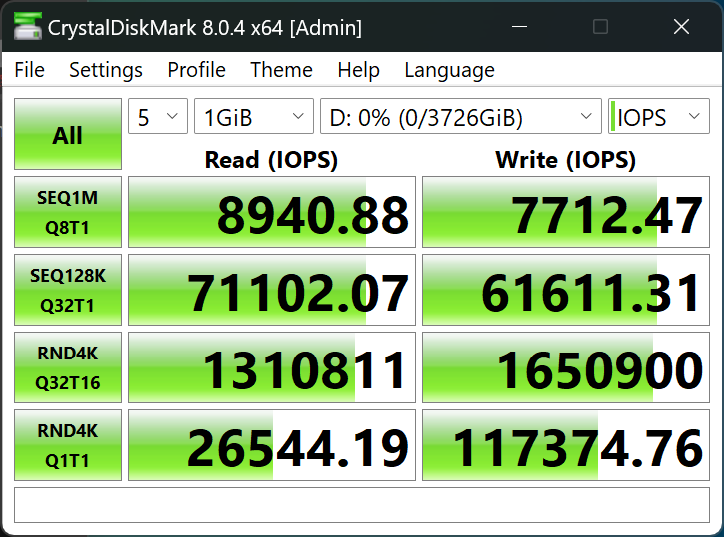
CRYSTAL DISK BENCHMARK VER. 8.0.4 x64
Crystal Disk Benchmark is used to measure read and write performance through sampling of random data which is, for the most part, incompressible. Performance is virtually identical, regardless of data sample so we have included only that using random data samples.
THROUGHPUT

IOPS
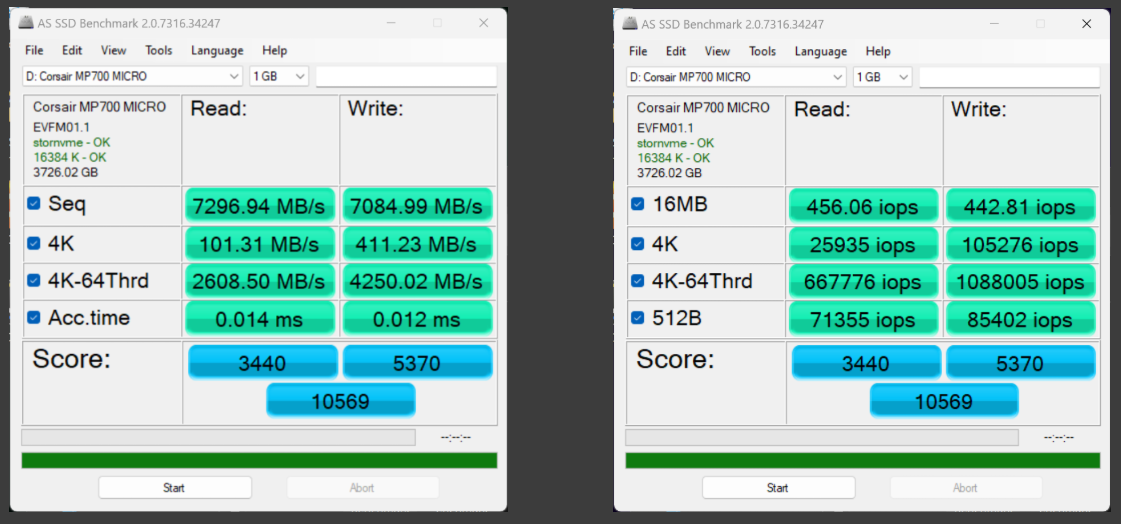
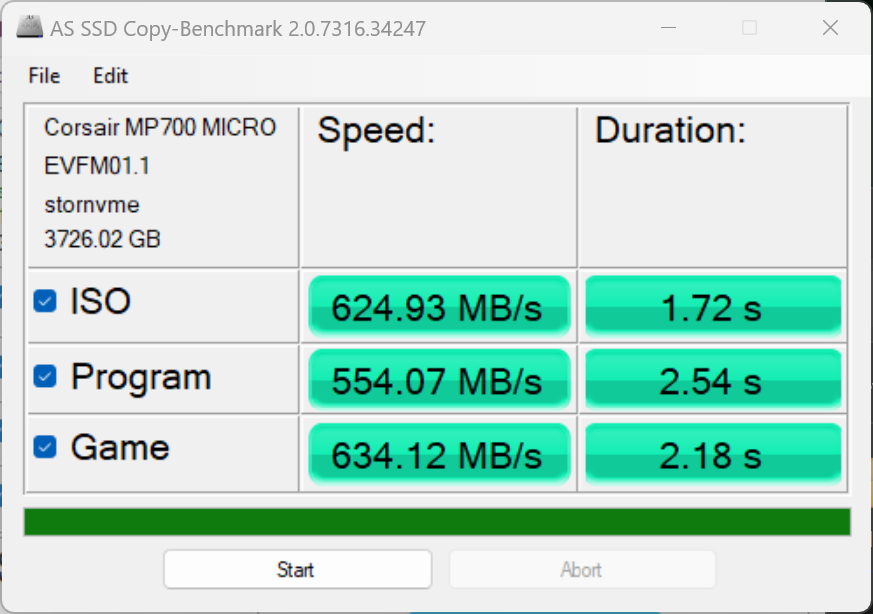
AS SSD is widely regarded as one of the most challenging benchmarks for solid-state drives, as it tests performance exclusively with incompressible data. This makes its results a “worst-case scenario” for data transfer speeds, which is why many enthusiasts prefer AS SSD for a realistic measure of SSD performance.
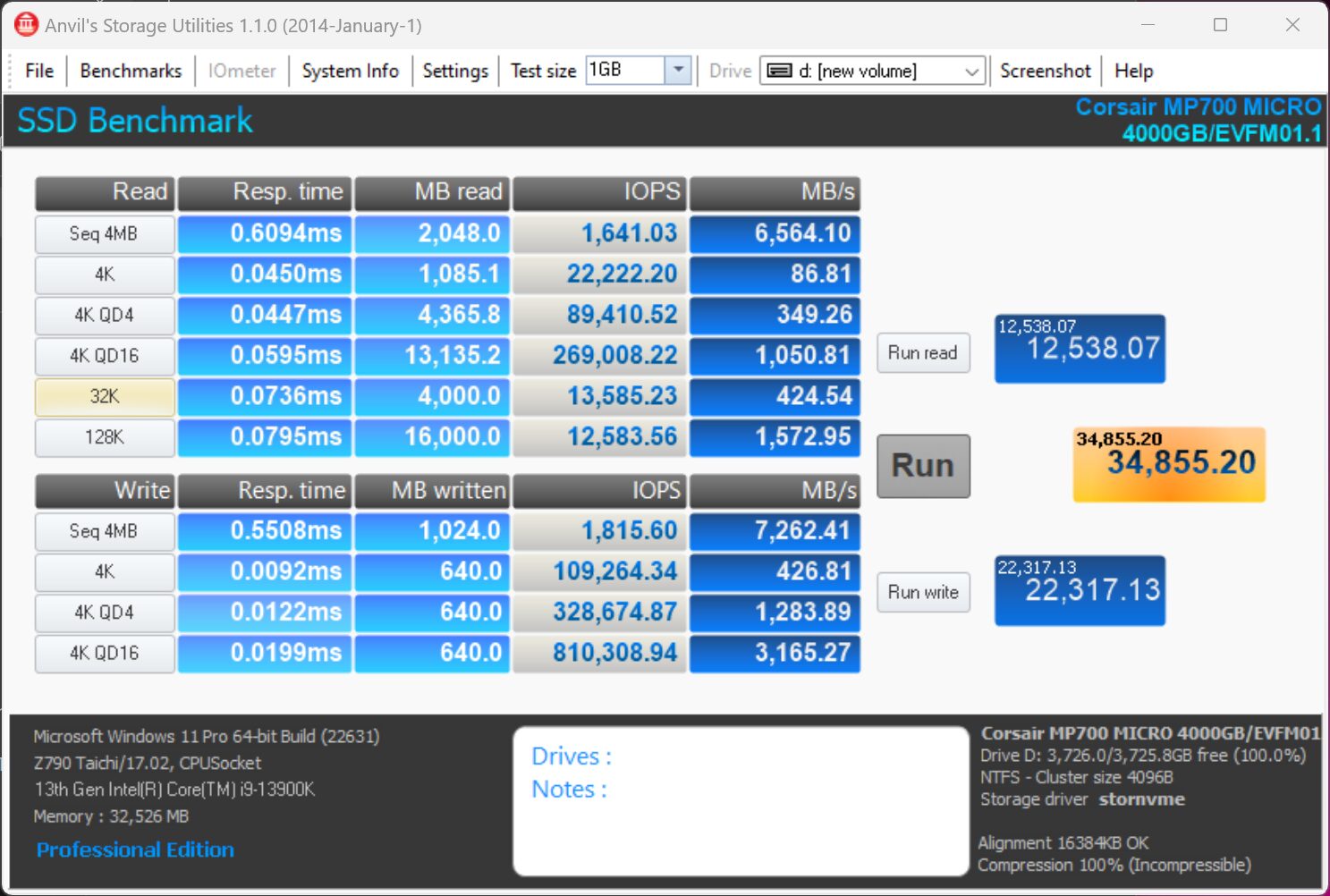
ANVIL STORAGE UTILITIES PROFESSIONAL
Anvil’s Storage Utilities (ASU) are the most complete test bed available for the solid state drive today. The benchmark displays test results for, not only throughput but also, IOPS and Disk Access Times. Not only does it have a preset SSD benchmark, but also, it has included such things as endurance testing and threaded I/O read, write and mixed tests, all of which are very simple to understand and use in our benchmark testing.
AJA VIDEO SYSTEM DISK TEST
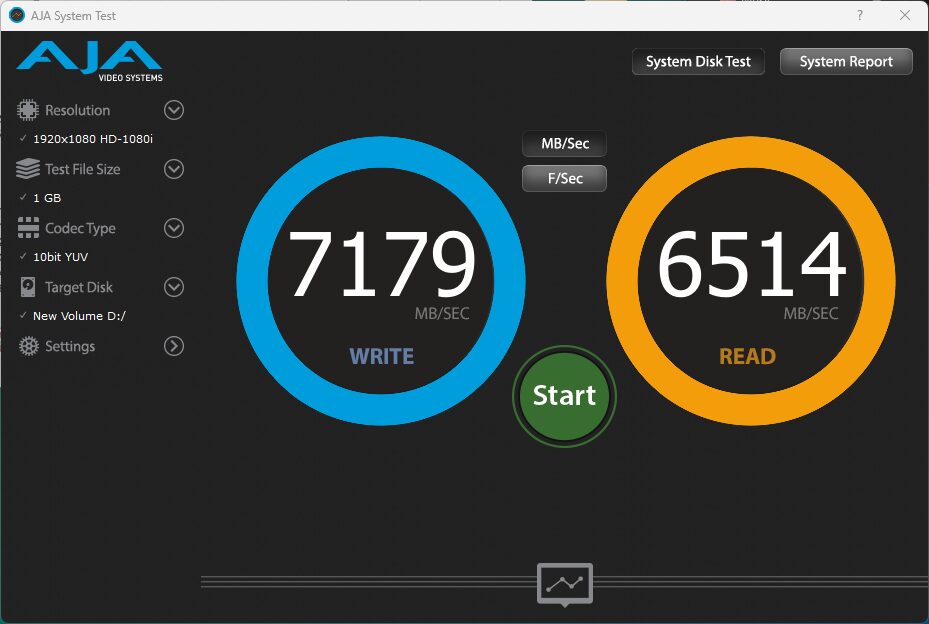
The AJA Video Systems Disk Test is relatively new to our testing and tests the transfer speed of video files with different resolutions and Codec.
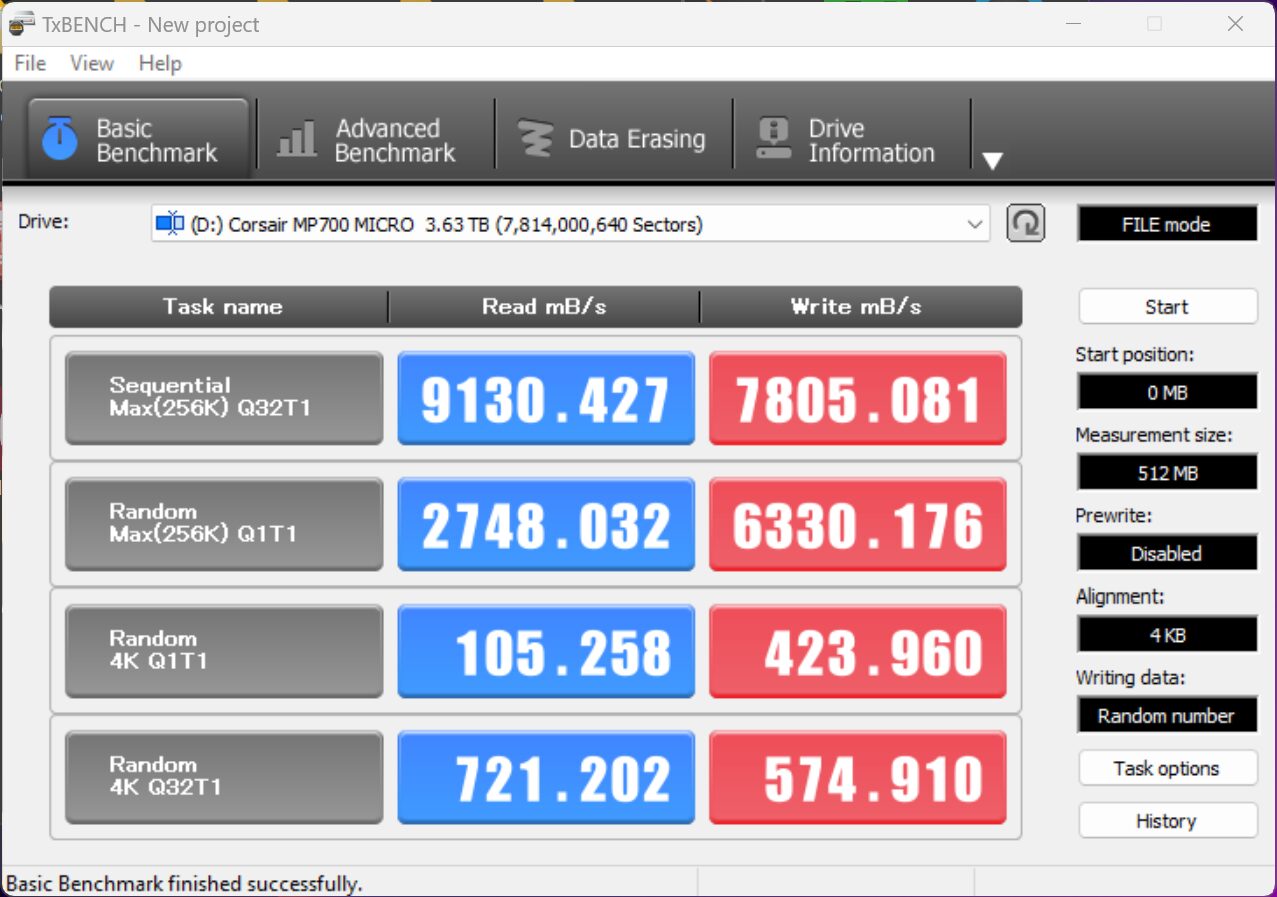
TxBench is one of our newly discovered benchmarks that we works much the same as Crystal DiskMark, but with several other features. Advanced load benchmarking can be configured, as well as full drive information and data erasing via secure erase, enhanced secure erase, TRIM and overwriting. Simply click on the title for a free copy.
It is now only a matter of time until we will see PCIe 5.0 NVMe SSDs in a 2230 form factor soon! Hopefully, by 2026! Insane out of the world speeds in a small form factor!
Absolutely agree! Looking forward to seeing insane speeds in a very small 2230 form factor very soon!
Who knows, maybe in CES 2026 we will see these SSds already!
There is an error in the MS direct storage section, it says [“increasing” game load times], but I would have thought the author meant to say [“decreasing” game load times].
Ref:
As our Corsair MP700 Micro 4TB SSD is MS DirectStorage compatible, we thought we might take advantage of the 3DMark DirectStorage Feature Test and see how this SSD fared. MS DirectStorage, in very basic terms, allows direct transfer of data from your SSD storage directly to your GPU, eliminating its historical necessary passage from the SSD through the CPU to RAM, back through the CPU and finally to the GPU VRAM. This is, for the most part at this time, intended on [increasing game load times],reducing CPU overhead and providing more detailed graphics.
I agree, noticed it too. I believe the author meant to say “faster loading times” instead of “increased loading times”.
As an example, Diablo IV (the game I play) support Microsoft DirectStorage, therefore leading to faster loading times. (Although Diablo IV had issues with DirectStorage before, the problem appeared to been fixed now).
Fixed Thanks.