 The SSD Review The Worlds Dedicated SSD Education and Review Resource |
We’re entering an era where smaller, faster, and higher-capacity SSDs are no longer luxuries; they’re necessities. I experienced this firsthand last year while shopping for a new ultrabook. My shortlist of must-haves was clear: a compact form factor, support for at least a 4TB SSD, and PCIe 4.0 performance. Ideally, I wanted PCIe Gen5 speeds, but nothing on the market offered that yet. My options came down to the Lenovo Yoga 9i 2-in-1 and the Dell Pro, but at the time, neither could accommodate 4TB of SSD storage.
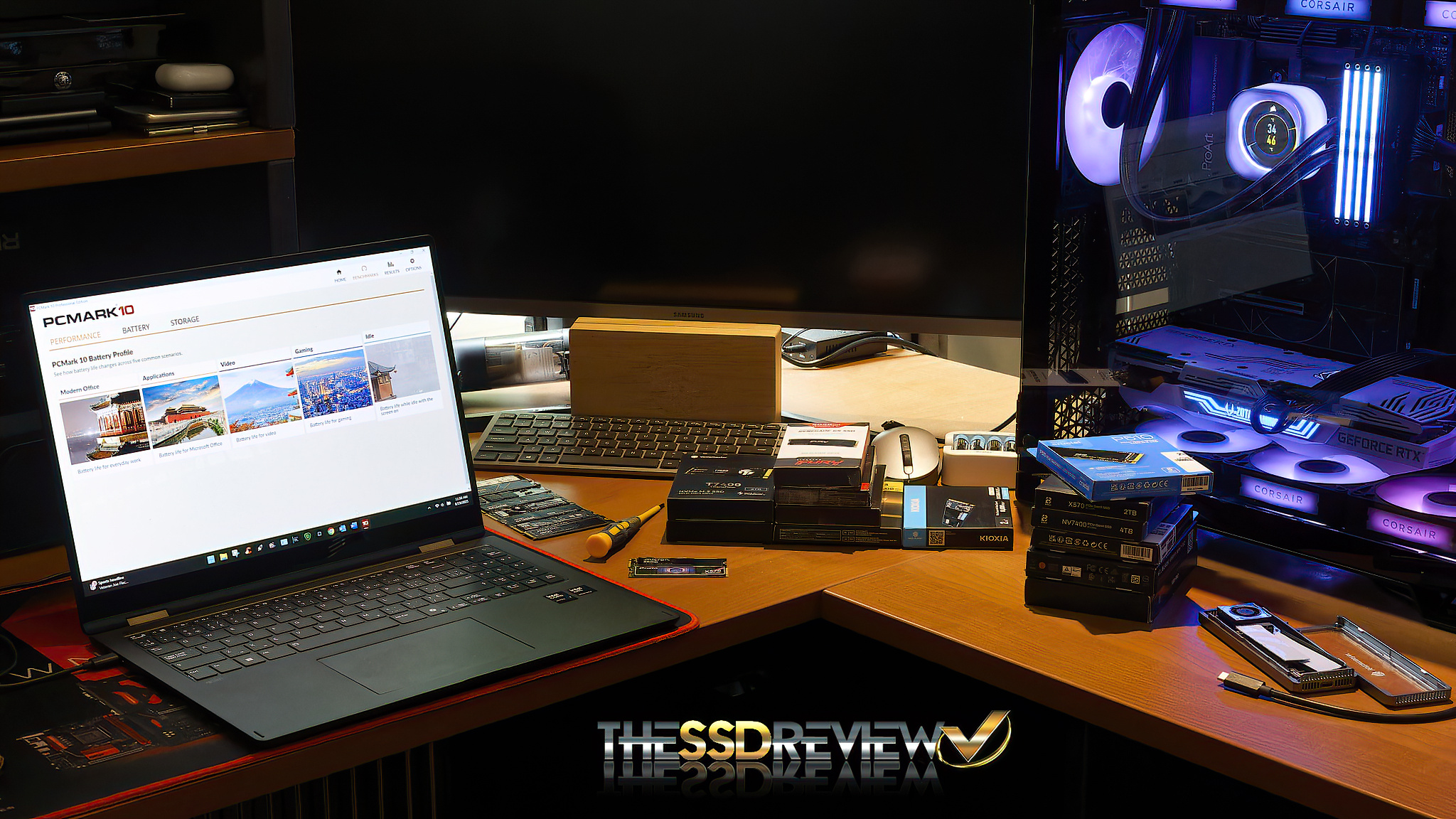
My final choice landed on the LG Pro 2-in-1 16″ Ultra 7 with 32GB of memory, and I wasted no time upgrading the factory 2280 (22mm x 80mm) Gen4 SSD to 4TB, with plans to push it to 8TB soon after. Not so fast! While this is indeed a Gen4 ultrabook (and the world’s smallest 16”), if the Corsair MP700 Micro Gen5 SSD had been available at the time, I’d have gone with the Yoga 9i without hesitation. Even so, we quickly learned a valuable lesson: ultrabooks demand single-sided SSDs. As we discovered with our LG and the Samsung 9100 Gen5 8TB SSD, double-sided drives simply won’t fit.
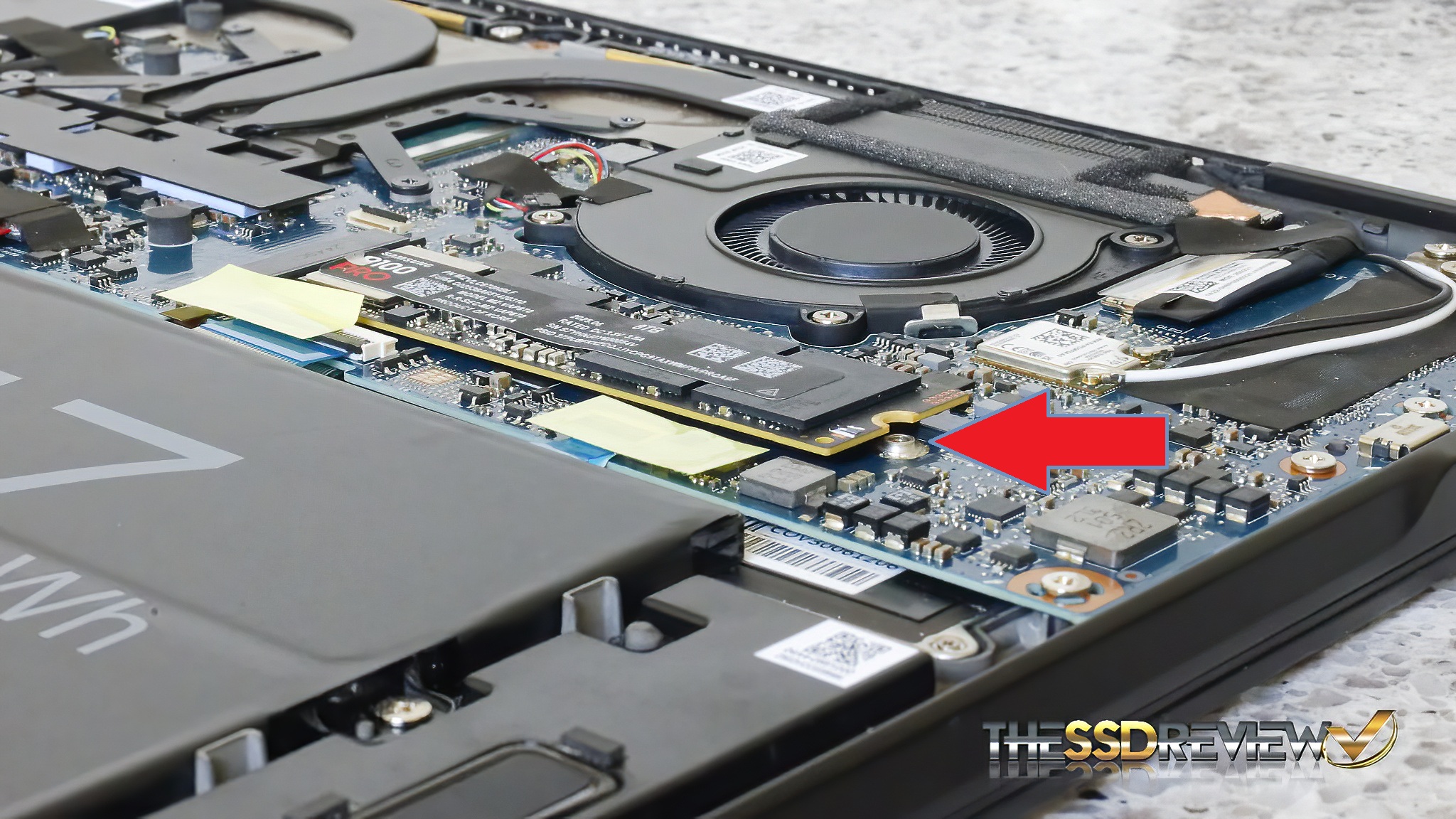
The truth is, some of us genuinely need the smallest ultrabook possible, while still packing the highest-capacity, best-performing SSD…for travel or those unusual situations, like perching in a tree with a laptop for nature photography. Been there.

Ultimately, NAND flash memory dictates what’s possible. As newer NAND becomes denser and more compact, it allows for greater capacity within a smaller footprint. The SSD we’re reviewing today is the 4TB Corsair MP700 Micro Gen5, and it’s impressively tiny, just a 2242 form factor (22mm wide x 42mm long). And its storage capacity is absolutely massive!
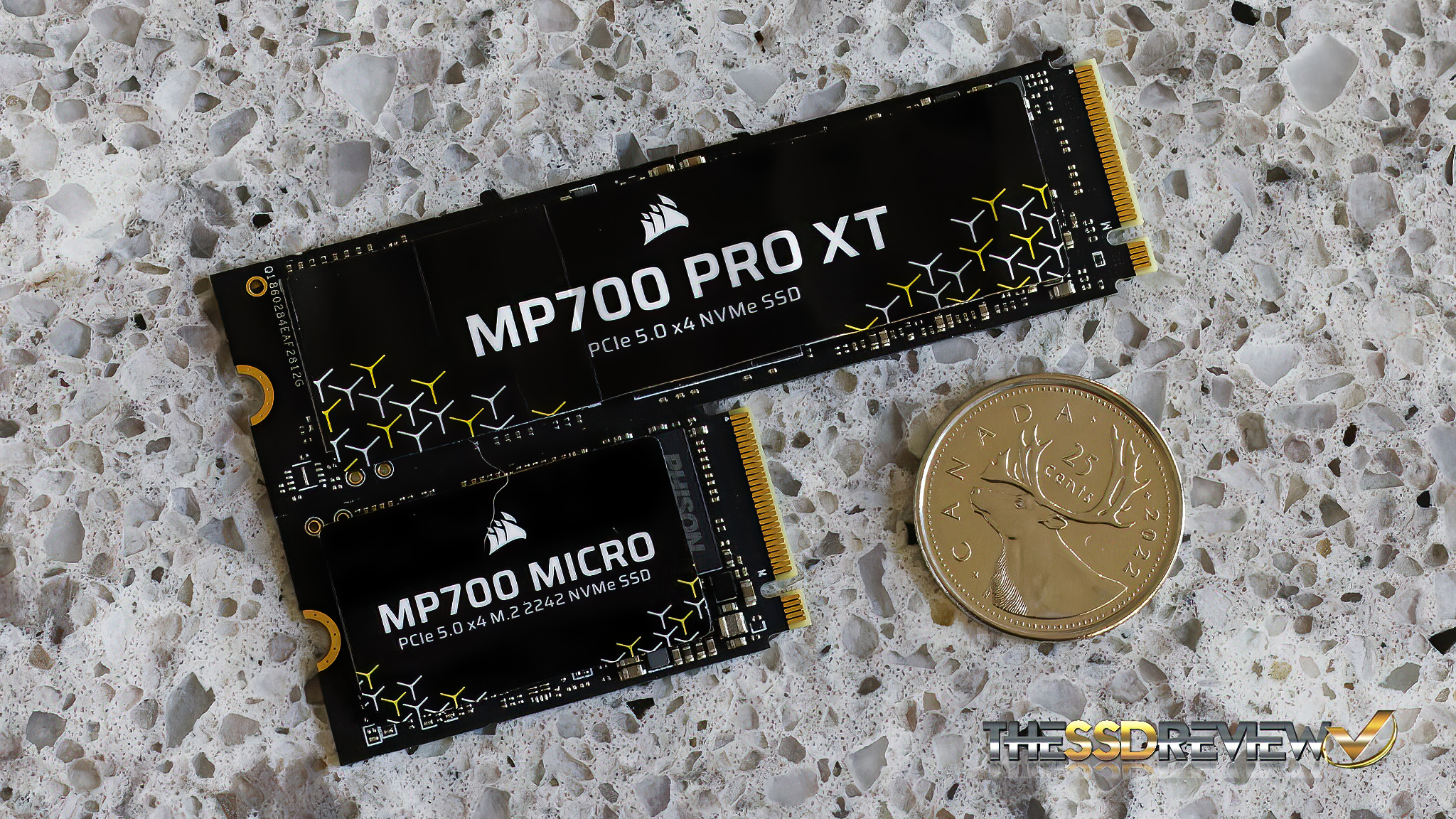
Yes that would be the Corsair MP700 Pro XT 2TB SSD, another SSD release this morning and the first public release of the Phison PS5028-E28 8-channel Gen5 SSD controller, right beside the 4TB Corsair MP700 Micro we are testing in this report. Check out that review here!
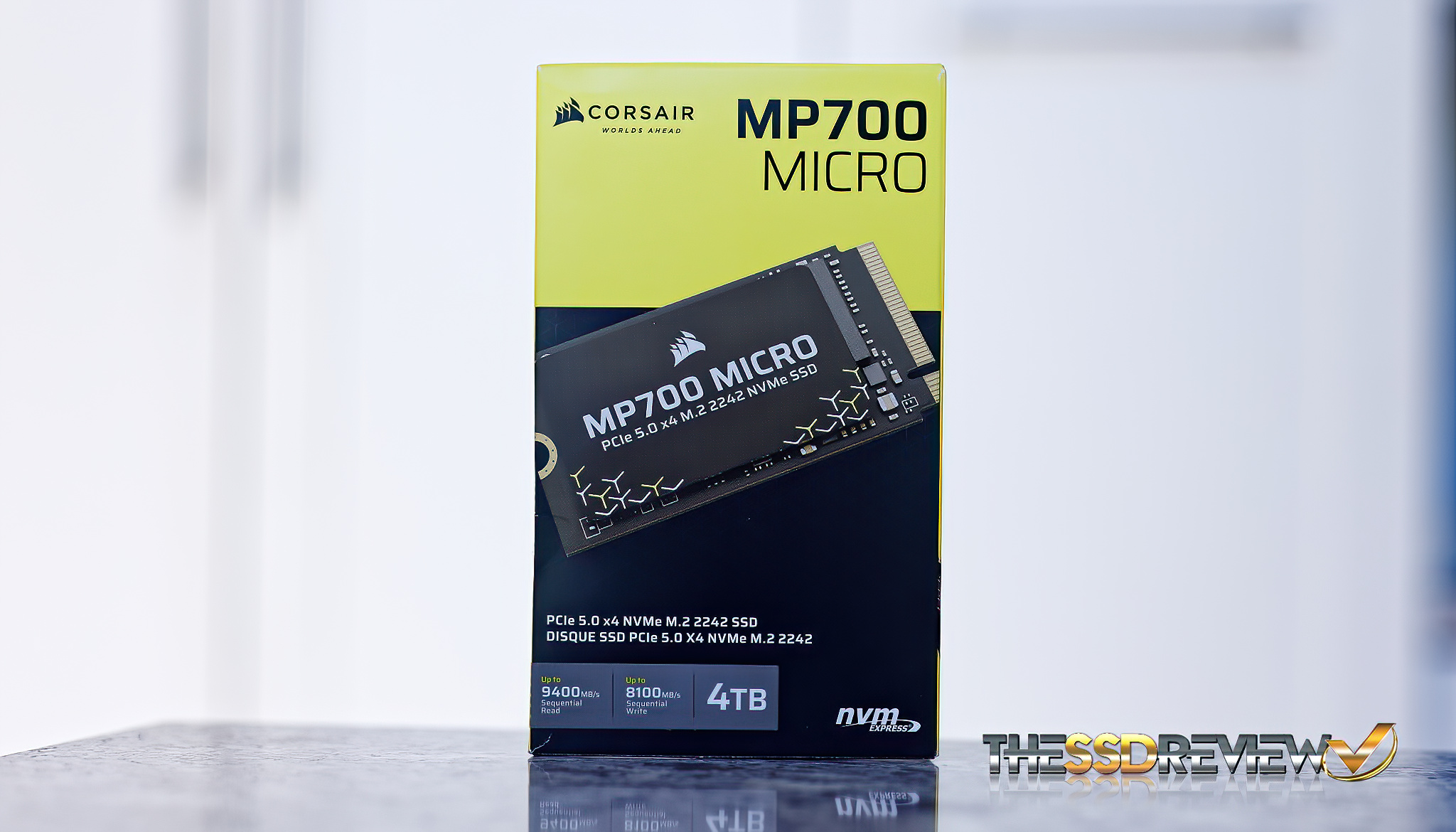
The Corsair MP700 Micro is a PCIe 5.0 (Gen5) x4 DRAMless SSD built on the NVMe 2.0 protocol, and it just might be the world’s smallest 4TB SSD, featuring the compact 2242 form factor (22mm wide by 42mm long).
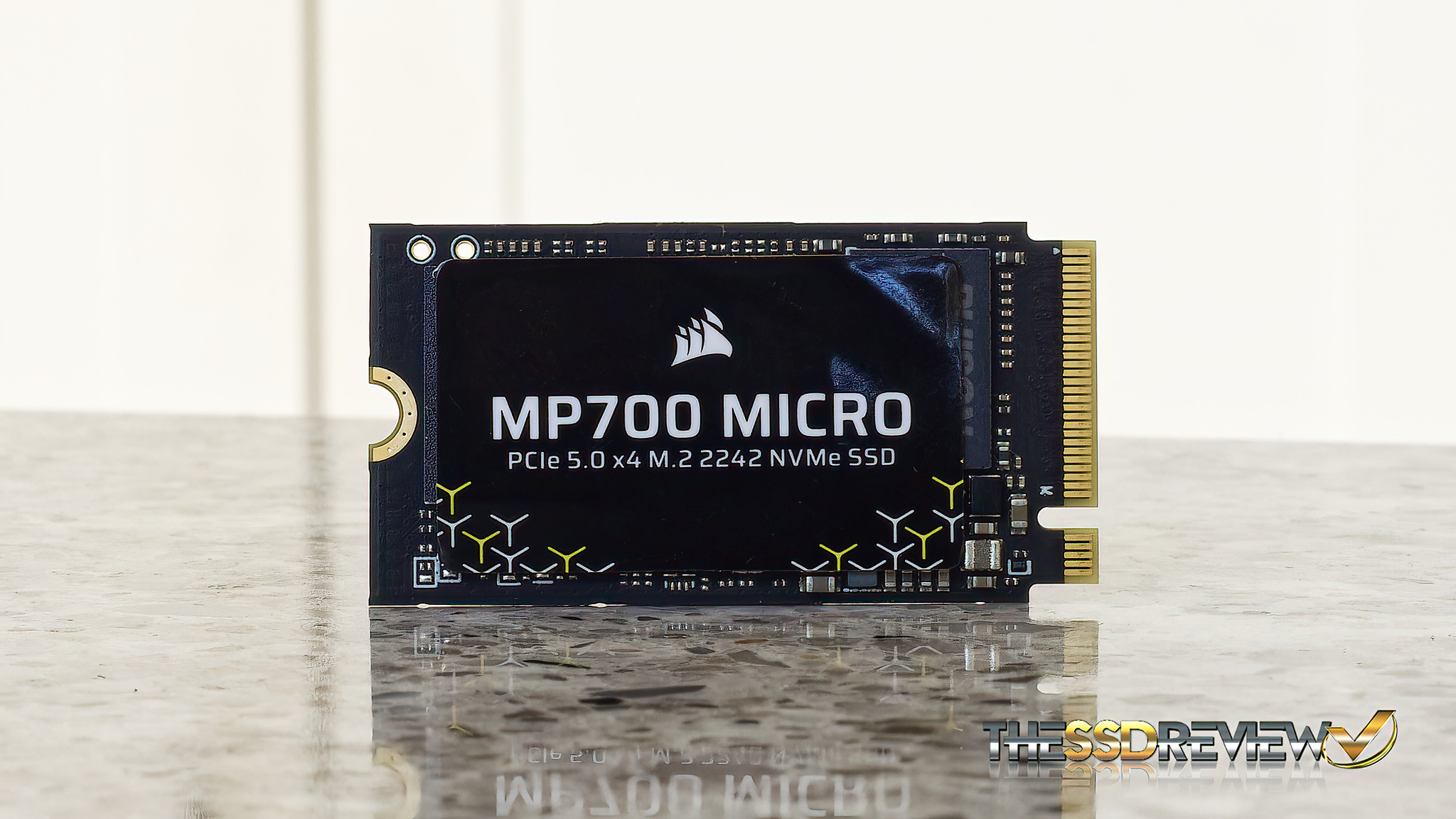
This SSD comes in 2TB and 4TB capacities. The 2TB model is rated for up to 10GB/s read and 8.5GB/s write speeds, while the 4TB version we’re testing today is listed at 9.4GB/s read and 8.1GB/s write.
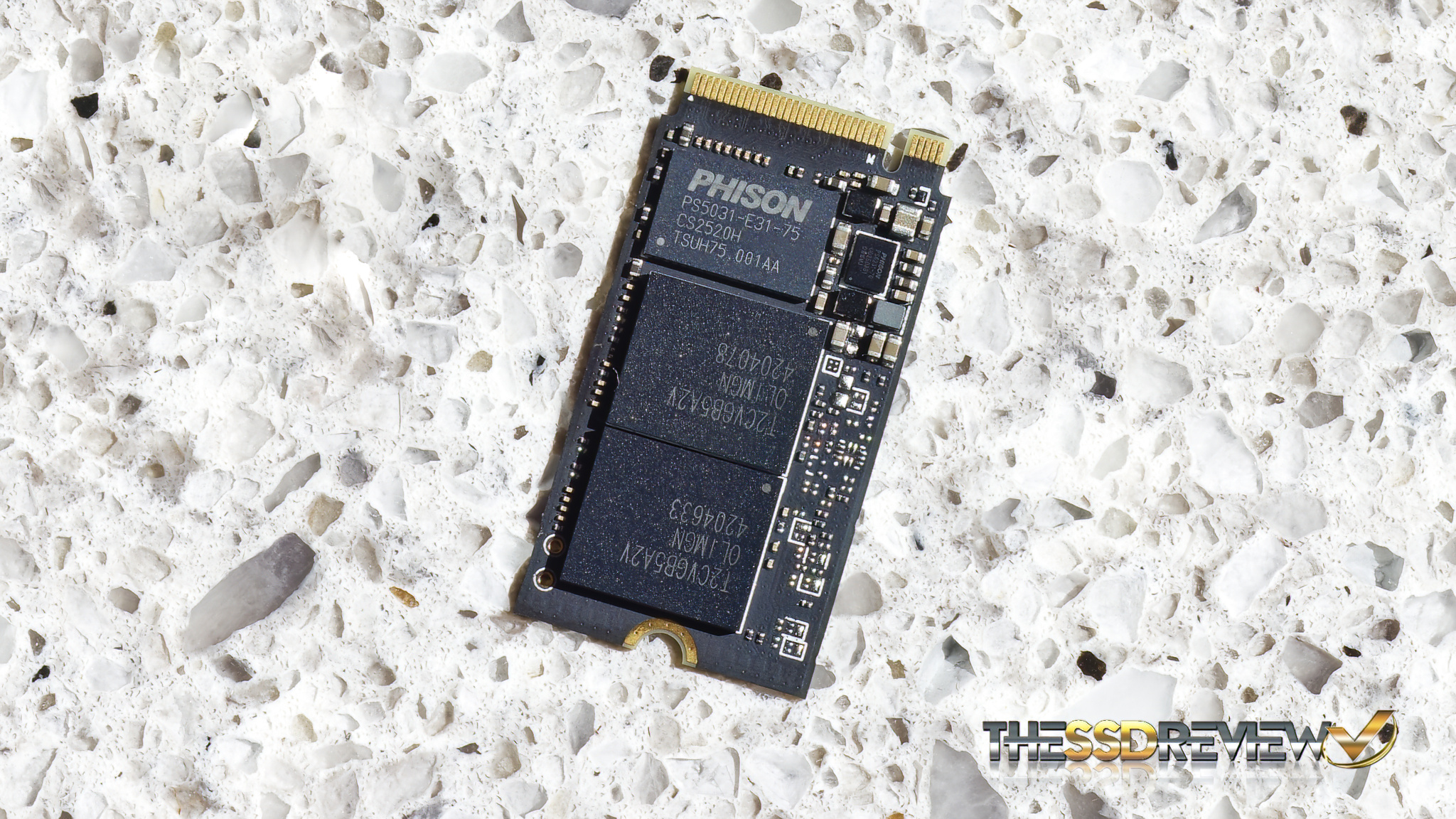
The Corsair MP700 Micro is powered by the Phison PS5031-E31 Gen5 DRAMless controller and features two NAND packages that Corsair identifies only as 3D TLC flash memory. We checked the markings on the NAND, but the identifiers don’t yet correspond to any publicly documented chips. Conversation with industry peers seems to provide that the NAND in this SSD is KIOXIA BiCS8 3D TLC NAND, however there is no definite confirmation from Corsair.
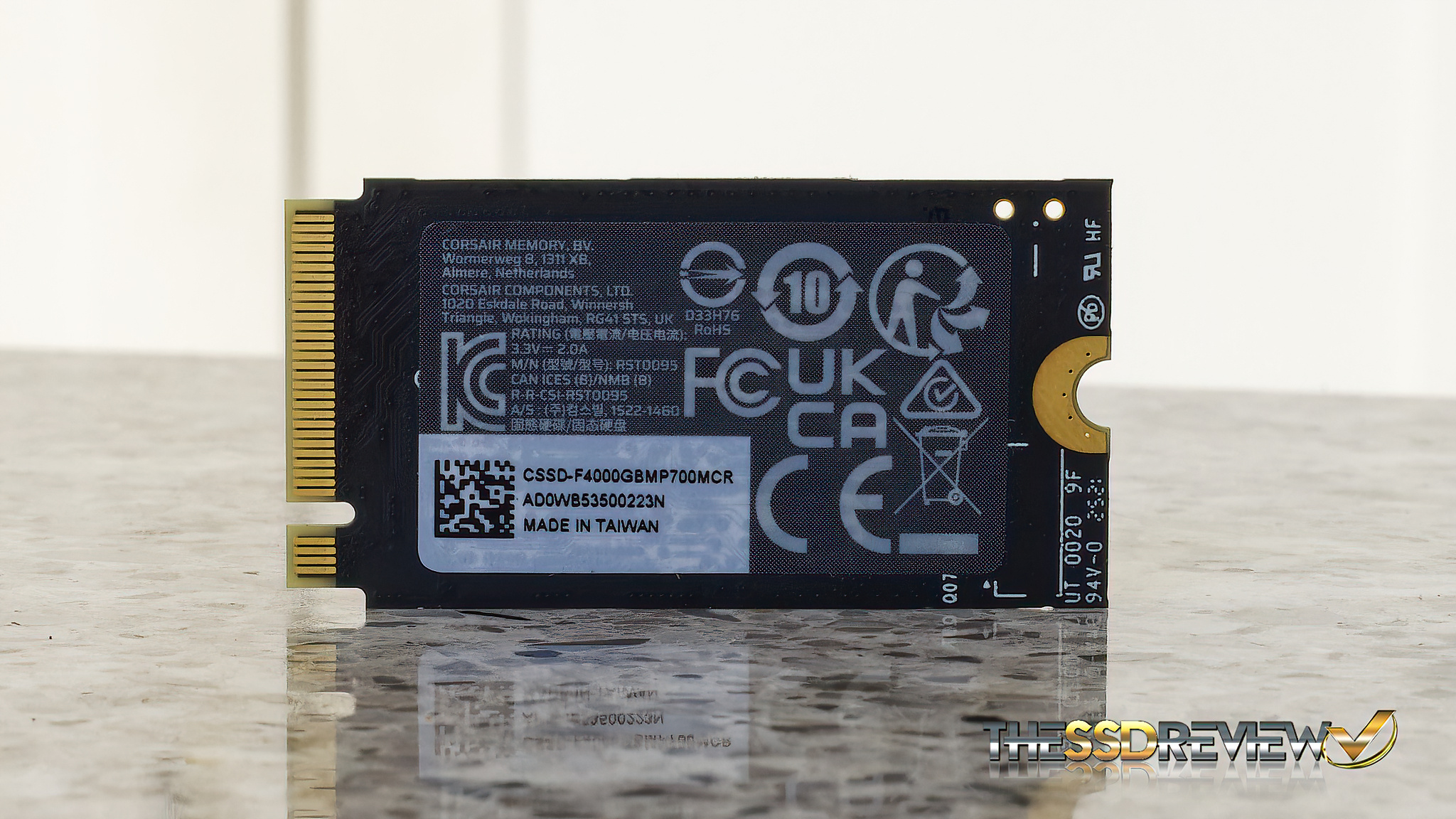
This is a single-sided SSD, and thanks to its carefully selected components, it runs exceptionally cool for a Gen5 drive, making it an ideal fit for compact systems such as the Lenovo Yoga 9i ultrabook. Power consumption is impressively low, with an active draw of just 5.9 watts. The MP700 Micro includes a 5-year limited warranty and endurance ratings of 1200TBW for the 2TB model and 2400TBW for the 4TB version. Pricing is on the premium side, at $284.99 USD for 2TB and $484.99 USD for 4TB. Availability and current pricing can be checked on Amazon.
It is now only a matter of time until we will see PCIe 5.0 NVMe SSDs in a 2230 form factor soon! Hopefully, by 2026! Insane out of the world speeds in a small form factor!
Absolutely agree! Looking forward to seeing insane speeds in a very small 2230 form factor very soon!
Who knows, maybe in CES 2026 we will see these SSds already!
There is an error in the MS direct storage section, it says [“increasing” game load times], but I would have thought the author meant to say [“decreasing” game load times].
Ref:
As our Corsair MP700 Micro 4TB SSD is MS DirectStorage compatible, we thought we might take advantage of the 3DMark DirectStorage Feature Test and see how this SSD fared. MS DirectStorage, in very basic terms, allows direct transfer of data from your SSD storage directly to your GPU, eliminating its historical necessary passage from the SSD through the CPU to RAM, back through the CPU and finally to the GPU VRAM. This is, for the most part at this time, intended on [increasing game load times],reducing CPU overhead and providing more detailed graphics.
I agree, noticed it too. I believe the author meant to say “faster loading times” instead of “increased loading times”.
As an example, Diablo IV (the game I play) support Microsoft DirectStorage, therefore leading to faster loading times. (Although Diablo IV had issues with DirectStorage before, the problem appeared to been fixed now).
Fixed Thanks.