 The SSD Review The Worlds Dedicated SSD Education and Review Resource |
So the Flash Memory Summit 2025 has begun in 2025 and it is our first return since pre-COVID. I always find myself confused with respect to this event, as it plays such a importance in each one of our lives, yet it is relatively unknown to. I would be exaggerating just a bit if I tried to make the sale that this is all within even my grasp, but the truth is I learn every day. In the beginning, our (or rather my) discovery of SSDs was coincidental when I received a Dell XPS computer that was so much faster than any computer I had ever had. It started in 20 seconds or so and, magically, it executed my command the very second that I hit the enter key. This machine knew what I wanted before I did, or so it seemed. It contained the worlds first solid state drive…or SSD. That was in 2007…some 18 years ago and I am as amazed today as I was then… and still just as confused as so many who ask me to explain why flash technology is so important to all of our lives.

The Flash Memory Summit brings people together from all corners of the world, and as diverse as many of the ideas are within, it all comes down to a simple thing… flash. Flash is rather unique, in that it originates as simple sand which is heated to over 3000°F and becomes molten glass where it goes through a process and becomes what is known as a silicon ingot. This ingot has the shape of a donair (to be rather blunt) but in its creation, forms a perfect cylinder where wafers are then cut creating a perfectly round and flat ‘dish’, if you will. This wafer is one of the purest substances on the face of the earth with a purity of 99.999999999%. From there, This can be cut and manufactured into circuitry, or for our usage scenario… NAND flash. I am fortunate to have been honoured with one of these wafers many years ago…
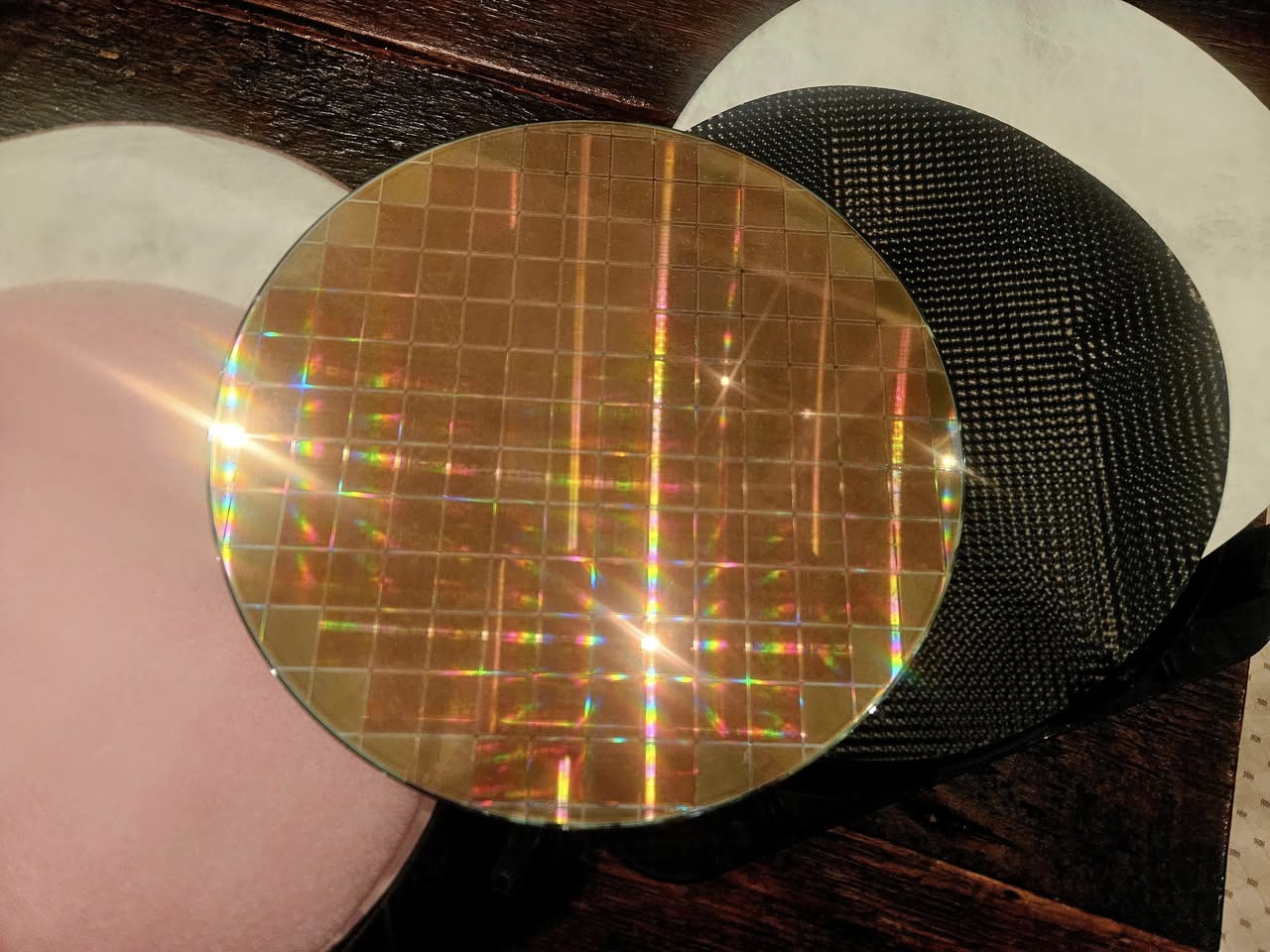
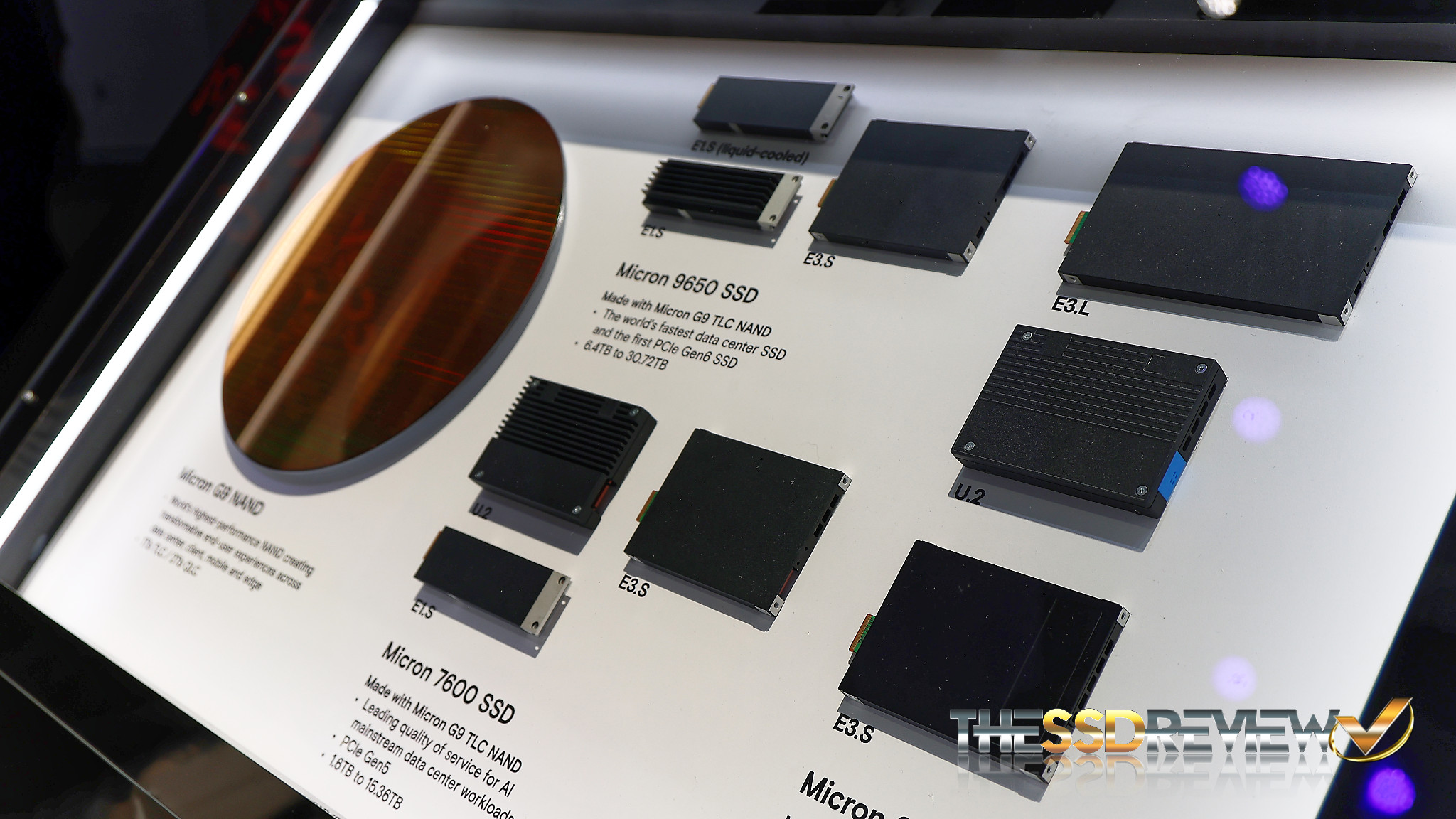
You can see by this very outdated chip that this wafer is cut into squares which are then used to create NAND storage. The doors to the FMS display area opened a short time ago. Take a look at this photo from the Micron booth showing the much more current Micron G8 NAND wafer. The squares are much smaller and the form the NAND found in each of these SSDs to the right. Oh to get my hands on one of these!
Now how does that affect you? NAND is present in the phone you use every day…as it is in the PC you may be reading this article with right now. This might not be so apparent if you are younger, but there was a time when we had to go to the bank for our business, a travel agent for vacation bookings, and there was a time that you could not see immediate replays in sporting events. In fact consider this. When we post this article, it will be available to and will be ‘posted’ on the internet through the moving of this data tens of thousands of miles…. yet in less than a split second. And you can comment where your response would travel tens of thousands of miles, only to be posted that second or so later.

This is flash after all. It not only provides a storage place for your data, but its sheer ability to move data at unheard of speeds, allows us to live in an instant world…and we don’t think twice. Banking and investing… instant. Finding the best place to vacation and the best prices… instant. Finding and following directions in the car… instant. Facebook… instant. Think about this for a second. I can post on FB and a few second laters someone from Asia can reply. Do we realize that that information has travelled thousands and thousands of miles to include through cabling in the deepest depths of the ocean? And even now consider AI… Anything you search on Google, for instance, will most likely return with a helpful summary atop all of the findings. That summary comes from ‘AI’ reading and forming a logical opinion from all of those sources. all of this information starts and ends with NAND flash storage. Today, you can take a simple picture going back 20, 30, 40 years or longer and have AI create a video within seconds… Thank flash.