 The SSD Review The Worlds Dedicated SSD Education and Review Resource |
THE GREAT MICRON FAB TOUR
Entering any wafer fab is not taken lightly. The machines, better described as tools, can be worth hundreds of millions of dollars as we will elaborate on further in this report. The Micron Boise fab is powered by what would be the equivalent of 30,000 homes and powered exclusively by public utilities as well as dams, wind power, solar power and private company contracts. If a power failure were to ever occur, there is a UPS backup generator system capable of maintaining power for building evacuation and to ensure safe shutdown of ‘tools’. There has only been one power failure in the last thirty years and the fab is run 24/7.
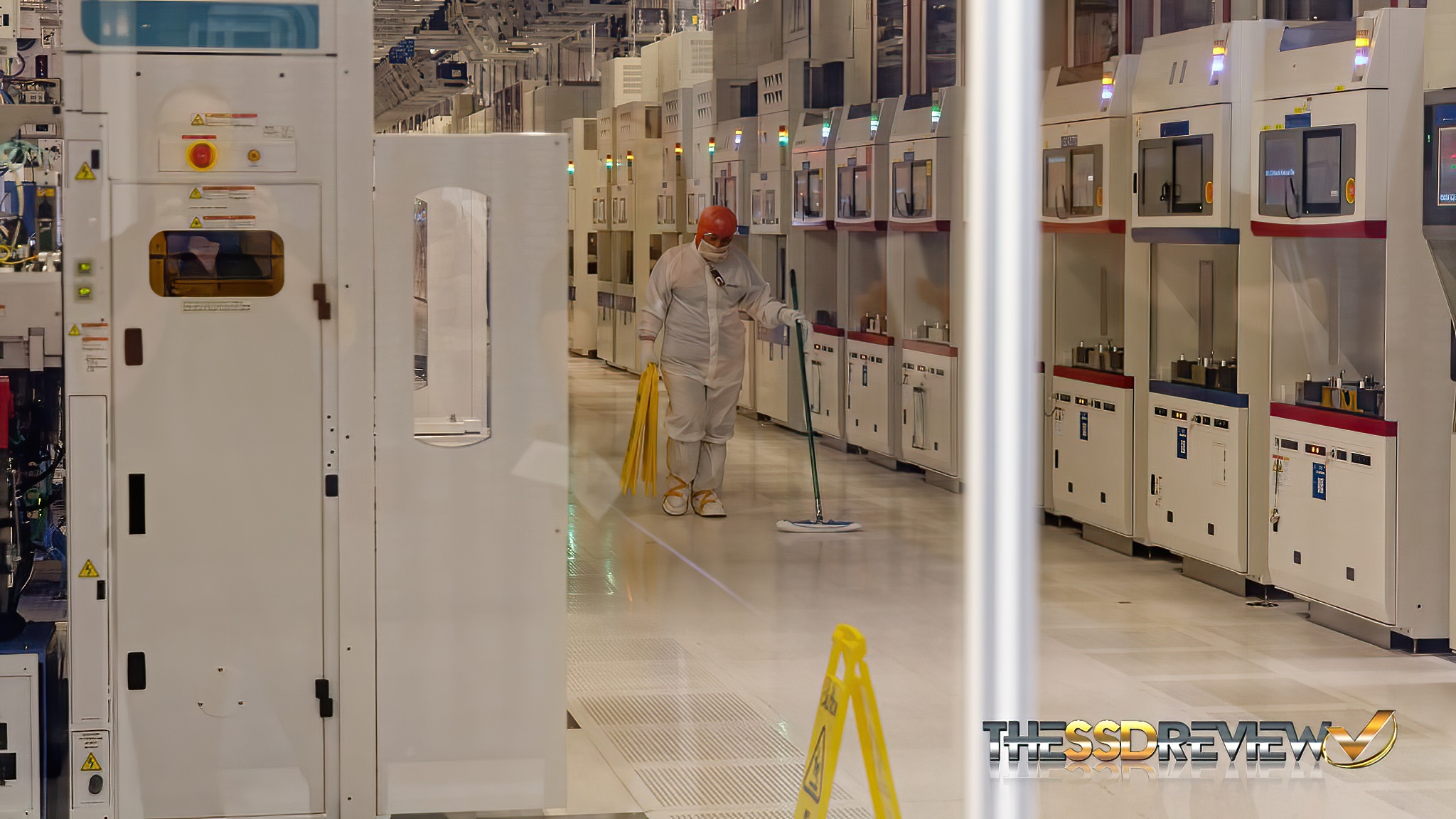
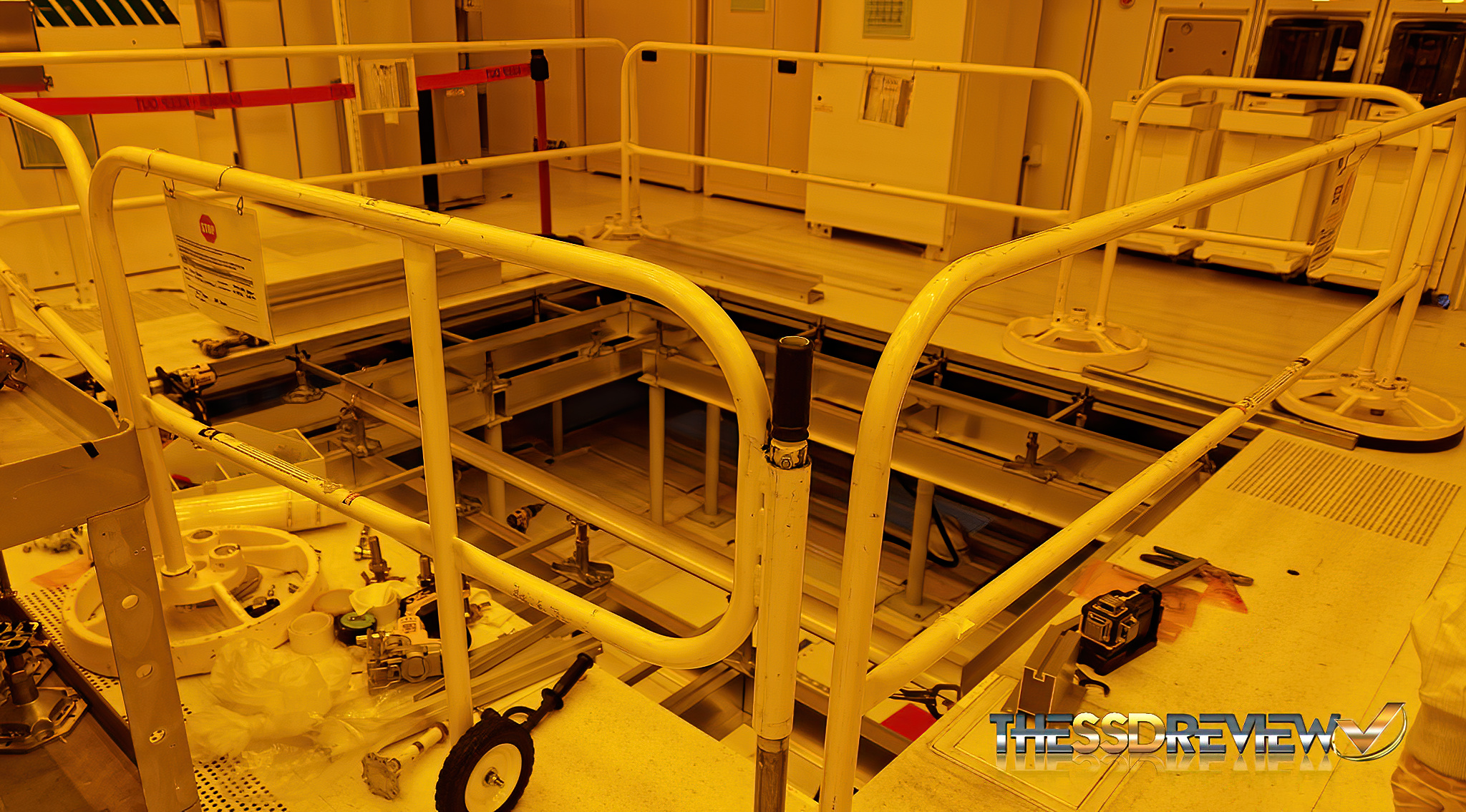
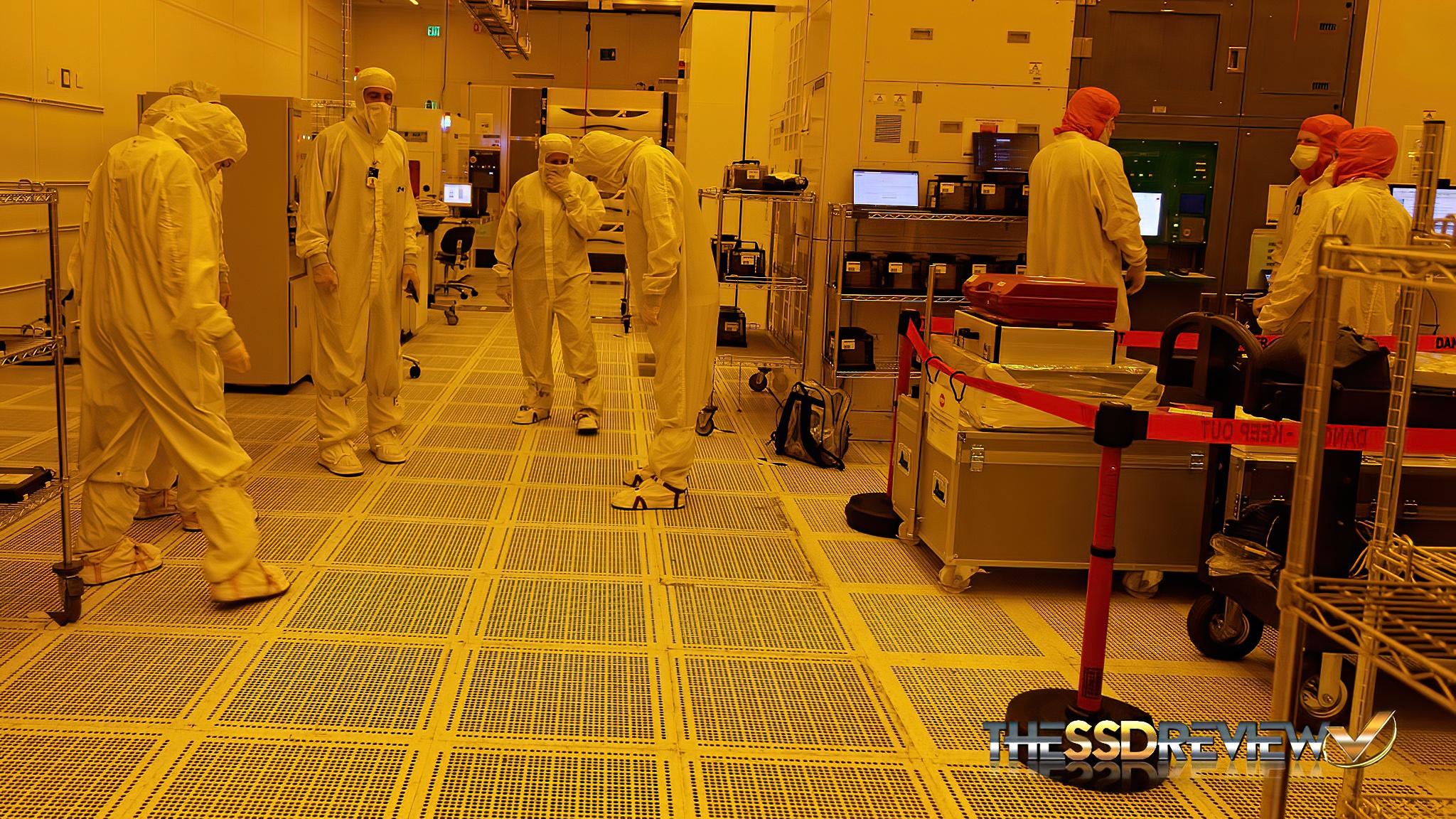
The inside of a fab is considered to be a ‘clean room’. The floors are being wet-mopped continually and there are hepa filters above which filter the steady flow of downward air that travels down through the floor. The walls and floor are all removable to accomodate for the installation and removal of new tools. In this photo below, the room is yellow in order to protect the wafers from direct light and subsequent damage.
The inside of the fab is 100 times cleaner than a hospital operating room. Any dust or dirt whatsoever could have a devastating effect on the tools within, as well as the production itself. The inside of the fab is considered a ‘Class 10’ clean room which means that there are no more than 10 particles measuring 0.5 micron or larger per 1 cubic foot of air. A human hair measures just 80 micron.
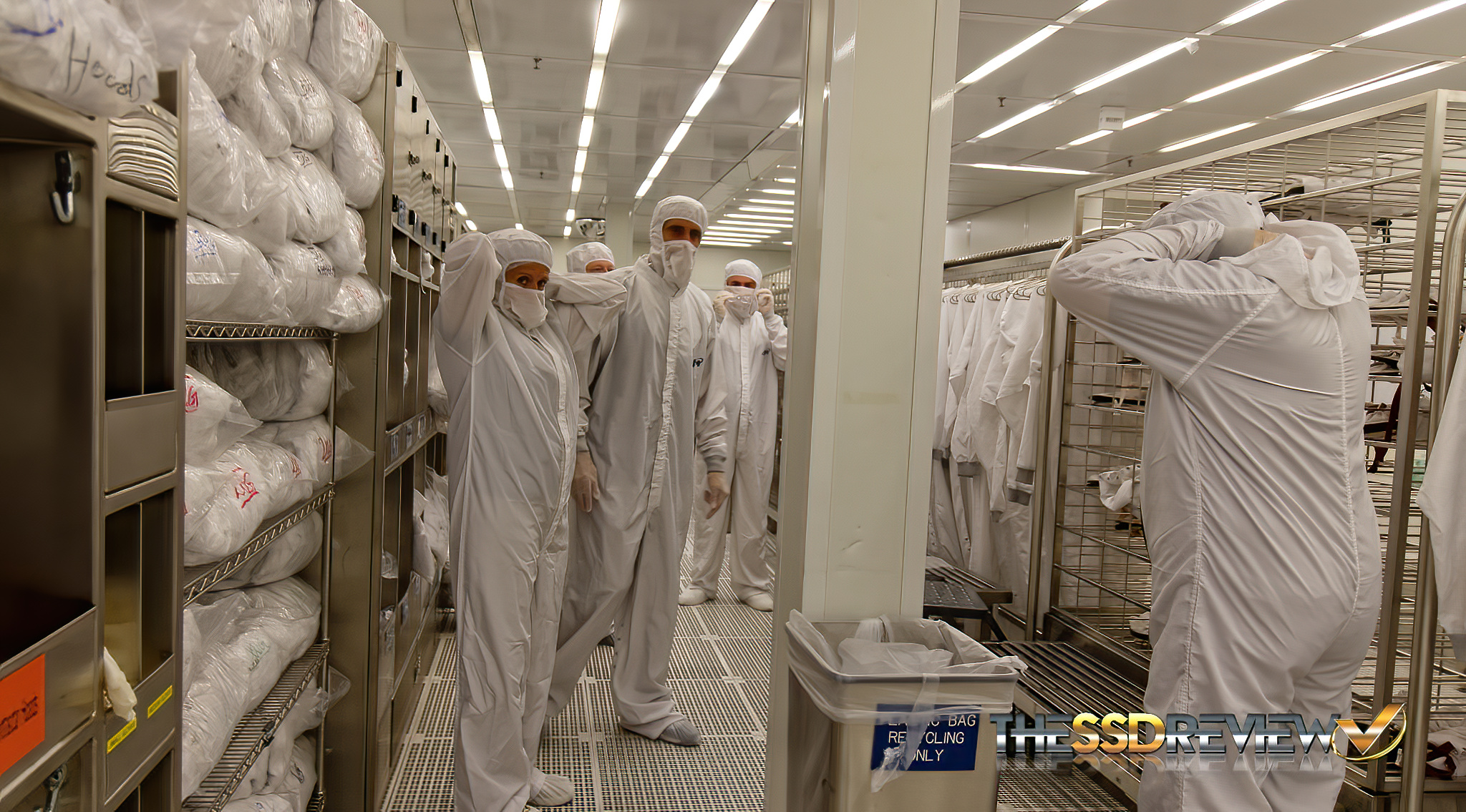
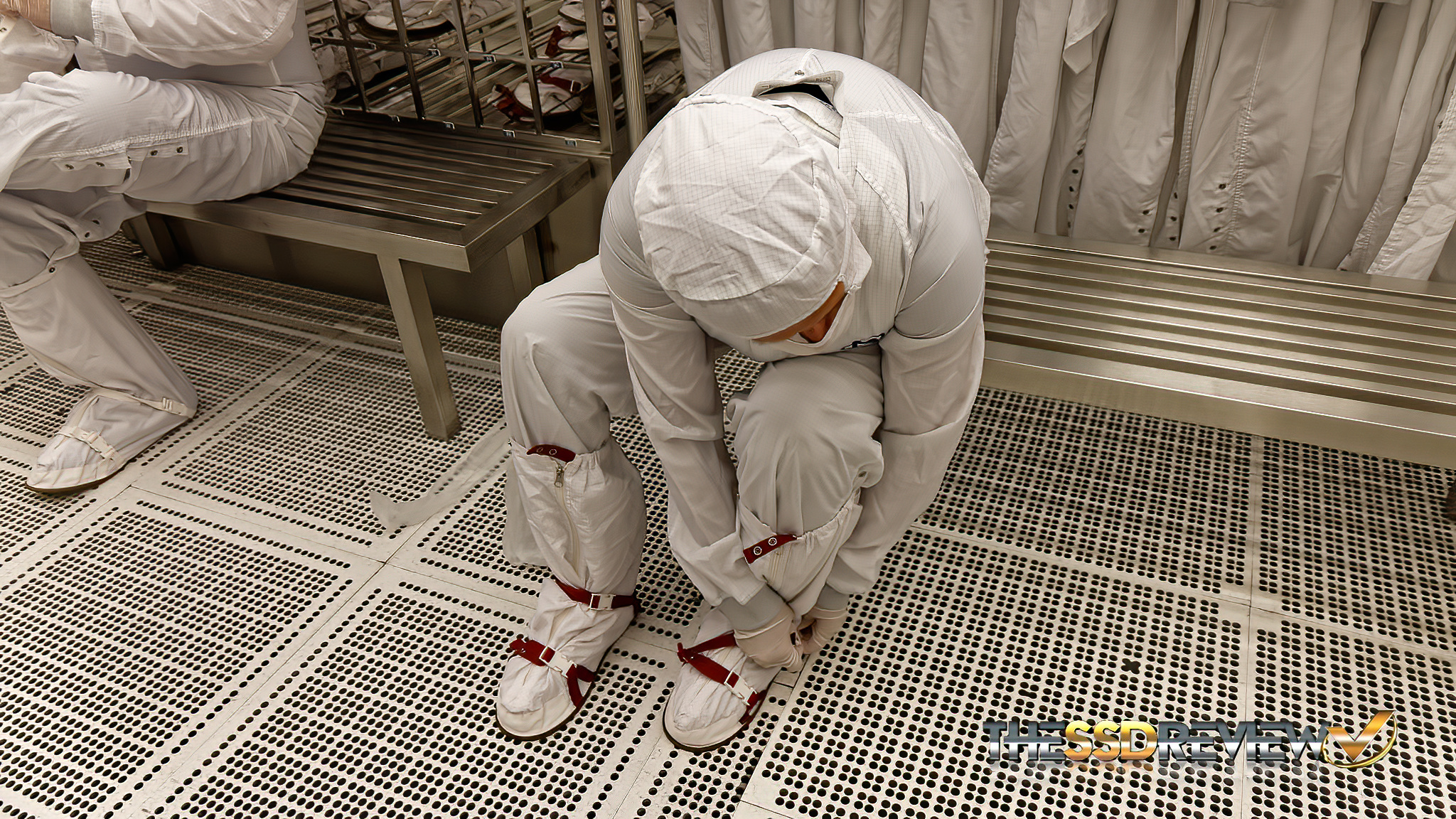
Before entering the fab, workers must suit up in a sanitization room where they sanitize their hands through a machine, dawn gloves, a full mask to cover their hair net, full coveralls and boots that are secured by red straps.
Within the fab, Micron contractors wear white hoods whereas vendors wear orange hoods. The reason for this ensures that only proper access is afforded to tools that contain critically protected IP (intellectual property).
Safety is also of the utmost priority within the fab as there are chemical, electrical, particulate and physical hazards to be considered. As contained as all tools are, a type of chemical hazard that may present itself includes exposure to hydrochloric and sulfuric acids as well as hydroflouric acid used in etching which creates dangerous gases within the sealed units.
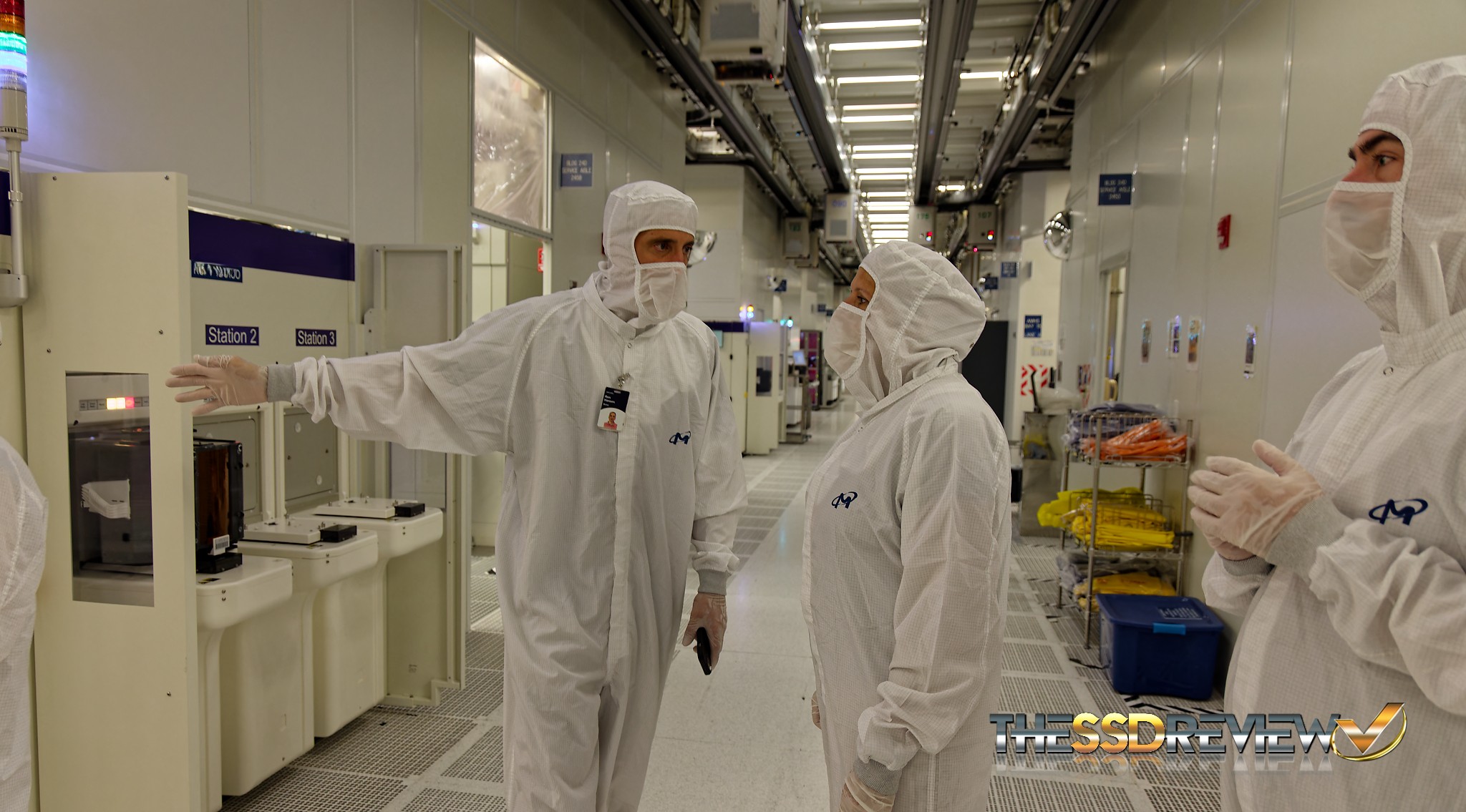
Upon entering the Micron fab, you will immediately notice significant travel overhead which are the ‘vehicles’ of Micron’s robotic automated tool handling system moving wafers within the fab. The system knows where every wafer and vehicle is at all times and coordinates transport to all 1600 steps in the ‘recipe’.
The vehicle has a DC motor which runs off of a capacitor that is powered via inductive power transfer from two 7000 watt lines that run along the track. There are 170 vehicles within the fab which run 24/7 365 days a year and are stopped for a check-up only once a year.
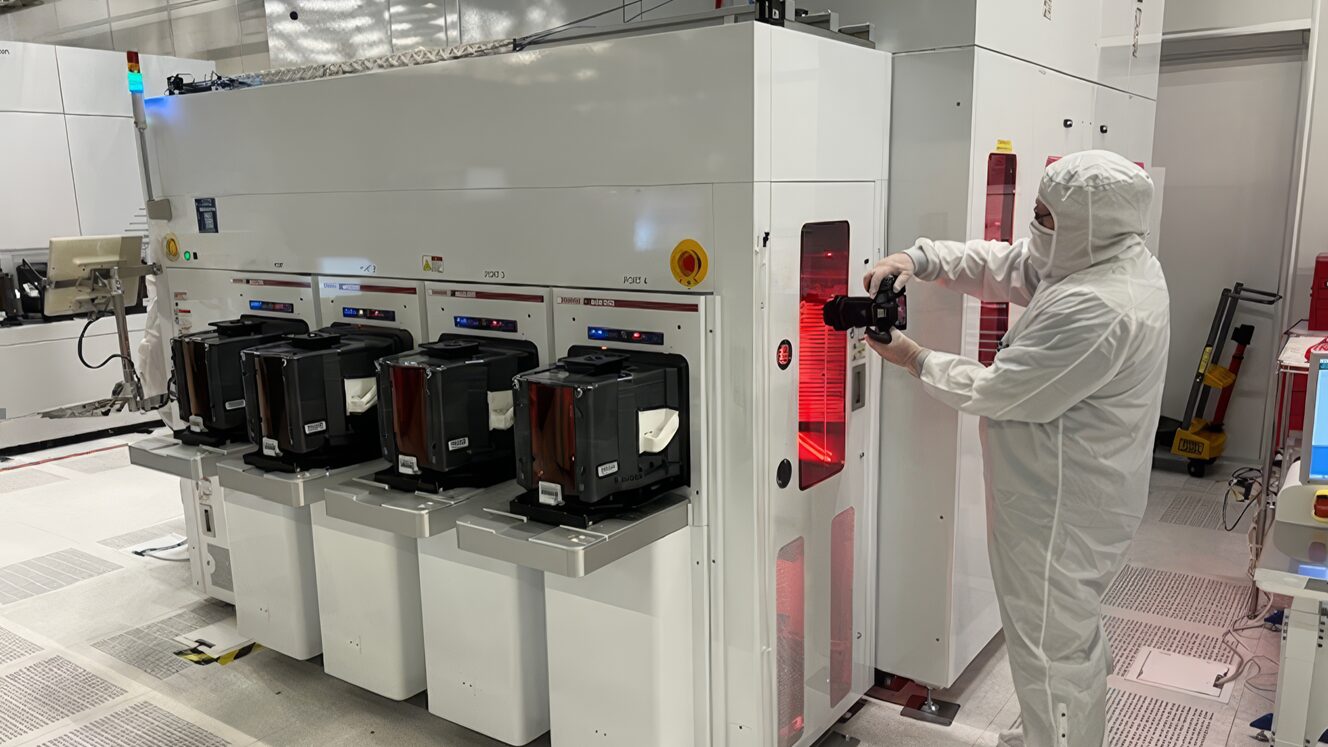
A necessary add on to the overhead hoist transport is Micron’s Equipment Front End Module and Sorter which acts as an intersection of sort moving wafers from vehicle to vehicle and tool.
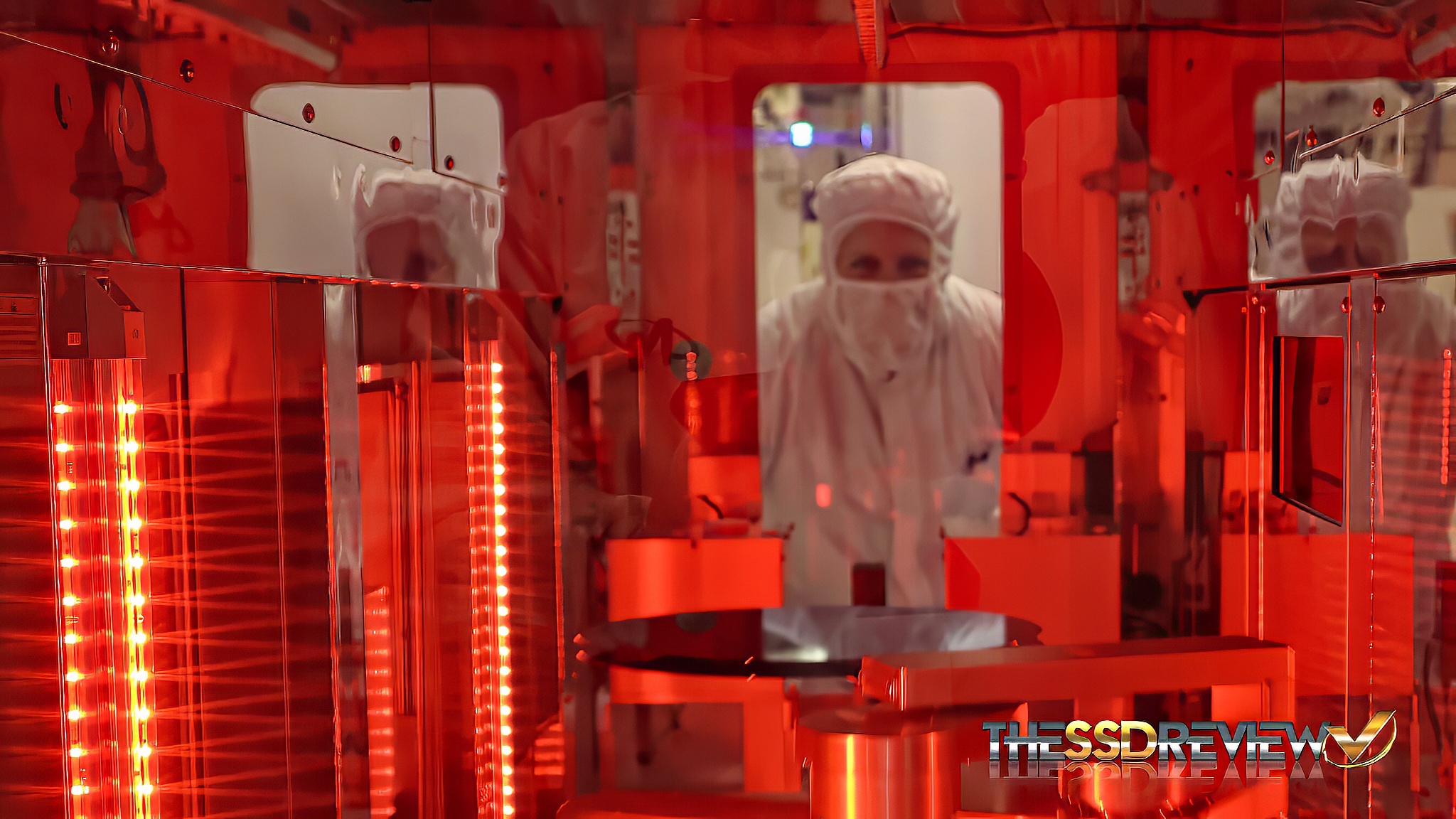
CHEMICAL MECHANICAL PLANER – CMP TOOL
When a circuit layer has been etched into the wafer, films are deposited on the surface to create the next layer of circuitry. Films are added using vapor deposition or electroplating and this leaves a rough uneven film on the surface.
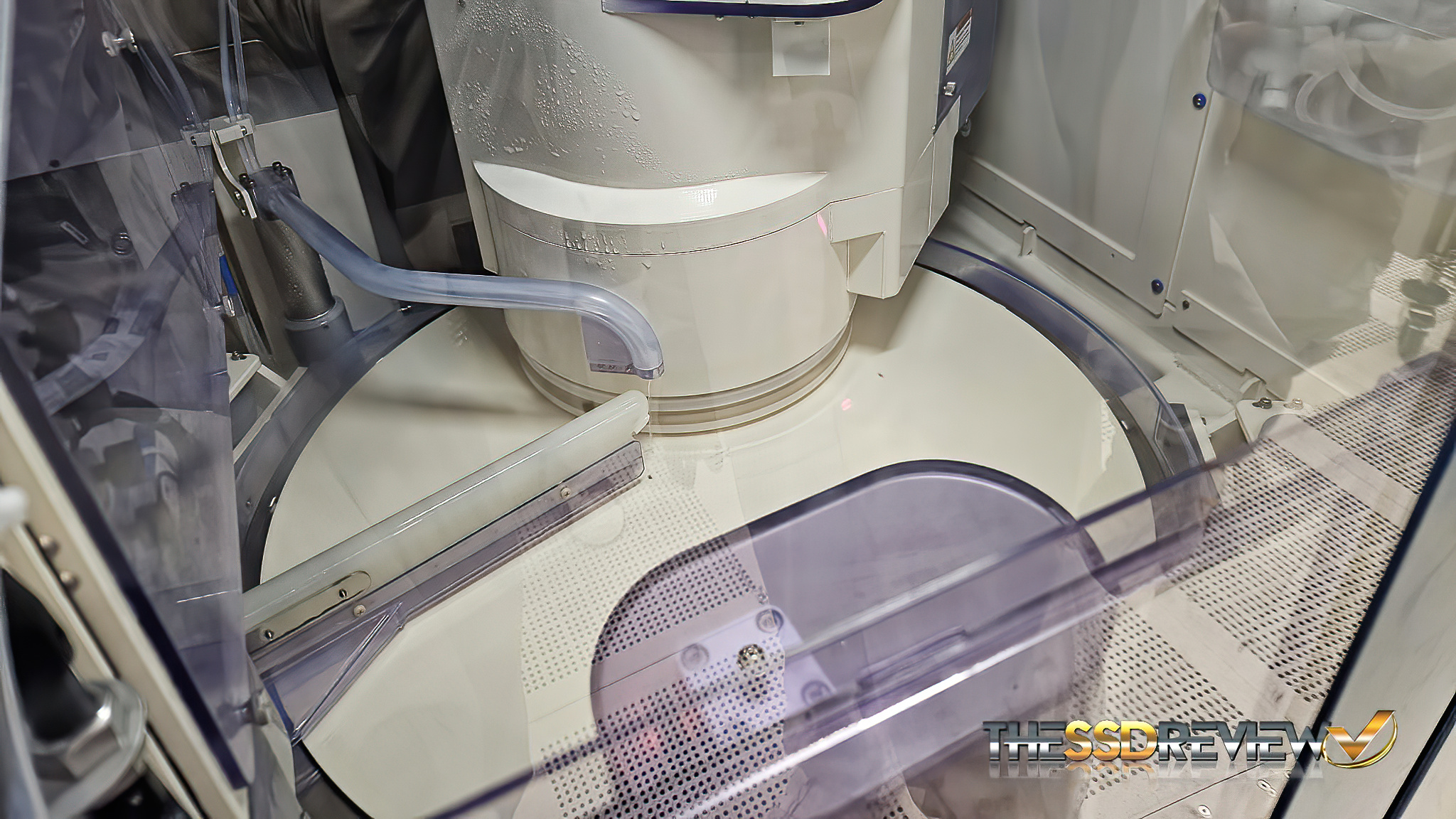
The surface needs to be flattened before the next layer can be created on the wafer. The CMP process uses a slurry which contains abrasive particles as well as basic or acidic solutions to polish and flatten the wafer for the next phase.
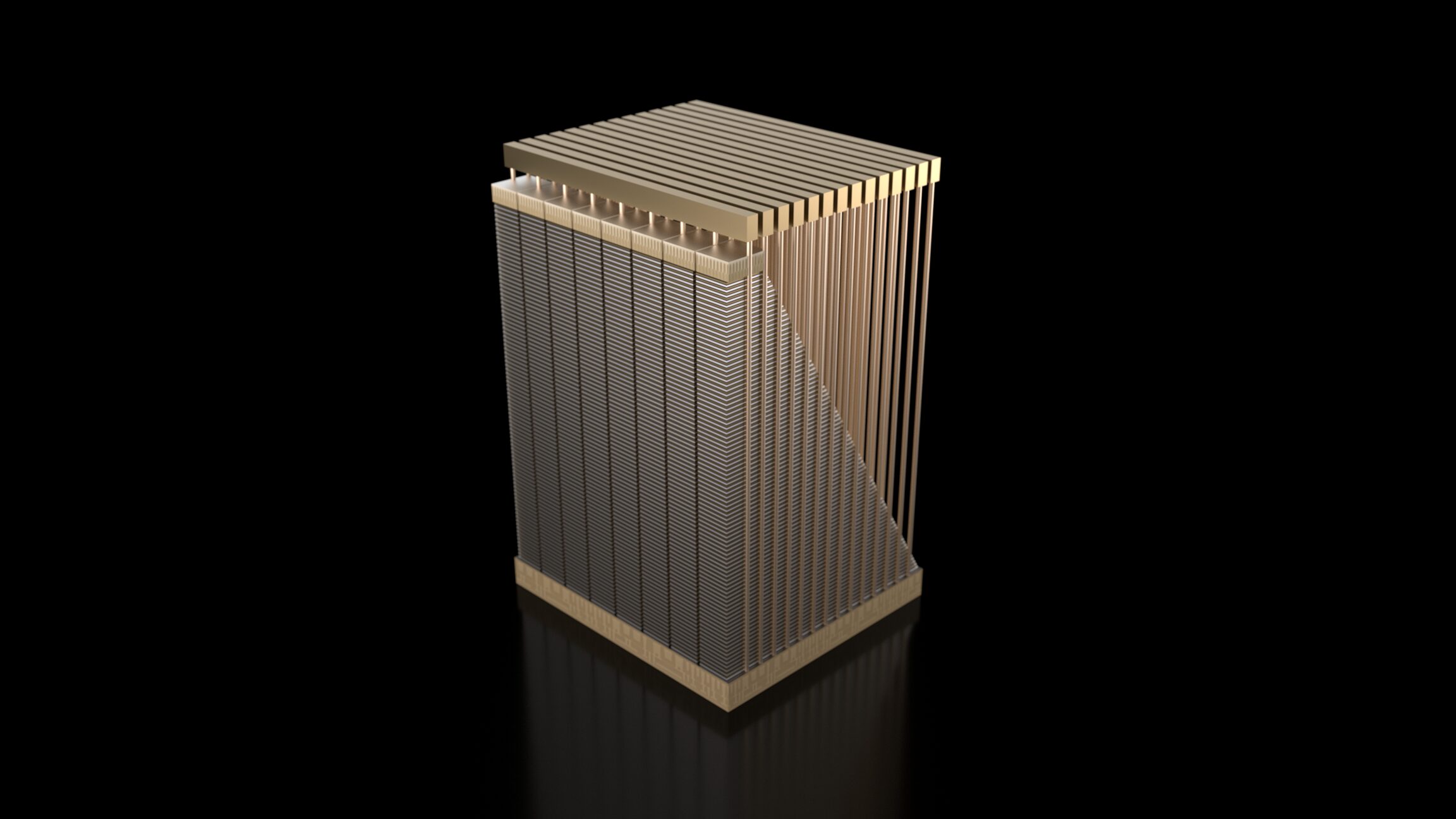
When we speak to layers, this graphic is of Micron’s Micron G9 TLC NAND. This is a ‘not to scale’ depiction of the NAND package just so one can visualize the number of layers within a memory chip that is somewhere close to 1mm in height.